Carbon Monoxide Safety Blog
Expert guides, safety tips, and CO detector advice from the AirShield team.


All Articles (122)
College Dorm CO Safety: Move-In Checklist for Students
Most students think dorm rooms are safe from carbon monoxide because there's no stove or space heater. But shared building systems can put you at risk without you ever knowing it.
Furnace Startup Carbon Monoxide Risk: What to Check First
The first time you turn on your furnace each fall is the most dangerous moment of the heating season. Here's why — and what to do before you flip that switch.
UL Listed CO Detector Plug In: Avoid Recalled Models (2026)
The CPSC recalled 377,000 plug-in CO detectors in August 2026. Here's how to check if yours is on the list and what a UL listed CO detector plug in actually means.
Carbon Monoxide Detector for Boats at the Marina: A Safety Guide
CO poisoning on boats kills people every summer — and marinas make it worse. Learn why docked boats are especially dangerous and what every boater needs on board.
Vacation Rental CO Poisoning: What Every Traveler Must Know
Most vacation rental guests never think about carbon monoxide — until something goes wrong. Here's what you need to know before your next trip.
Carbon Monoxide Poisoning in Children: Symptoms Parents Must Know
Kids show CO poisoning symptoms differently than adults — and they get sick faster. Here's what to watch for and how to protect your family tonight.
Carbon Monoxide Detector for Van Life: What Every Nomad Needs to Know
Van lifers sleep in enclosed spaces with propane stoves and gas heaters — a dangerous mix. Here's what carbon monoxide risk looks like on the road and how to stay safe.
Portable CO Detector That Works in Europe and Worldwide (2026)
Most CO detectors from the U.S. won't work in European outlets — and that gap can be deadly. Here's what international travelers need to know before their next trip.
What Anna Faris's CO Scare Teaches Every Traveler
Anna Faris almost died from carbon monoxide in a vacation rental. Here's what her story means for anyone who's ever slept somewhere unfamiliar — and what you can do before your next trip.
Should a CO Detector Be in Your Bedroom? Yes. Here's Why
Carbon monoxide is most dangerous when you're asleep. Learn exactly where to put a CO detector in your bedroom and why it could save your life tonight.
Can Carbon Monoxide Seep Through Walls? What You Need to Know
Carbon monoxide can move through walls, floors, and ceilings — even in homes that look sealed tight. Learn how CO travels and how to protect your family.
Carbon Monoxide in Boats, Cars, and Vehicles: Why Portable Detection Is No Longer Optional
Tragic incidents on yachts, recreational boats, and in idling cars have revealed a dangerous blind spot: most people never think about carbon monoxide detection outside the home. The risk in enclosed vehicles is real, growing, and almost entirely unaddressed by standard home detectors.
Generator Carbon Monoxide Deaths Peak Every Hurricane Season — Here's How to Survive Yours
The CPSC issues its generator CO warning every pre-hurricane season for a reason: portable generators kill more people than the storms themselves in many disaster years. With the 2026 Atlantic season beginning today, here is what storm-state residents must do right now.
Recalled Amazon CO Detectors: What Parents Must Know Before Buying Another One
A wave of faulty carbon monoxide detectors sold on Amazon has sent children to the hospital — and millions of parents don't know their unit may be compromised. Here's how to verify your detector is actually protecting your family.
Portable CO Detectors for Generator Use: What CPSC Wants You to Know Before Storm Season
CPSC's pre-season warning is clear: generators kill more Americans from CO than any other single source during disaster events. Here's what a portable detector must do to actually protect you.
Do You Need a Carbon Monoxide Detector in a Child's Bedroom? The Answer May Surprise You
Most parents assume the hallway CO detector covers their child's room — it often doesn't. Here's what pediatric safety data says about detector placement for kids.
Recalled Carbon Monoxide Detectors: What Amazon Buyers Need to Know Right Now
Faulty CO detectors sold on Amazon have hospitalized children — and millions of buyers may still own recalled units. Here's how to check yours and what actually keeps your family safe.
How Many CO Detectors Do I Need? The Room-by-Room Guide
Most households need more than one carbon monoxide detector — and placement matters as much as quantity. Here's exactly how many you need and where to put them.
Can Your Water Heater Produce Carbon Monoxide? What Every Homeowner Must Know
Gas water heaters are one of the most overlooked sources of carbon monoxide in the home. Learn how CO leaks from water heaters happen, the warning signs, and how to protect your household year-round.
Carbon Monoxide Poisoning in Babies: What Parents Miss
A baby can't tell you they have a headache. CO poisoning in infants shows up as fussiness, poor feeding, and excessive sleepiness — symptoms every parent already sees on a normal day. Here's why infants absorb CO faster than adults and what actually separates a hard day from an emergency.
Pool Heater Carbon Monoxide: The Hidden Backyard Danger
In May 2026, a family of four died at a Florida vacation rental from a faulty pool heater — an appliance almost no one thinks to check. Pool heaters are fuel-burning combustion equipment, and when venting fails, they can pump CO into pump sheds, pool houses, and nearby living space.
Can a Pressure Washer Cause Carbon Monoxide Poisoning?
A gas pressure washer can produce carbon monoxide at a rate equivalent to 100 idling cars — making it one of the most concentrated CO sources of any common home equipment. Summer is peak pressure-washing season for driveways, decks, siding, and boats. Here's what makes it so dangerous.
Carbon Monoxide Looks Exactly Like Being Drunk
On June 17, two people died in Indiana. On June 19, five people died in Missouri. Both incidents: generators, summer gatherings, CO. The symptoms were there — but at a summer party, carbon monoxide and alcohol are indistinguishable until it's too late.
Your CO Detector Has an Expiration Date
A CO detector that can't detect CO isn't protection — it's a false sense of security. Most expire after 5–7 years, pass the test button right up to the end, and give no indication their sensor has failed. July is peak home-sale month. Here's how to check yours in 2 minutes.
Carbon Monoxide on Boats: The Swim Platform Danger
On June 16, 2026, a 9-year-old died from CO poisoning on a boat — in open air, in broad daylight. Every motorized boat creates a low-pressure zone that pulls its own exhaust back toward passengers. The swim platform is where it concentrates. Here's what every boater must know before July 4th weekend.
July 4th Carbon Monoxide Danger: Grills and Generators
Every Fourth of July, backyard cookouts and party generators send hundreds of Americans to the ER with CO poisoning. Here's exactly what goes wrong — and the simple rules that keep your celebration from turning into a tragedy.
Carbon Monoxide in Vacation Rentals: What Travelers Must Know
At least 183 documented CO incidents in U.S. hotels have killed 49 people and injured 1,600 more since 1989. Only 14 states require CO detectors in hotels. This summer, millions of travelers will sleep in properties with no protection at all.
Summer Power Outage? Your Generator Could Kill You
Generators kill roughly 100 Americans every year — and summer storm outages are one of the highest-risk scenarios. Here's what makes them so lethal, and the exact placement rules that keep your backup power from becoming a backup hazard.
Car Running in Closed Garage: How Long Until It's Dangerous?
Almost half a million people searched this exact question. The answer: faster than you think. A car idling in a closed two-car garage reaches dangerous CO levels in under 10 minutes — even with a modern catalytic converter.
What Causes Carbon Monoxide in a House? 7 Hidden Sources
CO is produced in most American homes every day — by the furnace, the water heater, the attached garage, the fireplace. Under normal conditions, it vents safely outside. Here are the 7 sources that send it into your living space instead.
Why Is Carbon Monoxide Dangerous? The Science Explained
Carbon monoxide kills more than 400 Americans every year and sends 50,000 to the ER. What makes it so effective — and so deceptive — comes down to one molecule and how your blood handles it.
Carbon Monoxide Cases Are Up 50% in 2026: The Data Every Homeowner Needs to See
Maryland recorded a 50% spike in CO emergency visits this year. Illinois just published its first CO surveillance report — 940 ER visits and 57 deaths annually, mostly on Sunday evenings. Here's what the 2026 data shows.
Two El Paso Siblings Booked an Airbnb to See Their Favorite Band. They Never Came Home.
Hugo Morales, 35, and his sister Laura, 37, flew to Mexico City in February 2025 to see Kings of Convenience — the first trip they'd taken alone together. A gas water heater improperly installed in the laundry room of their Airbnb killed them overnight. A wrongful death lawsuit was filed against Airbnb in 2026.
Your Gas Water Heater Is the Most Overlooked CO Source in Your Home
Furnaces get inspected. Water heaters get ignored. Yet water heaters are among the top residential CO sources — and unlike furnaces, they run 365 days a year. Here's what failure looks like and how to detect it before it becomes serious.
The Amazon CO Detector That Failed While Families Got Sick
It had an Amazon's Choice badge and had sold 4,000 units in a month. Consumer Reports linked it to four hospitalizations — including two children — after it failed to alarm when CO reached life-threatening levels.
Why a Disconnected Carbon Monoxide Detector Cost Two Lives
On February 8, 2026, Jay and Kristen Ruskey died in their sleep at a friend's home in California. A CO detector was on the ceiling of their room. Its wiring was disconnected. Here's what that means for everyone who sleeps somewhere other than home.
How Accurate Are Portable Carbon Monoxide Detectors?
The number on your CO detector's display is only as accurate as the sensor behind it. Here's what sensor type, calibration drift, and UL certification actually tell you — and what they don't.
Portable Carbon Monoxide Detector for Camping: The Complete Guide
CO from a single camp stove can reach NIOSH danger levels inside a 4-person tent in under 10 minutes. Most campers don't know the risk — or that their home alarm won't protect them in a tent. Here's what every camper needs to know.
Best Portable Carbon Monoxide Detector in 2026
Most portable CO detectors look identical on the shelf but perform completely differently when it matters. Here are the five criteria that separate genuinely protective devices from the rest — and which detector meets all of them.
Portable Carbon Monoxide Detector for RV: What Every Owner Needs
RVs run propane appliances day and night — stoves, furnaces, water heaters, refrigerators — often while you sleep in an enclosed space with limited ventilation. Here's why a portable CO detector with a live display is the most important safety upgrade you can make.
Portable Carbon Monoxide Detector: Battery or Plug-In?
Battery-operated portable CO detectors have a reliability problem most buyers never consider. Here's what it is, why it matters more for travel than home use, and what to look for instead.
Generator Carbon Monoxide Dangers This Hurricane Season
The CPSC issued a June 2026 warning: portable generators kill more people after storms than the storm itself. Here's what every family needs to know about generator carbon monoxide before the next power outage.
Carbon Monoxide in Summer: 5 Hidden Risks This Season
CO poisoning isn't just a winter problem. Boats, grills, vacation rentals, and storm generators create dangerous carbon monoxide levels every summer — and most people never see them coming.
Hotel Carbon Monoxide: Why You Should Bring Your Own Detector
Most hotel guests assume CO safety is someone else's problem. It isn't. Hotel CO incidents are documented every year — and the detector on the wall may not be enough. Here's what every traveler needs to know.
Digital Carbon Monoxide Detector: Why the Number on the Screen Changes Everything
Most CO detectors show nothing until disaster strikes. A digital carbon monoxide detector with a live PPM display gives you the number — and the number is what lets you act before an alarm ever sounds.
This Portable Travel CO Detector Could Save Your Life
Over 400 Americans die from CO poisoning every year — and your home detector doesn't come with you to hotels, Airbnbs, and RVs. Here's what the best portable carbon monoxide detector actually needs to have, and why most options fail the test.
Hurricane Season and Carbon Monoxide: The Hidden Danger in Every Power Outage
CO poisoning kills more people after hurricanes than the storms themselves in many events. Hurricane season opens June 1 — here's what every household with a generator needs to know before the first outage.
Low-Level Carbon Monoxide Exposure: The Silent Risk Your Alarm Never Triggers
Your CO alarm is calibrated to stay silent at 35 PPM. NIOSH says that's already unsafe for an 8-hour day. Here's what chronic low-level CO exposure does — and why most detectors won't tell you it's happening.
Carbon Monoxide Detector Placement: Exactly Where to Put Yours
Most CO detectors are installed wherever an outlet is convenient — not where they actually protect you. Here's the room-by-room placement guide that changes that.
Portable Carbon Monoxide Detector: 5 Features That Actually Matter
Most portable CO detectors alarm only after dangerous concentrations have built for hours. The five features below separate a unit that provides real-time protection from one that just occupies an outlet.
Carbon Monoxide Detector for Travel: Your Hotel Safety Protocol
Hotels and vacation rentals carry CO risks no host will warn you about — expired sensors, shared HVAC, and no maintenance visibility. Here's what a carbon monoxide detector for travel needs to do, and how to use it correctly on every trip.
Carbon Monoxide in Cars: Garage Risks and How to Stay Safe
A running car generates enough carbon monoxide to reach dangerous levels in a closed garage within minutes — and the gas migrates directly into your home. Here's what every driver with an attached garage needs to know.
Portable Carbon Monoxide Detector: What It Is, Who Needs One, and How to Choose
Most CO detectors are fixed to a wall and only alarm when it's already dangerous. A portable carbon monoxide detector follows you — to hotels, rental properties, boats, and RVs. Here's what separates a real one from a unit that only looks like it works.
Carbon Monoxide Poisoning Symptoms: Signs & What to Do
CO poisoning mimics the flu so convincingly that most victims don't realize what's happening until it's a crisis. Here's every carbon monoxide poisoning symptom by exposure level — and the exact response sequence that can save your life.
Boat Carbon Monoxide: The Hidden Killer on the Water
Carbon monoxide on boats kills silently — and most victims thought they were just seasick. Before this boating season, here's what every skipper and passenger needs to know about CO risks on the water.
Gas Grill Carbon Monoxide: What Every Backyard Cook Needs to Know
Grills produce more carbon monoxide than almost any other residential device. Bring one inside — or position it wrong outside — and you can reach a lethal situation in under 10 minutes. Here's what the safety labels don't tell you.
Carbon Monoxide Alarm Going Off? Here Is Exactly What to Do
Your CO alarm just triggered. Whether it's still sounding or already stopped, the next few minutes determine everything. Here is the exact protocol — and how to tell if it's a real event.
Best Carbon Monoxide Detector of 2025: What to Look For and Why It Matters
Most CO detectors sold in hardware stores share a critical flaw: they only alarm when CO is already dangerous. Here is what separates a genuinely protective detector from one that just meets the minimum standard.
Carbon Monoxide in Your Garage Is Entering Your Home — Here Is How to Stop It
An attached garage is one of the highest CO-risk zones in any home. Vehicles, lawn equipment, and faulty seals make it a direct pipeline from combustion sources to sleeping areas. Here is what to know.
Furnace Carbon Monoxide: Why Your Heating System Is the Biggest CO Risk in Your Home
Your gas furnace is the single most common source of fatal CO poisoning in American homes. Here is what causes it, what the warning signs look like, and what to do before heating season starts.
Carbon Monoxide Poisoning Treatment: What Happens, What Helps, and What Does Not
CO poisoning affects more than 50,000 Americans annually. The treatment depends on exposure severity — and delayed or incomplete treatment has lasting neurological consequences. Here is what the evidence says.
Carbon Monoxide Detectors in Rental Properties: What Landlords Are Required to Do
CO detector requirements for landlords vary by state, but liability does not. Here is what the law requires, what it does not, and what responsible property owners are doing beyond the minimum.
Winter Carbon Monoxide Poisoning: Why Cold Weather Is CO's Deadliest Season
CO poisoning deaths spike every winter — not by a little, but dramatically. Here is why cold weather creates the perfect conditions for CO accumulation, and what to do before the first freeze.
Carbon Monoxide Detector Not Working? Here's How to Tell — and What to Do
A CO detector that looks fine might have a dead sensor. Here's how to test yours, what the warning signs are, and when it's time to replace it.
Carbon Monoxide Detector vs. Smoke Detector: What's the Difference?
They look similar on the wall — but they detect completely different things. Here's exactly what each device does, what it misses, and why you need both.
Signs of a Carbon Monoxide Leak in Your House — and How to Confirm It
CO has no smell, no color, and no taste. The only reliable sign of a leak is a detector reading. But there are physical and environmental clues worth knowing.
Carbon Monoxide Detector False Alarm: What's Causing It and What to Do
Not every CO alarm means there's CO. But you can't assume it's false. Here's what commonly triggers CO detector false alarms — and how to tell the difference.
How Does a Carbon Monoxide Detector Work? A Clear Explanation
Most people own a CO detector but have no idea what's inside it. Understanding how it works helps you choose a better one — and know when to replace it.
Carbon Monoxide Headache: How to Tell If Your Headache Is From CO
CO headaches feel identical to tension headaches and migraines. Here's what distinguishes a carbon monoxide headache — and when to treat it as an emergency.
Do Gas Stoves Produce Carbon Monoxide? What Cooks Need to Know
Gas stoves produce CO during normal operation. Most kitchens handle it safely — but certain conditions can push levels high enough to cause symptoms. Here's what to know.
Why Most Carbon Monoxide Detectors Fail Travelers (And What Actually Works)
From a VRBO in Tulum to a five-star resort in Costa Rica, the pattern is the same: families had no way to know the air was poisoning them. Here's what actually works.
The 70 PPM Standard Was Designed to Alarm Late — Here's Why That's a Problem
The UL 2034 alarm threshold lets CO reach 70 PPM for over an hour before your detector beeps. AirShield's live PPM display means you act at 5 PPM — before a single symptom starts.
Is Your Hotel Room Safe? The CO Risk Most Travelers Ignore
Carbon monoxide regulations for hotels vary wildly by state — and some have none at all. Here's what every traveler needs to know before they check in.
Carbon Monoxide Poisoning Symptoms: What to Know Before It's Too Late
CO poisoning is often misdiagnosed as the flu or food poisoning — sometimes fatally. Knowing the signs can make the difference between a close call and a tragedy.
RV Safety Guide: Protecting Your Family from CO and Gas Leaks on the Road
RVs are 3x more likely to accumulate dangerous CO than standard homes. Generators, propane heaters, and poor ventilation make them uniquely high-risk enclosed spaces.
Airbnb Safety Checklist: 7 Things to Verify Before Your First Night
No federal law requires Airbnb hosts to install CO detectors. Here's a practical checklist every short-term rental guest should run through before they sleep.
The 6 Most Common Sources of Carbon Monoxide in Your Home
Most homeowners know CO is dangerous but have no idea where it actually comes from in their house. Here are the six appliances most likely to be producing it.
How to Choose a CO Detector: What the Specs Actually Mean
Not all CO detectors are created equal. Alarm threshold, sensor type, display type, and certification all matter. Here's what to look for before you buy.
Where to Place a Carbon Monoxide Detector: A Room-by-Room Guide
Most people install their CO detector in the wrong place. Discover exactly where detectors should go in every room — and the common placement mistakes that make your detector nearly useless.
Carbon Monoxide Detector Beeping: What Every Chirp Pattern Means
Not all CO detector beeps mean the same thing. Some signal danger — others signal a dead battery or an expired sensor. Misreading the pattern is a costly mistake.
How Long Do Carbon Monoxide Detectors Last? When to Replace Yours
Most homeowners don't know CO detectors expire — and an expired detector gives zero protection while still appearing to work. Here's how to check yours and when to replace it.
Carbon Monoxide PPM Levels Explained: What's Safe, What's Dangerous
Understanding CO concentration in parts per million is the difference between acting in time and acting too late. Here is the complete PPM reference chart and what every level means for your health.
Plug-In Carbon Monoxide Detectors: Who Needs One and What to Look For
Plug-in CO detectors require no installation, no wiring, and no battery swaps. Here's who benefits most from them, how they compare to hardwired and battery models, and what specs to insist on.
Portable Carbon Monoxide Detector for Travel: What to Look For in 2025
CO poisoning incidents in hotels, Airbnbs, cruise ships, and RVs happen every year. A portable detector that fits in your carry-on is the most reliable protection — here's exactly what to look for.
Carbon Monoxide Detectors for Apartments: What Every Renter Needs to Know
38 states have CO detector laws — but renter protections vary enormously, many landlords don't comply, and the detectors they install may be years past their expiration. Here's what to do.
Do You Need a Carbon Monoxide Detector in an All-Electric Home?
No gas appliances? You might still be at risk. An attached garage, a neighbor's unit, or your own car makes CO poisoning possible in fully electric homes. Here's the full picture.
Carbon Monoxide Detector Laws by State (2025): Is Your Home Compliant?
38 states have CO detector requirements — but the rules differ dramatically by state, building type, and occupancy. Here's a full breakdown of what's required where you live.
Carbon Monoxide and Natural Gas Detector Combo: Why You Need Both
CO detectors don't detect gas leaks. Gas detectors don't detect CO. If you have gas appliances, you need a single device that does both — and most homes don't have one.
Generator Carbon Monoxide: Why It Kills and How to Stay Safe
Portable generators produce roughly 100 times more CO per hour than an idling car — and kill hundreds of Americans every year during the very power outages people rely on them to survive. Here's what the distance rules get wrong, and what actually works.
Carbon Monoxide Survivor Stories: The Pattern That Repeats
Documented carbon monoxide survivor accounts share an unsettling pattern: symptoms dismissed as flu, detectors that failed silently, and leaks that built overnight. Here's what each incident reveals about your own home.
Carbon Monoxide Poisoning While Sleeping: The Real Risk
Carbon monoxide is most dangerous while you sleep — you cannot recognize symptoms, you cannot act, and by the time a standard alarm triggers, concentrations may already be incapacitating. Here is what the data shows and how to protect yourself.
Does Carbon Monoxide Have a Smell? What You Need to Know
Carbon monoxide is completely odorless and colorless — you cannot smell, see, or taste it, which is exactly why it kills. Here is what the science says and what you can actually rely on to detect it.
Carbon Monoxide from Grills: The Summer Risk Most Backyard Cooks Ignore
Carbon monoxide from charcoal and gas grills kills dozens of Americans every summer — not from outdoor cooking itself, but from where and how people use grills. Here is what the data shows and how to stay safe this season.
Carbon Monoxide in Airbnbs and Vacation Rentals: What Every Summer Traveler Needs to Know
Carbon monoxide incidents in short-term rentals have killed guests and prompted federal rule changes. Here is what Airbnb's detector policy actually covers — and why bringing your own is the only protection you can verify.
Carbon Monoxide Symptoms vs Heat Exhaustion: How to Tell the Difference This Summer
Headache, nausea, dizziness, fatigue — carbon monoxide poisoning and heat exhaustion share nearly identical early symptoms. Misidentifying one as the other has cost lives. Here is how to tell them apart and when to treat both as emergencies.
Is Carbon Monoxide Heavier Than Air? Where CO Actually Collects
Most people assume carbon monoxide sinks to the floor like a heavy gas — it doesn't. CO is nearly the same weight as air and disperses evenly throughout a room. Here's what that means for detector placement and why the misconception costs lives.
What Happens If You Breathe Carbon Monoxide? A Complete Guide
Breathing carbon monoxide silently replaces oxygen in your blood — without any smell, taste, or warning. Here is exactly what happens inside your body, how fast it happens, and what to do.
How Long Does Carbon Monoxide Poisoning Take? The Full Timeline
Carbon monoxide poisoning can incapacitate a sleeping adult in under an hour — or take several hours at lower concentrations. The timeline depends entirely on PPM level. Here is exactly how fast it happens.
Carbon Monoxide at Father's Day Cookouts: What You Need to Know
Father's Day is the single biggest grilling day of the year — and charcoal and propane grills are carbon monoxide sources. Here's what every backyard cookout needs before the grill lights up.
3 Children Dead After Generators Ran in Garages July 4
Three children in Wayne County, Michigan died on the July 4th weekend after families ran generators indoors during storm-related power outages. Here's the specific sequence of decisions that turned a power outage into a tragedy — and how to run a generator without killing your family.
Carbon Monoxide Killed a Family in a Parked Car in Toledo
On July 15, 2026, three members of a family died from carbon monoxide poisoning inside a parked Ford Explorer with a flat tire in a Toledo, Ohio parking lot. Most people assume CO in cars requires a running engine in a closed garage. The Toledo case shows why that assumption is wrong.
CPSC Warns: Stop Using These Amazon CO Detectors Now
In July 2026, the CPSC issued an emergency stop-use warning for JNHCD combination smoke and CO detectors sold on Amazon, citing failure to alert consumers to smoke and fire. A separate Treatlife recall followed weeks earlier. Here's how to check if you own either product — and how to tell a reliable detector from a dangerous one before you buy.
Carbon Monoxide Detectors That Show PPM: Why a Number Matters More Than an Alarm
Most CO detectors do one thing: stay silent until a threshold is crossed, then beep. A detector with a live PPM display shows you the actual concentration — right now — before any alarm triggers. Here's why that number changes everything about how you respond.
Electrochemical vs. Semiconductor CO Detectors: Which Sensor Type Actually Protects You
There are two main sensor technologies inside consumer CO detectors, and most buyers never know which one they're getting. The difference in accuracy, false-alarm rate, and low-level sensitivity is significant. Here's what each technology does and why it matters.
The Best Carbon Monoxide Detector for Elderly Parents: What to Look For
Adults over 65 are among the highest-risk groups for fatal CO poisoning — they sleep more deeply, respond more slowly to alarms, and have cardiovascular systems that are less forgiving of oxygen deprivation. Here's what to look for when choosing a CO detector for an elderly parent or grandparent.
2 St. Paul Teens Dead from Carbon Monoxide in a Parked Car — August 2026
Toxicology reports confirmed this week that two St. Paul students died of accidental carbon monoxide poisoning after being found in a vehicle. Their deaths follow a pattern that claims young lives every summer — and that a detector in the car would have caught in minutes.
3 Madison Apartment Units Evacuated for Carbon Monoxide — August 14, 2026
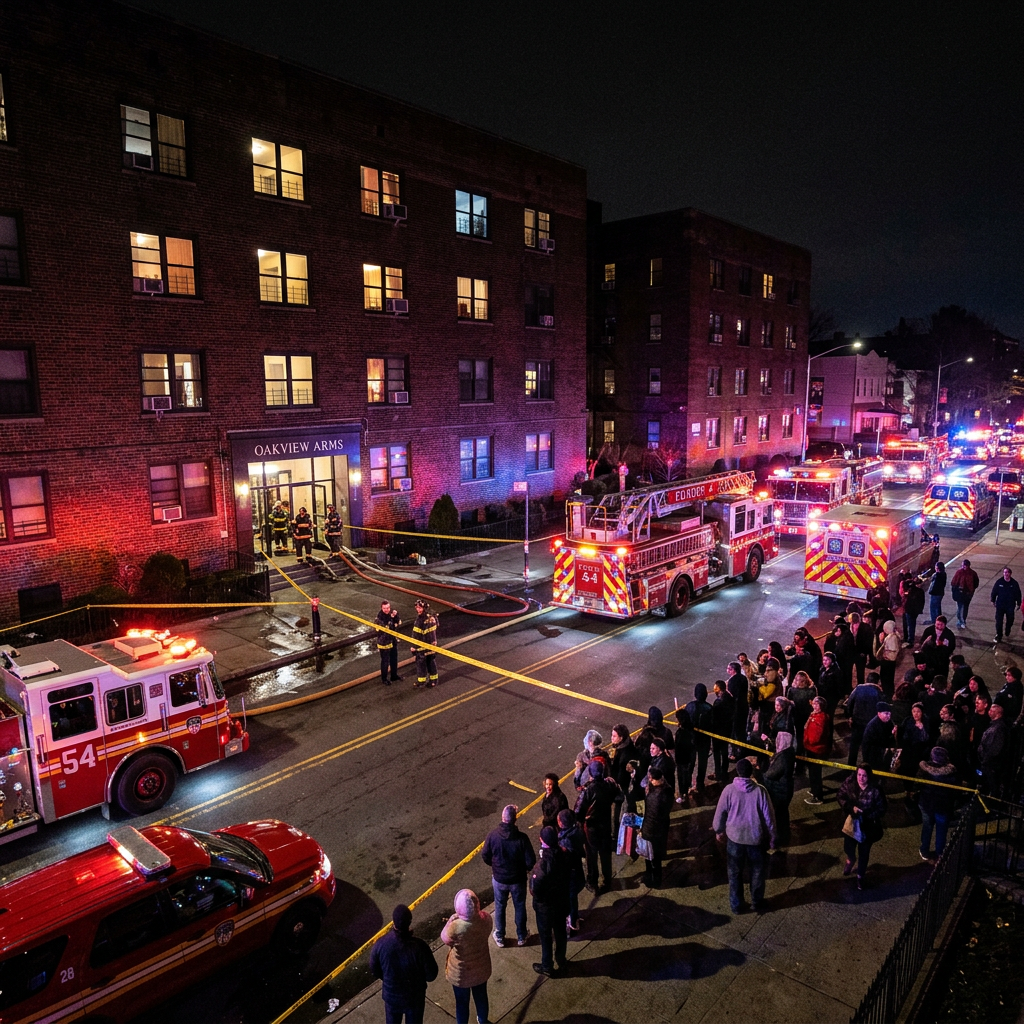
Three west-side Madison apartment units were evacuated today after investigators found high carbon monoxide levels inside the building. No landlord notice. No alarm that reached residents in time. Just emergency responders at the door. This is the part of apartment CO risk that renters never see coming.
Can a Landlord Be Sued for Carbon Monoxide Poisoning? What Renters Need to Know
A Regina family is suing after their 11-year-old died from CO in an apartment. A Colorado attorney says tight rental markets let unsafe conditions go unchecked. Across the U.S. and Canada, landlord liability for CO poisoning is becoming a growing area of litigation — here's what it means for renters.
When Carbon Monoxide Looks Like the Flu: How CO Poisoning Gets Misdiagnosed
Headache, nausea, fatigue, dizziness — the early symptoms of carbon monoxide poisoning are clinically identical to influenza. Published studies confirm that CO exposure is regularly misdiagnosed in emergency rooms. Here's how to tell the difference before it's too late.
The Best Carbon Monoxide Detectors With No Subscription Fee (2026)
Nest Protect, Ring Alarm, and similar smart-home CO detectors require monthly cloud subscriptions that can cost $300–$600 over five years. Here's a complete breakdown of subscription costs across top brands — and the detectors that don't charge a cent beyond the sticker price.
How Many Carbon Monoxide Detectors Do I Need? (NFPA Answer by Home Size)
NFPA 720 specifies exactly how many CO detectors every US home needs — and most households have fewer than required. Here's the answer by floor count, bedroom count, and home type, plus documented cases where a single detector placed in the wrong location failed to prevent tragedy.
Carbon Monoxide Detector for Garage: What to Get and Where to Put It
A car idling in a closed 2-car garage can reach 1,500 PPM of carbon monoxide within 2 minutes — 21 times the OSHA immediately dangerous to life level. Here's why garages need dedicated CO detection, what type of detector to use, and the one placement mistake that makes most garage detectors useless.
10 Years of CO Research: What Dr. Blaine Shilling Found That Changed How We Build Detectors
Carbon monoxide researcher Dr. Blaine Shilling spent a decade studying how CO affects the human body at sub-alarm levels — the exposures that never trigger a standard detector but quietly accumulate over days. His findings directly shaped AirShield's approach to real-time CO monitoring.
97% of Firefighters Said This Makes Travel Safer — The AirShield Survey
AirShield surveyed professional firefighters on portable CO detector use during travel. 97% said traveling with a portable CO detector is safer than traveling without one. Here's what professional first responders know about carbon monoxide that most travelers don't.
Why AirShield Detects CO 50x Faster Than Standard Detectors
A standard UL 2034 CO alarm is required to wait up to 240 minutes before sounding at 70 PPM. AirShield's OLED display shows you the live PPM reading within 5 seconds of CO entering the sensor. Here's the technical reason for that gap — and why it matters for your safety.
How AirShield Is Built: Splash-Proof Screen, Eco-Friendly Design, and Why It Never False Alarms
Three things that separate AirShield from the typical plug-in CO detector: a bio splash-resistant OLED screen that survives real-world humidity and cleaning, a design built around environmental responsibility, and a sensor that has never triggered a false alarm in the life of a properly installed unit.
Carbon Monoxide Detector for a Vacation Home, Cabin, or Second Property
Vacation homes carry higher CO risk than primary residences — and most guests have no way to verify the detector works. Here is what every vacation property owner needs to know.
Hardwired vs Battery vs Plug-In Carbon Monoxide Detectors: Which Does Your Home Need?
New construction codes often require hardwired CO detectors. But hardwired is not necessarily safer — and in many homes, a plug-in with a live display is the better choice.
How to Test a Carbon Monoxide Detector the Right Way (the Test Button Is Not Enough)
Pressing the test button only confirms the alarm works — not that the CO sensor is functional. Here is how to actually verify your detector is sensing carbon monoxide.
Carbon Monoxide From a Fireplace: Wood, Gas, and Pellet Stove Risks Explained
Wood-burning fireplaces, unvented gas logs, and pellet stoves all produce carbon monoxide. Here is what drives the risk and where to place your detector.
Carbon Monoxide Poisoning in Pets: Symptoms in Dogs, Cats, and Birds
Pets absorb carbon monoxide faster than humans and show symptoms earlier. Birds can lose consciousness within minutes. Here is what to watch for and what to do.
Smart Carbon Monoxide Detector vs Regular: Do You Actually Need WiFi and an App?
Smart CO detectors cost 3-5x more and add app connectivity. But they still alarm at the same threshold — and most do not show your real-time CO level. Here is what you actually need.