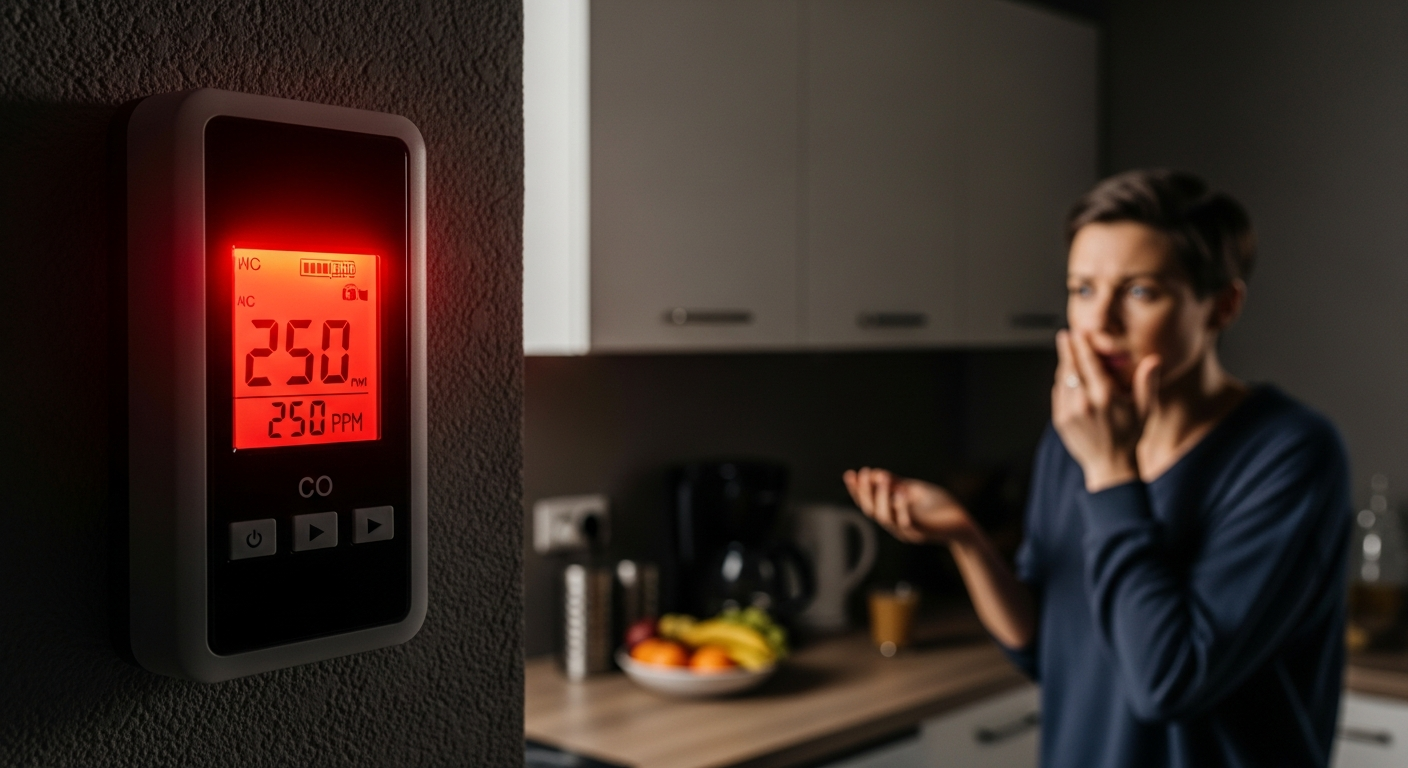
Your CO detector goes off. You don't smell anything unusual, nobody feels sick, and everything seems fine. Is it a false alarm? Possibly — but you need to rule out actual CO before you assume that. Here's what causes genuine false CO alarms, what causes real ones that feel like false alarms, and how to tell the difference.
What Causes True False Alarms
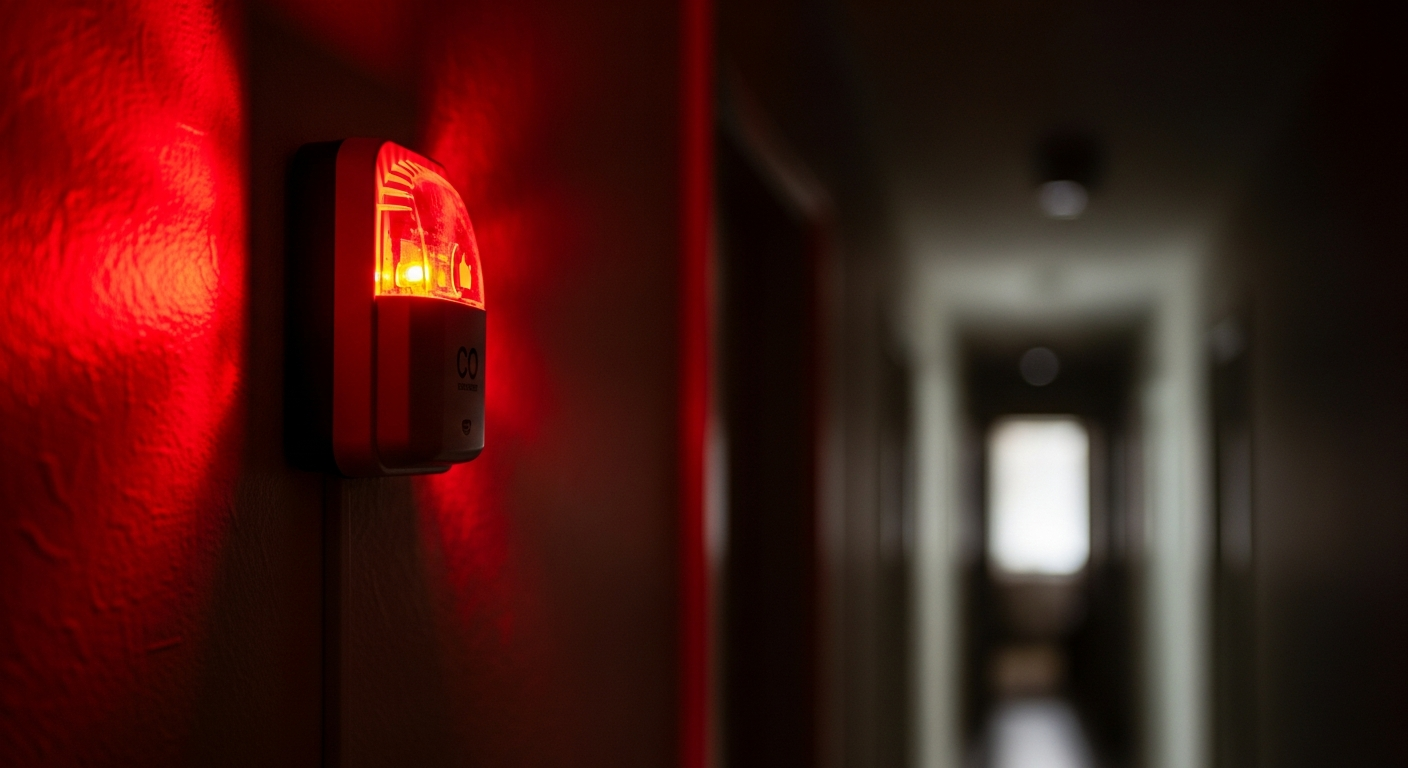
A CO detector can alarm without dangerous CO present under specific conditions:
- Low battery — a weak battery causes voltage instability that some detectors interpret as a sensor signal; this often produces a chirp rather than a full alarm
- High humidity or steam — steam from cooking or showers can temporarily affect some sensor types, particularly older metal oxide semiconductor sensors
- Certain chemicals — solvents, paint fumes, cleaning sprays, and hydrogen from car batteries can trigger false readings on some sensor technologies
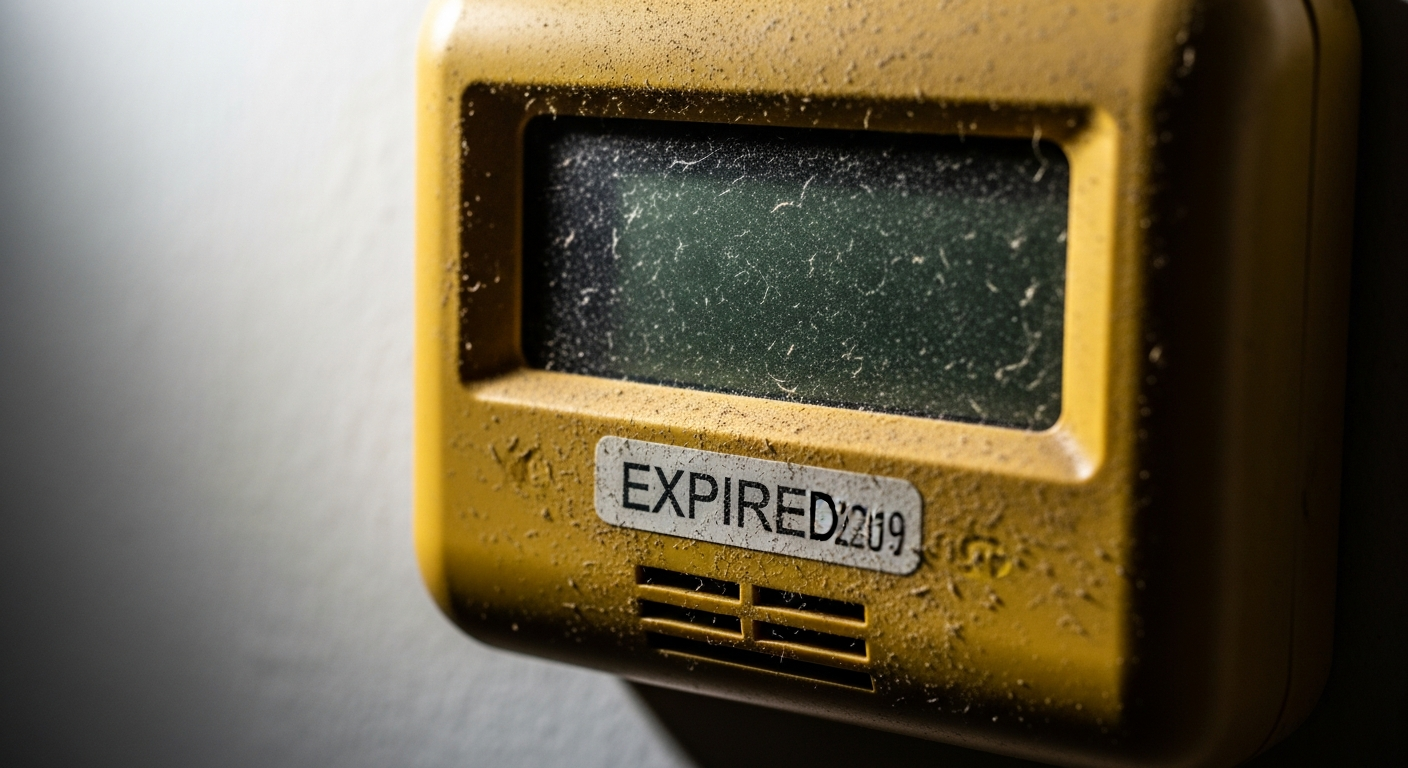
- End of sensor life — a degrading sensor may give erratic readings as it fails, including false positives
- Detector placed too close to appliances — CO detectors near stoves or furnace returns may pick up momentary exhaust spikes during appliance startup
What Feels Like a False Alarm but Isn't
Many real CO events are initially dismissed as false alarms because nobody feels sick and no obvious source is visible. CO at 50–70 ppm may not produce obvious symptoms for hours. If your detector alarms and you don't have a live PPM display, you have no way to confirm the reading independently.
How to Tell the Difference

- Get everyone out of the house immediately when the alarm sounds
- Call 911 — firefighters carry professional CO meters and will check the air for free
- Do not re-enter until the source is identified and resolved
- If you have a detector with a live PPM display: check the reading. If it shows 0, the alarm may have been a momentary spike from cooking or a humidity event. If it shows any sustained reading above 9 ppm, take it seriously.
- Check whether the detector is near its end of sensor life — if it's 5+ years old, a false alarm may indicate the sensor is failing
Reducing Genuine False Alarms
- Place the detector at breathing height (5 feet), away from the kitchen and bathrooms
- Replace the unit if it's near or past its sensor expiration date
- Use a detector with an electrochemical sensor — these are significantly more selective and resist humidity and chemical interference better than semiconductor sensors
- A live PPM display eliminates ambiguity: if the number reads 0, there's no CO; if it reads 45, there is
AirShield uses an electrochemical sensor that resists the common triggers of false alarms, and the OLED display shows you the actual ppm reading — so you know immediately whether to evacuate or ventilate.
Protect Your Home with AirShield™
The only portable CO detector that shows you real-time PPM readings on a live OLED display. Electrochemical sensor, multi-gas detection, UL listed.
Check Availability →

Loading comments...