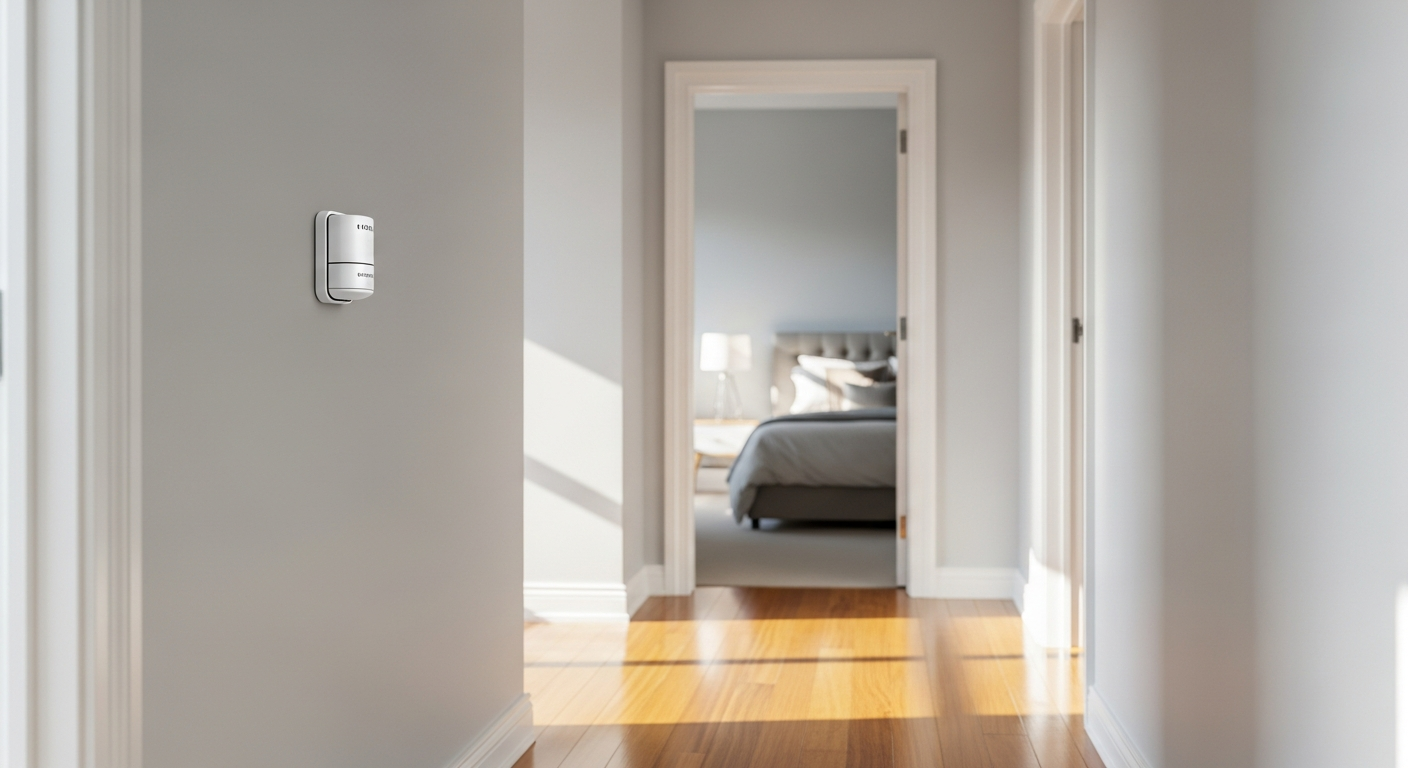
Where you put a carbon monoxide detector matters almost as much as having one at all. A detector installed in the wrong location — too high, too low, too close to a vent, or in the wrong room — can respond slowly, alarm late, or generate false readings. This guide tells you exactly where to put detectors in every room of your home.
The Science Behind CO Detector Placement
Carbon monoxide has a molecular weight of 28 g/mol — nearly identical to air at 29 g/mol. Unlike smoke, which rises, or propane, which sinks, CO distributes relatively evenly throughout a space. This means CO concentration at any height is roughly the same, which simplifies placement decisions. The primary rule is simple: place detectors at breathing height so the alarm triggers before CO reaches harmful concentrations at the level you breathe.
- Optimal height: 5 feet from the floor — typical breathing height for a seated adult
- Acceptable range: anywhere from 1 foot above the floor to ceiling level
- Never place a detector within 15 feet of fuel-burning appliances — you'll get false readings from normal combustion exhaust
- Never place detectors in dead air corners or directly above vents where airflow dilutes readings
Bedroom: Your Highest Priority Location
CO poisoning is most deadly during sleep because you can't respond to early symptoms — lightheadedness, confusion, drowsiness — that might otherwise wake you. Every sleeping area in your home should have a CO detector within 10 feet of where people sleep, ideally on the wall adjacent to the bed or on the nightstand if using a portable plug-in unit.
- Primary bedroom: required — this is the most important location
- Guest bedrooms: strongly recommended, especially if the room has a gas appliance or is adjacent to a garage
- Children's rooms: required — children are more vulnerable to CO than adults
- Keep the detector on the same level as the bed, not on the floor
Living Room and Common Areas
Living areas should have a detector on each floor of your home, positioned at breathing height on a central wall away from exterior doors and windows. A detector near a return air vent or in a high-traffic hallway will capture CO from multiple rooms as air circulates.
Basement
Basements deserve a dedicated detector, separate from any upper floor units. Basements frequently house furnaces, water heaters, and other fuel-burning equipment. CO from faulty equipment in the basement can rise to upper floors slowly — by the time a detector on the first floor alarms, dangerous concentrations may already exist at the basement level.
- Install a detector within 10 feet of the furnace, water heater, or any other combustion appliance
- Keep it at breathing height (5 ft), not on the ceiling
- Do not place it directly above the appliance — this creates false readings from normal exhaust
Attached Garage
An attached garage is one of the most significant CO risk points in a home. Vehicle exhaust contains extremely high CO concentrations, and the shared wall between a garage and living space allows CO to migrate indoors. Install a detector on the interior wall between the garage and the house — not inside the garage, where vehicle exhaust will trigger constant false alarms. The goal is to catch CO that has migrated into the living space.
Kitchen
Kitchens are tricky. Gas stoves produce CO during normal operation, and placing a detector too close to the stove will generate false alarms from cooking combustion. Keep CO detectors at least 15 feet away from the stove. A detector in the adjacent hallway or at the entrance to the kitchen strikes the right balance — close enough to detect a real leak, far enough to avoid nuisance alarms.
How Many Detectors Do You Need?
The NFPA recommends one detector on each level of your home plus one in or near each sleeping area. For a typical two-story home with a basement:
- Basement level: 1 detector near combustion appliances
- Main floor: 1 central detector in a hallway or living area
- Upstairs: 1 in the hallway near bedrooms, plus individual bedroom detectors if sleeping areas are spread out
- Minimum for a one-story home: 2 detectors (one sleeping area, one main living area)
Where NOT to Place a CO Detector
- Directly above fuel-burning appliances — normal combustion exhaust will cause false alarms
- Inside garages — vehicle exhaust will constantly trigger the detector
- Near exterior doors and windows — outside air dilutes readings
- In attics or crawl spaces — these aren't living spaces and temperatures cause sensor damage
- In bathrooms — humidity damages sensors
- Within 3 feet of an HVAC supply vent — airflow dilutes CO concentration
The AirShield detector's live PPM display is especially useful for verifying placement: install it, wait 10 minutes, and confirm the reading is near 0. If you see elevated readings at rest with no appliances running, your placement may be picking up interference — move it and check again. For a complete room-by-room breakdown with exact height requirements per UL 2034 and NFPA 720, use the CO Detector Placement Guide.
Protect Your Home with AirShield™
The only portable CO detector that shows you real-time PPM readings on a live OLED display. Electrochemical sensor, multi-gas detection, UL listed.
Check Availability →
Loading comments...