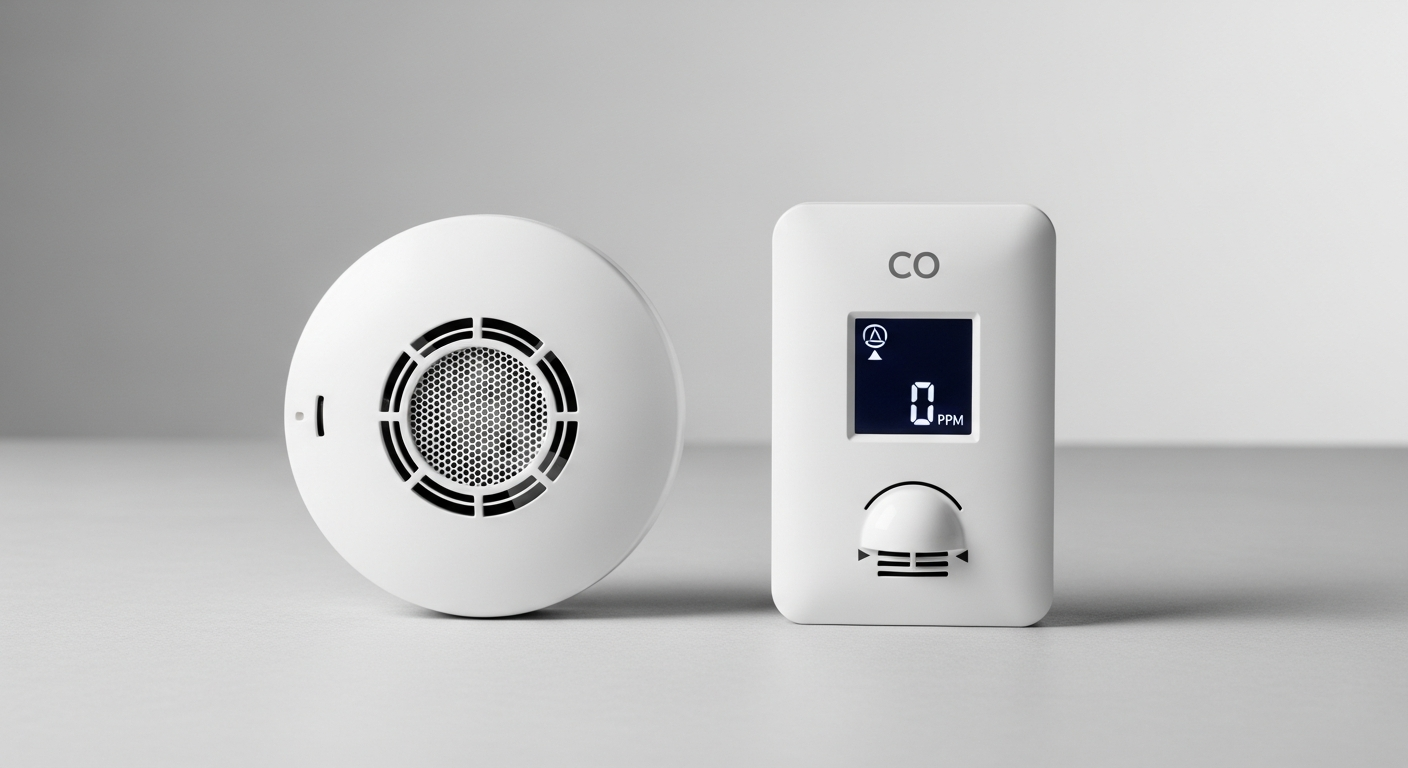
Walk through most hardware stores and you'll find smoke detectors, CO detectors, and combination units all on the same shelf. They look nearly identical. Many homeowners assume one device covers both risks — or that a smoke detector will catch carbon monoxide. Neither assumption is correct.
What a Smoke Detector Does
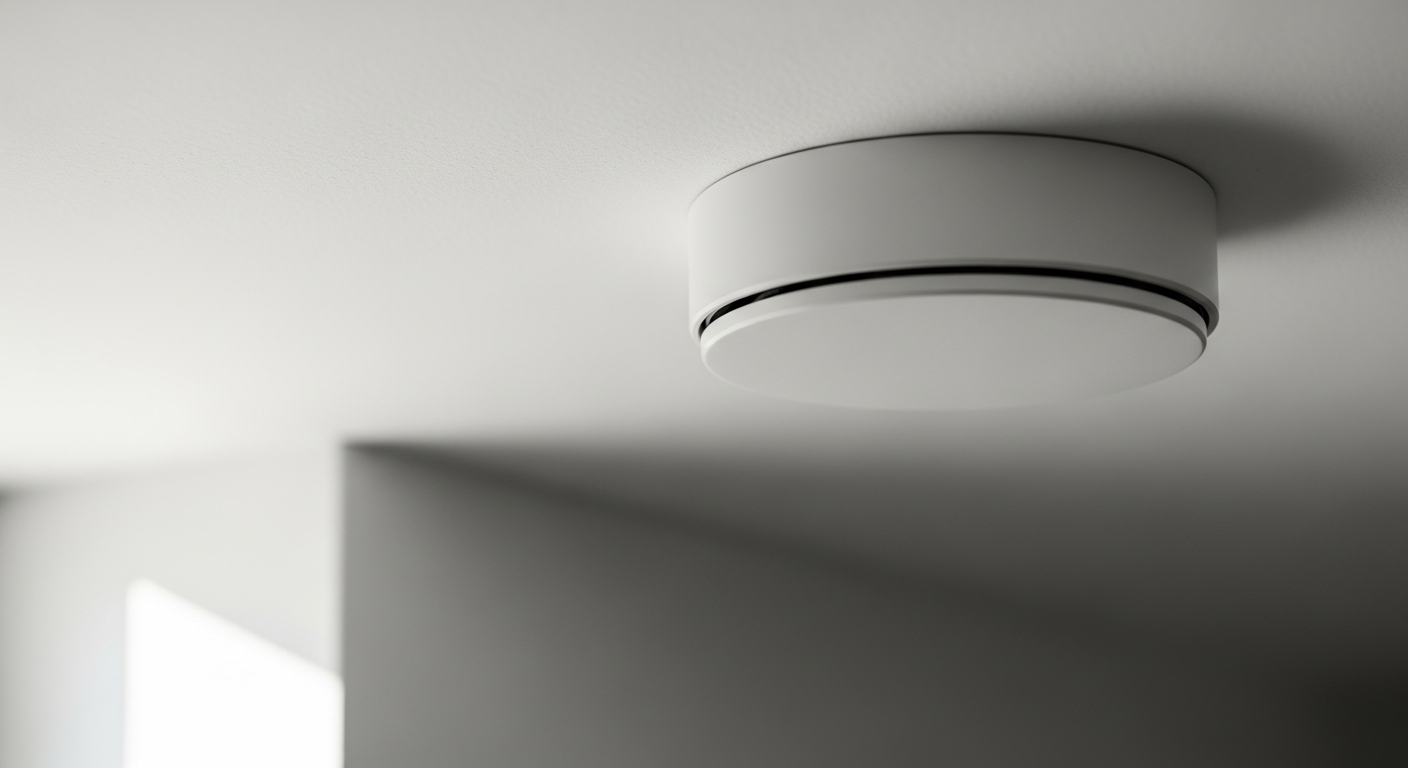
Smoke detectors detect airborne particles produced by combustion — the visible or invisible byproducts of fire. They use one of two sensor types:
- Ionization sensors: detect fast-flaming fires by sensing ions produced by combustion particles
- Photoelectric sensors: detect slow, smoldering fires by detecting light scatter from smoke particles
- Combination units: use both technologies
Smoke detectors do not detect carbon monoxide, natural gas, or propane. They detect the physical particles of smoke, not the chemical composition of the air.
What a CO Detector Does
CO detectors detect carbon monoxide gas molecules in the air using an electrochemical, biomimetic, or metal oxide semiconductor sensor. They respond to the chemical presence of CO — not to smoke particles, heat, or any other combustion byproduct.
- CO detectors will not alarm from a fire unless CO is also present
- CO detectors will not detect natural gas or propane (different sensors required)
- CO detectors measure concentration in parts per million (ppm)
- A good CO detector displays the live ppm reading; a basic one only alarms at a threshold
Combination Units: Convenient but Limited
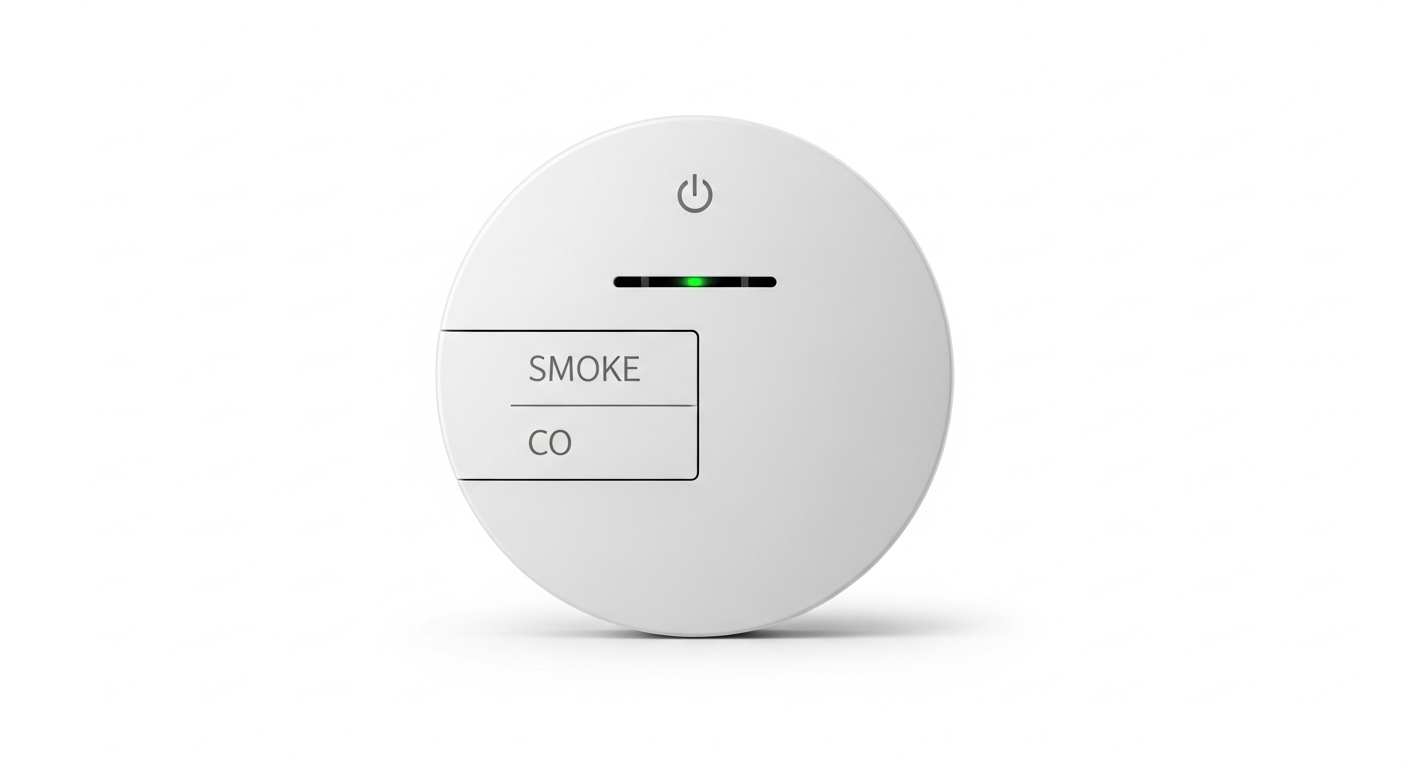
Combination smoke/CO detectors put both sensor types in one unit. This is convenient but comes with trade-offs:
- When the alarm sounds, you may not know which hazard triggered it
- CO sensors in combo units are often basic threshold-only — no live PPM display
- Sensor lifespans differ: smoke detector components may outlast the CO sensor, or vice versa
- Combo units typically don't detect natural gas or propane
What You Actually Need
- A smoke detector on every level of the home and inside each bedroom
- A CO detector outside each sleeping area — separate from the smoke detector
- If you have gas appliances: a multi-gas detector that also covers methane and propane
- Preferably a CO detector with a live PPM display so you know what the air contains before an alarm fires
AirShield detects CO, methane, and propane simultaneously with live PPM readings for each — covering what a standard smoke/CO combo unit misses entirely.
Protect Your Home with AirShield™
The only portable CO detector that shows you real-time PPM readings on a live OLED display. Electrochemical sensor, multi-gas detection, UL listed.
Check Availability →
Loading comments...