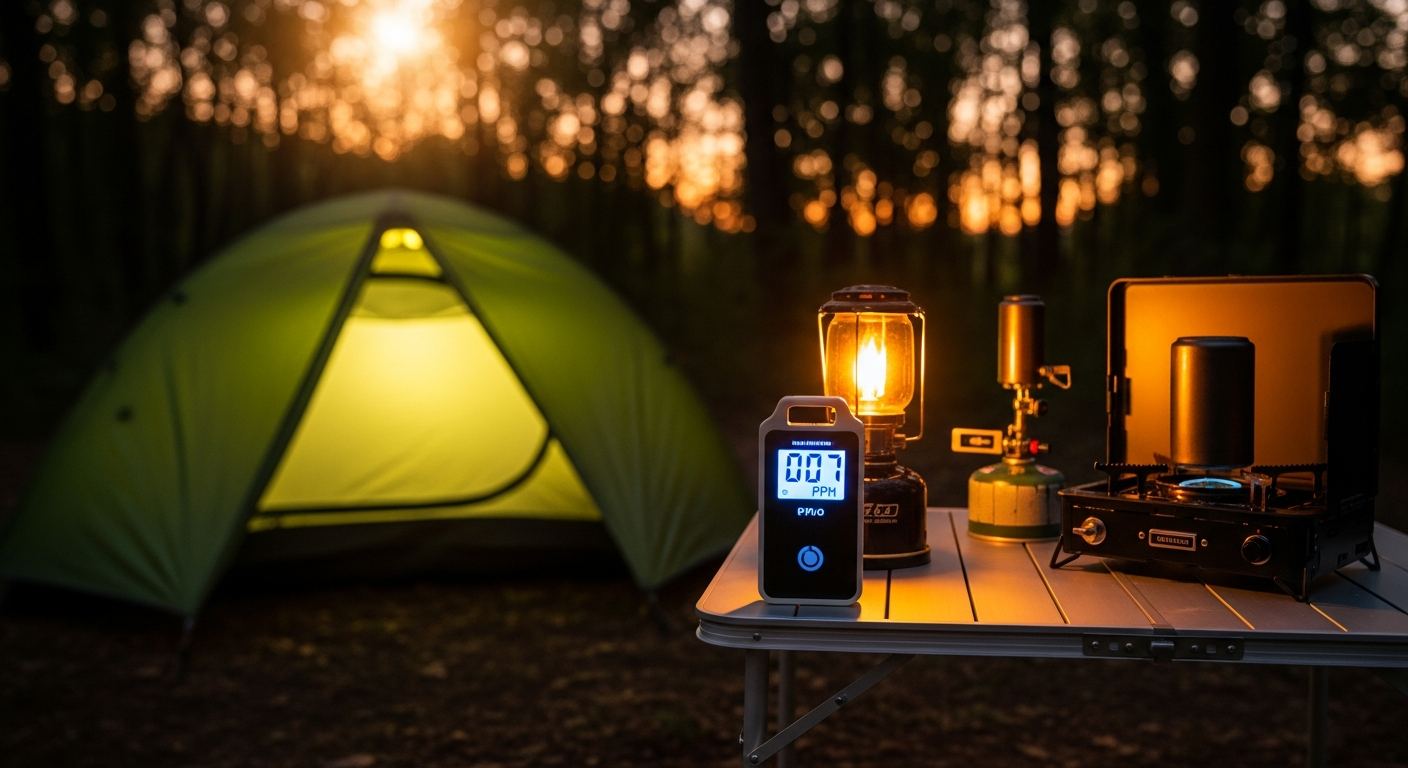
Every June, campsite reservations fill across the country — and so do emergency departments. Carbon monoxide, the colorless odorless gas with no taste, no smell, and no warning signs, does not pause for summer. The Consumer Product Safety Commission reports that more than 150 Americans die each year from carbon monoxide generated by portable sources: generators, camp stoves, propane heaters, and charcoal grills. Campers are disproportionately represented in that number. In February 2025, two men were found dead inside a sealed ice fishing tent in Alberta — a propane heater inside an enclosed space had filled the tent with CO while they slept. The enclosed space is the variable that turns a familiar piece of camp equipment into a lethal one. This guide covers why camping creates elevated CO risk, the sources responsible for most deaths, why a home alarm is not enough in a tent, and what to look for in a portable carbon monoxide detector before you pack one. Generator Carbon Monoxide: Why It Kills and How to Stay Safe
Why Carbon Monoxide Risk Is Higher at a Campsite Than at Home
At home, CO builds up slowly because houses have large air volumes, building envelope gaps, and fixed CO alarms installed to code. Tents and camping trailers are the opposite on every dimension. A standard 4-person camping tent holds 80-120 cubic feet of air. A compact trailer holds 250-400 cubic feet. Compare that to a 250-square-foot bedroom with an 8-foot ceiling, which holds 2,000 cubic feet. The smaller the space, the faster any CO source reaches dangerous concentrations. CO from a single propane camping stove can reach the NIOSH ceiling limit of 200 PPM inside a standard 4-person tent in under 10 minutes with the doors and windows sealed. A South Korean study on camping-related CO poisoning found a prehospital fatality rate of 39.5% — meaning nearly 4 in 10 victims were found dead on scene — because concentrations in small enclosures rose to lethal levels before anyone could respond. Many campers compound the risk by zipping the tent against rain or cold, the same behavior that traps CO inside. Low-Level Carbon Monoxide Exposure: The Silent Risk Your Alarm Never Triggers Takeaway: tent volume is the variable that makes camping CO risk categorically different from home risk — an enclosure that feels cozy is also an enclosure that fills with CO faster than most people realize.
The Three Sources Responsible for Most Camping CO Deaths
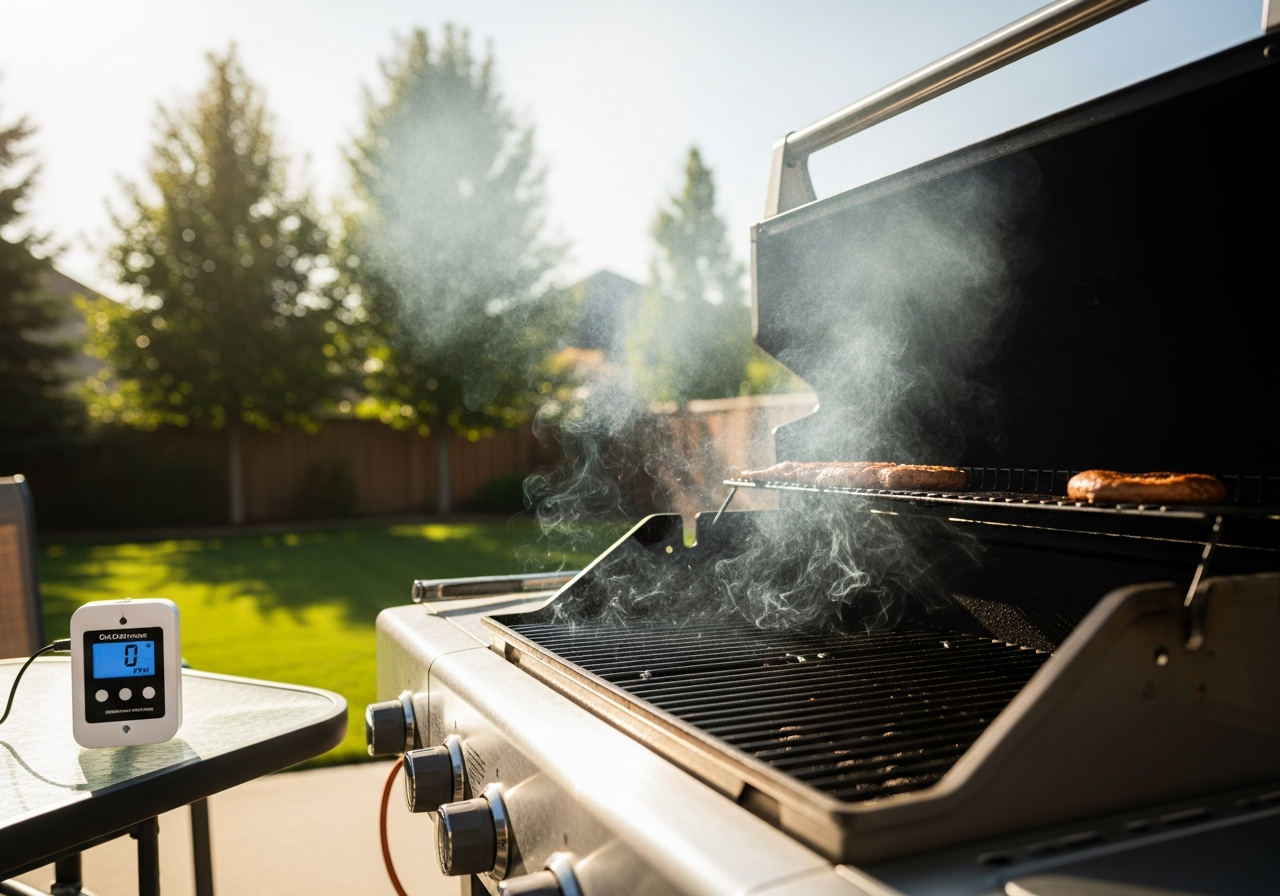
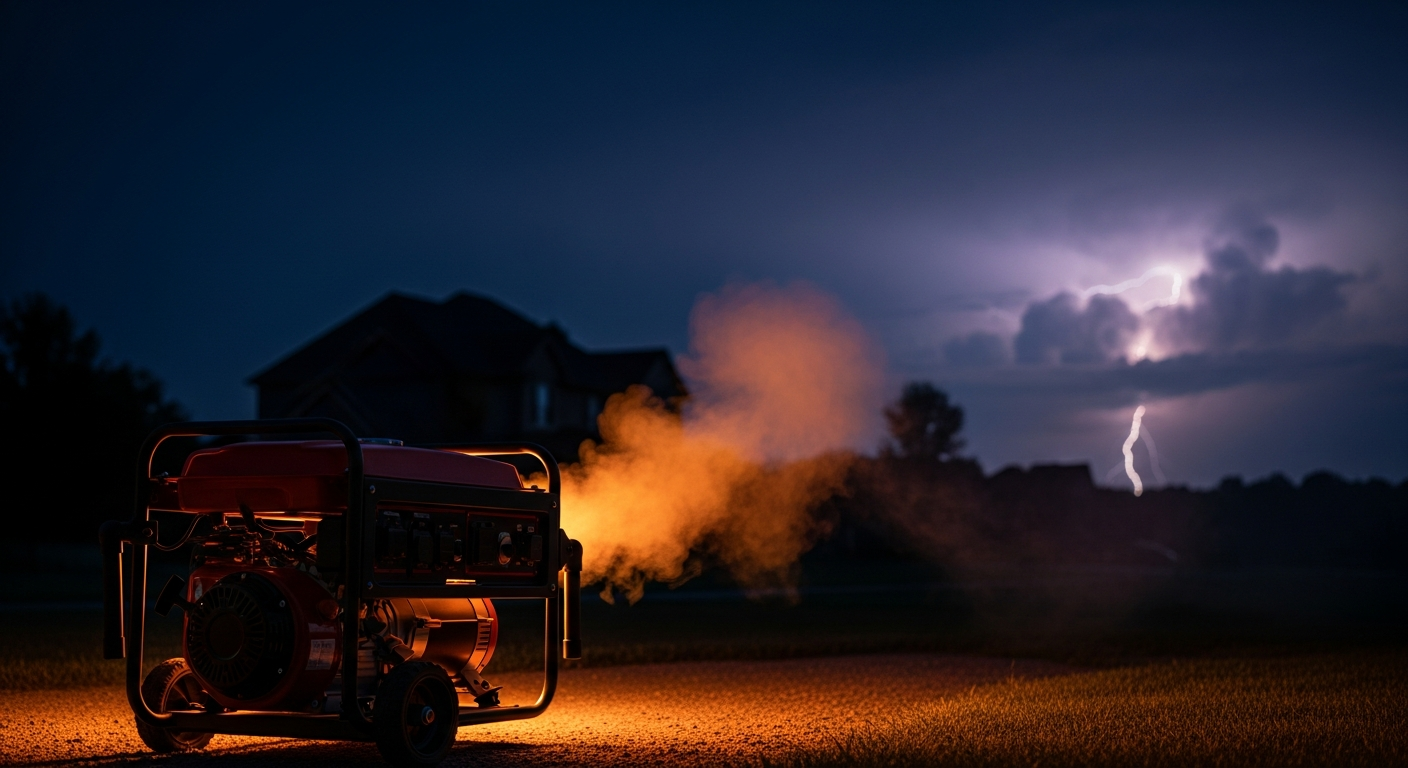
The pattern across reported camping CO deaths is consistent — three source categories account for the overwhelming majority of incidents. Propane and gas heaters brought inside tents or awnings are the leading cause. Camping heaters are designed for ventilated spaces, not sealed enclosures. Even a correctly functioning heater produces CO; in a zipped tent, that CO has nowhere to go. The second source is charcoal grills and disposable barbecue units brought into or near shelters, often to provide warmth after cooking. An important and widely unknown fact: a charcoal grill continues to emit CO for hours after the visible flame is out. The briquettes produce lethal concentrations while appearing completely cold and safe. In a study of camping CO poisoning deaths, 83.4% of victims were unaware that charcoal could produce carbon monoxide — a piece of knowledge that would have saved their lives. The third source is portable generators placed too close to tent openings or trailers, particularly when wind carries exhaust toward sleeping areas. CO from a generator 15-20 feet away, with the exhaust pointed toward the tent entrance, can accumulate inside even in open-air conditions. Carbon Monoxide in Summer: 5 Hidden Risks This Season Takeaway: propane heaters, charcoal after cooking, and nearby generators are all common campsite equipment — and all three are capable of filling an enclosed sleeping space with lethal CO.
Why Your Home CO Alarm Won't Protect You in a Tent
Standard residential CO alarms — including plug-in and battery units from major brands — are calibrated to meet UL 2034, the residential safety standard. UL 2034 is calibrated for home environments where air volumes are large and CO rises slowly. It requires that the alarm not trigger below 30 PPM and allows 60-240 minutes to alarm at 70 PPM. In a 2,000-square-foot home, this gives occupants time to evacuate safely. In an 80-cubic-foot tent where CO can reach dangerous concentrations in under 10 minutes, a UL 2034 alarm may not trigger until it is too late. A detector that shows 45 PPM while you are still awake and responsive is actionable information; a beep-only alarm calibrated to trigger at 70 PPM in a standard home may not alarm in time in a tent. A true portable carbon monoxide detector for camping shows live numeric PPM readings from the moment it powers on — not just an alarm when a threshold is crossed. The number tells you when to act, when to ventilate, and when to leave, without waiting for a threshold to be crossed. Digital Carbon Monoxide Detector: Why the Number on the Screen Changes Everything Takeaway: the calibration window that protects you in a house is designed for house-sized air volumes — it does not translate to a tent or small camping shelter.
What to Look for in a Portable Carbon Monoxide Detector for Camping
Four specifications determine whether a camping CO detector will actually protect you. First: sensor type. Electrochemical sensors are the only type accurate enough to detect the low-level concentrations that matter in a small, partially sealed space. Metal oxide sensors are common and cheaper, but they are not reliably accurate below approximately 100 PPM — the concentrations where camping situations become dangerous well before a traditional alarm activates. Second: live numeric PPM display. The number tells you when to act even before any alarm threshold is crossed. Forty-five PPM on a live display in a tent is a reason to unzip the door immediately; a green LED on an indicator-only unit gives you nothing. Third: compact plug-in or battery format that travels easily. A portable detector is useless if it's too inconvenient to pack — it needs to be the kind of thing that goes in the bag automatically, every trip. A portable CO detector that covers hotels, Airbnbs, and any unfamiliar sleeping space doubles as the most useful single safety item you can carry while traveling. Portable Carbon Monoxide Detector for Travel: What to Look For in 2025 Takeaway: electrochemical sensor, live PPM display, and compact form factor are the three non-negotiable criteria for a camping CO detector.
How to Position a Portable CO Detector at a Campsite
Placement determines what your detector catches and how quickly it responds. CO distributes relatively evenly in a small, still enclosed space — so in a tent, the relevant variable is proximity to sleeping areas, not elevation. Place the detector within 10 feet of where you sleep, at approximately shoulder height when lying down, within 6-10 feet of any fuel-burning appliance or within 15-20 feet of a nearby generator. Never place a detector on the floor of a tent where sleeping bags or gear may cover it. If sleeping in a trailer or RV, position the detector in the sleeping area rather than near the propane appliance zone — the reading where you breathe at night is what matters. Running a single propane burner for 5 minutes inside a trailer with the windows closed is enough to raise CO to detectable levels — knowing that in real time changes the decision you make about ventilation. Portable Carbon Monoxide Detector for RV: What Every Owner Needs Takeaway: the detector belongs in your sleeping zone, at sleeping height, close enough to the area you occupy at night to give you real-time information when it counts.
Pre-Trip Carbon Monoxide Safety Checklist for Campers
Run through this before every camping trip:
- Never operate propane heaters, camp stoves, or lanterns inside a tent, awning, or sealed shelter — even briefly.
- Never bring a charcoal grill inside any enclosed space; it emits CO for hours after cooking, even when it looks and feels cold.
- Keep generators at least 20 feet from tent openings with exhaust pointed away from any sleeping area.
- Place your portable CO detector within 10 feet of your sleeping area, at shoulder height while lying down — not on the floor.
- Test your detector before each trip by pressing the test button and confirming the display responds.
- Check the sensor's manufacture date — electrochemical sensors lose low-level accuracy after 5-7 years.
- If the detector reads above 35 PPM inside your shelter, leave immediately and ventilate before re-entering.
- Pack one portable CO detector per sleeping enclosure — if the tent and the trailer are both in use, each one needs coverage.
Camping CO risk is real, consistent across incident reports, and entirely preventable. The conditions that make it dangerous — small enclosed spaces, fuel-burning equipment, people sleeping — are exactly the conditions a good portable carbon monoxide detector is designed for. The AirShield™ 3-in-1 Portable Carbon Monoxide Detector travels with you, shows live PPM readings from the moment you power it on, and gives you the information to act before any alarm threshold is crossed. Whether the trip is a tent weekend or an extended RV journey, it goes in the bag with the sleeping bag.
Frequently Asked Questions
Sources & References
- CPSC: Carbon Monoxide Dangers from Portable Generators and Other Consumer Products — CPSC data on portable CO source fatalities — 150+ deaths per year in the U.S.
- NIOSH: Carbon Monoxide Occupational Exposure Limits — NIOSH ceiling limit of 200 PPM for occupational CO exposure
- Government of Canada: Carbon Monoxide and Camping Safety — Health Canada guidance on CO risks in enclosed camping environments
- Korean Study on Camping CO Poisoning Fatality Rates — South Korean epidemiological study: 39.5% prehospital fatality rate in camping CO incidents; 83.4% of victims unaware charcoal produces CO
Protect Your Home with AirShield™
The only portable CO detector that shows you real-time PPM readings on a live OLED display. Electrochemical sensor, multi-gas detection, UL listed.
Check Availability →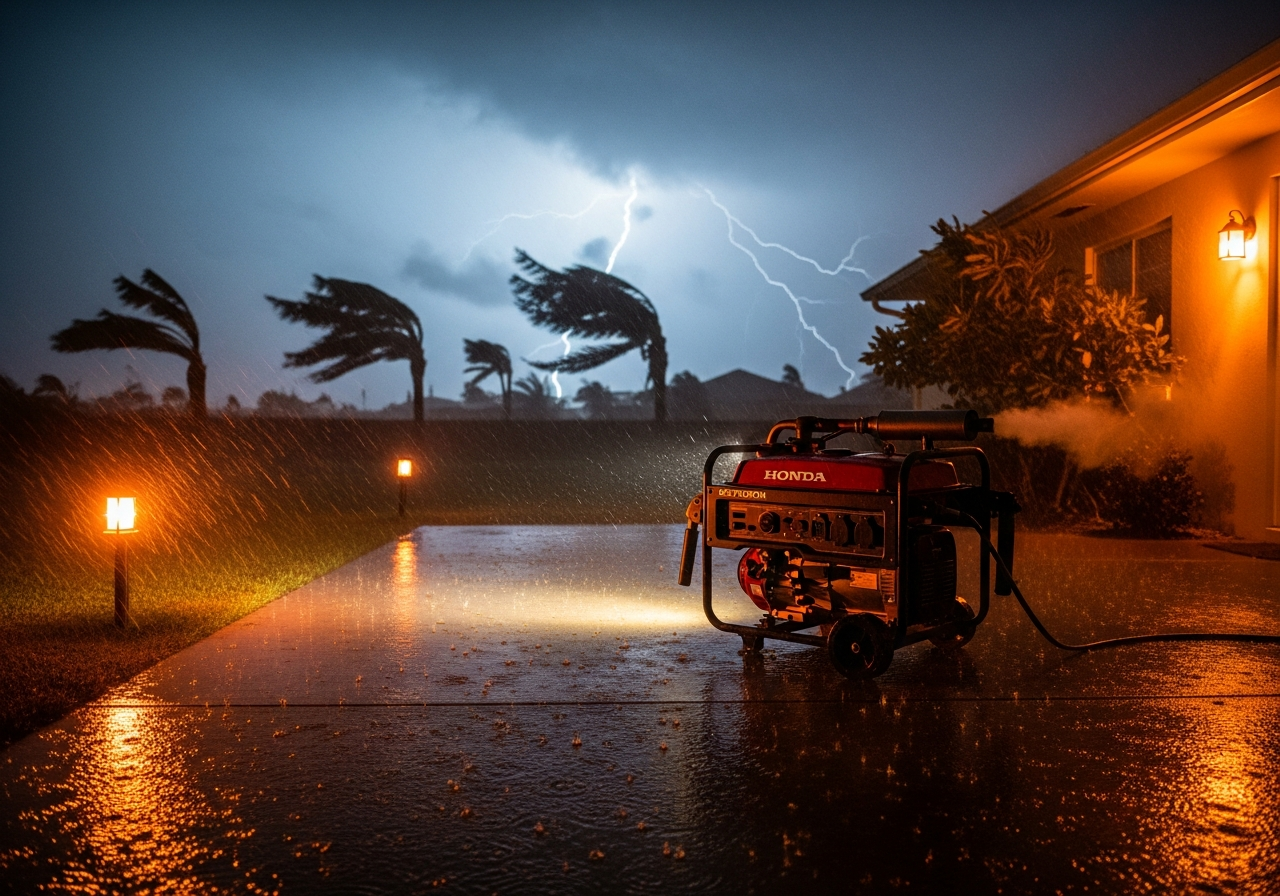
Loading comments...