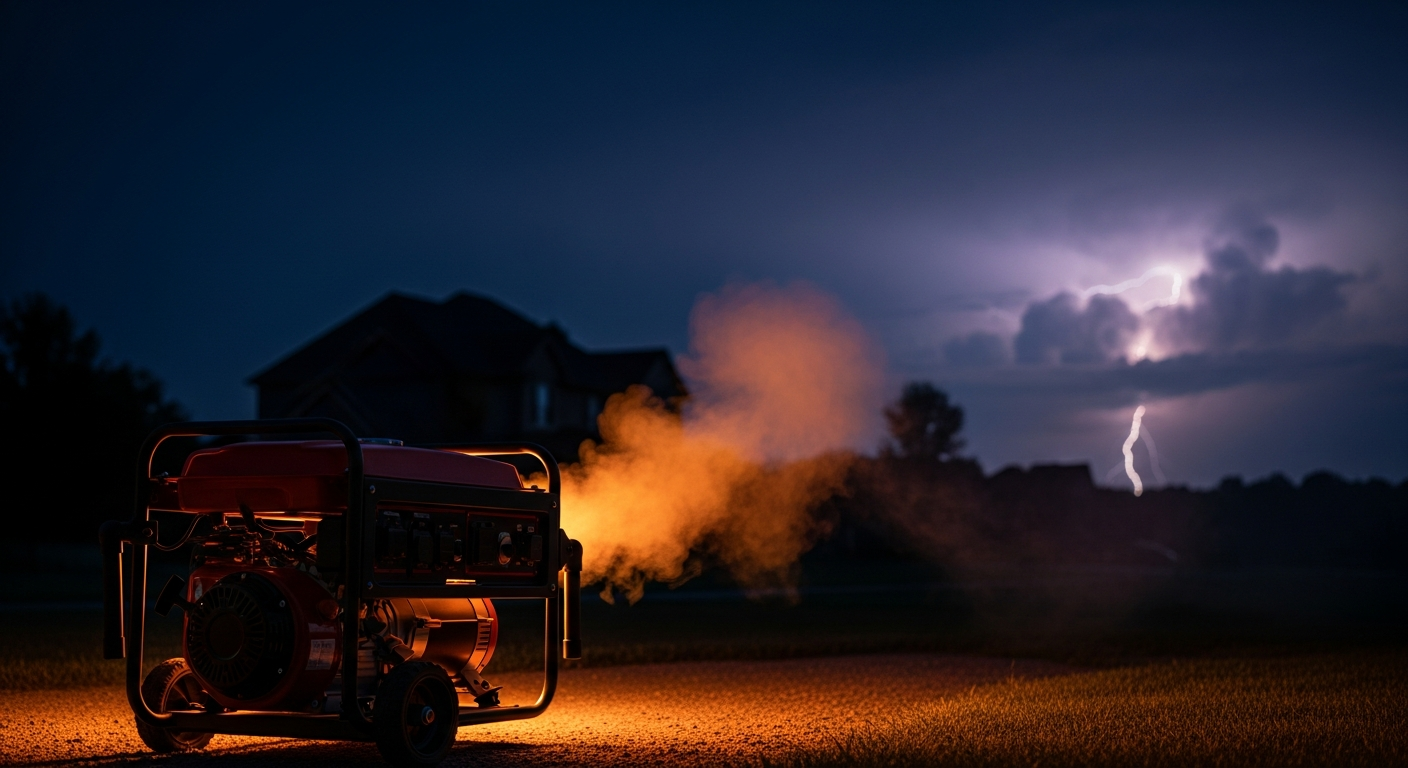
The 2021 Texas winter storm left millions without power for days. In the weeks that followed, generator carbon monoxide poisoning sent hundreds of people to emergency rooms and killed more than 80 across the state — more deaths than the storm itself caused directly. The same pattern repeats every hurricane season, every ice storm, every extended power outage: people who survived the disaster were killed by the gas produced by their solution to it. Generator carbon monoxide is not a niche risk. The CDC attributes roughly 400 non-fire CO deaths to portable generators each year — making them the single largest source of fatal CO poisoning in the United States. They produce approximately 100 times more carbon monoxide per hour than a car engine idling in an enclosed garage. And unlike furnaces or gas stoves, generators are often treated as outdoor electrical equipment, with no intuitive connection to exhaust and combustion. This article covers why generators produce so much CO, why distance rules are inadequate on their own, how quickly fatal concentrations develop, and what an evidence-based generator CO safety protocol actually looks like. The 6 Most Common Sources of Carbon Monoxide in Your Home
Why Generators Produce So Much Carbon Monoxide
Most people understand that running a car in a closed garage is dangerous. What they don't grasp is that a portable generator is substantially worse. A standard 5,000-watt generator emits between 50 and 100 grams of CO per hour — roughly 100 times more than a modern car at idle — and unlike automotive engines, generators have no catalytic converter to oxidize that exhaust before it leaves the stack. The fundamental issue is combustion engineering. Generator engines run at fixed, high RPMs regardless of electrical load, optimized for power output rather than clean combustion. Every gallon of gasoline burned with incomplete combustion produces significant CO — and at the speeds and temperatures typical of a portable generator, incomplete combustion is the norm. In field testing by the Consumer Product Safety Commission, a single portable generator running in an attached garage raised indoor living-space CO to 1,000 PPM within minutes — a level where loss of consciousness is possible within an hour. That's not a warning to file away. At 1,000 PPM you may already feel confused and unwell before you recognize the danger. Carbon Monoxide PPM Levels Explained: What's Safe, What's Dangerous Takeaway: the volume of CO a generator produces makes any indoor or semi-enclosed operation categorically dangerous — not merely inadvisable.
The 20-Foot Rule Is a Starting Point, Not a Guarantee
The CPSC recommends running generators at least 20 feet from any door, window, or vent. That guidance is worth following — but it's routinely misread as a threshold: if you're beyond 20 feet, you're safe. That's not how exhaust plumes work. CO concentration at any downwind point depends on wind speed, direction, exhaust volume, building geometry, and whether any openings face the generator. CPSC research found generators placed 25 feet from a home — with windows open on the generator side — produced indoor CO levels exceeding NIOSH occupational limits within 15 minutes of startup. The variables that matter beyond raw distance: exhaust direction matters as much as placement. Point the exhaust stack away from the structure entirely, not perpendicular to it. Prevailing wind should carry exhaust away from the building, not across it. Semi-enclosed spaces nearby — patios, carports, covered decks, breezeways — accumulate exhaust nearly as fast as enclosed rooms and should be treated as indoors. In practice, the only reliable combination is distance plus correct exhaust orientation plus a live CO reading inside the home confirming your placement is actually working. Where to Place a Carbon Monoxide Detector: A Room-by-Room Guide Takeaway: generator placement must account for wind direction, exhaust angle, and nearby enclosures — and should always be verified with real-time indoor monitoring.
How Fast Generator CO Becomes Lethal
The timeline of generator CO poisoning is faster than most people expect, and it's made worse by a biological trap: CO impairs the cognitive function you need to recognize and respond to poisoning before it produces obvious physical symptoms. At 400 PPM — a concentration a generator running in a garage with a partially open door can produce within 30 minutes — headache and dizziness begin within 1–2 hours. At 800 PPM, dizziness and convulsions within 45 minutes, death within 2–3 hours. At 1,600 PPM — achievable quickly in a closed garage — incapacitation within 20 minutes. A person at moderate CO exposure may feel mildly unwell and attribute it to the physical stress of managing a power outage. They may decide to push through. By the time they recognize something is seriously wrong, their ability to reason and self-rescue may already be gone. Post-incident investigation data from the CPSC regularly documents victims who placed generators dangerously despite being aware of the general warnings. This pattern isn't carelessness — it's the cognitive effect of early CO exposure. Carbon Monoxide Poisoning Symptoms: Signs & What to Do Takeaway: the window between 'feeling vaguely unwell' and 'unable to self-rescue' from generator CO can be under an hour — which is why detection before symptoms is the only reliable defense.
The Four Mistakes That Account for Most Generator Deaths
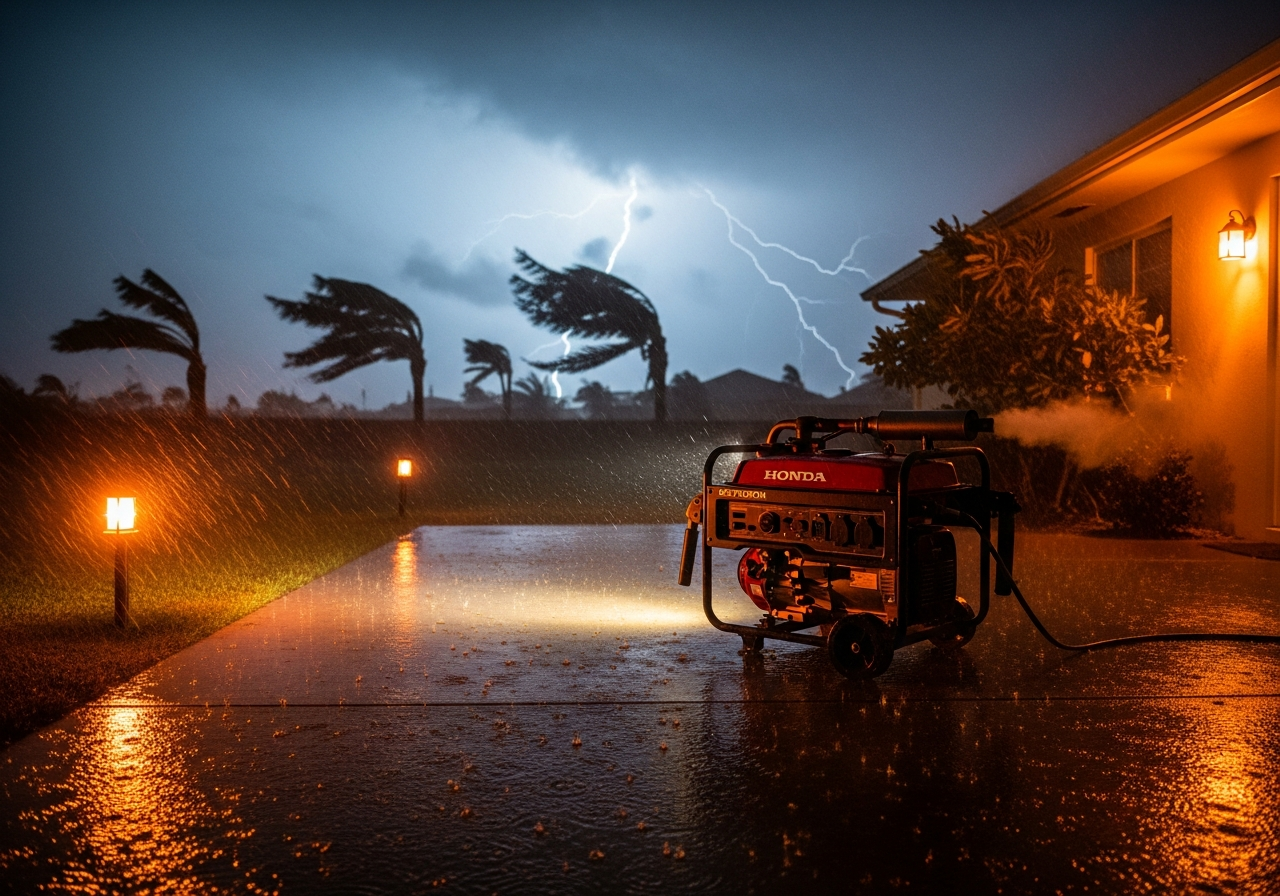
Post-incident analysis from the CPSC and CDC consistently identifies the same failure patterns. The first and most common: running a generator inside a garage with the door open, which feels like outdoor operation but is nearly as dangerous as a closed garage — CO seeps through interior door gaps, HVAC intakes, and wall penetrations into the connected living space. CPSC reviews found garages with open doors produced fatal indoor CO concentrations as quickly as garages with closed doors. The second: shelter-seeking during rain — moving the generator under an overhang, covered porch, or into a shed concentrates exhaust more than open ground and puts the unit adjacent to or structurally connected with occupied spaces. Third: overnight operation without monitoring. The CPSC data shows a disproportionate share of generator CO fatalities between midnight and 6 a.m. — victims asleep, unable to recognize symptoms, unable to self-rescue. Fourth: assuming a short run is safe. A 20-minute run to charge medical equipment or phones is long enough to raise indoor CO to dangerous levels if placement is wrong. Each of these mistakes is understandable in a high-stress power outage. None of them is recoverable once CO accumulates. Takeaway: no generator run is short enough or open enough to be assumed safe — the only reliable check is a live CO reading indoors.
Practical Application: Generator CO Safety Protocol
Run through this before the next storm — not during it when decisions are harder:
- Before buying: prioritize generators with a built-in CO safety shutoff — CPSC-compliant models cut power automatically when CO at the unit exceeds a threshold
- Placement: minimum 20 feet from any door, window, or vent — downwind, exhaust pointing away from the building entirely
- Never run under overhangs, in carports, on covered porches, or in garages — open door or closed, treat any partial enclosure as indoors
- Tell every household member the generator is running, where it is, and where to meet outside if a CO alarm sounds
- Run a CO detector with a live PPM display on the floor level most connected to where the generator is operating — check it every 30 minutes
- If indoor CO rises above 35 PPM sustained, move the generator further away and recheck before assuming the reading will settle
- Never run a generator overnight without a functioning CO detector actively watching the sleeping area
- CO alarm sounds or symptoms appear: evacuate immediately, leave doors open as you exit, call 911 from outside — do not re-enter until emergency services clear the space Carbon Monoxide Alarm Going Off? Here Is Exactly What to Do
Generators keep families safe, warm, and connected through the power outages that climate and aging infrastructure deliver with increasing frequency. They also produce — per hour of operation — more carbon monoxide than almost any other residential combustion source, and they kill hundreds of Americans each year, disproportionately during the very disasters people counted on them to survive. The margin between a safe generator setup and a fatal one is narrower than most people think, and it depends on distance, wind, exhaust direction, and building geometry all working together. None of those variables is as reliable as a CO detector with a live PPM display inside the home — one that tells you whether your placement is actually working, not just whether it should. The AirShield™ 3-in-1 Portable Carbon Monoxide Detector monitors CO, methane, and propane continuously, displays real-time PPM on its OLED screen, and requires no installation. Plug it in before the next outage. Visit airshield.store and make it part of your storm preparedness kit today.
Protect Your Home with AirShield™
The only portable CO detector that shows you real-time PPM readings on a live OLED display. Electrochemical sensor, multi-gas detection, UL listed.
Check Availability →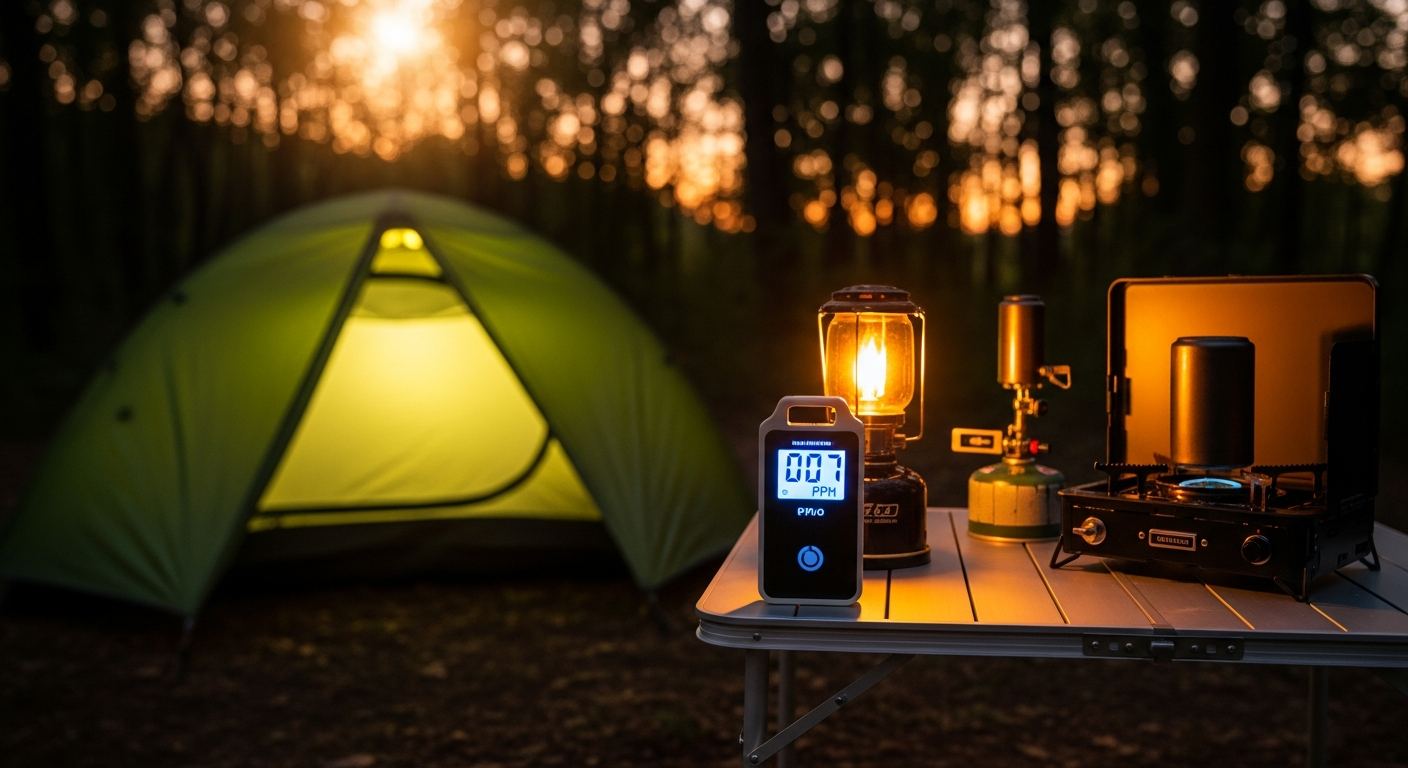
Loading comments...