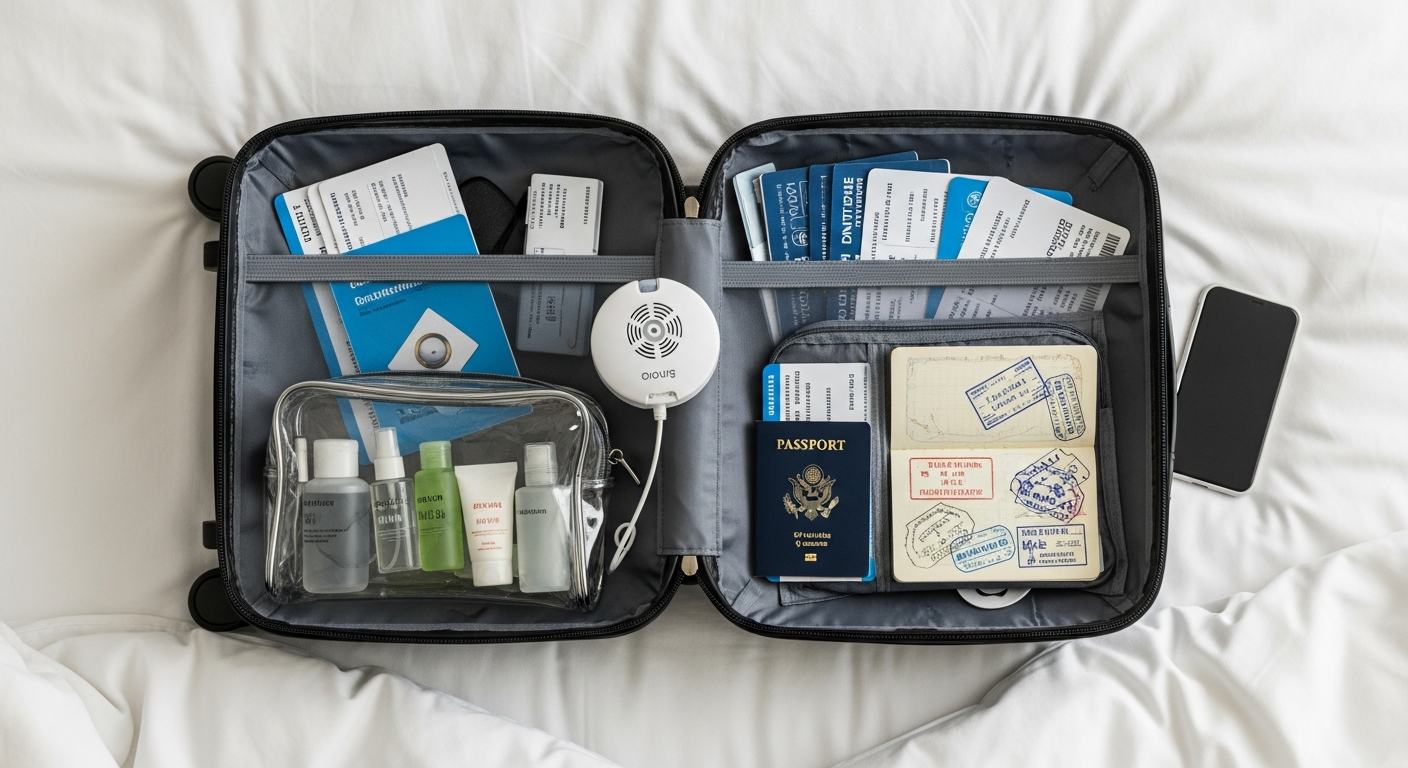
You control the safety of your own home. You don't control the hotel's boiler maintenance schedule, the Airbnb host's compliance with local safety codes, or the RV park's generator ventilation setup. A portable carbon monoxide detector is the only way to bring your own safety standard to every place you sleep.
Why Travel CO Risk Is Real and Underreported
Carbon monoxide incidents in travel accommodations are more common than most people realize, and they're systematically underreported because survivors often don't connect their symptoms to CO exposure during travel.
- Hotels: boilers, heating systems, and pool heaters are common sources; regulations vary widely by state
- Short-term rentals: no federal CO detector requirement; host compliance is self-reported
- RVs and campervans: generators, propane heaters, and poor ventilation create acute risk
- Cruise ships: engine rooms, deck generators, and enclosed onboard spaces
- International travel: CO regulations and detector standards outside the US are often weaker
What Makes a CO Detector Truly Travel-Ready
Not all portable CO detectors are practical for travel. A genuinely travel-ready unit needs:
- Compact size: small enough to fit in a carry-on pocket or toiletry bag without adding meaningful weight
- Universal voltage compatibility: 100–240V so it works in any country without a separate power converter
- International plug adapters: works in US, EU, UK, and Australian outlets without modification
- Plug-in design: doesn't rely on batteries that could die mid-trip or can't cross international security screens
- Live PPM display: see the actual CO level immediately upon arrival in a new room
- Instant-on: starts reading within seconds of being plugged in, not after a 5-minute warmup period
Battery vs. Plug-In for Travel
Battery-operated detectors seem portable, but they introduce a reliability problem on longer trips: batteries die, and replacement batteries in international destinations may use different sizes or chemistries. A plug-in unit that draws power directly from the wall outlet eliminates this failure mode entirely — as long as you're plugged in, you're protected. Most hotel rooms have an outlet near the bed; plug the detector in before you go to sleep.
What to Do When You Check In
A systematic arrival routine takes 2 minutes and eliminates ambiguity about your room's safety:
- Plug your detector into the outlet nearest where you'll sleep
- Wait 60 seconds for the sensor to initialize and display a baseline reading
- Confirm the reading is below 10 PPM — this is the normal background level
- Note where the door is and make sure you can exit without fumbling in the dark
- If the reading is elevated or the detector alarms, notify hotel staff immediately and request a different room
What About the Built-In Hotel Detectors?
Many hotels have CO detectors installed — but their maintenance, calibration schedule, and expiration dates are outside your control. A hotel CO detector might be 8 years old, past its sensor life, and give you no indication it has failed. Your own detector gives you certainty that the equipment monitoring your room's air quality is current, calibrated, and reliable.
AirShield was built for exactly this use case: it's compact enough to fit in a jacket pocket, includes adapters for US, EU, UK, and Australian outlets, plugs into any 100–240V outlet anywhere in the world, and displays a live PPM reading from the moment you plug it in. Tens of thousands of frequent travelers carry one on every trip. For a complete breakdown of what to look for in any portable CO detector, see Portable Carbon Monoxide Detector: What It Is, Who Needs One, and How to Choose.
Protect Your Home with AirShield™
The only portable CO detector that shows you real-time PPM readings on a live OLED display. Electrochemical sensor, multi-gas detection, UL listed.
Check Availability →
Loading comments...