
Carbon monoxide doesn't send a warning. It doesn't smell. It doesn't produce a sensation that distinguishes it from a headache that was probably already there. This year, that invisibility is doing more damage than it has in recent memory. Cases of carbon monoxide exposure in Maryland jumped nearly 50% in 2026 compared to the previous year — from 167 emergency room and urgent care visits in 2025 to 251 so far in 2026, with months still remaining. At the same time, Illinois published its first comprehensive CO surveillance report, revealing that CO poisoning sends nearly 940 people to emergency departments annually and kills 57 Illinoisans every year — on average, more than one per week. This post covers what the new 2026 data actually shows, which conditions are driving the spikes, and why the pattern matters for anyone living in a home with a fuel-burning appliance. Carbon Monoxide Poisoning Statistics: What the Numbers Mean for You Carbon Monoxide PPM Levels Explained: What's Safe, What's Dangerous
Maryland's 50% Spike — What the Numbers Actually Show
Maryland's numbers are stark. In all of 2025, Maryland recorded 167 emergency room and urgent care visits due to CO exposure. Through the first months of 2026, that count had already reached 251 — a nearly 50% increase year over year, with summer and fall still ahead. Maryland health officials have attributed part of the increase to the unusually cold early months of 2026, which pushed more households to rely on gas heating systems that hadn't been professionally serviced since the previous winter. A 50% jump in emergency CO visits within a single state, in a single year, is not a statistical outlier — it is evidence of a protection gap that exists across millions of households. The Maryland data captures only emergency visits: cases severe enough to require medical care. CO exposure that produces headaches, nausea, and disorientation without prompting an ER trip goes unrecorded. The actual number of households experiencing elevated CO is substantially higher than what emergency data captures. Carbon Monoxide Poisoning Symptoms: What to Know Before It's Too Late Takeaway: Emergency visit data systematically undercounts CO exposure — for every person who goes to the ER, many more experience symptoms they attribute to something else entirely.
The Illinois Surveillance Report: 940 Emergency Visits a Year, One Death Per Week
Illinois' Department of Public Health released the state's first comprehensive carbon monoxide surveillance report in early 2026, covering five years of data from 2019 to 2023. The findings give the most detailed picture of residential CO risk in any major state to date. Over the five-year period, CO poisoning resulted in an average of 940 emergency department visits, 126 hospital admissions, and 57 deaths per year in Illinois alone. Illinois fire departments responded to 9,860 CO-related calls in 2024 — nearly 27 per day. Across the full five-year study period, departments handled more than 50,000 total CO incidents, with 95% occurring in residential settings. The report also identified something no national dataset had previously isolated with this precision: CO incidents were significantly more likely to occur on Sunday evenings, between 6 p.m. and midnight. The Sunday evening pattern reflects when people are home, fuel-burning appliances have been running for hours, and homes are closed up — a combination that concentrates risk in the exact hours most households consider the safest. The 6 Most Common Sources of Carbon Monoxide in Your Home The residential concentration — 95% of incidents — challenges the perception that CO risk is primarily industrial or occupational. It is domestic. It lives in the same home as the furnace, the water heater, and the attached garage. Takeaway: CO risk in residential settings is not rare — Illinois data shows it is a daily occurrence with predictable peak timing on weekend evenings.
The CPSC's June 2026 Warning: Why Hurricane Season Raises the Stakes
On June 1, 2026 — the official start of the Atlantic hurricane season — the U.S. Consumer Product Safety Commission issued a specific warning about carbon monoxide deaths from portable generators. The agency directed the warning at households along the Atlantic seaboard and Gulf Coast, where storm-related power outages drive a predictable spike in generator use — and generator-related CO deaths. The CPSC's guidance is unambiguous: generators must be operated outdoors only, at least 20 feet from any structure, with exhaust directed away from windows, doors, and vents. Even with all windows and doors open, running a generator inside a garage or close to a home can produce lethal CO concentrations within minutes. Generator Carbon Monoxide: Why It Kills and How to Stay Safe The warning is issued every year because the deaths continue every year. After major storms, the CPSC consistently documents CO fatalities caused not by the storm itself, but by the response to it — people attempting to maintain power in enclosed or semi-enclosed spaces with equipment designed strictly for outdoor use. The combination of power outage, extreme heat, and a running generator too close to the home is a pattern that kills dozens of Americans annually. Takeaway: Generator CO deaths after hurricanes are entirely preventable — and they continue to occur at the same rate every year because the warning fails to reach people before they make the dangerous decision.
What the Data Means If You Have a Fuel-Burning Appliance
The Maryland spike, the Illinois surveillance report, and the CPSC hurricane season warning describe the same underlying reality: carbon monoxide is produced in most American homes, its exposure is systematically undercounted, and the protective infrastructure — detectors that alarm before dangerous concentrations build — is inconsistently installed, maintained, and trusted. Any home with a gas furnace, gas water heater, gas range, fireplace, wood stove, or attached garage has a CO source. These appliances are engineered to vent CO safely. When they don't — due to age, improper installation, a blocked flue, or a failed component — CO accumulates in the living space. The CPSC estimates that 50,000 Americans visit emergency rooms for CO poisoning annually — a figure that represents only the severe end of the exposure spectrum. Low-Level Carbon Monoxide Exposure: The Silent Risk Your Alarm Never Triggers The gap between that number and Maryland's 251 visits or Illinois's 940 is a measurement artifact, not evidence of low risk. CO poisoning doesn't present with a label. It presents as a headache, fatigue, nausea — symptoms most people manage at home and attribute to something else while the source keeps running. Takeaway: Most CO exposure never reaches the emergency room — it produces symptoms that go unattributed while the source continues operating undetected.
Practical Steps Based on the 2026 Data
- Have every fuel-burning appliance professionally inspected before each heating season — dirty burners, cracked heat exchangers, and blocked flues are the most common residential CO sources.
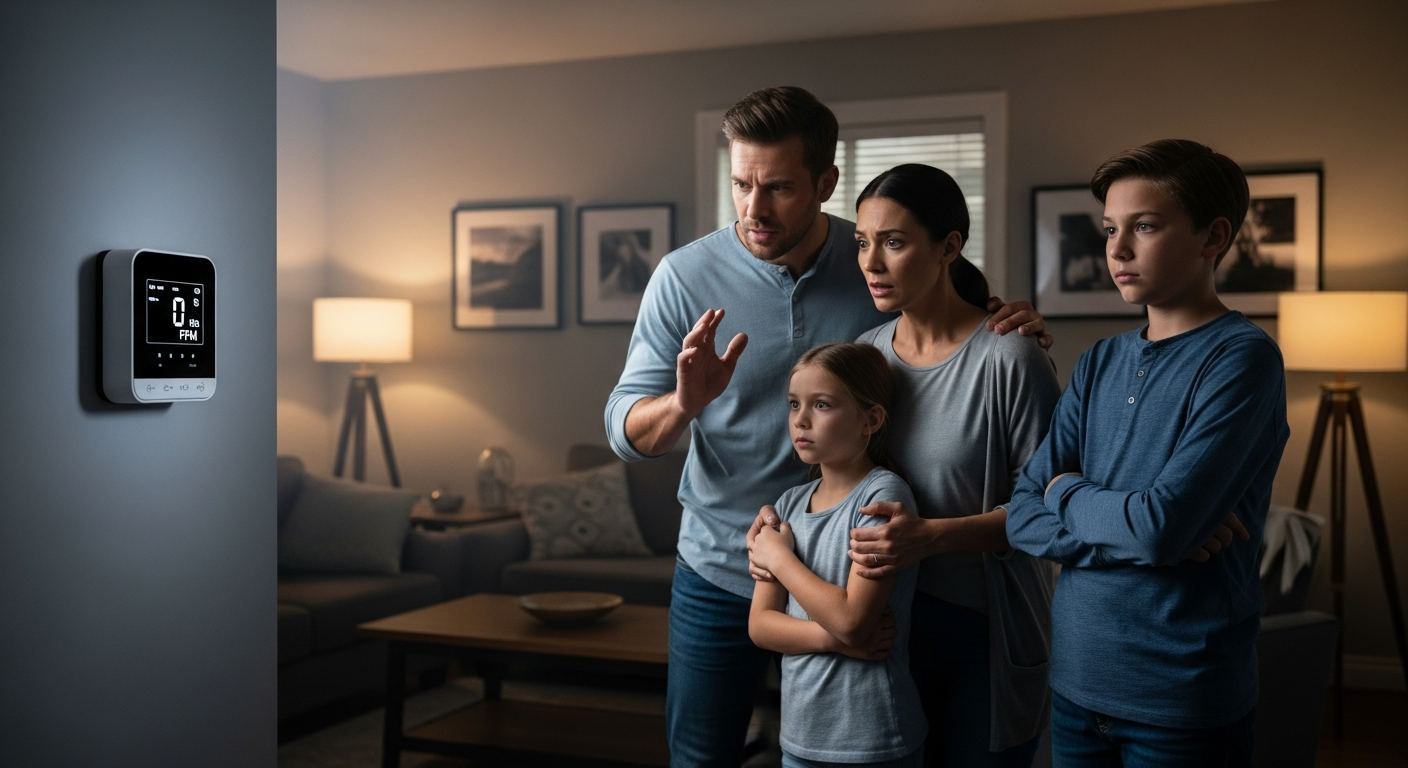
- Install a CO detector that shows live PPM readings — not just a threshold alarm, but a display that tells you the actual concentration so you know if your home is running at 5 PPM, 30 PPM, or higher.
- Test your CO detector on Sunday evenings when you're home and appliances have been running — the Illinois peak timing finding makes this the highest-risk window.
- Never run a generator within 20 feet of any structure — this distance is CPSC-established because even 'outdoor' generators near windows can push indoor concentrations above dangerous thresholds within minutes.
- If you develop headache, nausea, dizziness, or confusion that improves when you go outside, treat it as possible CO exposure — leave the building, get fresh air, and call 911 before re-entering.
- Check your detector's manufacture date. Electrochemical sensors degrade after 5–7 years. A detector past its rated life may pass its self-test while significantly underreading actual CO levels.
The data from 2026 doesn't describe a new hazard. It describes an existing one being documented with more precision than before — and showing a larger problem than the national narrative around CO has acknowledged. Maryland's 50% increase. Illinois's 940 ER visits per year. The CPSC's recurring generator warning. These numbers capture only the severe end of the exposure spectrum. The best response is a detector that shows you a number — not a green light that may or may not reflect what's in the air. AirShield™ displays live CO, methane, and propane PPM continuously, so you are watching the air — not waiting for an alarm that only trips after dangerous concentrations have already built up. Check Availability →
Frequently Asked Questions
Sources & References
- CBS Baltimore: CO Exposure Up 50% in Maryland (2026) — Maryland health officials report a 50% increase in CO emergency visits in 2026 compared to 2025.
- CPSC: Generator and CO Hazard Warning, Hurricane Season 2026 — CPSC June 2026 warning about portable generator CO deaths ahead of the Atlantic hurricane season.
- Illinois IDPH: First CO Surveillance Report (2019–2023) — Illinois Department of Public Health's first comprehensive CO surveillance report, published early 2026.
- CPSC: Carbon Monoxide Information Center — CPSC national data on CO deaths, hospitalizations, and emergency department visits.
Protect Your Home with AirShield™
The only portable CO detector that shows you real-time PPM readings on a live OLED display. Electrochemical sensor, multi-gas detection, UL listed.
Check Availability →

Loading comments...