Every fall, homeowners schedule furnace inspections. Filters get replaced, heat exchangers get checked, flues get examined. It is a seasonal ritual built on decades of public health messaging. Gas water heaters receive no equivalent attention — and yet they run continuously, 365 days a year, producing the same combustion byproducts as a furnace every time they fire. For a household of four, that is roughly 3,000 to 4,000 firing cycles annually. Each one is an opportunity for incomplete combustion to produce carbon monoxide instead of carbon dioxide. Water heaters are among the top three residential CO sources in the United States — alongside furnaces and gas ranges — and they receive a fraction of the inspection attention. This post covers how gas water heaters produce CO, what a failing unit looks like, where to place a CO detector relative to the appliance, and why the water heater in your utility room deserves the same scrutiny you'd give any other gas appliance. The 6 Most Common Sources of Carbon Monoxide in Your Home
How a Gas Water Heater Produces Carbon Monoxide
A gas water heater burns natural gas or propane to heat water in a tank. In complete combustion, the fuel combines with oxygen to produce carbon dioxide and water vapor — both harmless at residential concentrations. Incomplete combustion, which occurs when the fuel-to-air ratio is off, produces carbon monoxide instead. Several conditions cause incomplete combustion in water heaters: a dirty or corroded burner that disrupts the flame, insufficient air supply due to poor ventilation in the utility room, a cracked or blocked flue that backdraws combustion gases into the living space, or an aging unit whose components no longer perform within tolerance. Because water heaters fire continuously day and night — not just during the heating season — a developing combustion problem generates CO year-round, including through the warmer months when no one is thinking about appliance safety. Furnace Carbon Monoxide: Why Your Heating System Is the Biggest CO Risk in Your Home The CO output from a malfunctioning water heater is often low-level and persistent rather than acute. This makes it particularly deceptive: it produces the chronic exposure profile — daily headaches, persistent fatigue, difficulty concentrating — that is most commonly misattributed to stress, illness, or seasonal allergies. Takeaway: Gas water heaters produce CO through the same combustion chemistry as furnaces, but without the same seasonal inspection rhythm — making failure more likely to go undetected.
What a Failing Water Heater Looks Like — Before It Becomes an Emergency
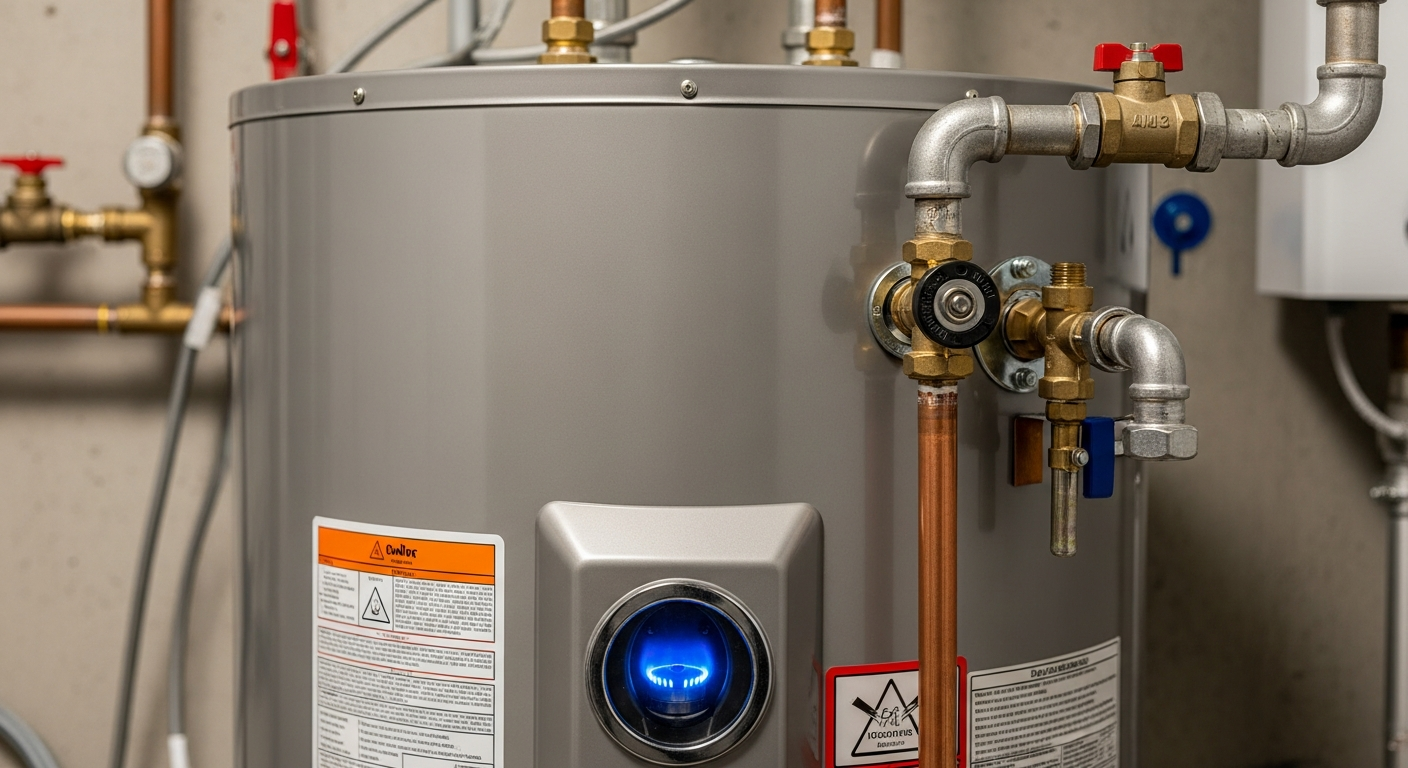
Several observable indicators precede a serious CO event from a gas water heater. The most reliable is burner flame color. A properly operating gas water heater produces a blue flame. A yellow, orange, or flickering flame indicates incomplete combustion — a CO-producing condition. Soot or black marks near the burner access panel or along flue connections are evidence that combustion gases are escaping before they should. A persistent burning or sulfurous smell when the unit fires suggests incomplete oxidation. Inside the home, the symptom pattern associated with chronic low-level CO exposure from a water heater includes headaches that are worse in the morning (when the home has been closed overnight), fatigue and brain fog that improve when residents spend time outdoors, and multiple household members experiencing similar symptoms simultaneously. The morning headache pattern is particularly diagnostic — CO concentrations build overnight in closed homes, and symptoms from continuous low-level exposure are typically most severe after the longest period of exposure. Low-Level Carbon Monoxide Exposure: The Silent Risk Your Alarm Never Triggers Pets, particularly birds and small dogs, often show symptoms before humans due to their lower body mass. Takeaway: A yellow flame, soot deposits, or unexplained morning headaches in multiple household members are all indicators warranting immediate water heater inspection and CO testing.
Where to Place a CO Detector If You Have a Gas Water Heater
CO detector placement relative to a gas water heater follows the same principle as any fuel-burning appliance: the detector should sample ambient air in the living space, not the direct combustion output near the appliance. A detector placed too close to the unit may read transiently elevated during normal firing cycles and produce false alarms; placed too far from the appliance or the rooms it serves, it may miss a developing leak. The NFPA 720 standard recommends a CO detector outside each separate sleeping area and on each habitable level of the home. For a water heater located in a utility room, basement, or garage, place one detector in the utility space itself and one in the adjacent living area. A detector with a live PPM display gives you information that an alarm-only device cannot — it shows whether your home's baseline is 0 PPM or 5 PPM or 15 PPM, a distinction that matters for identifying chronic low-level exposure before it becomes acute. Carbon Monoxide Detector Placement: Exactly Where to Put Yours Alarm-only detectors are calibrated to trip at 70 PPM — a threshold set to prevent acute poisoning, not to catch the chronic exposure pattern most commonly produced by a slowly failing water heater. Takeaway: A CO detector with a numeric display catches the low-level chronic exposure pattern from aging water heaters; a threshold-only alarm is calibrated for acute emergencies and will not alert you to the slow build that precedes them.
How Age and Maintenance History Change the Risk
Most gas water heaters have a rated lifespan of 8–12 years. CO risk increases as the unit ages for predictable reasons: burners accumulate mineral and scale deposits that disrupt the combustion geometry, flue connections corrode and develop gaps that allow backdrafting, and sediment accumulation at the tank bottom can affect burner performance. A water heater past 7 years that has not had a professional burner inspection is operating on aging components without verification of combustion quality. CPSC data on residential CO sources consistently shows water heaters as contributors to the 50,000 annual emergency department visits for CO exposure — and the 95% residential concentration found in the Illinois IDPH surveillance report reflects a risk profile that includes water heaters as a primary source category. A water heater past 10 years with no recent inspection and no CO detector in its vicinity is one of the most common and most preventable residential CO hazards. How Long Do Carbon Monoxide Detectors Last? When to Replace Yours Takeaway: Age is the most reliable predictor of water heater CO risk — units past 7 years warrant annual burner inspection and a functioning CO detector in the same space.
What to Do Right Now
- Look at your water heater's burner flame through the access panel — it should be blue. Yellow, orange, or flickering flames indicate incomplete combustion and require a professional inspection.
- Check around the flue connection and burner access panel for soot or black marks. Any soot deposit indicates combustion gases are escaping before venting.
- Find your water heater's manufacture date — it is on the rating plate, typically encoded in the first digits of the serial number. If it is older than 7–8 years, schedule a professional inspection.
- Install a CO detector in the utility room or space containing your water heater, and one in the nearest sleeping area. Use a model with a numeric PPM display so you can see baseline readings.
- If multiple household members are experiencing morning headaches or fatigue that improves when outdoors — especially combined with any yellow flame or soot — leave the home, ventilate it, and call your gas utility or a licensed HVAC technician before re-entering.
- Schedule an annual water heater inspection alongside your furnace inspection. They share the same combustion risk and deserve the same preventive attention.
Gas water heaters sit in utility rooms and basements, firing day and night, and receive almost no public health attention compared to furnaces. The Illinois IDPH data showing 95% of CO incidents in residential settings — and 50,000+ fire department responses over five years in a single state — reflects an appliance inventory that includes water heaters alongside furnaces and ranges. The appliance that runs the most often is not always the one that gets inspected. AirShield™ shows a live PPM reading from the moment it powers on. Plug one in near your water heater and you'll know whether your home is running at 0 PPM or something that deserves a call to your gas company. Check Availability →
Frequently Asked Questions
Sources & References
- CPSC: Carbon Monoxide Information Center — CPSC data on residential CO sources, including water heaters and fuel-burning appliances.
- Illinois IDPH: CO Surveillance Report 2019–2023 — First Illinois CO surveillance report: 95% of 50,000+ incidents occurred in residential settings.
- NFPA 720: Standard for the Installation of CO Detection and Warning Equipment — NFPA guidance on CO detector placement relative to fuel-burning appliances.
Protect Your Home with AirShield™
The only portable CO detector that shows you real-time PPM readings on a live OLED display. Electrochemical sensor, multi-gas detection, UL listed.
Check Availability →
Loading comments...