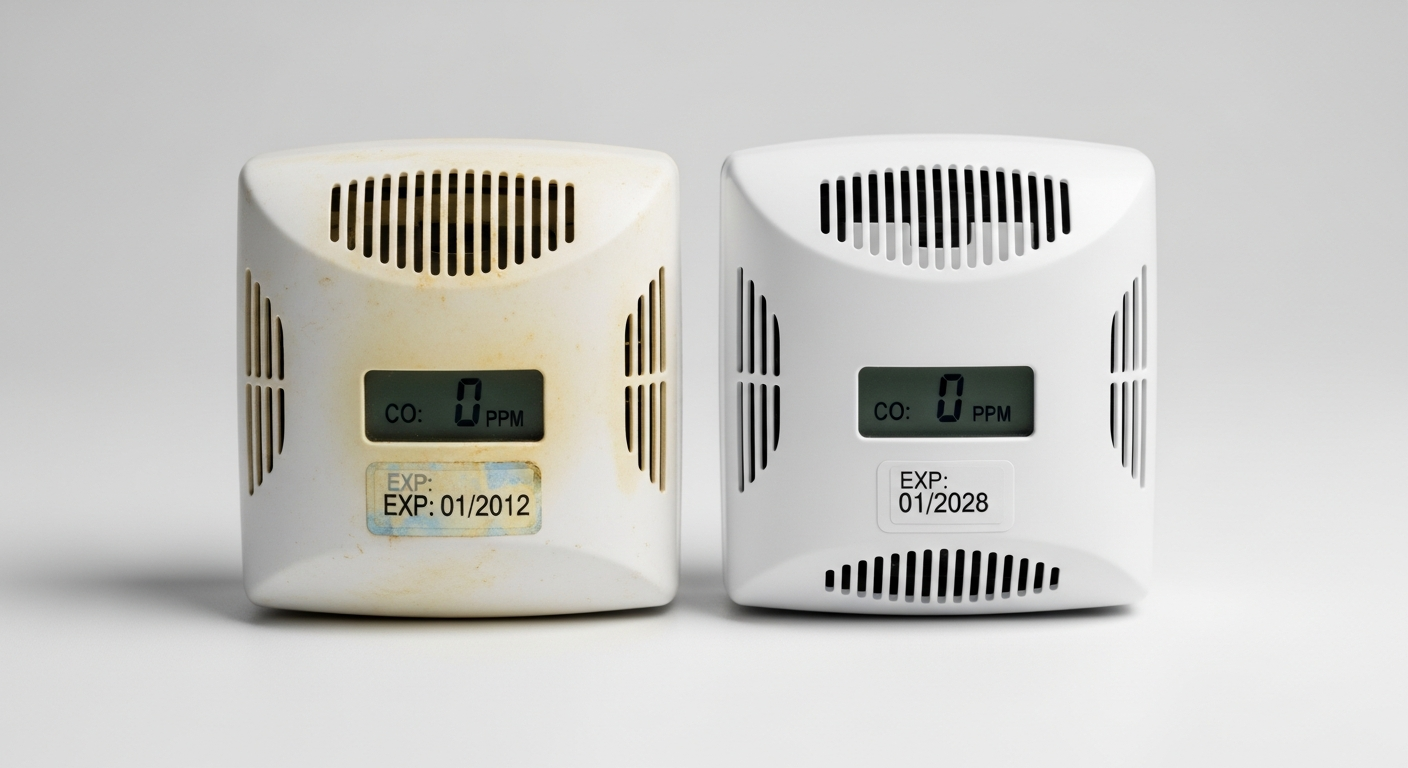
A carbon monoxide detector that looks normal, passes its test button check, and beeps when you press the button can still be completely non-functional. CO detector sensors degrade chemically over time, and once the sensor expires, the device may make alarm sounds while being entirely blind to actual CO in the air. This is one of the most dangerous — and most common — home safety misconceptions.
How Long Do CO Detectors Actually Last?
Lifespan depends almost entirely on sensor technology:
- Electrochemical sensors: 7–10 years (the technology used in quality detectors)
- Metal oxide semiconductor sensors: 5–7 years
- Biomimetic gel sensors: 2–3 years
- The entire unit should be replaced when the sensor expires — not just the battery
How to Find the Expiration Date on Your Detector
Every UL 2034 certified CO detector must display an expiration or manufacture date. Here's where to look:
- Flip the detector over and look on the back or bottom panel
- Look for text that says 'Replace by', 'Expiration date', or 'Manufactured on'
- If you find a manufacture date only, add 5–7 years (or 10 for high-quality electrochemical units) to get the expiration
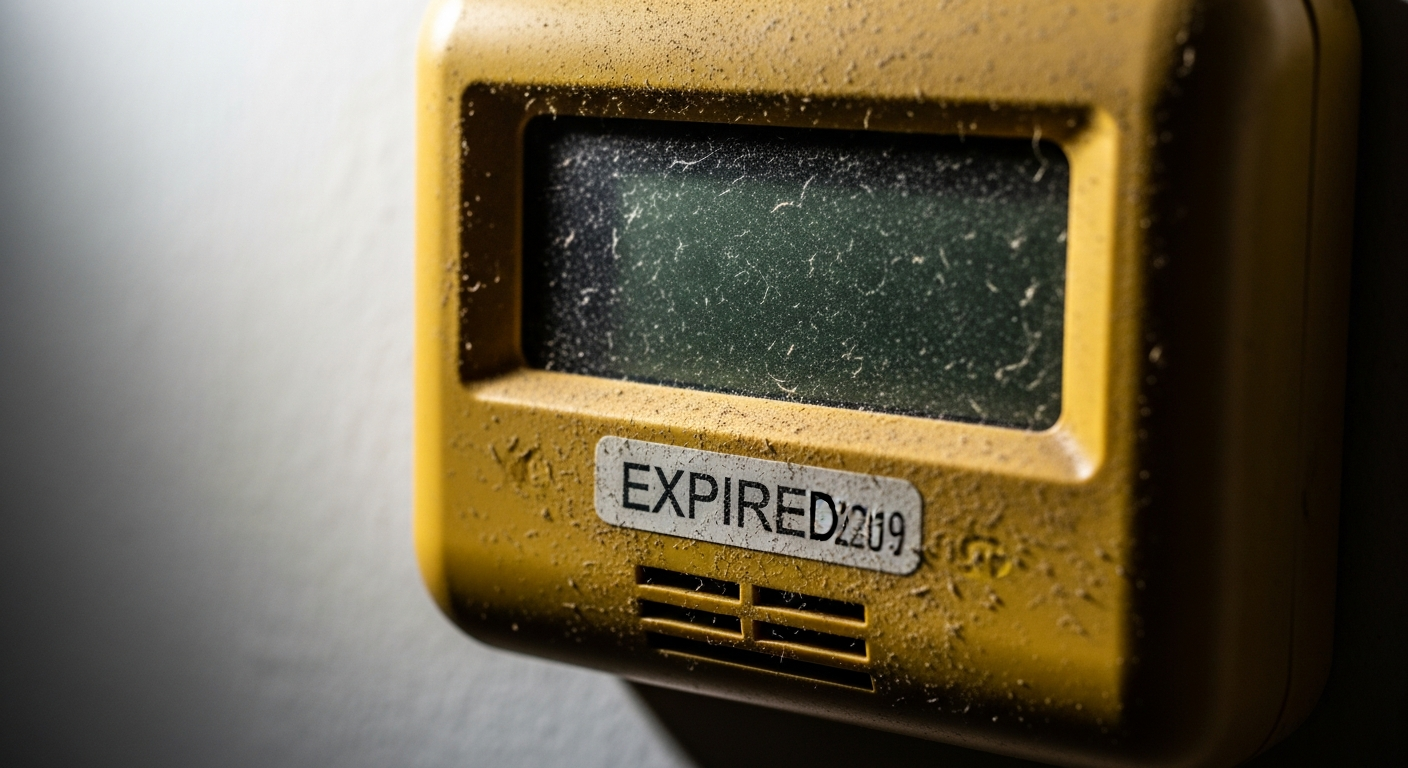
- If you can't find any date, the detector should be replaced immediately
Why the Test Button Doesn't Tell You the Sensor Is Working
The test button on most CO detectors checks only that the alarm horn, LED lights, and circuitry are functional. It does not test whether the electrochemical sensor can actually detect carbon monoxide. A detector with a completely failed sensor will pass the test button check. This is why expiration dates matter — and why a live PPM display is far more informative than a test button.
Signs Your Detector May Need Early Replacement
- The unit is 5 or more years old and you don't know the exact manufacture date
- It emits 5 chirps every minute — the end-of-life signal for most brands
- The unit never alarmed despite a documented CO incident in your home
- The battery door no longer closes properly or connections are corroded
- The manufacturer no longer makes or supports that model
What Happens to the Sensor Over Time
Electrochemical CO sensors work by running a continuous low-level chemical reaction. This reaction slowly depletes the electrolyte solution inside the sensor cell over years of operation. As the electrolyte is consumed, sensitivity decreases gradually — the sensor needs higher and higher CO concentrations to trigger an alarm. Eventually, it won't trigger at all. The unit has no way to flag this degradation automatically on models without an expiration-monitoring circuit.
Replacement Costs and Timing
The cost of replacing a CO detector is small compared to the cost of being unprotected. If you're replacing an expired detector, consider upgrading to a unit with:
- A 10-year electrochemical sensor (fewer replacements over a lifetime)
- A live PPM display (so you can verify the sensor is actively reading)
- Multi-gas detection (CO + methane + propane) if you have gas appliances
- UL 2034 certification as the minimum quality baseline
AirShield uses an M8 electrochemical sensor rated for 10 years, with a live OLED display that shows the PPM reading in real time — so you can see that the sensor is actively measuring, not just waiting for a threshold alarm. Check every detector in your home this week. If any are over 5 years old without a confirmed manufacture date, replace them now. Use the CO Detector Expiration Calculator to quickly check any detector's status by manufacture year.
Protect Your Home with AirShield™
The only portable CO detector that shows you real-time PPM readings on a live OLED display. Electrochemical sensor, multi-gas detection, UL listed.
Check Availability →
Loading comments...