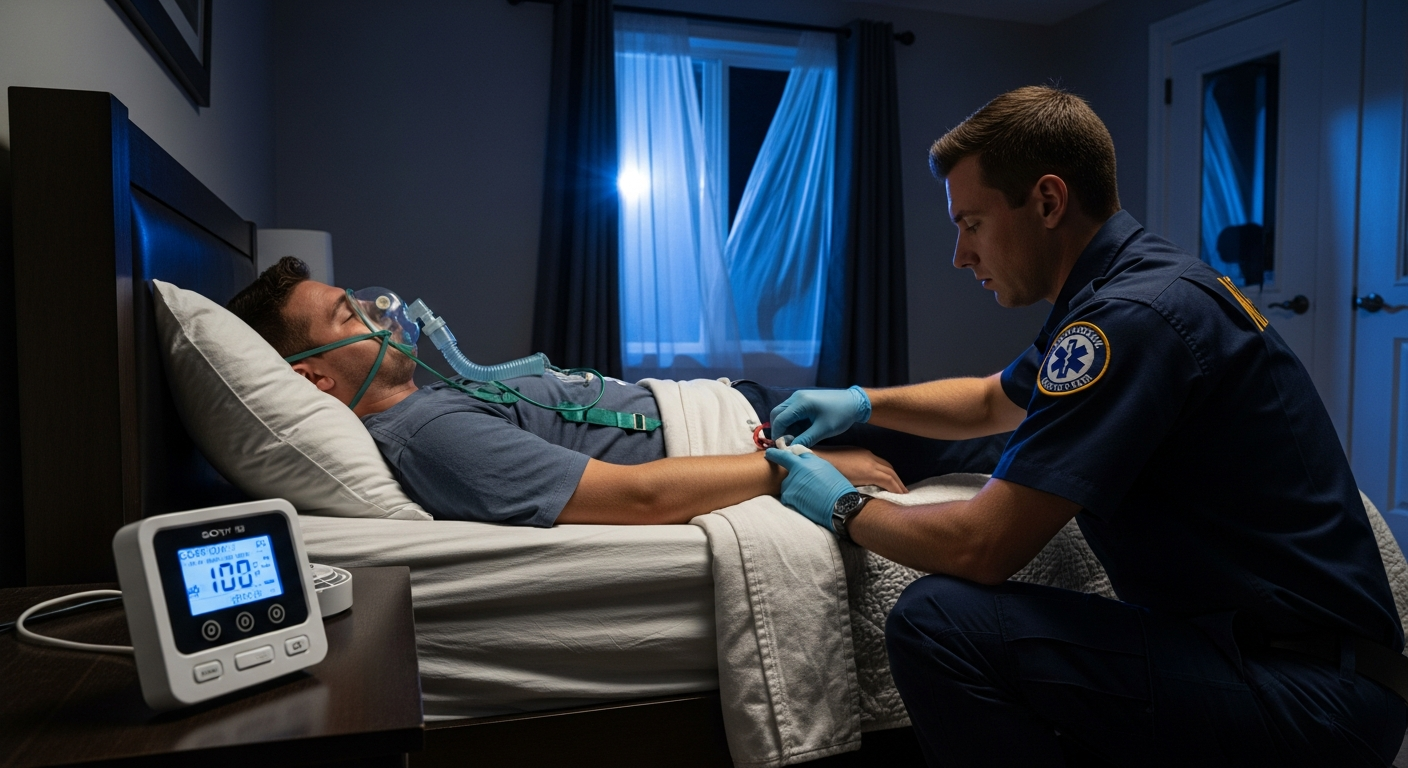
Carbon monoxide poisoning treatment is time-sensitive, severity-dependent, and more complex than most people realize. The standard mental model — get fresh air, feel better — is accurate for mild cases but dangerously incomplete for moderate to severe exposure. Roughly 50,000 Americans visit emergency rooms annually for CO poisoning, and a subset of those who recover from the initial event develop delayed neurological sequelae — cognitive impairment, memory loss, and personality changes — weeks after the acute event, even when they felt recovered. Understanding how CO affects the body, what the medical treatment options are, and what the risk factors for lasting damage look like is relevant to anyone who has had a CO alarm event, experienced CO-like symptoms, or wants to know what to do if someone in their household is exposed.
What Carbon Monoxide Does to the Body
Carbon monoxide causes harm through two primary mechanisms. First, it binds to hemoglobin — the oxygen-carrying protein in red blood cells — with an affinity approximately 250 times greater than oxygen. This forms carboxyhemoglobin (COHb), which cannot carry oxygen, reducing the blood's oxygen-delivering capacity proportional to the percentage of hemoglobin that is bound. At COHb levels of 10 to 20%, most people experience headache, nausea, and dizziness. At 20 to 40%, confusion, impaired judgment, chest pain, and loss of consciousness become likely. Above 50%, COHb is associated with seizure, cardiac arrhythmia, coma, and death. Second, CO binds directly to intracellular proteins including myoglobin (in heart and skeletal muscle) and cytochrome c oxidase (the key enzyme in cellular respiration), impairing oxygen utilization at the cellular level even after COHb is reduced. This second mechanism explains why some patients with significant CO exposure continue to deteriorate neurologically even after oxygen therapy clears the carboxyhemoglobin. Takeaway: CO poisoning is not just oxygen deprivation — it is also direct cellular toxicity, which changes the treatment calculus.
First Response: Fresh Air and Supplemental Oxygen
The first step in carbon monoxide poisoning treatment at any severity level is removal from the CO source and administration of high-flow oxygen. At normal atmospheric oxygen levels, the half-life of carboxyhemoglobin — the time it takes for COHb to drop by half — is approximately 4 to 5 hours. Breathing 100% normobaric oxygen (provided through a non-rebreather mask in an emergency department) reduces that half-life to 60 to 90 minutes. This is why calling 911 rather than self-transporting is important for anyone who is symptomatic: paramedics carry high-flow oxygen and will begin treatment before arrival at the hospital. Mild CO poisoning — typically defined as COHb below 25% with headache and nausea but no loss of consciousness, no cardiac symptoms, and no significant neurological findings — is usually treated with normobaric oxygen for several hours, monitoring, and discharge with follow-up instructions. The decision to escalate to more aggressive treatment depends on exposure severity, symptoms, and specific patient risk factors. Takeaway: high-flow oxygen is the cornerstone of all CO poisoning treatment — delay increases COHb time and neurological risk.
What Happens at the Hospital: Diagnosis and Assessment

Emergency evaluation of a suspected carbon monoxide poisoning case includes a blood COHb level (drawn as soon as possible — COHb drops rapidly once the patient is on supplemental oxygen, so the admission level may significantly understate the peak exposure), an ECG to assess for cardiac effects, and a neurological examination. Pulse oximetry — the standard fingertip blood oxygen sensor — cannot distinguish between oxyhemoglobin and carboxyhemoglobin. A pulse oximeter will read normal in a CO-poisoned patient because it measures the percentage of hemoglobin bound to something, not whether that something is oxygen. This is a critical point: a patient with 30% COHb will show a normal pulse ox reading. Emergency departments use co-oximetry (either via blood draw or specialized non-invasive monitors) to measure COHb directly. A chest X-ray may be performed to assess for pulmonary edema. Neurological assessment looks for confusion, ataxia, or other findings that suggest central nervous system involvement and indicate higher risk for delayed neurological sequelae. Takeaway: standard pulse oximetry cannot diagnose CO poisoning — only co-oximetry can measure carboxyhemoglobin.
Hyperbaric Oxygen Therapy: When and Why It Is Used
Hyperbaric oxygen therapy (HBOT) — delivering 100% oxygen at two to three times atmospheric pressure — reduces COHb half-life to approximately 20 to 30 minutes and is thought to directly address the cellular and mitochondrial mechanisms of CO toxicity that normobaric oxygen cannot fully reverse. The evidence on HBOT for CO poisoning remains somewhat contested: a landmark 2002 randomized trial by Weaver et al. found significantly reduced rates of delayed neurological sequelae at 6 weeks in patients treated with HBOT versus normobaric oxygen, but subsequent studies have had more mixed findings. Current medical consensus generally recommends HBOT for CO poisoning in patients with: loss of consciousness at any point during the exposure, COHb greater than 25%, cardiac arrhythmia or ischemia, severe metabolic acidosis, neurological findings on examination, or pregnancy (fetal hemoglobin has even higher CO affinity). Not all hospitals have hyperbaric chambers — transfer to a facility with one may be required. Takeaway: HBOT is the highest-level CO poisoning treatment and is indicated for moderate to severe exposures, particularly when neurological involvement is present.
Practical Application: What to Do When CO Poisoning Is Suspected
- Call 911 immediately — do not self-transport if symptoms are present, paramedics will begin high-flow oxygen en route
- Move everyone out of the building and away from the CO source before calling — do not delay exit to make the call
- Tell the dispatcher specifically that you suspect carbon monoxide poisoning — this ensures the response includes the right equipment
- At the hospital, confirm they are measuring COHb via co-oximetry, not relying on standard pulse oximetry
- If your exposure was significant and you are discharged after normobaric oxygen treatment: ask about neurological follow-up at 4 to 6 weeks — delayed neurological sequelae can appear after apparent recovery
- Document all symptoms that occurred during exposure — this information helps the treatment team assess severity and make HBOT decisions
- Do not return to the building until the CO source is identified and resolved by a qualified professional Carbon Monoxide Alarm Going Off? Here Is Exactly What to Do
- Prevention is more effective than any treatment: a CO detector with a live PPM display allows you to detect sub-alarm concentrations before they cause any exposure
Carbon monoxide poisoning treatment has improved significantly with greater understanding of COHb dynamics and the cellular mechanisms of CO toxicity, but the most important treatment decision remains the first one: get out, call 911, and begin high-flow oxygen as quickly as possible. Time to oxygen directly determines COHb exposure duration, and COHb exposure duration directly determines neurological outcomes. The treatment that matters most is the one that happens before CO concentrations reach harmful levels — which is why a detector that shows you 12 ppm before it reaches 35 ppm is not a luxury. It is the earliest and most effective intervention in the chain.
Protect Your Home with AirShield™
The only portable CO detector that shows you real-time PPM readings on a live OLED display. Electrochemical sensor, multi-gas detection, UL listed.
Check Availability →
Loading comments...