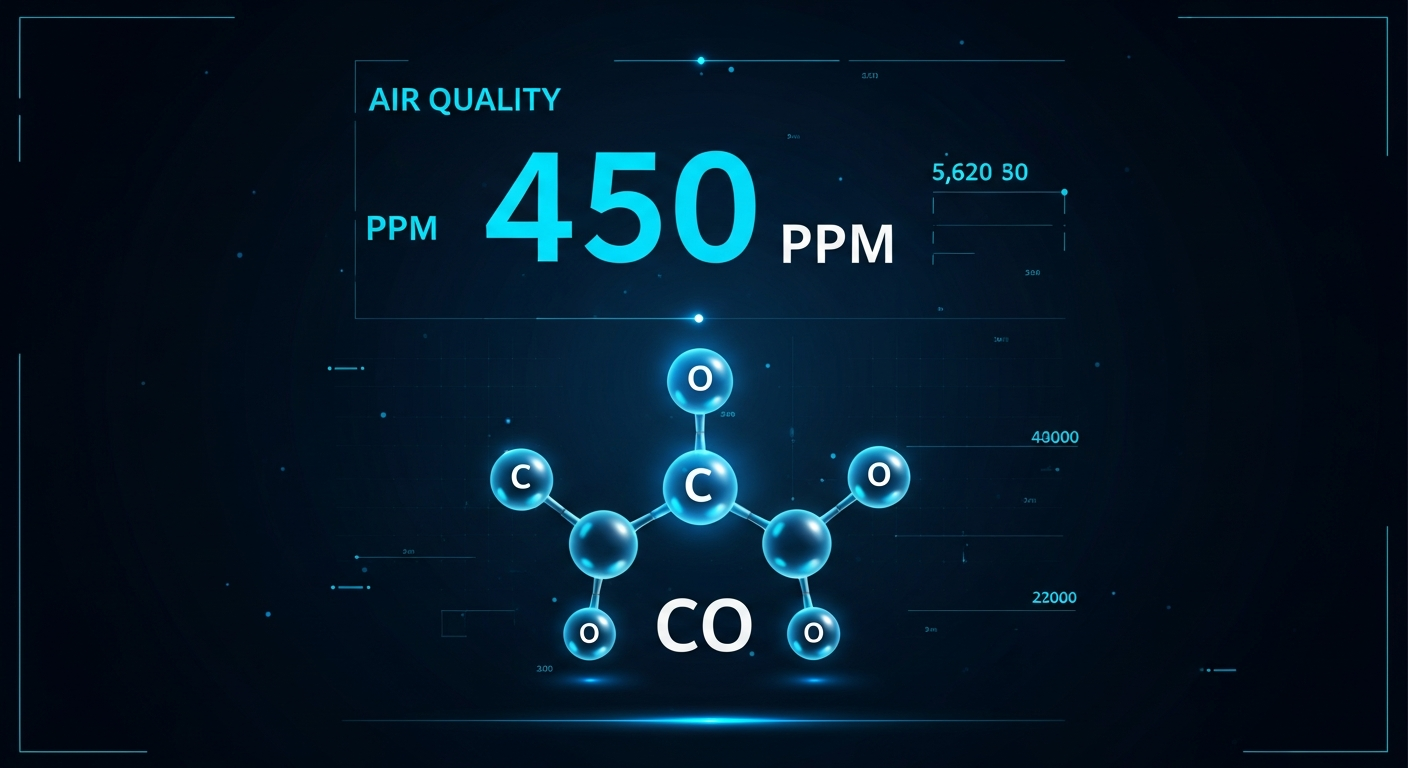
Carbon monoxide poisoning at 400 PPM — the indoor concentration a portable generator in an attached garage can produce within 30 minutes — can incapacitate a sleeping adult within 1–2 hours and cause death within 3. At 1,600 PPM, the timeline compresses to 20 minutes for symptoms, 1 hour for death. How long carbon monoxide poisoning takes is not a fixed answer — it is a function of PPM concentration, duration of exposure, the individual's age and health, and critically, whether they are awake and able to recognize and act on early symptoms or asleep with no recognition pathway at all. This guide gives you the complete concentration-time relationship, what the UL 2034 alarm standard means for when your detector actually sounds, and why sleeping exposure is so consistently lethal.
How Fast Does CO Poisoning Happen at Different Concentrations?
The following timeline is based on NIOSH occupational safety data, UL 2034 alarm threshold testing, and CPSC incident documentation. All times assume a healthy adult at rest — physical activity, sleep, and health conditions all shorten the timeline. **35 PPM** — NIOSH 8-hour occupational ceiling. Prolonged exposure over many hours may cause mild headache and fatigue. This level does not trigger any residential CO alarm. **70 PPM** — UL 2034 requires alarms to sound within 4 hours. Headache after 1–2 hours of sustained exposure. **150 PPM** — UL 2034 requires alarms to sound within 50 minutes. Headache within 30–60 minutes; dizziness within 2 hours. **400 PPM** — Frontal headache within 1–2 hours. Life-threatening symptoms within 3 hours. This is a concentration a poorly ventilated garage generator can achieve indoors in under 30 minutes. **800 PPM** — Dizziness, nausea, convulsions within 45 minutes. Death within 2–3 hours. **1,600 PPM** — Headache and dizziness within 20 minutes. Death within 1 hour. **3,200 PPM** — Headache, dizziness, nausea within 5–10 minutes. Death within 25–30 minutes. **12,800 PPM** — Immediate physiological effect. Death within minutes. Vehicle exhaust in an enclosed garage can reach 12,800 PPM within minutes — which is why running a car in a closed garage, even briefly, is one of the fastest CO fatality scenarios documented in CPSC data. Carbon Monoxide in Your Garage Is Entering Your Home — Here Is How to Stop It Takeaway: the difference between 400 PPM and 1,600 PPM is not a doubling of danger — it is a 9-fold reduction in time to life-threatening symptoms.
Why Does Sleep Make CO Poisoning Faster and Deadlier?
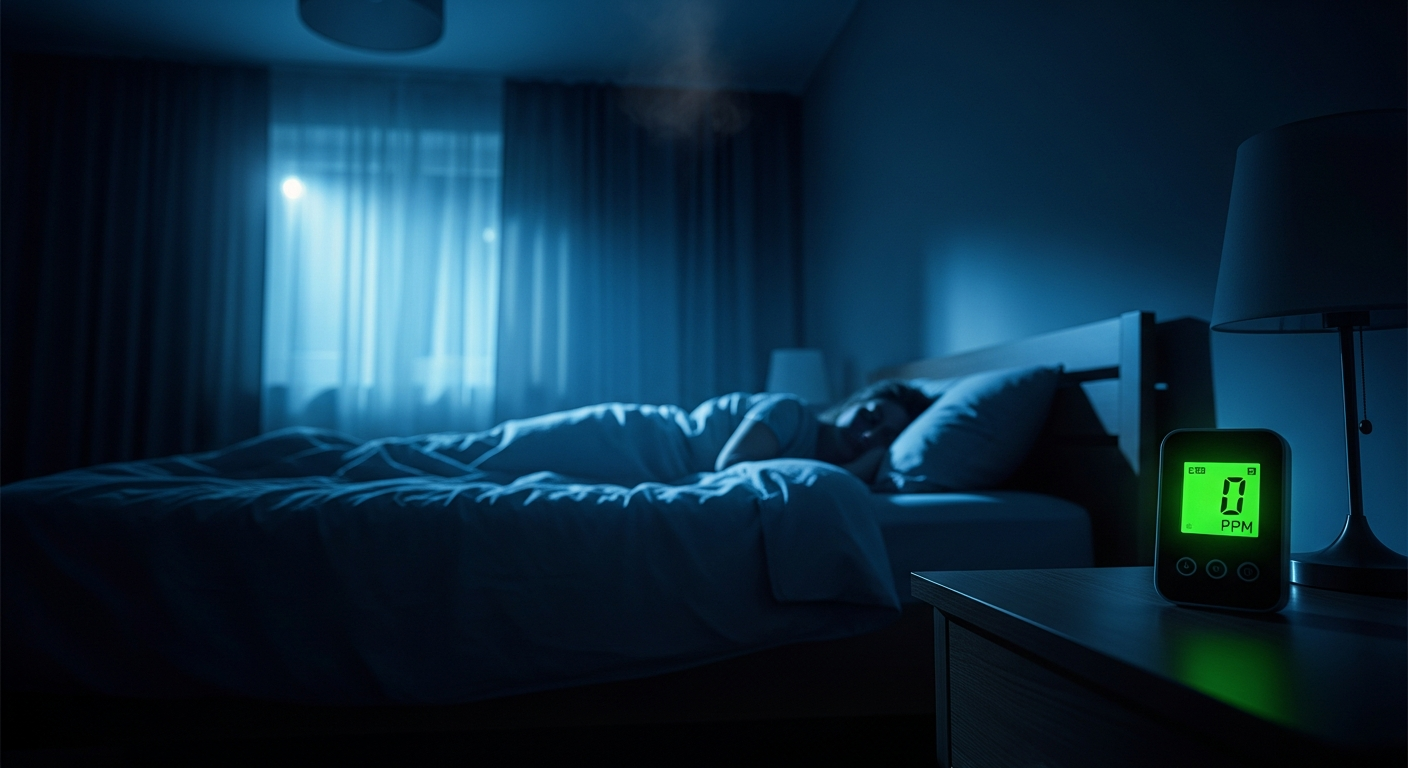
The chemistry of CO poisoning is the same whether you are awake or asleep — but sleep eliminates the critical window where recognition allows self-rescue. A waking person at 200 PPM over 2 hours develops a noticeable frontal headache. If they associate it with the environment — step outside, feel it ease, step back in, feel it worsen — they have time to act. Many people do not make that connection, but some do. Sleep removes the possibility entirely. A sleeping person at 400 PPM progresses from zero symptoms to significant COHb saturation without any recognition event. The drowsiness CO induces at low levels is indistinguishable from normal sleep. The headache, nausea, and dizziness build during the very state that prevents their recognition. CPSC fatality data consistently shows that nighttime hours — midnight to 6 a.m. — represent a disproportionate share of CO deaths, despite lower waking activity during those hours. The concentration threshold for fatal outcome is effectively lower at night because recognition and self-rescue are unavailable. This is also why NFPA 720 specifically requires CO detectors within 15 feet of sleeping areas — not just per floor. The placement acknowledges that sleeping occupants need detection before CO reaches incapacitating levels in the room where they cannot recognize symptoms. Carbon Monoxide Poisoning While Sleeping: The Real Risk Takeaway: sleep does not change CO chemistry — it eliminates the self-rescue window that makes the same concentration survivable when awake.
What the UL 2034 Alarm Standard Means for When Your Detector Sounds
The UL 2034 standard — which governs every residential CO alarm sold in the United States — requires detectors to alarm at specific concentration-time combinations. Understanding the standard explains a critical gap in standard CO protection: - **70 PPM:** Alarm must sound within 60–240 minutes (1–4 hours). Does NOT need to alarm within 1 hour. - **150 PPM:** Alarm must sound within 10–50 minutes. - **400 PPM:** Alarm must sound within 4–15 minutes. - **Below 70 PPM:** No alarm required. Ever. The 70 PPM threshold was set to reduce nuisance alarms — not to protect sleeping occupants from slow-building chronic exposure. A furnace with a minor heat exchanger leak producing 40 PPM in the bedroom for years will never trigger a UL 2034 alarm. But sustained 40 PPM affects sleep quality, elevates cardiovascular risk, and can impair cognitive function over time. A detector with a live PPM display shows you 40 PPM — or 15 PPM, or 8 PPM — the moment it is present, regardless of whether it crosses the alarm threshold. The number is your protection in the sub-threshold range that alarm-only detectors are legally required to ignore. The 70 PPM Standard Was Designed to Alarm Late — Here's Why That's a Problem Takeaway: UL 2034 alarm thresholds were calibrated to prevent false alarms, not to catch chronic low-level exposure — a live-display detector is the only tool that covers the full concentration range.
How to Cut Your Risk at Every Point on the Timeline
The timeline from safe to dangerous to fatal cannot be changed — but your position on that timeline can be controlled:
- Install a CO detector with a live PPM readout in every sleeping area — not just per floor; a detector in the hallway can show 0 PPM while a gas fireplace in the bedroom is building 40 PPM inside the closed room
- Know your appliances' maintenance status — a furnace with a cracked heat exchanger and a water heater without annual service inspection are the most common sources of slow-building residential CO
- Never run any combustion engine indoors — generator, gas grill, lawnmower, car — under any ventilation assumption; the PPM-to-time curves above assume open outdoor air, not a garage with a cracked door Carbon Monoxide from Grills: The Summer Risk Most Backyard Cooks Ignore
- If you wake with a headache that improves outdoors, treat it as a CO event immediately — do not go back inside to investigate; call 911 from outside
- Check your CO detector's manufacture date — after 5–7 years, the electrochemical sensor loses calibration and may not respond accurately at any concentration, including the 400 PPM range How Long Do Carbon Monoxide Detectors Last? When to Replace Yours
How long carbon monoxide poisoning takes is ultimately the wrong question to ask — because by the time you are asking it from inside a space with CO buildup, the clock is already running. The right question is what you see before symptoms start. The AirShield™ 3-in-1 Portable Carbon Monoxide Detector displays live CO PPM on an OLED screen the moment it is plugged in — 8 PPM, 35 PPM, 400 PPM — so you see the number before your body starts the timer. Visit airshield.store.
Frequently Asked Questions
Sources & References
- NIOSH: IDLH for Carbon Monoxide — NIOSH concentration-time relationship table for CO; immediately dangerous to life or health threshold: 1,200 PPM
- UL 2034: CO Alarm Alarm Threshold Requirements — UL 2034 table of required alarm response times by CO concentration — basis for all US residential CO alarms
- CPSC: Non-Fire CO Poisoning Deaths Annual Report — CPSC annual fatality data; nighttime/sleeping exposures disproportionately fatal
- CDC: Carbon Monoxide Fact Sheet — CDC overview of CO toxicity, exposure limits, and prevention; ~430 non-fire deaths and 50,000+ ER visits annually
- Journal of Emergency Medicine: CO Exposure and Outcome — Clinical outcomes correlated with COHb saturation levels and duration of exposure before treatment
Protect Your Home with AirShield™
The only portable CO detector that shows you real-time PPM readings on a live OLED display. Electrochemical sensor, multi-gas detection, UL listed.
Check Availability →
Loading comments...