Last reviewed by AirShield Safety Team: October 25, 2026
On this page
- What is a carbon monoxide detector and how does it work?
- What types of carbon monoxide detectors are available?
- What is the best carbon monoxide detector in 2026?
- Where should you install a carbon monoxide detector?
- How much does a carbon monoxide detector cost?
- How to choose the right detector for your home
- Frequently asked questions
What Is a Carbon Monoxide Detector and How Does It Work?
A carbon monoxide detector is a safety device that continuously samples indoor air and measures the concentration of CO, a colorless, odorless gas produced by incomplete combustion in furnaces, water heaters, stoves, generators, and vehicles. Most models use an electrochemical sensor: CO diffuses into a small cell containing an electrolyte, reacts chemically, and produces an electrical current proportional to the gas concentration. ==A built-in processor compares that reading against a time-weighted alarm curve defined by UL 2034 — high concentrations trigger an alarm within minutes, while lower concentrations must persist for one to four hours before the alarm sounds.== Cheaper detectors use biomimetic or semiconductor sensors, which cost less to manufacture but are less precise at low, sub-threshold concentrations.
Takeaway: every CO detector measures the same underlying gas, but sensor type and alarm logic determine how early and how precisely it warns you.
What Types of Carbon Monoxide Detectors Are Available?
Five main categories of CO detectors are sold today, each trading off installation complexity, cost, and how much information they give you before an emergency threshold is reached.
| Type | How it alerts | Power | Best for | Limitation |
|---|---|---|---|---|
| Battery plug-in alarm | Audible alarm only at UL 2034 threshold | Battery or plug-in with battery backup | Budget single-room coverage | No visibility into CO levels below the alarm threshold |
| Hardwired / interconnected | Audible alarm, all units trigger together | Hardwired to home electrical system | Whole-home coverage in new construction | Requires electrician installation; not portable |
| Smart / WiFi-connected | Audible alarm + phone push notification | Plug-in or hardwired | Remote monitoring while away from home | Depends on WiFi and app uptime; still alarm-threshold only in most models |
| Combination smoke + CO | Audible alarm, distinct tones per hazard | Hardwired or battery | Consolidating two safety devices into one | Combining sensors can compromise either sensor's optimal placement height |
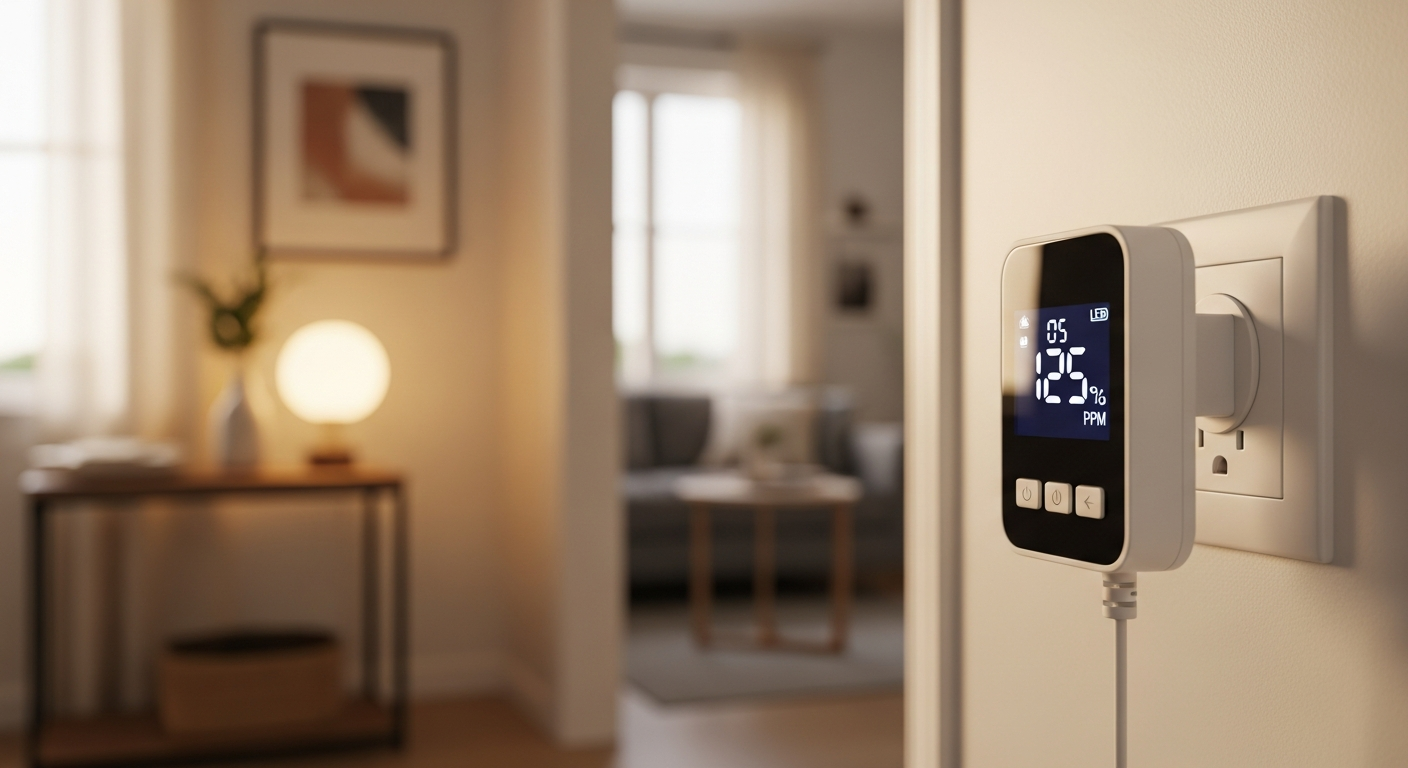
| Portable with live PPM display | Audible alarm + continuous OLED/LCD PPM readout | Plug-in, often with rechargeable battery for travel | Detecting sub-threshold leaks; travel, rentals, RVs, hotel rooms | Typically covers one room at a time; not interconnected across a whole house |
==The critical distinction isn't brand — it's whether the device only alarms at the UL 2034 threshold or continuously displays PPM, since sub-threshold CO exposure (10–35 PPM) is where most chronic, misdiagnosed poisoning occurs.== A household that wants both whole-home coverage and visibility into lower-level leaks typically needs more than one type — for example, hardwired alarms on every level plus one portable display unit near a suspected source like a garage or a water heater closet.
Takeaway: the right detector type depends on whether you're covering a fixed structure, need mobility, or want continuous PPM visibility rather than a binary alarm.
Go deeper
What Is the Best Carbon Monoxide Detector in 2026?
There is no single "best" detector for every situation — the right choice depends on whether you need fixed whole-home coverage or portable, real-time monitoring. For new construction or a full home retrofit, an interconnected hardwired system from an established brand like Kidde or First Alert remains the standard, since it covers every level automatically and meets most state mandates out of the box.
For anyone who wants to see the actual PPM reading rather than wait for a binary alarm — homeowners investigating a suspected slow leak, renters and travelers who can't install hardwired units, or RV and camper owners — a portable detector with a live digital display is the better fit. ==The AirShield 3-in-1 Portable Carbon Monoxide Detector uses an electrochemical sensor with a Smart M8 chip, shows live CO PPM, humidity, and temperature on an OLED screen, and is UL listed with universal 100–240V power for international use.== It does not replace hardwired interconnected coverage in a large multi-story home, but it fills the gap those systems leave: visibility into CO levels below the alarm threshold, and portability across rooms, rentals, and trips.
Takeaway: match the detector type to the coverage you actually need — fixed whole-home alarms for baseline compliance, a portable PPM-display unit for early warning and mobility.
Where Should You Install a Carbon Monoxide Detector?
The Consumer Product Safety Commission (CPSC) recommends at least one CO detector on every level of a home, including the basement, and one within 10 feet of every bedroom door so the alarm is loud enough to wake a sleeping occupant. Because CO has roughly the same density as air and mixes evenly rather than settling or rising like a heavier or lighter gas, mounting height is far less critical than it is for smoke detectors — a CO detector works whether it's plugged into a low outlet, mounted on a wall, or placed on a tabletop.
==Keep detectors at least 5 feet from fuel-burning appliances such as furnaces, water heaters, and stoves to avoid nuisance readings from normal appliance startup, and avoid placing units directly next to windows, doors, or air vents where outdoor drafts can skew readings.== Add a dedicated detector near an attached garage, in any room with a fireplace or wood stove, and near a portable generator's operating area — never inside an enclosed space with the generator itself.
Takeaway: cover every level and every sleeping area first, then add detectors near specific combustion sources like garages, water heaters, and fireplaces.
How Much Does a Carbon Monoxide Detector Cost?
Basic battery-powered plug-in alarms range from about $20 to $40 and provide UL 2034-compliant alarm protection with no display. Smart, WiFi-connected models that push a phone notification alongside the audible alarm typically run $40 to $80. Hardwired, interconnected whole-home systems cost more once installation is included — often $100 to $300 total when an electrician wires multiple units together across a multi-story house.
Portable detectors with a continuous digital PPM display sit in a similar price range to smart alarms — the AirShield 3-in-1, for example, is priced around $59 — but add real-time monitoring and portability that fixed-location alarms don't offer. ==Price alone is a poor proxy for protection quality; the sensor type, UL 2034 listing, and whether the unit displays PPM or only alarms at threshold matter more than the sticker price.==
Takeaway: budget alarms and premium display units can cost the same — the deciding factor should be sensor type and whether you need continuous PPM visibility, not price bracket alone.
How to Choose the Right Detector for Your Home
Start by counting the levels and sleeping areas in your home, since that determines the minimum number of units the CPSC recommends. Then identify specific CO sources — an attached garage, a gas water heater, a fireplace — that warrant an additional dedicated detector nearby. Finally, decide whether binary alarm protection is sufficient or whether you want continuous PPM visibility to catch sub-threshold leaks before they become dangerous.
- Confirm the detector is UL 2034 listed before buying — this is the baseline safety certification.
- Install one unit per level and one within 10 feet of every bedroom door.
- Add a dedicated unit near attached garages, water heaters, fireplaces, and generator operating areas.
- Choose a model with a live PPM display if you want visibility below the alarm threshold.
- Check the sensor's rated lifespan (typically 5–7 years) and mark a replacement date.
- Test the alarm function monthly and replace batteries or check plug-in backup power on the same schedule as smoke detectors.
Takeaway: the right setup is rarely one device — it's whole-home baseline coverage plus targeted detectors near known combustion sources.
AirShield™ 3-in-1 Portable Carbon Monoxide Detector
Electrochemical sensor with Smart M8 chip. Live OLED display showing real-time CO PPM, humidity, and temperature. UL listed. Works worldwide on 100–240V. Built for the gap fixed alarms leave — continuous visibility, not just a threshold alarm.
Check Availability →Frequently Asked Questions
Sources & References
- U.S. Consumer Product Safety Commission (CPSC) — Carbon Monoxide Information Center
- CDC — About Carbon Monoxide Poisoning
- NIOSH — Carbon Monoxide Occupational Exposure Limits
- UL Standards — UL 2034 Single and Multiple Station Carbon Monoxide Alarms
- National Fire Protection Association (NFPA) — CO Alarm Placement Guidance