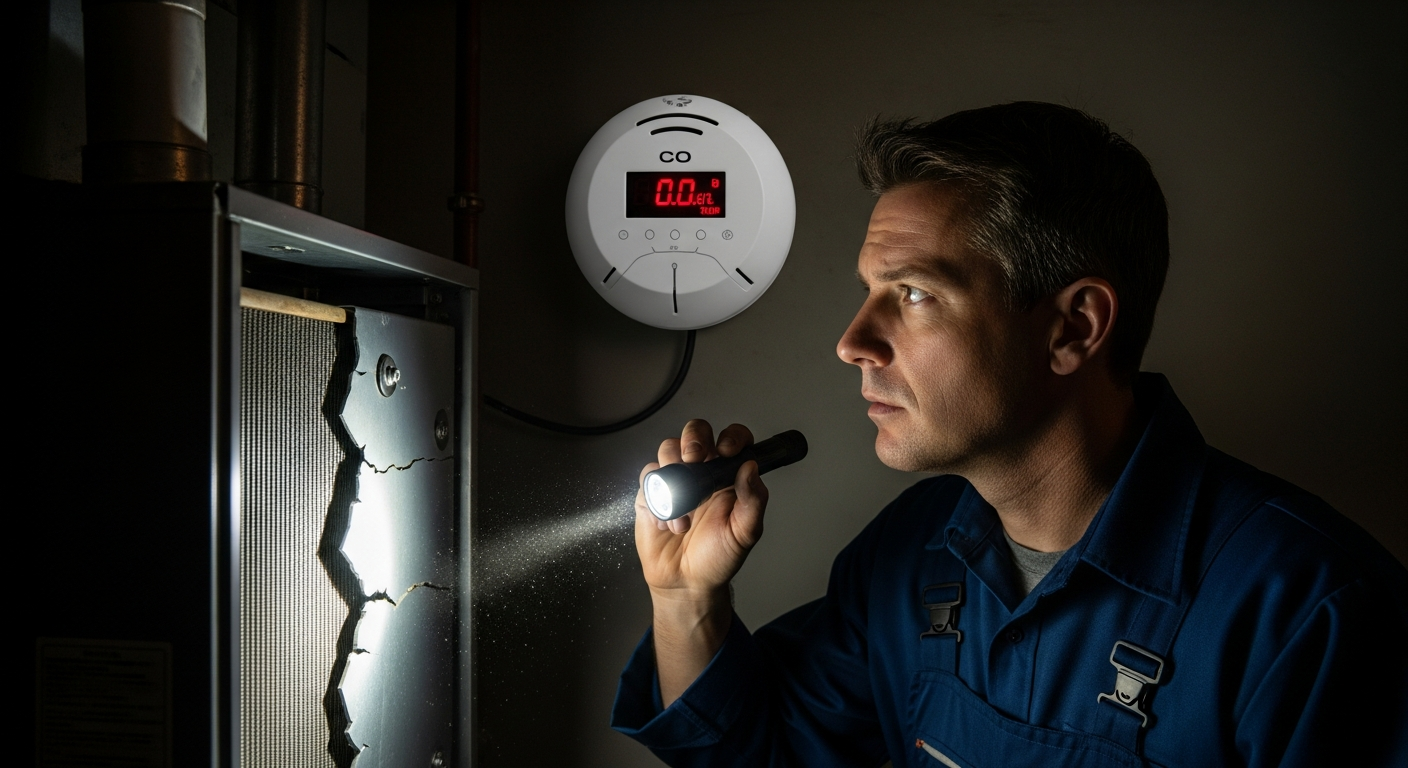
Your gas furnace is running right now — or it will be as soon as temperatures drop. And it is the single most common source of fatal carbon monoxide poisoning in American residential buildings. The CPSC estimates that more than 150 people die each year from CO produced by gas heating systems, with thousands more requiring emergency treatment. Furnace carbon monoxide events share a consistent pattern: the CO builds slowly over hours while the home's occupants sleep, the accumulation follows a subtle symptom curve that mimics winter illness, and by the time the alarm sounds — if there is a working alarm — the exposure has been prolonged. Understanding how furnaces produce carbon monoxide, which specific failure modes are most dangerous, and what the early warning signs look like is the most direct thing a homeowner with a gas furnace can do to prevent a preventable fatality.
How a Gas Furnace Produces Carbon Monoxide
Under normal operating conditions, a properly maintained gas furnace produces very little carbon monoxide. The burner combusts natural gas in the presence of adequate oxygen, producing primarily carbon dioxide, water vapor, and heat. The exhaust gases — including whatever trace CO is produced — travel through the heat exchanger, into the flue, and exit the building through the exhaust vent. The home's air never contacts the combustion gases directly; the heat exchanger is the physical barrier between the combustion side and the air distribution side. Carbon monoxide becomes a problem when one of three things happens: the combustion process is incomplete (insufficient air supply, contaminated gas, or a dirty burner), the heat exchanger fails and allows exhaust gases to mix with the circulated air, or the exhaust system fails to remove combustion byproducts from the building. Each failure mode produces CO, but the cracked heat exchanger is by far the most dangerous because it routes exhaust gases directly into the air stream that flows to every room in the house. Takeaway: the furnace's heat exchanger is the single most consequential component for CO safety.
The Cracked Heat Exchanger: Your Biggest Risk
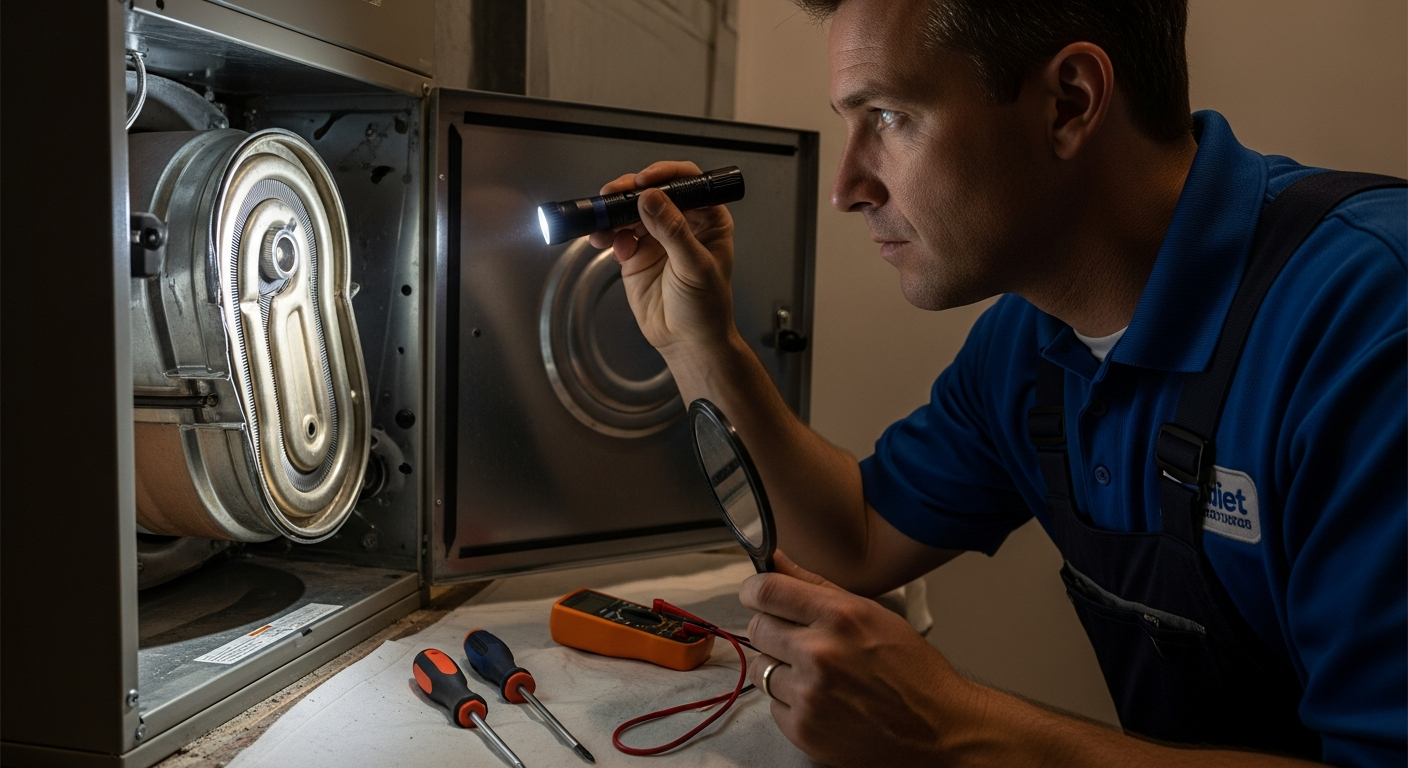
A heat exchanger is a metal chamber through which combustion gases pass — it heats the surrounding air without mixing with it. Over years of thermal cycling (heating up and cooling down thousands of times), the metal develops fatigue and can crack. When a heat exchanger cracks, combustion gases including carbon monoxide escape into the air distribution system and are delivered to every room served by the HVAC. A crack does not have to be visible to be dangerous — hairline fractures that cannot be seen without a professional inspection or a combustion gas test can allow significant CO migration. Heat exchangers in residential furnaces typically last 15 to 25 years, but furnaces operated under stress — oversized units that short-cycle, units with dirty filters that restrict airflow, or units with overheated burners — can develop cracks significantly earlier. The CPSC and NFPA both recommend annual professional inspection of gas furnaces as the primary prevention measure for heat exchanger failure. Takeaway: annual furnace inspection specifically including heat exchanger integrity testing is the most important single action for furnace CO prevention.
Warning Signs Your Furnace May Be Producing CO
Before a CO alarm triggers or symptoms become severe, furnaces often give observable signs that something is wrong. The most reliable visual indicator is the flame color: a properly burning gas burner produces a blue flame with a small yellow-orange tip. A furnace burner producing elevated CO will often show an abnormally yellow or orange flame, indicating incomplete combustion. Additional warning signs include soot or black marks around the furnace cabinet, heat exchanger, or flue connections — products of incomplete combustion that indicate a combustion problem. A furnace that short-cycles — turns on and off more frequently than usual — may have a heat exchanger problem causing an internal temperature trip. Excessive condensation on interior windows during furnace operation can indicate combustion gases are being introduced into the home's air. At the household symptom level: occupants feeling headaches, fatigue, or mild nausea that consistently improve when they leave the house and worsen in the morning after overnight furnace operation should treat this as a potential CO exposure pattern. Takeaway: a yellow furnace flame plus occupant symptoms is a CO emergency until proven otherwise.
Annual Maintenance: What to Ask For and Why It Matters
HVAC industry guidance universally recommends annual furnace inspection before the heating season begins. Most homeowners schedule this as a general tune-up, but the specific CO-relevant elements of an annual inspection are worth understanding. A comprehensive furnace safety inspection should include: visual inspection of the heat exchanger for visible cracks or stress fractures, combustion gas analysis at the flue outlet to measure CO concentration in the exhaust, inspection of all vent connections for rust, corrosion, gaps, and proper slope, verification that combustion air supply is adequate for the appliance's BTU rating, cleaning of burners and inspection of flame pattern, and verification that the exhaust termination is clear of obstructions including snow, ice, or bird nests. Ask your technician specifically to test for CO in the exhaust and in the supply air — some will not do this without a specific request. If the technician finds a cracked heat exchanger, do not restart the furnace until it has been replaced. Temporary electric heat is a far better option than continued CO exposure. Takeaway: request CO testing specifically in your annual inspection — it is the only way to detect furnace carbon monoxide before symptoms appear.
Practical Application: Protecting Your Home From Furnace CO
- Schedule a furnace inspection before heating season starts — specifically request heat exchanger inspection and combustion CO testing
- Install a CO detector with a live PPM display on each floor of the home, prioritizing locations near sleeping areas
- Check and replace the furnace filter on the manufacturer's schedule — restricted airflow is a direct cause of overheating and heat exchanger stress
- If you notice a yellow furnace flame, soot around the cabinet, or short-cycling, call an HVAC technician immediately — do not wait for the seasonal inspection
- Know the pattern of furnace-related CO poisoning: symptoms that worsen overnight and improve when you leave the home are the hallmark — do not attribute these to winter illness without ruling out CO Carbon Monoxide Poisoning Symptoms: Signs & What to Do
- If your furnace is more than 15 years old, discuss heat exchanger integrity specifically with your technician — age is the primary risk factor for cracking
- Consider a CO detector at the return air intake if your system is centrally ducted — this location detects any CO being distributed through the system before it reaches living areas
Furnace carbon monoxide is not a fringe risk. It is the leading cause of residential CO deaths in the United States, it peaks in winter during heating season, and it follows a pattern that makes it easy to mistake for ordinary winter illness until concentrations rise to a level that impairs the judgment needed to recognize the danger. Annual inspection and a live-reading CO detector are the two interventions with the highest demonstrated impact. Both are accessible, neither is expensive, and either alone catches what the other might miss.
Protect Your Home with AirShield™
The only portable CO detector that shows you real-time PPM readings on a live OLED display. Electrochemical sensor, multi-gas detection, UL listed.
Check Availability →
Loading comments...