
Carbon monoxide in vacation rentals has killed guests in Airbnbs, beach houses, mountain cabins, and hotel rooms — not as freak accidents, but as a documented and recurring pattern linked to aging appliances, absent detectors, and the fundamental problem that every short-term rental is a stranger's home with maintenance history you cannot verify. Since 2012, the CPSC has documented multiple fatalities directly attributable to CO in short-term rental properties, prompting policy changes at Airbnb and VRBO and a specific CPSC advisory warning travelers to bring portable CO detectors. Summer travel season — Memorial Day through Labor Day — is when millions of Americans book vacation rentals and hotel rooms with no visibility into the detector status of the space where they will sleep. This guide covers exactly what Airbnb's CO detector policy does and does not guarantee, how to check a rental's actual detector status, and why a portable detector you bring yourself is the only CO protection you can fully trust.
What Airbnb's CO Detector Policy Actually Requires — and What It Misses
Airbnb's current policy requires hosts to install CO detectors in listings that have enclosed sleeping spaces and either fossil fuel appliances (gas stoves, furnaces, water heaters) or an attached garage. Hosts must confirm compliance during the listing setup process. The gap is in verification. Airbnb does not physically inspect properties. Detector compliance is self-reported by hosts — and hosts may not know that their detector has exceeded its sensor lifespan, is incorrectly placed, or fails to meet the UL 2034 standard. A CO detector that is 8 years old, mounted on a kitchen ceiling near the gas range, and never had its manufacture date checked may technically satisfy Airbnb's policy while providing zero actual protection. The specific things Airbnb's policy does not guarantee: **Current sensor functionality.** CO detector sensors have a 5–10 year lifespan. A detector installed when a property was first listed years ago may have an expired sensor today — still mounted, still on the listing photos, and still non-functional at any CO concentration. **Correct placement.** NFPA 720 requires CO detectors within 15 feet of each sleeping area. A single detector in the kitchen, distant from the bedrooms where guests sleep, may not respond to CO building in the bedroom zone fast enough to wake sleeping occupants. **Alarm-only detection.** Even a correctly placed, in-date detector only alarms at 70 PPM sustained for 4 hours or 150 PPM for 50 minutes. Sub-threshold concentrations — which cause symptoms and chronic exposure effects — go undetected. How Long Do Carbon Monoxide Detectors Last? When to Replace Yours Takeaway: Airbnb's policy creates an expectation of protection that the physical detector may or may not actually deliver — the only way to know is to check the unit yourself on arrival.
How to Check a Vacation Rental's CO Detector the Moment You Arrive
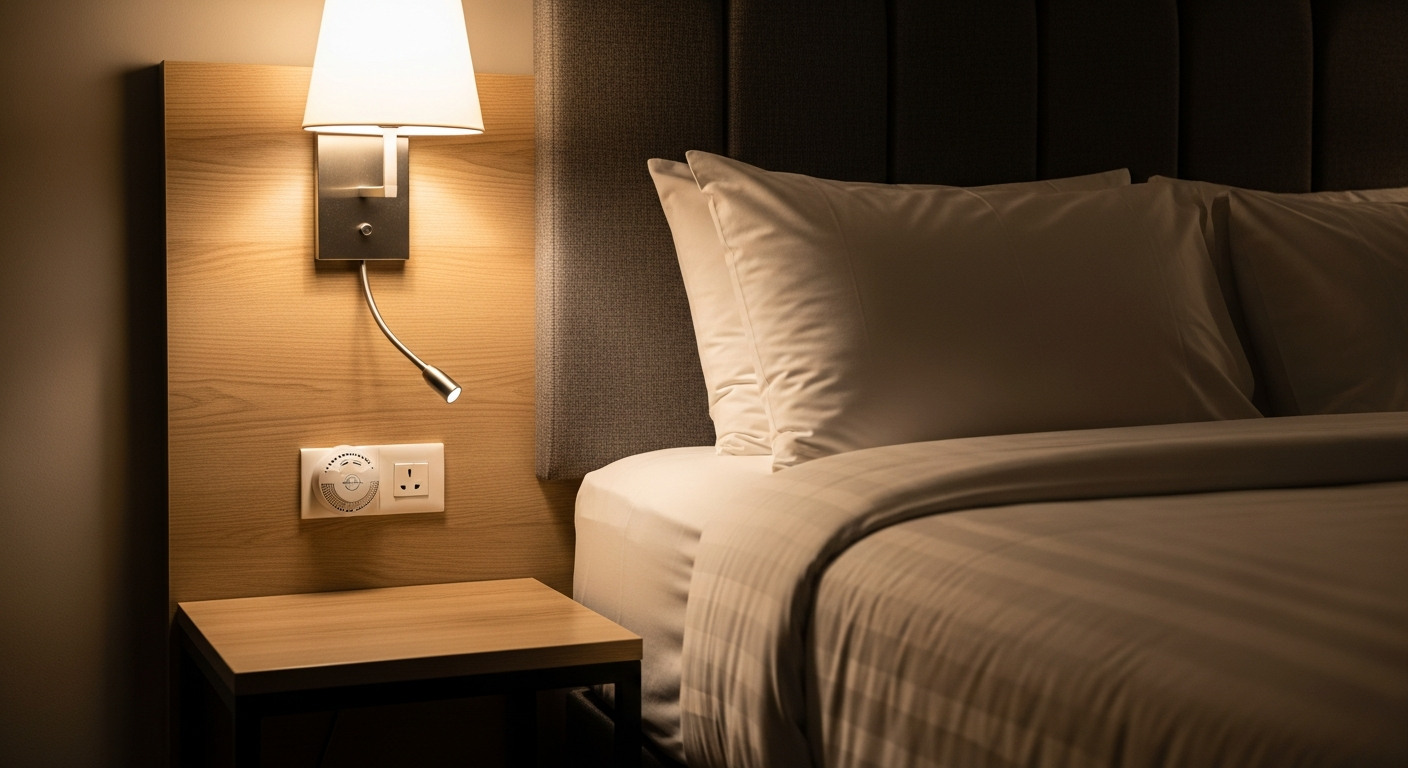
The 5-minute arrival check that every short-term rental guest should perform: **Step 1: Find the detector.** Walk every room, including hallways near bedrooms. If there is only one detector and it is in the kitchen or near the front door, it is not covering the sleeping areas where CO risk is highest during nighttime exposure. **Step 2: Check the manufacture date.** Turn the detector face-down or look at its back panel. Every UL 2034 CO detector must display either a manufacture date or a replacement date. If the manufacture date is more than 7 years ago — or if there is no date at all — the sensor is likely past its service life. **Step 3: Press the test button.** A functional alarm will sound within 10 seconds. No sound means the battery is dead, the unit is defective, or the alarm function has failed. Note: this test checks circuitry, not the actual CO sensor's ability to detect gas. **Step 4: Note placement relative to where you will sleep.** The detector should be within 15 feet of the bedroom door where you sleep. If it is on a different floor or in a separate wing of the property, it is not providing bedroom-level protection. If any of these checks fail — missing detector, expired date, failed test, or placement far from sleeping areas — treat the rental as having no functioning CO protection for that night. Carbon Monoxide Detector Placement: Exactly Where to Put Yours Takeaway: the 5-minute arrival check is the only way to convert a rental's listed policy into confirmed protection.
The Specific CO Sources in Vacation Rentals That Most Guests Never Think About
Short-term rentals concentrate multiple CO sources in a space whose maintenance history is entirely unknown to the guest: **Aging gas appliances.** Vacation properties often have older appliances — furnaces, water heaters, and gas ranges that may not have been serviced in years. A furnace with a cracked heat exchanger can vent combustion gases into the living space rather than the exterior flue. The appliance runs normally; CO accumulates slowly overnight. **Attached garages.** A vehicle warming up in the attached garage of a vacation home sends CO directly into the living space through any gap in the shared wall. Rental guests may not know the garage shares a wall with the bedroom wing. **Fireplaces with improper flue draw.** A wood fireplace or gas fireplace with a partially blocked flue, a closed damper, or inadequate outdoor air for combustion produces CO that enters the living space rather than exiting through the chimney. Rental guests often use the fireplace without knowing its maintenance status. **Pool and spa heating equipment.** Properties with outdoor pools and hot tubs typically have gas heaters. A heater with a failing heat exchanger or blocked exhaust vent can produce CO that migrates toward the adjacent structure. None of these sources are visible. None produce a smell. And all can be simultaneously present in a vacation rental that last had an appliance inspection years before your booking. Does Carbon Monoxide Have a Smell? What You Need to Know Takeaway: the variety of CO sources in a vacation property — and the absence of any maintenance transparency — is the fundamental argument for bringing your own detector.
Why Bringing Your Own Portable CO Detector Is the Standard for Safe Travel
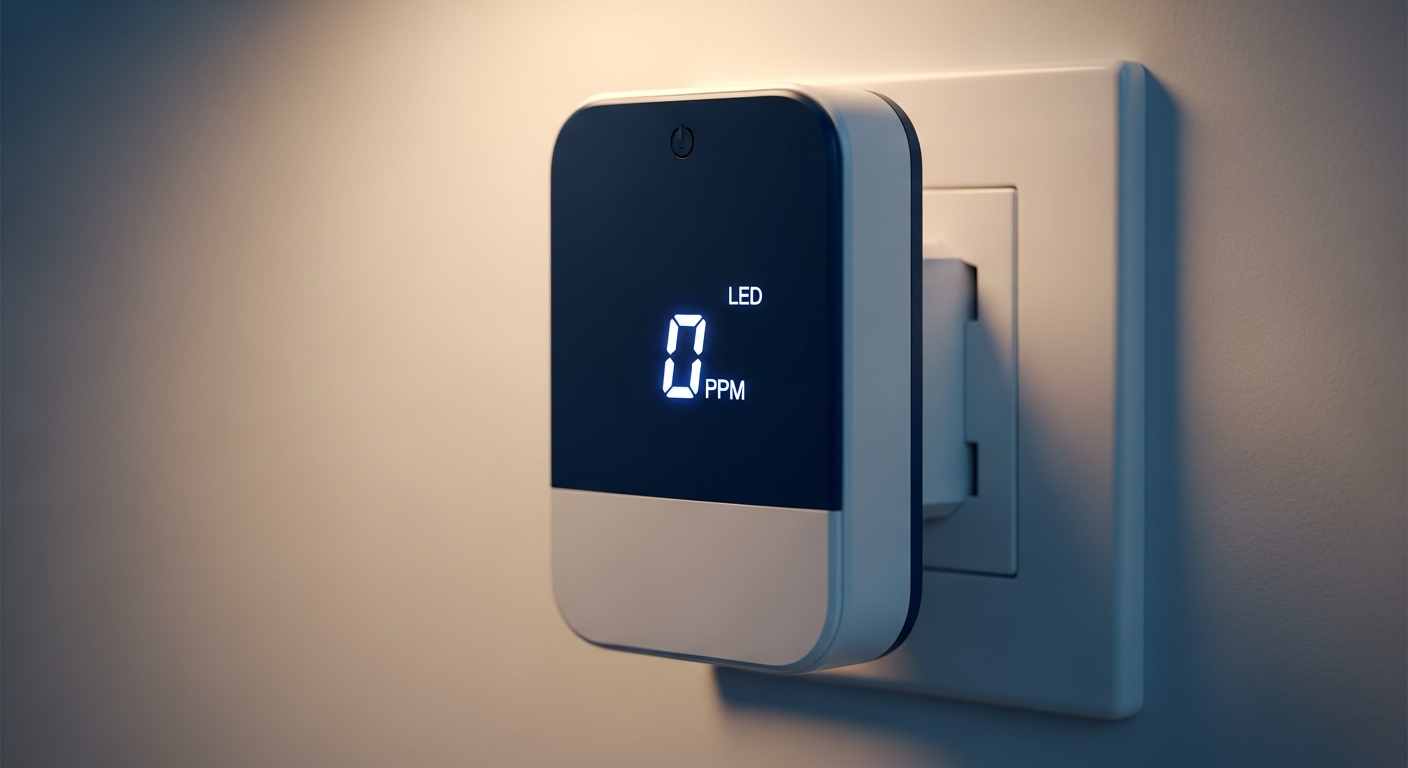
A portable CO detector you carry gives you something no Airbnb policy can: certainty that the equipment measuring the air in the room where you sleep is current, calibrated, and yours. The specific advantages of a portable detector over the property's installed unit: **Known purchase date.** You know exactly when you bought it and how old the sensor is. No guessing from a faded sticker on a wall-mounted unit. **Correct placement.** You plug it in within 10 feet of where you will sleep — not wherever the host happened to mount it near the kitchen. **Live PPM display.** A detector with a real-time PPM readout shows you whether there are sub-threshold concentrations in the room (5, 15, 25 PPM) before any alarm-only unit would trigger. That readout is your independent verification that the air is clean — not an assumption based on the absence of an alarm. **Works in every rental, every hotel, every night.** The same detector that checks your vacation rental checks the hotel room in Charleston, the cabin in Colorado, and the Airbnb in Portugal. One purchase covers every place you sleep that is not your home. Portable Carbon Monoxide Detector for Travel: What to Look For in 2025 Takeaway: a portable detector in your bag is the single travel safety purchase that covers every CO source in every space where you sleep away from home.
Short-term rental platforms have improved their detector policies — but a policy is not a detector, and a detector is not a functioning sensor. The only CO protection you can fully trust in any vacation rental or hotel room is the one you brought yourself, plugged in within arm's reach of where you sleep, showing you the live number in real time. The AirShield™ 3-in-1 Portable Carbon Monoxide Detector is designed specifically for this: compact enough to pack, universal voltage for international travel, and a live OLED display that shows CO PPM, temperature, and humidity the moment it is plugged in. Stop hoping the rental's detector is current. Know for certain. Visit airshield.store.
Frequently Asked Questions
Sources & References
- CPSC: Short-Term Rental CO Safety Guidance — CPSC consumer guidance on CO detectors in vacation rentals; CPSC has documented multiple fatalities in short-term rentals lacking functioning CO detectors
- CDC: Carbon Monoxide Poisoning Prevention — CDC data on CO fatalities and prevention; hotel and short-term rental incidents documented as recurring source category
- Airbnb: Safety Policy — CO and Smoke Detectors — Airbnb's host requirements for CO detectors in listings with enclosed sleeping areas and fossil fuel appliances or attached garages
- NFPA 720: Standard for CO Detection in Dwelling Units — NFPA 720 placement standard for CO detectors; basis for most state residential requirements
Protect Your Home with AirShield™
The only portable CO detector that shows you real-time PPM readings on a live OLED display. Electrochemical sensor, multi-gas detection, UL listed.
Check Availability →
Loading comments...