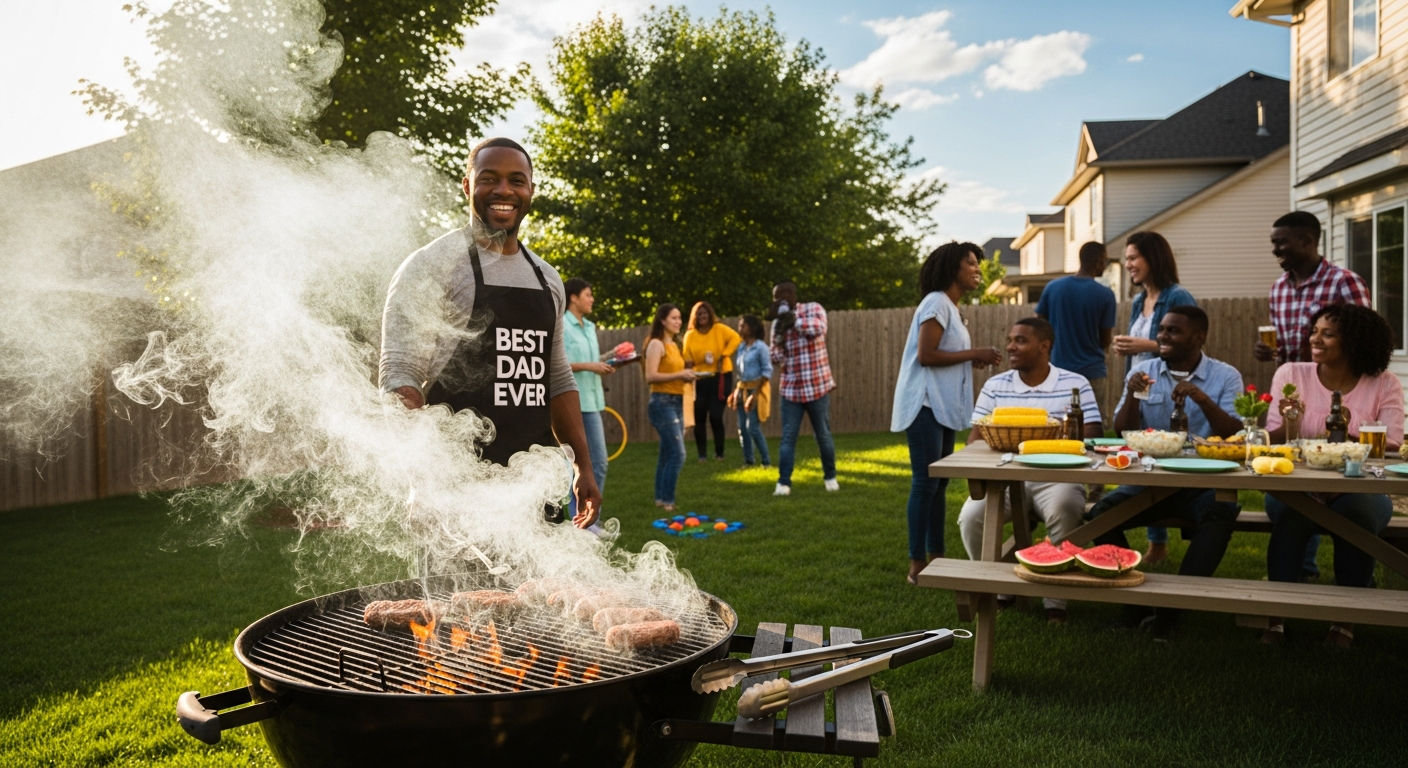
Today is Father's Day — the single biggest grilling day on the American calendar. According to the Hearth, Patio & Barbecue Association, more Americans fire up a grill on Father's Day than on any other day of the year, including the Fourth of July. Millions of charcoal and propane grills are lighting up right now in backyards, on patios, and — critically — in garages, under canopies, and inside covered outdoor kitchens across the country. Father's Day carbon monoxide risk is real, predictable, and almost never discussed at the cookout. This post covers what every host and backyard chef needs to know before the grill lights up. Carbon Monoxide from Grills: The Summer Risk Most Backyard Cooks Ignore
Every Charcoal and Propane Grill Produces Carbon Monoxide
Carbon monoxide is not a malfunction — it is the normal byproduct of combustion. When carbon-based fuel burns without enough oxygen to complete the reaction, CO is produced instead of CO₂. Charcoal grills produce CO throughout their entire burn cycle, peaking when coals are lit and when the grill is running hot with the lid closed. Propane grills produce CO when the burners run, though at lower concentrations than charcoal under equivalent conditions. In open outdoor air, these concentrations disperse before they build to dangerous levels. Move that same grill under a covered patio, into a garage, beneath a pop-up tent, or against a wall that breaks airflow — and the physics change entirely. Walls and ceilings don't move CO the way wind does. They allow it to pool. On a calm Father's Day afternoon, a grill under a gazebo with closed or partial walls can accumulate CO faster than the host's body recognizes the early warning signs. Does Carbon Monoxide Have a Smell? What You Need to Know Takeaway: A grill doesn't have to malfunction to produce dangerous CO — it just has to be used in a space where the gas can collect instead of disperse.
The Enclosed Space Problem — Where Most Father's Day CO Incidents Happen
The CPSC documents carbon monoxide deaths related to grills every year, and the pattern is consistent: the grill was moved. Someone brought the charcoal grill into the garage when it started raining. Someone set it up under a pop-up tent with the side panels down. Someone backed it against the house wall to block the wind and didn't realize they'd created a pocket where CO concentrated. Father's Day gatherings add several factors that make this more likely: - Larger groups mean more fuel burned for longer periods - Covered outdoor spaces — gazebos, pergolas, covered patios — look open but block the air movement that makes outdoor grilling safe - Guests feel early symptoms (headache, slight dizziness) and attribute them to heat, alcohol, or standing near the fire - No one wants to raise a concern at a family celebration The typical Father's Day CO incident isn't someone grilling inside a garage with the door shut — it's someone grilling on a covered structure that looks ventilated but isn't. The difference between open-air grilling and semi-enclosed grilling is often invisible until CO has already built. Carbon Monoxide Poisoning While Sleeping: The Real Risk Takeaway: Semi-enclosed outdoor spaces — gazebos, tents, covered patios — carry real CO risk that looks like good weather planning.
Why Kids at Cookouts Are at Greater Risk Than Adults
Carbon monoxide affects everyone, but children are significantly more vulnerable than adults at the same concentration. Children breathe faster relative to their body size, which means they absorb a greater proportion of CO per minute of exposure. Their smaller blood volume means CO accumulates faster in the bloodstream at equivalent exposure levels. A Father's Day cookout is, by definition, a family event. Kids are running around near the grill, sitting in the smoke path, eating at tables adjacent to burning charcoal. At low concentrations — levels that a healthy adult might experience as a mild headache — a child can become noticeably impaired faster. A child who seems unusually cranky, tired, or nauseated at an outdoor cookout should prompt you to consider CO before assuming they're overheated or overstimulated. It's a connection almost no parent makes in the moment — because CO poisoning doesn't look like CO poisoning. It looks like a tired kid who's had too much sun. Carbon Monoxide Poisoning Symptoms: What to Know Before It's Too Late Takeaway: Children absorb CO faster than adults — an unusually tired or unwell child at a cookout near a grill is a signal worth taking seriously.
What a CO Detector Shows You That Instinct Never Could
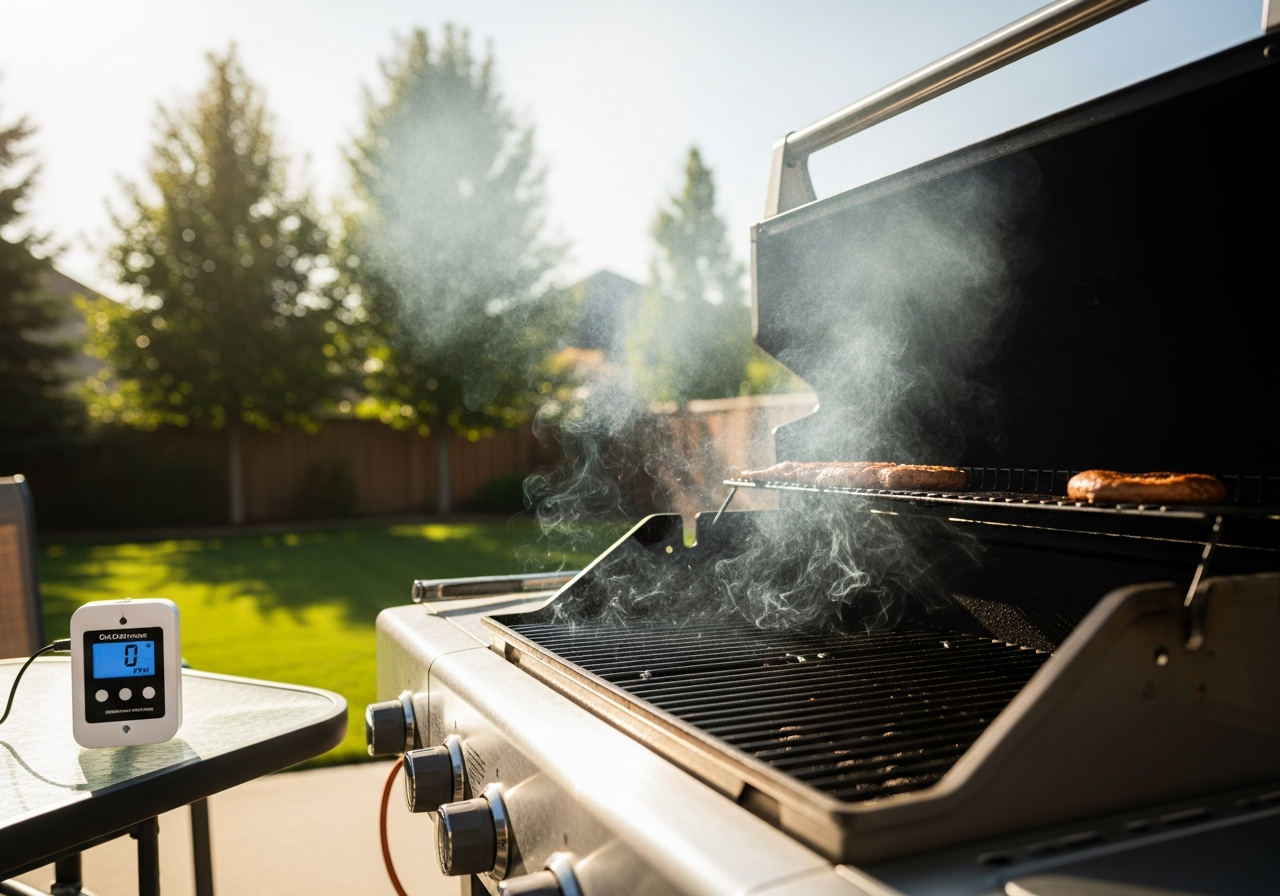
The sensory problem with CO at cookouts is that the grill is already producing visible smoke and a recognizable smell. That smell — the pleasant aroma of charcoal or propane cooking — masks any sense that anything is wrong. CO has no odor. It produces no visible haze. The only way to know the concentration in the air near a grill is to measure it. A portable plug-in CO detector placed near the cooking area reads the live CO level in real time — not a threshold alarm that only sounds when dangerous concentrations are reached, but an actual number. 35 PPM by the covered grill station, climbing to 60 PPM when the lid goes down — that's information that changes behavior before symptoms start. A beep-only alarm is calibrated to sound after prolonged exposure; a live display tells you the trend before you cross into that territory. For a Father's Day cookout where kids are nearby, where guests are staying for hours, and where the grill may be running under a covered structure, knowing the number is the difference between catching a problem early and attributing it to the heat until someone feels genuinely ill. Carbon Monoxide PPM Levels Explained: What's Safe, What's Dangerous Takeaway: CO at a cookout can only be detected by measurement — instinct, smell, and sight all fail to catch it before symptoms start.
Practical Steps Before You Light the Grill Today
Father's Day cookout safety doesn't require canceling plans — it requires adjusting one or two things about where and how the grill runs:
- Always grill in fully open outdoor air — no gazebo side panels, no garage doors cracked, no walls within a few feet that could break airflow on all sides
- Keep charcoal grills away from any structure: CPSC guidance is clear that no grill should be used within any enclosed or semi-enclosed space, regardless of how open it feels
- Place a CO detector near the grill area — plug it in to an outdoor outlet or use battery backup; let it read for 10 minutes before your first guests arrive
- Know the early symptoms: frontal headache, nausea, dizziness, and confusion are the four signals — if multiple people feel them simultaneously, leave the space immediately
- Never bring a grill indoors after the party to keep it warm or finish cooling — the grill continues to produce CO even after cooking is done while coals are still smoldering
- Brief at least one other adult at the gathering — having two people who know the symptoms and the plan is meaningfully safer than one
Father's Day carbon monoxide risk is real — but it's also entirely avoidable with the right information and one measurement device. The AirShield™ 3-in-1 Portable Carbon Monoxide Detector plugs in wherever you need it, reads live CO PPM on an OLED display, and sounds an 85 dB alarm if concentrations climb. Enjoy the cookout. Just know what's in the air. Visit airshield.store.
Frequently Asked Questions
Sources & References
- CPSC: Grill Carbon Monoxide Hazard Warning — CPSC guidance on grill-related CO deaths and outdoor-only grill operation requirements.
- CDC: Carbon Monoxide Poisoning — Frequently Asked Questions — CDC guidance on CO sources, symptoms, and prevention in residential settings.
- NFPA: Carbon Monoxide Safety — NFPA data on residential CO fatalities and prevention standards.
Protect Your Home with AirShield™
The only portable CO detector that shows you real-time PPM readings on a live OLED display. Electrochemical sensor, multi-gas detection, UL listed.
Check Availability →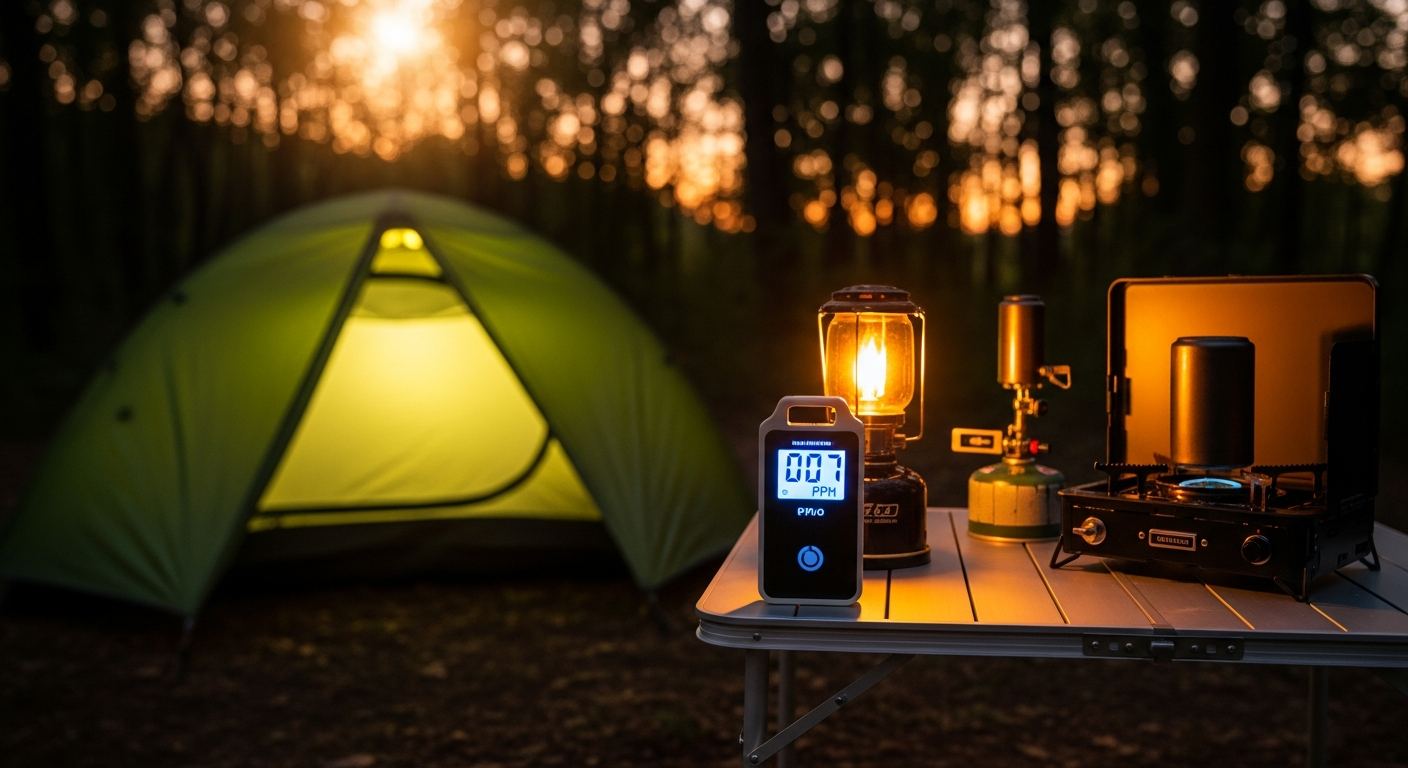
Loading comments...