Most people associate carbon monoxide poisoning with winter — furnaces failing, fireplaces backdrafting, cars warming up in garages. That association is not wrong. But it creates a dangerous blind spot from June through August, when summer carbon monoxide risks are just as real and far less expected. Boats, backyard grills, camp stoves, vacation rental appliances, and storm generators all produce CO. And summer's behavioral patterns — more time in enclosed spaces like boat cabins and covered patios, more nights in unfamiliar vacation rental beds, more generator use after hurricane-season storms — create the exposure that causes harm. The CDC notes that CO poisoning occurs year-round, with summer spikes tied directly to recreational activity and post-storm generator use. This guide covers the five carbon monoxide risks that peak in summer and what to do about each one. Generator Carbon Monoxide Dangers This Hurricane Season
Risk 1: Boats and Personal Watercraft
Recreational boating is one of the highest-risk CO environments in the summer, and also one of the least discussed. Boat engines — gasoline and diesel — produce significant CO in their exhaust, and hull design can concentrate that exhaust in ways that are not intuitive. The swim platform area at the rear of most boats is a documented CO accumulation zone: people swimming or floating near the stern of an idling boat can be exposed to CO concentrations that cause symptoms within minutes. The cockpit and cabin of slow-moving or idling boats can also accumulate CO through what the U.S. Coast Guard describes as the station wagon effect — the same aerodynamic pressure differential that can pull station wagon exhaust into the rear of a vehicle pulls boat engine exhaust forward into passenger areas. The U.S. Coast Guard reports that CO from boat engines kills dozens of Americans annually, with many more suffering neurological symptoms that are attributed to other causes because no one expected CO exposure on an open body of water. Children and smaller adults are disproportionately affected due to lower body mass and tendency to sit at the stern. This Portable Travel CO Detector Could Save Your Life Takeaway: boats produce CO at concentrations that can be life-threatening in and around the stern and cockpit — CO poisoning on the water is consistently under-attributed and under-prevented.
Risk 2: Grills and Camp Stoves in Enclosed Spaces
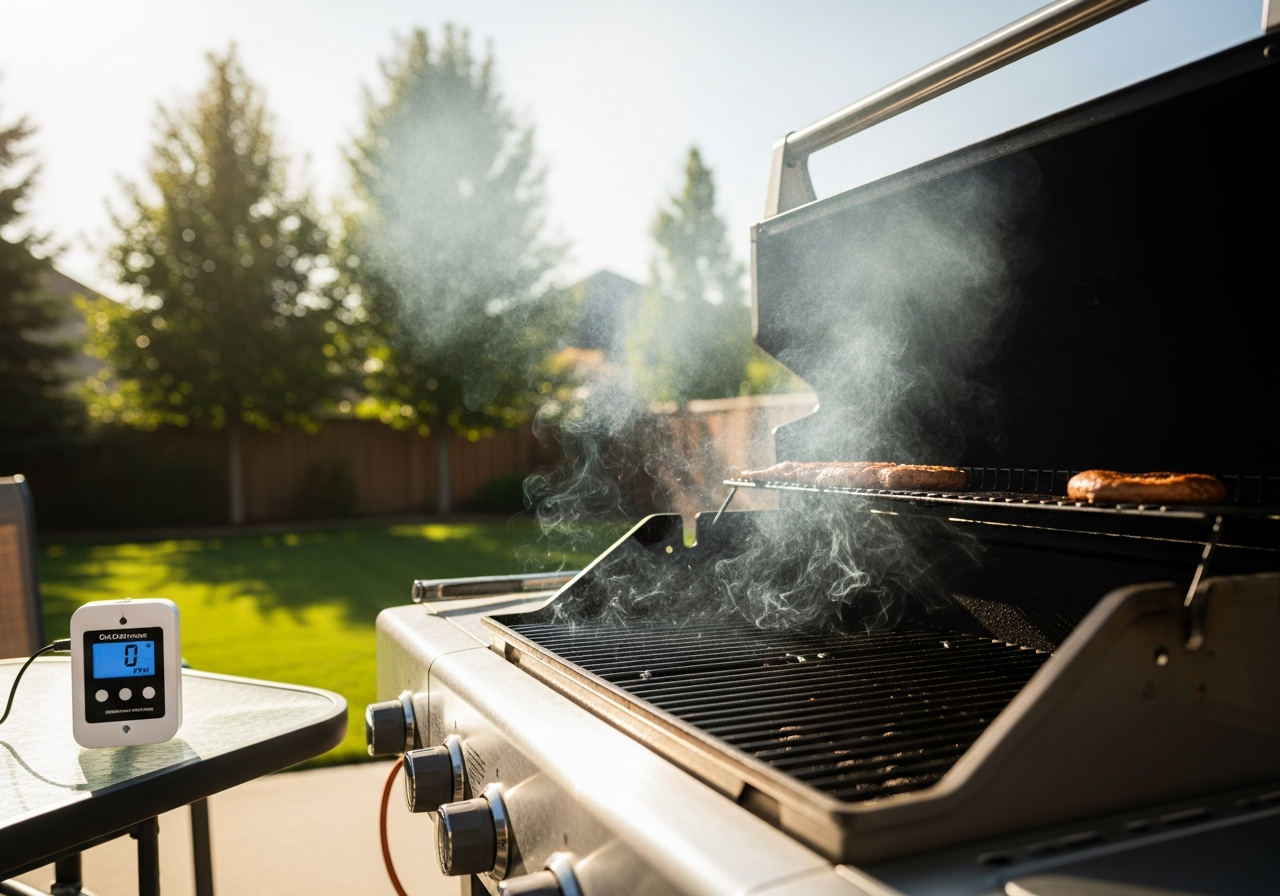
Gas and charcoal grills are designed for open outdoor use, where CO disperses as quickly as it is produced. The risk emerges from the increasingly common behavior of grilling under a covered patio, in a garage with the door open, or near open kitchen windows and sliding glass doors. In low-wind conditions — common on humid summer evenings — CO from a grill on a covered patio can accumulate faster than it dissipates, reaching 50 to 100 PPM under the cover within minutes of lighting. Camping creates a parallel risk: camp stoves used inside tents or poorly ventilated cabins for cooking or warmth produce CO concentrations that can cause rapid incapacitation. Charcoal, in particular, produces CO at much higher concentrations than propane — using a charcoal grill indoors for any reason is a documented cause of mass-casualty CO events. The CDC estimates that CO poisoning from charcoal grills and camp stoves causes dozens of deaths annually in the U.S., nearly all of which occur when the stove or grill is used in a space assumed to have adequate ventilation but does not. The test of adequate ventilation is a CO reading, not a guess. Digital Carbon Monoxide Detector: Why the Number on the Screen Changes Everything Takeaway: covered patios, garage doors, and tent walls all restrict airflow enough to allow CO accumulation — grill or camp stove location relative to enclosed spaces matters more than most people realize.
Risk 3: Vacation Rentals and Hotel Rooms
Summer travel puts millions of families in vacation rentals and hotel rooms with appliances they have never tested, maintained by people they have never met. Hotel CO incidents are documented every year: pool heating systems, boilers, and parking garage ventilation are the most common sources. In August 2025, thirteen people at an Ocean City, Maryland hotel required emergency evaluation after a CO alarm triggered — four were hospitalized. In vacation rentals, the risk is more diffuse but pervasive: gas ranges, water heaters, and fireplaces in Airbnbs and vacation homes vary enormously in age, maintenance status, and ventilation adequacy. CO detector requirements for short-term rentals differ by state, and compliance even where required is inconsistent. Maryland CO exposure cases rose nearly 50 percent in 2026 compared to the prior year — and a significant portion of those cases involve people exposed in spaces they temporarily occupied, not their own homes. Walking into a rental and seeing 22 PPM on your portable detector is information that alarm-only detectors in that room would never show you. Carbon Monoxide Detector for Travel: Your Hotel Safety Protocol Takeaway: vacation rentals and hotels carry CO risk from appliances you did not inspect and cannot assess — the only way to verify air quality in an unfamiliar space is a detector that shows you the number.
Risk 4: Storm Generators After Hurricane-Season Power Outages
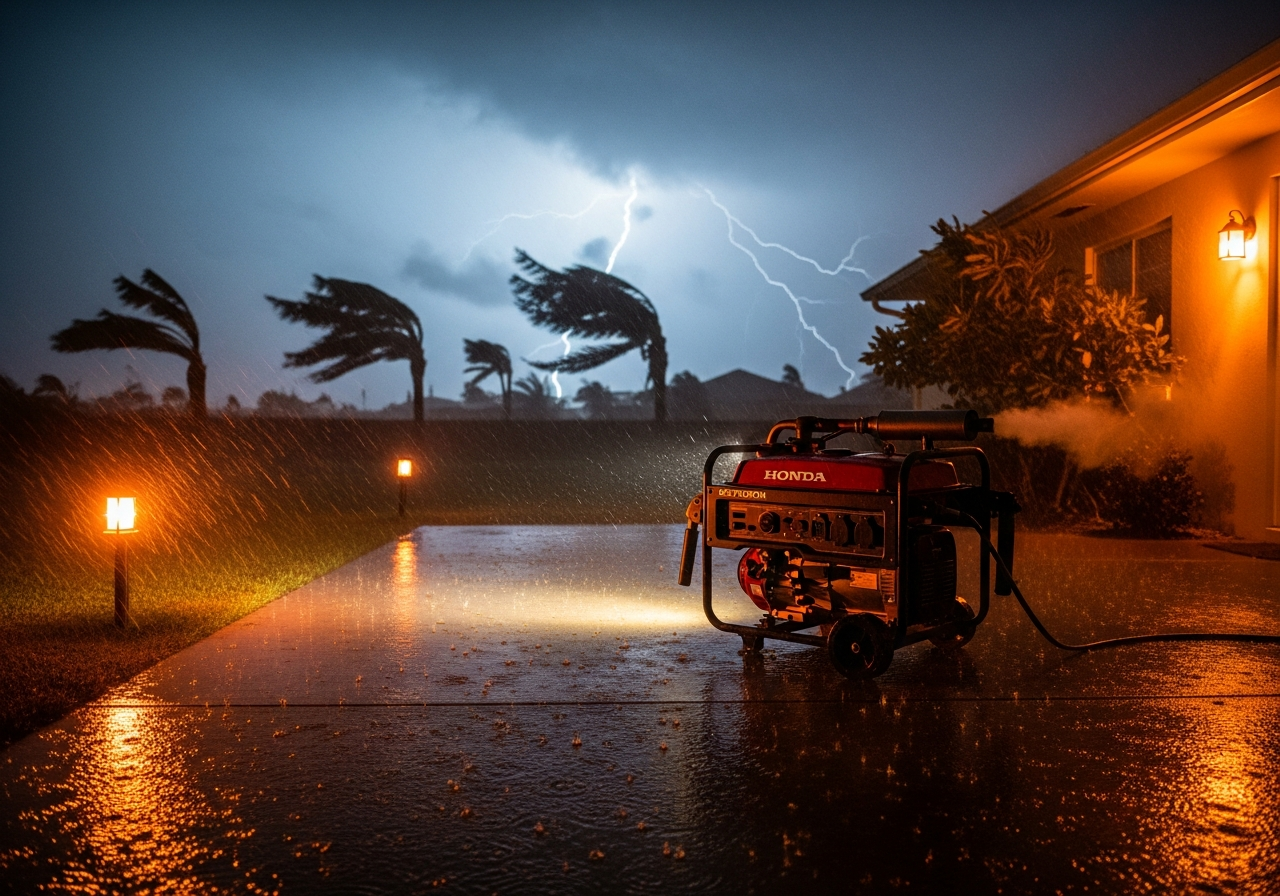
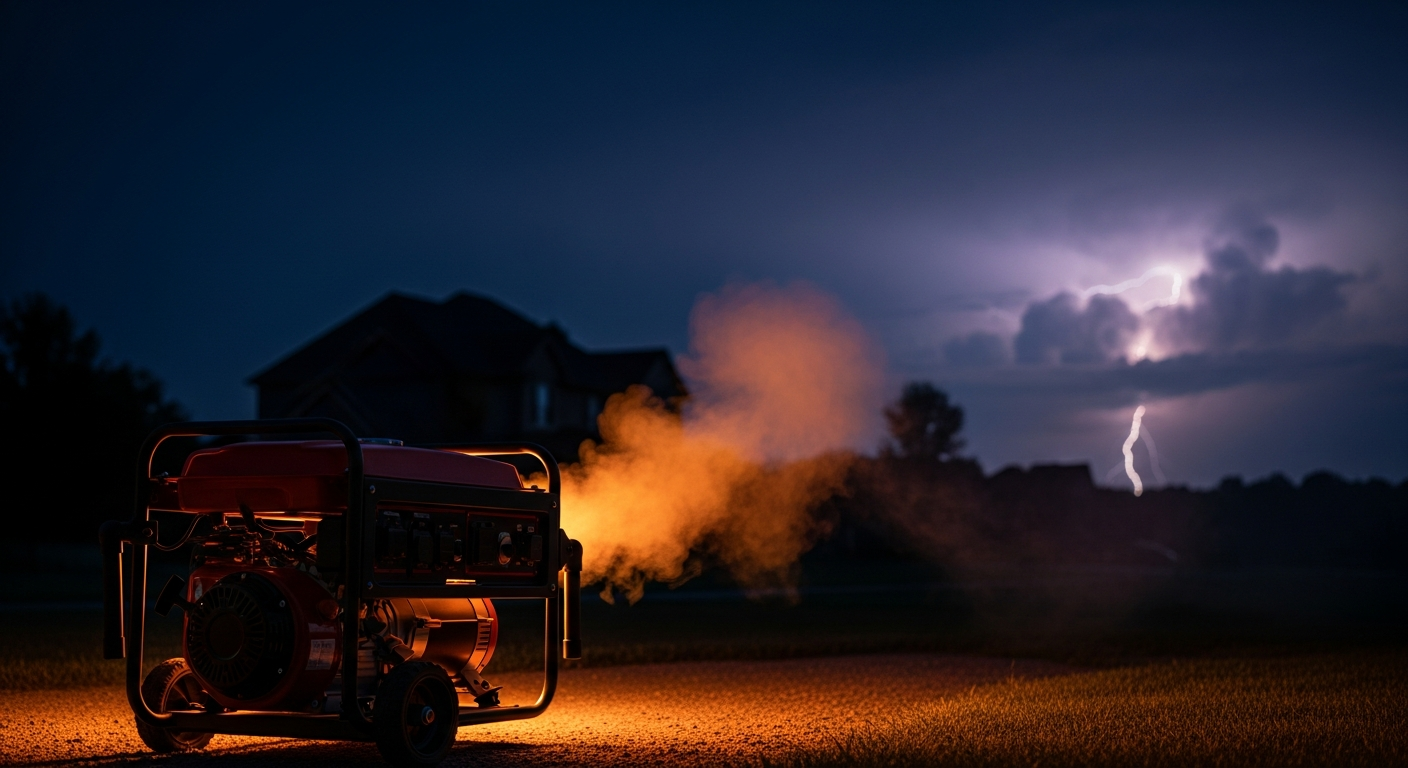
The Atlantic hurricane season runs June through November — the entire back half of summer and fall. Power outages that follow tropical storms and hurricanes trigger widespread generator use, and generator CO is the leading source of CO-related deaths in storm aftermath. The CPSC issued an active warning in June 2026 specifically about this pattern. What makes post-storm generator CO uniquely dangerous is the combination of fatigue, distraction, and sleeping: generators run overnight while families sleep, CO builds through HVAC intake or open windows, and early symptoms — headache, fatigue — are attributed to storm stress rather than CO. CPSC data establishes that generator CO incidents peak between midnight and 6 a.m. — exactly when cognitive impairment from CO is most likely to prevent the occupant from recognizing what is happening and taking action. A CO detector that shows a live reading lets someone check the level before going to sleep; an alarm-only unit stays silent at 50 PPM while CO continues to build. Generator Carbon Monoxide Dangers This Hurricane Season Takeaway: generators during storm outages create the highest-density CO poisoning risk of summer — and it overwhelmingly happens at night, when early detection matters most.
Summer CO Safety: What to Do This Season
Four practical actions reduce summer CO risk across all of these categories:
- Bring a portable CO detector on every trip — vacation rental, hotel, cabin, or RV; plug it in when you arrive and check the reading before you go to sleep
- Never idle your boat near people in the water, and keep passengers away from the stern and swim platform when the engine is running
- Move grills and camp stoves well away from any enclosed space — covered patios, screened porches, and garages with open doors all restrict airflow enough to allow CO accumulation
- Establish generator placement before a storm arrives: 20 feet minimum from the home, exhaust directed away from all windows and vents, with a CO detector inside the home running during the outage
- Know the early symptoms — headache, fatigue, and mild nausea in an enclosed or semi-enclosed space with a combustion appliance nearby — and treat them as a CO event until proven otherwise
Summer CO doesn't announce itself differently than winter CO. It's the same invisible gas, the same physiological process, the same window between early exposure and crisis — just different sources and different settings. The AirShield™ 3-in-1 Portable Carbon Monoxide Detector is built for exactly this: a device compact enough to pack, universal enough to plug in anywhere in the world, and precise enough to show you 18 PPM on a live OLED display before any alarm would register. Visit airshield.store to bring it with you this summer.
Frequently Asked Questions
Sources & References
- CDC: Carbon Monoxide Poisoning — Seasonal Patterns — CDC overview of CO poisoning patterns and summer-specific risks
- CPSC: Boating and Carbon Monoxide Safety — CPSC guidance on recreational CO exposure risks including boats and generators
- USCG: Carbon Monoxide Dangers on Boats — U.S. Coast Guard guidance on CO poisoning risks for recreational boaters
Protect Your Home with AirShield™
The only portable CO detector that shows you real-time PPM readings on a live OLED display. Electrochemical sensor, multi-gas detection, UL listed.
Check Availability →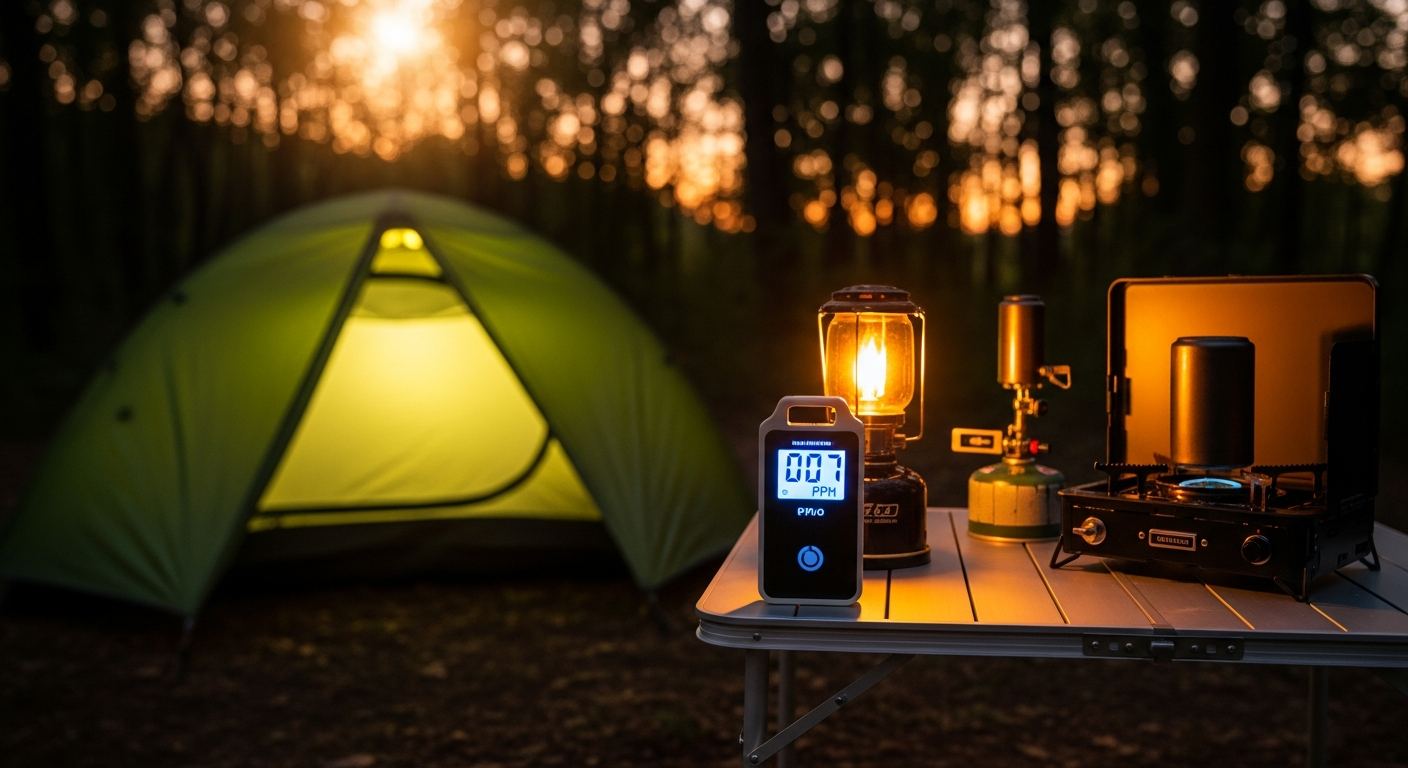
Loading comments...