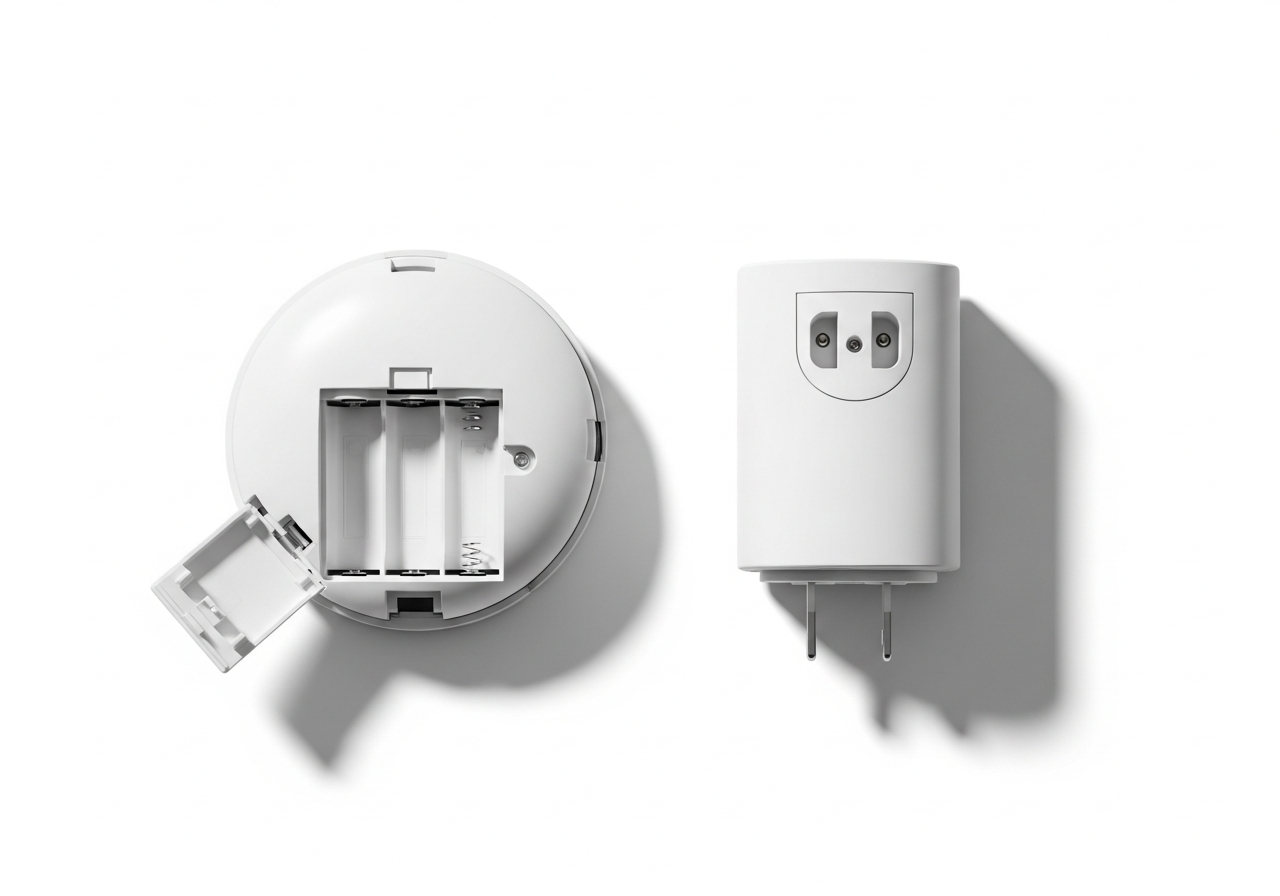
When most people buy a portable carbon monoxide detector, they compare price, size, and alarm volume. The question almost no one asks is: how does this device perform when the battery is at 40 percent? Or when it has been sitting in a travel bag for four months between trips? Or when it is plugged into a 240V European outlet without a converter? These are not edge cases. They are the normal life cycle of a travel CO detector — and they determine whether the device actually protects you or just occupies space in your carry-on. The battery vs. plug-in debate is not a minor preference question. It has a direct bearing on whether a portable CO detector functions at full accuracy during the stay that matters. This guide covers the reliability difference, the specific failure modes of each type, and what to look for in a portable CO detector that you can trust every time you use it. Best Portable Carbon Monoxide Detector in 2026
The Battery Reliability Problem in Portable CO Detectors
Battery-operated portable CO detectors have a failure mode that most buyers do not consider at purchase: electrochemical sensors require stable voltage to produce accurate readings. As batteries deplete, the voltage they supply drops — and the sensor's accuracy degrades accordingly, often before the battery is depleted enough to trigger a low-battery alarm. This means a battery-operated CO detector can be in a state of reduced accuracy that the device itself is not reporting. The display may show numbers. The alarm may test correctly. But the readings at 10-25 PPM — the sub-threshold range where a live display provides its primary value — may be off by 5 to 15 PPM in either direction. The second reliability issue is the travel kit reality: a portable CO detector that goes on one trip, sits in a bag for six months, and comes out for the next trip may have a battery that has self-discharged during storage. Self-discharge varies by battery chemistry, but alkaline batteries lose 2-3 percent of charge per month in storage. A portable CO detector that sat in a travel bag for six months with alkaline batteries may have lost 15-18 percent of battery capacity before the trip begins — and the traveler has no way to know this without a dedicated battery tester. Digital Carbon Monoxide Detector: Why the Number on the Screen Changes Everything Takeaway: battery depletion reduces CO sensor accuracy before any low-battery alert triggers — in a travel device used intermittently, this is a meaningful and consistent reliability gap.
Why Plug-In Portable CO Detectors Eliminate the Core Failure Mode
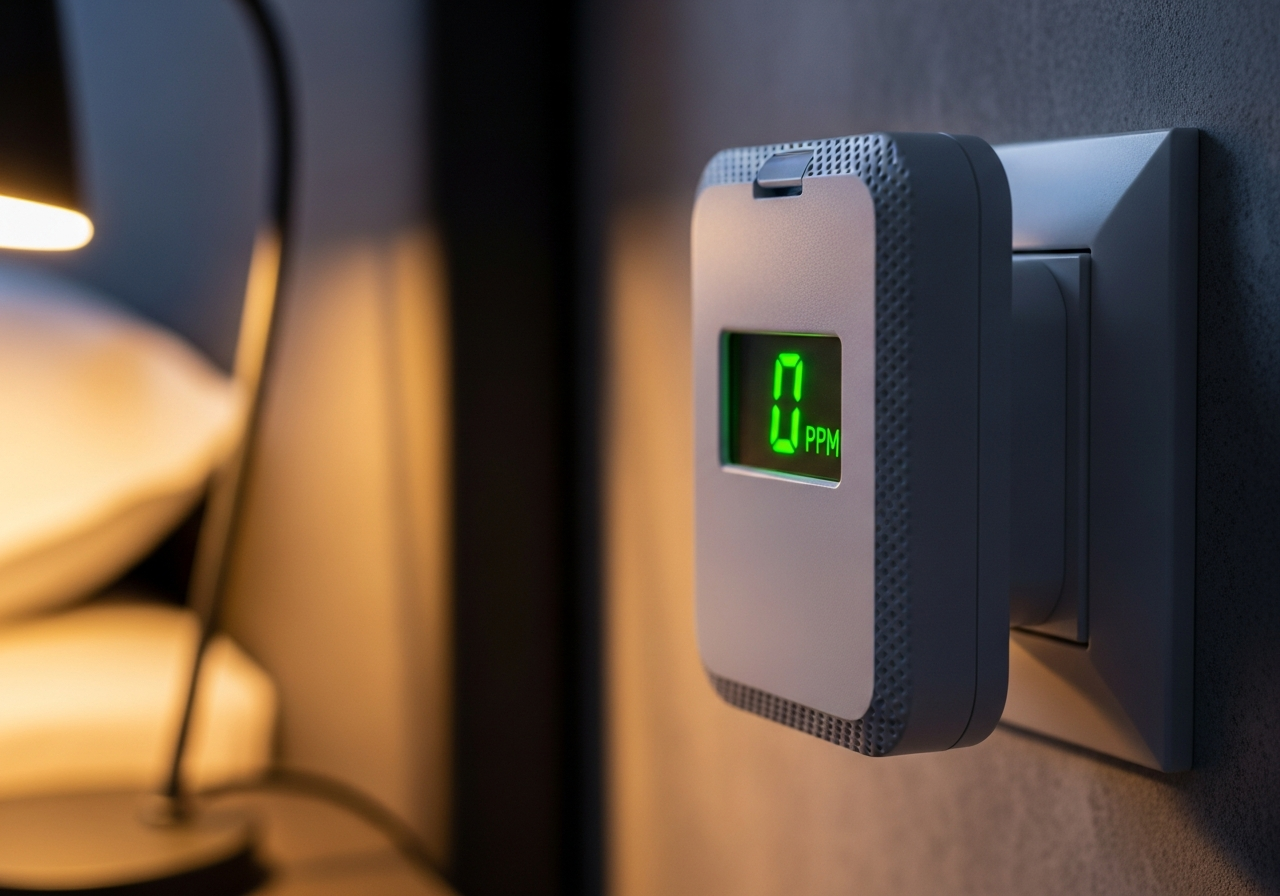
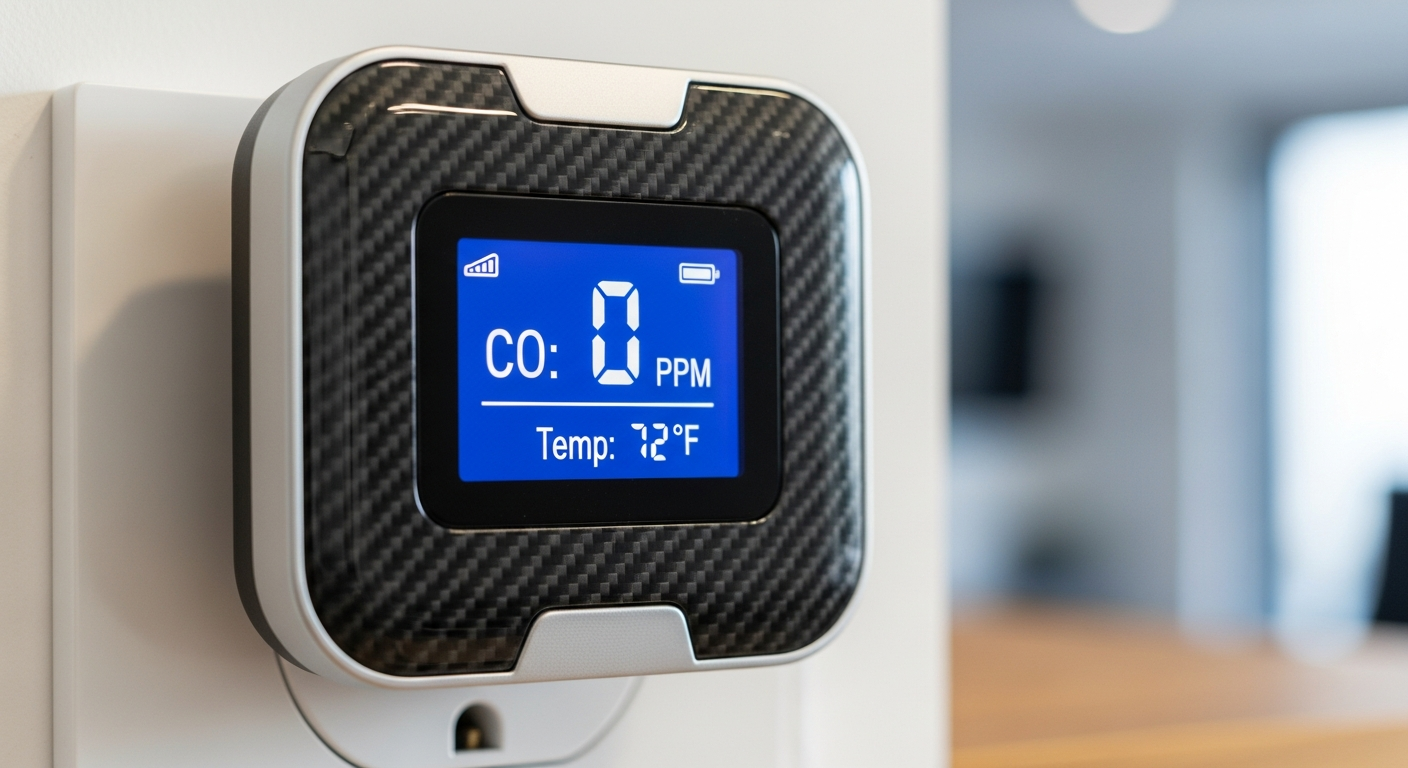
A plug-in portable CO detector draws power from the outlet, not from a stored charge, which means sensor voltage is continuous and stable for the entire duration of the stay. The accuracy of a plug-in unit on day one of a hotel stay is the same as on day seven, because the power supply has not changed. There is no self-discharge during storage. There is no degradation curve to worry about. The only power-related failure mode for a plug-in unit is a power outage — which is also the scenario where a battery backup feature provides value. Most quality plug-in portable CO detectors include battery backup precisely for this reason: stable plug-in power for normal operation, battery backup for power outages when you need it most. The form factor concern about plug-in units — that they require an accessible outlet — is legitimate for specific use cases: tent camping, remote off-grid cabins, and any location without standard electrical access. For hotels, Airbnbs, vacation rentals, RVs with shore power, and any built environment, an accessible outlet is essentially always available. For the settings that represent the vast majority of travel CO detector use cases, plug-in operation provides consistently higher accuracy and eliminates the battery failure mode entirely. This Portable Travel CO Detector Could Save Your Life Takeaway: plug-in operation provides stable sensor power for the full duration of every stay, eliminating the reliability variable that makes battery-operated units unpredictable in intermittent travel use.
International Travel: Why Voltage Matters More Than You Think
A portable CO detector that does not specify universal voltage input is a U.S.-only device, regardless of how it is marketed. The U.S. standard of 110-120V is not used in most of the world. Plugging a U.S.-standard portable CO detector into a 240V European or Asian outlet without a voltage converter will damage or destroy the device — and even with a converter, the added bulk, cost, and potential converter failure defeats much of the portability value. Universal 100-240V input — the specification to look for — means the detector's internal power supply automatically handles any input voltage within that range. You only need a plug adapter to match the outlet shape; no converter is required. This distinction matters not only for international flights but for domestic travel contexts where non-standard power is encountered: older hotels with 220V outlets in some rooms, RV shore power hookups, and commercial rental properties with mixed electrical infrastructure. A portable CO detector without universal voltage input is functionally limited to the United States and Canada — for any traveler who crosses borders or frequently visits older properties, this is a significant limitation that is not apparent from the product listing. Carbon Monoxide Detector for Travel: Your Hotel Safety Protocol Takeaway: universal 100-240V input is the specification that makes a plug-in portable CO detector genuinely useful for international and domestic travelers who encounter non-standard power sources.
How to Choose: Battery vs. Plug-In for Your Use Case
The right format depends on where you use the detector and how frequently:
- Hotel, Airbnb, and vacation rental travel — plug-in every time; accessible outlets are standard and stable power eliminates the battery reliability variable
- RV travel with shore power hookups — plug-in; most campground hookups provide stable power and an accessible outlet near the sleeping area
- Tent camping and off-grid cabins without power — battery-operated is the only practical option; carry fresh batteries for every trip and replace them at the start of each season regardless of apparent battery level
- International travel — plug-in with universal 100-240V input only; battery-operated avoids the voltage issue but reintroduces the reliability problem
- Mixed-use travelers — a plug-in unit with battery backup covers both scenarios; stable power for built environments, battery function when the grid is unavailable
- If you choose battery-operated — replace batteries before every trip, not just when the low-battery alert sounds; never use old batteries from storage without testing them first
The question of battery vs. plug-in in a portable CO detector is not really about convenience — it is about reliability, and reliability is what the device exists to provide. The AirShield™ 3-in-1 Portable Carbon Monoxide Detector is a plug-in unit with universal 100-240V input, international adapters included, and an OLED live display powered by the Smart M8 electrochemical chip. It provides the same accurate CO reading on the first minute of your first hotel stay and the last night of your tenth trip — because the power supply never changes and the sensor never runs on a depleted battery. Visit airshield.store.
Frequently Asked Questions
Sources & References
- CPSC: Carbon Monoxide Detector Technology and Standards — CPSC guidance on CO detector types and reliability standards
- UL 2034: Standard for CO Alarms — Power Supply Requirements — UL 2034 standard addressing power supply, sensor accuracy, and alarm reliability requirements
- NIOSH: Electrochemical Sensor Performance in CO Detection — NIOSH data on electrochemical sensor performance and occupational CO exposure limits
Protect Your Home with AirShield™
The only portable CO detector that shows you real-time PPM readings on a live OLED display. Electrochemical sensor, multi-gas detection, UL listed.
Check Availability →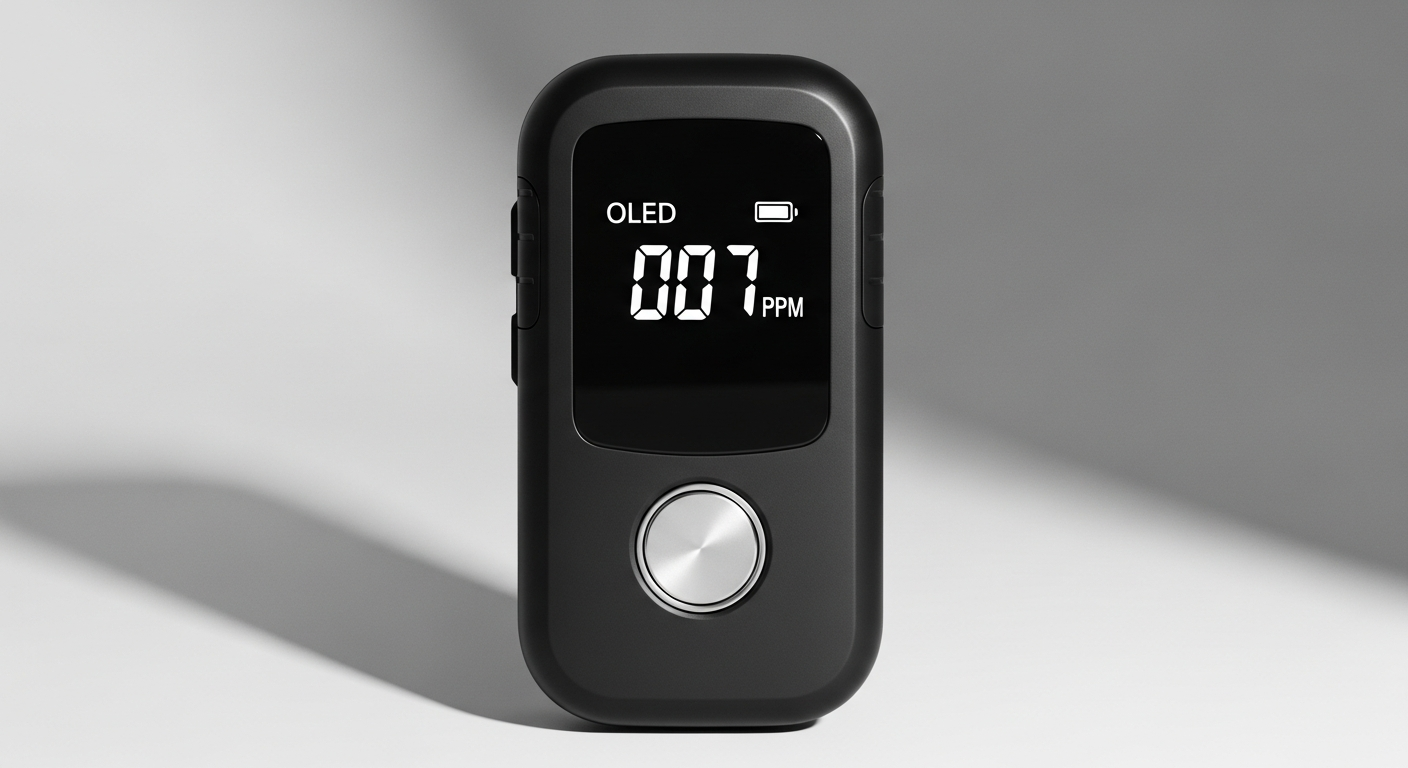
Loading comments...