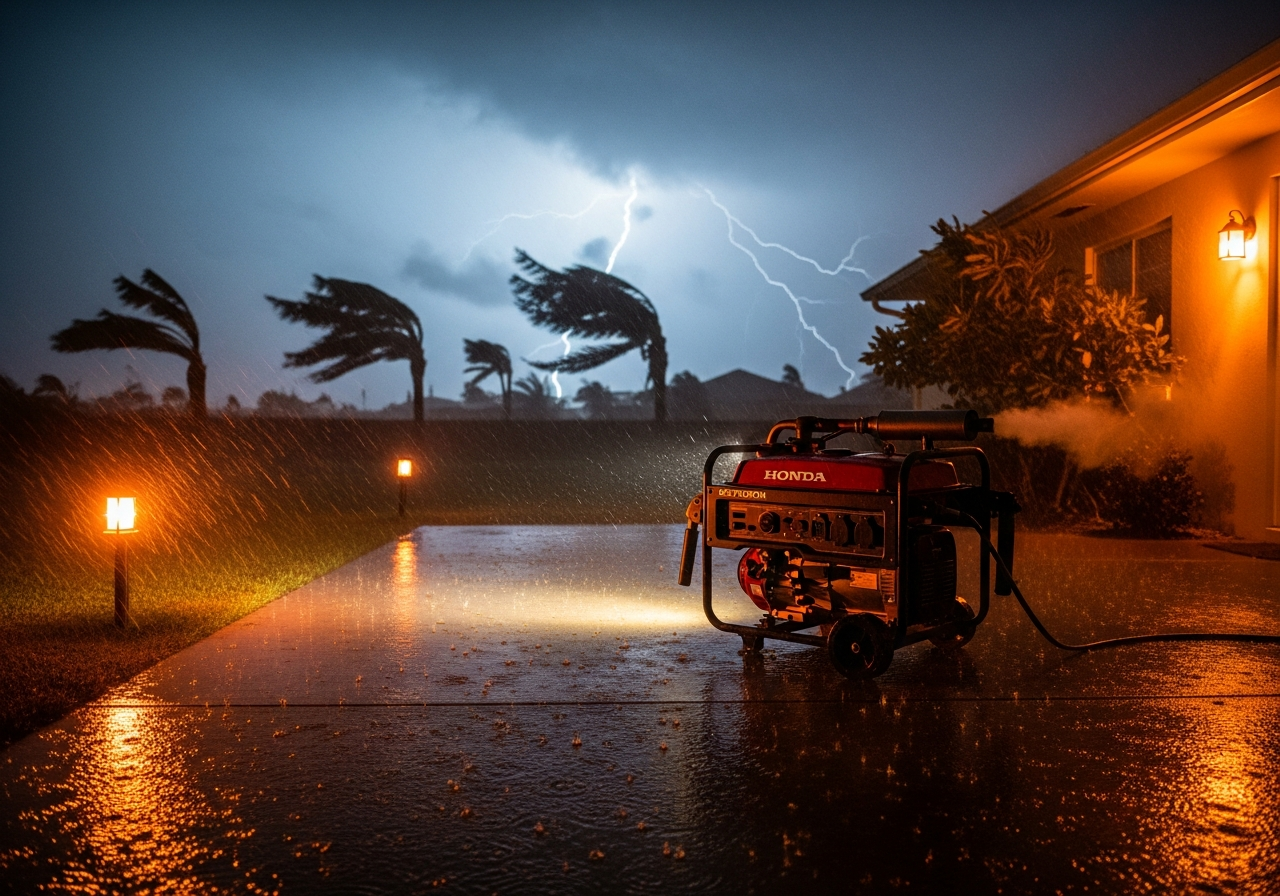
The 2026 Atlantic hurricane season officially began June 1 — and the U.S. Consumer Product Safety Commission did not wait to issue its annual warning. Generator carbon monoxide, the CPSC stated, is one of the most preventable yet most deadly post-storm hazards American families face. According to CPSC data, portable generators cause approximately 100 CO deaths every year — more than any other single consumer product. After a major storm, when power is out for hours or days and generators run continuously, that toll climbs. The problem is that generator CO is odorless and invisible. You cannot smell it accumulating. You cannot see it drifting from the exhaust toward your window. By the time symptoms appear — headache, dizziness, nausea — CO is already in your bloodstream. This guide covers why generators produce such dangerous levels of CO, how it finds its way into homes, what placement rules actually protect you, and how to know whether the air in your home is safe during an outage. Digital Carbon Monoxide Detector: Why the Number on the Screen Changes Everything
Why Do Generators Produce So Much Carbon Monoxide?
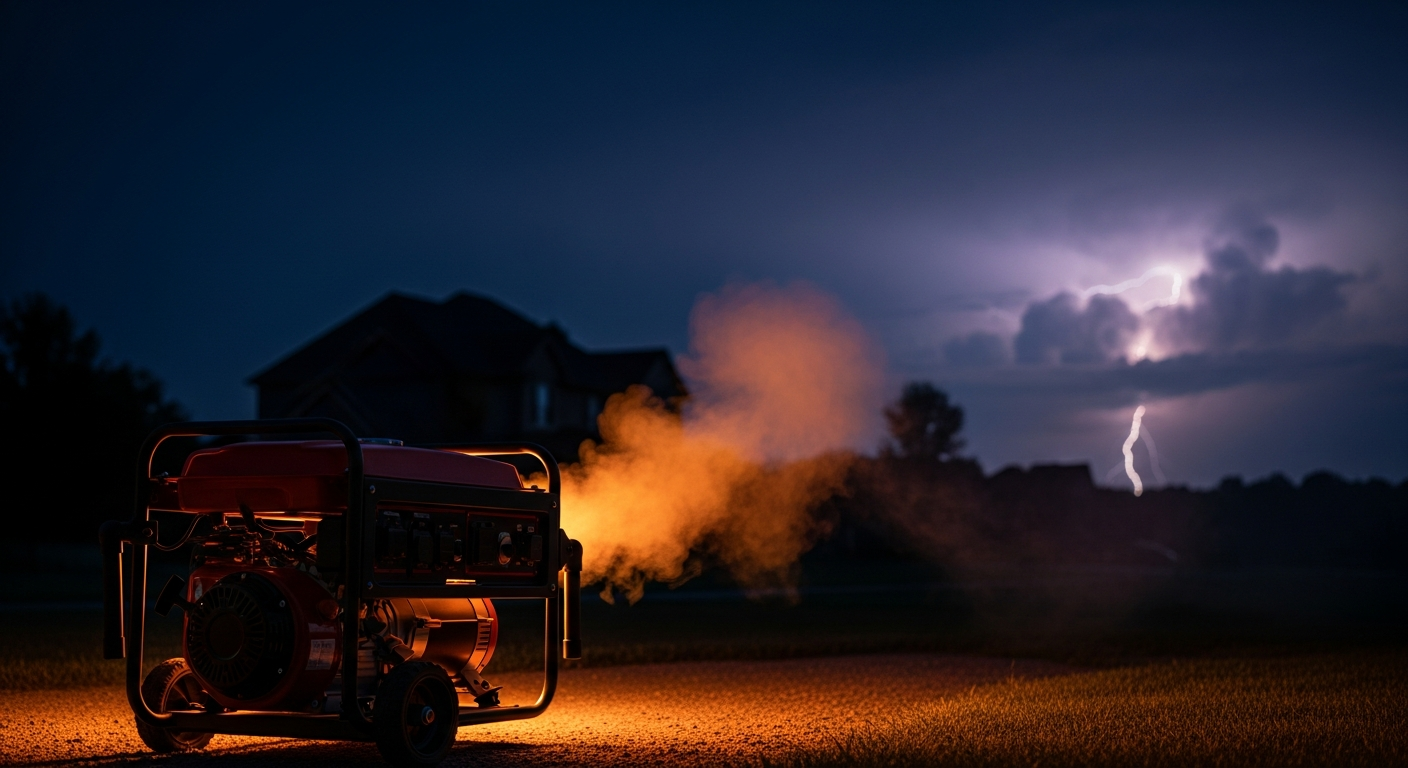
Generators run on combustion fuels — gasoline, propane, or natural gas — and combust them under real-world conditions that are never perfectly efficient. Complete combustion produces carbon dioxide and water. Incomplete combustion, which happens in every portable generator under load, produces carbon monoxide as a byproduct. The scale is what surprises most people. A typical 5,500-watt gasoline generator produces roughly 500 to 800 PPM of CO in its direct exhaust — concentrations that can cause loss of consciousness in minutes and death in under ten minutes at close range. According to CPSC research, a portable generator produces more carbon monoxide in a single hour than 450 modern cars idling simultaneously — and unlike cars, generators often run for hours without anyone monitoring the exhaust. That CO doesn't vanish in open air. It drifts, accumulates in corners, pockets near doorways, and enters homes through gaps most homeowners don't know exist. Generator CO is not a problem created by obvious mistakes. It's a physics and chemistry problem: combustion produces CO, CO is heavier than warm air under real storm conditions, and it follows airflow toward enclosed spaces. Understanding the scale is what separates people who take it seriously from those who don't. This Portable Travel CO Detector Could Save Your Life Takeaway: generators produce CO at concentrations hundreds of times greater than a car exhaust — the quantity is why standard safety rules and live CO monitoring both matter.
How Generator Carbon Monoxide Gets Into Your Home
The most common mental model of generator CO poisoning is someone running a generator inside the garage — an obvious mistake most people wouldn't make. The real risk is more subtle: the generator is outside, positioned what feels like a safe distance away, but CO still builds indoors. It enters through three primary pathways that are easy to overlook. First, open windows and gaps: exhaust directed into the prevailing wind can push CO directly through window openings, gaps around window AC units, and unsealed entry points. Second, HVAC air intake: many homes draw outdoor air through a low intake vent; a generator positioned near that intake feeds exhaust directly into the circulation system. Third, pressure differentials: opening and closing doors during a power outage creates negative pressure that actively pulls outdoor air — including CO — inside. CPSC incident data shows that generator CO poisonings frequently occur with generators positioned 10 to 15 feet from the home — a distance most families consider safe, but which is insufficient when HVAC placement or wind direction works against them. Twenty feet with exhaust facing away from all openings is the minimum standard. A CO detector inside the home is the only way to confirm that your setup is actually working. Carbon Monoxide Detector Placement: Exactly Where to Put Yours Takeaway: outdoor placement alone does not guarantee safety — the entry pathways for CO are numerous and non-obvious, and only a detector can confirm indoor air quality.
Why Generator CO Incidents Peak Between Midnight and 6 a.m.
Generator CO incidents follow a predictable and preventable pattern: they overwhelmingly happen while occupants are asleep. After a storm, people run the generator for hours, go to bed assuming outdoor placement handles the risk, and never check the indoor CO level again. CO's early symptoms — a mild headache, fatigue, slight nausea — are indistinguishable from storm stress, physical exhaustion, or a poor night's sleep. Most adults don't connect these symptoms to CO until cognitive impairment is already significant. At 35 to 70 PPM indoors, the typical response is to take an Advil and go back to sleep. At 100 to 200 PPM, concentration and judgment begin to fail — the exact capacity needed to recognize the danger and act on it. A CO detector with a live numeric display shows you 40 PPM at midnight when your brain still works, giving you the chance to relocate the generator, open windows, or evacuate — not 300 PPM at 3 a.m. when decision-making is already compromised. The window between a visible early reading and a medical emergency is where a live-display detector earns its place. Alarm-only units that stay silent until 70 PPM provide none of that window. How Long Does Carbon Monoxide Poisoning Take? The Full Timeline Takeaway: CO symptoms mimic exhaustion at low levels, which is exactly why overnight generator incidents go undetected — live CO readings give you the window to act before symptoms begin.
Generator CO Safety: What to Do Before the Next Outage
The time to establish your generator CO safety protocol is before the storm, not during it. These are the CPSC-recommended rules and the habits that back them up:
- Place the generator at least 20 feet from any window, door, or vent — this is the minimum, not the target; further is always better
- Point the exhaust away from the home and all neighboring structures, accounting for the most likely wind direction during the outage
- Never run a generator in a garage, even with the door wide open — CO accumulates regardless and travels through shared walls
- Install a CO detector with a live PPM display inside the home before the storm hits — checking a reading of 12 PPM is infinitely better than waking to an alarm at 300 PPM
- Check the CO reading every time you re-enter the home during a generator-powered outage — CO can build during a door-opening cycle
- If your detector reads above 35 PPM sustained, ventilate immediately and reposition the generator before returning
- Do not assume a quiet detector is a safe house — alarm-only units stay silent at concentrations that cause real physiological harm over hours
Generator carbon monoxide is the hurricane season hazard that gets overlooked in the chaos of a storm — and that is exactly why it claims more lives than the wind and rain. The AirShield™ 3-in-1 Portable Carbon Monoxide Detector shows you live CO readings on an OLED display the moment you plug it in — 18 PPM, 45 PPM, 70 PPM — so you see what is in your air before your body does. UL 2034 certified, plug-in operation, and built for exactly the moments when standard alarms fall short. Visit airshield.store before the next power outage.
Frequently Asked Questions
Sources & References
- CPSC: Hurricane Season 2026 Generator and CO Warning — Active June 2026 CPSC warning on generator CO hazards ahead of hurricane season
- CDC: Carbon Monoxide Poisoning Basics — CDC overview of CO poisoning causes, symptoms, and prevention
- CPSC: Carbon Monoxide — The Invisible Killer — CPSC statistics on CO poisoning deaths from portable generators
Protect Your Home with AirShield™
The only portable CO detector that shows you real-time PPM readings on a live OLED display. Electrochemical sensor, multi-gas detection, UL listed.
Check Availability →
Loading comments...