Generator-related carbon monoxide poisoning kills more Americans during disaster events than any other CO source — and CPSC has issued its pre-hurricane season warning for 2026 with the same urgent message it issues every year: generators placed outdoors can still fill your home with deadly CO. CPSC data shows portable generators are responsible for more than 900 CO deaths in the decade following major storm events, with the majority occurring when occupants believed the generator was safely placed. This post explains exactly how CO migrates from an outdoor generator into a sealed home, what a portable CO detector must be capable of during generator use, and why a live-reading PPM display is critical when your hardwired detectors may be offline.
Why Do Generators Kill So Many People Who Think They Are Being Safe?
The cognitive trap of generator CO poisoning is placement confidence. Homeowners who move their generator outdoors, away from doors and windows, believe they have eliminated the risk. The CPSC's incident data tells a different story: the majority of generator-related CO fatalities occur when the generator is outside — not inside — because CO migration into structures is far faster and more pervasive than intuition suggests. A standard 5,500-watt generator produces exhaust containing 5,000–10,000 ppm of CO. NIOSH sets the immediately dangerous to life and health threshold at 1,200 ppm. Even at 20 feet from a window, CO can enter through foundation gaps, HVAC intakes, dryer vents, and the microscopic air exchanges in modern construction. During a hurricane or tropical storm, negative pressure inside a tightly sealed home actually accelerates this migration by drawing outdoor air — and CO — inward. CDC modeling shows that a 5,500-watt generator running 20 feet from a home's exterior can raise interior CO above 150 ppm within 30 minutes under certain wind and pressure conditions. Generator Carbon Monoxide: Why It Kills and How to Stay Safe The other compounding factor is that during a power outage, hardwired CO detectors that depend on household current are offline — leaving occupants protected only by battery units, if they have them, and those batteries are as reliable as when they were last changed. Takeaway: Generator placement at the recommended 20-foot minimum does not guarantee safe interior CO levels — an independent portable detector inside the home is the only way to confirm occupant safety during generator operation.
What Happens to CO Levels Inside During a Power Outage?
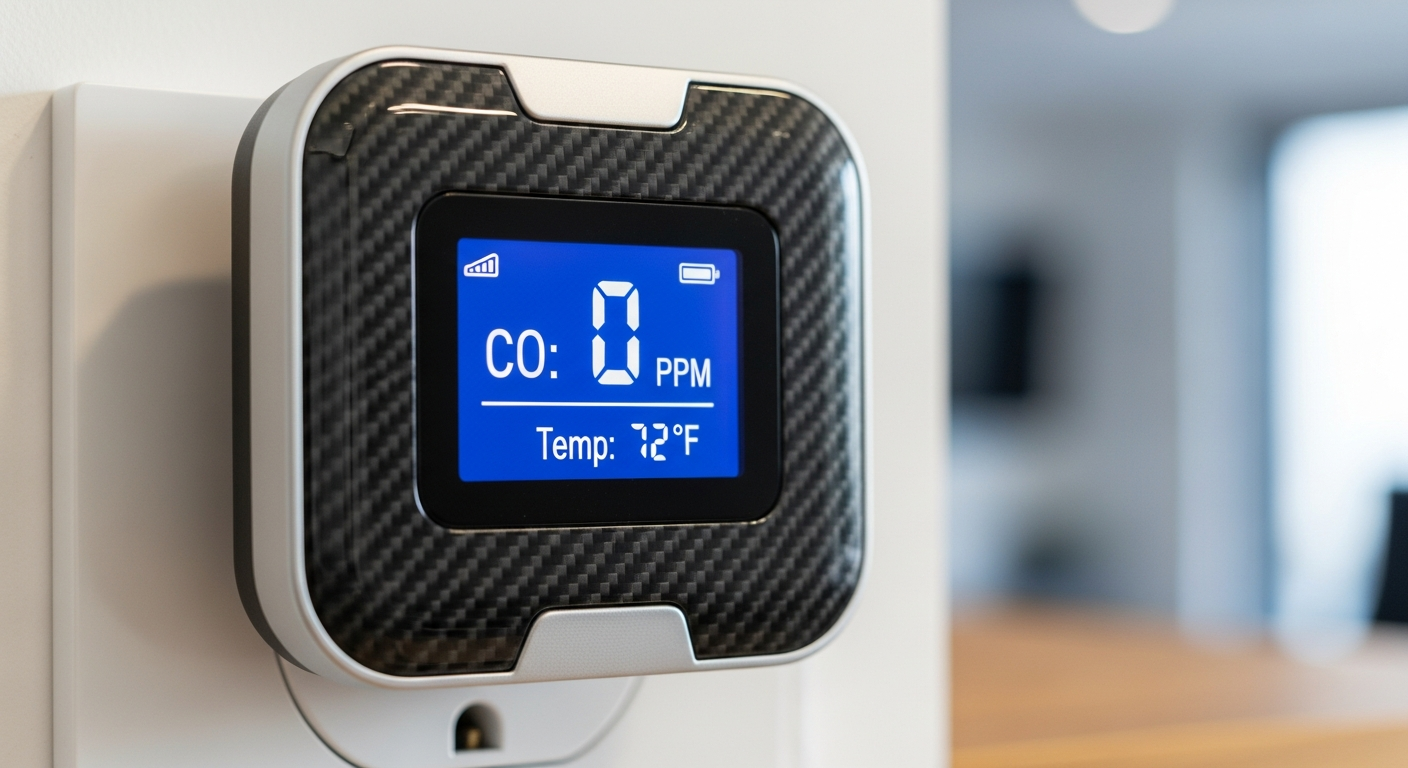
Power outages dramatically change the CO safety landscape inside a home in three ways. First, hardwired CO detectors go offline — the majority of detectors installed in U.S. homes are AC-powered with battery backup, but CPSC data shows that backup batteries are frequently dead or missing, particularly in regions that rarely test them. Second, the range of CO-producing appliances expands: camp stoves, propane heaters, charcoal grills moved indoors for cooking, and gasoline generators all enter service simultaneously. Third, windows and doors are often sealed for storm protection, eliminating the natural ventilation that otherwise dilutes CO accumulation. The result is a perfect storm of elevated CO production and reduced detection capability precisely when the risk is highest. CDC post-hurricane field investigations consistently find CO poisoning victims were using multiple fuel-burning devices simultaneously — a generator plus a propane camp stove, for example — with synergistic CO production that overwhelms what any single appliance would produce alone. During Hurricane Ida in 2021, CDC investigators attributed 11 CO deaths in Louisiana and New York directly to indoor generator use, and an additional 7 to charcoal and propane cooking indoors — all during a single two-week outage period. Carbon Monoxide Detector Placement: Exactly Where to Put Yours A portable CO detector that runs on generator-supplied power or an independent UPS battery provides the only reliable detection baseline when household power is down. Live PPM readings matter here because sub-alarm CO accumulation (35–60 ppm) is not safe for prolonged exposure, even if it does not trigger a 70-ppm alarm threshold. Takeaway: Power outages disable hardwired detectors, expand CO sources, and seal ventilation — creating compounded risk that only a generator-independent portable CO detector can address.
How to Set Up CO Detection Correctly During Generator Season?
- Never run a generator inside any enclosed structure — garage, basement, crawlspace, or screened porch — even with ventilation, per CPSC's absolute prohibition
- Place the generator at minimum 20 feet from all doors, windows, and vents with exhaust directed away from the building — use a measuring tape, not an estimate
- Deploy a portable CO detector inside the home powered independently of the main electrical circuit — either by the generator's output through a UPS, or by a freshly replaced battery
- Choose a unit with a live PPM display so you can monitor accumulation below alarm threshold — sub-alarm CO at 35–60 ppm over hours causes measurable harm Carbon Monoxide PPM Levels Explained: What's Safe, What's Dangerous
- If you use a propane heater, camp stove, or charcoal grill as a secondary heat or cooking source, ensure your detector also senses methane and propane for complete combustion gas coverage
- Check CO detector battery status before storm season — CPSC identifies dead backup batteries as the primary failure mode in hardwired detectors during power outages
- Post the Poison Control number (1-800-222-1222) visibly in the home and confirm every household member knows to exit immediately if the CO alarm sounds Carbon Monoxide Alarm Going Off? Here Is Exactly What to Do
Hurricane season starts June 1 — and CPSC's pre-season warning is already out. If you are in a storm state and adding a generator to your emergency kit, the portable CO detector that travels with that generator is not optional equipment. The AirShield™ 3-in-1 Portable Carbon Monoxide Detector runs on universal 100–240V — plug it into your generator's output during an outage and it monitors CO, methane, and propane live on an OLED display, giving you real-time confirmation that the air in your home is safe, not just the absence of an alarm. UL listed, electrochemical sensor, Smart M8 Chip, and compact enough to pack with your emergency supplies. Head to airshield.store before the first storm of the season makes it too late.
Frequently Asked Questions
Sources & References
- CPSC — Generator Safety — CPSC data on generator-related CO deaths and pre-hurricane season safety warnings
- CDC — Carbon Monoxide Poisoning After Disasters — CDC guidance on CO risk from generators and fuel-burning equipment during power outages
- NIOSH — Carbon Monoxide from Portable Generators — NIOSH engineering controls and detection recommendations for portable generator CO hazards
- NFPA — Generator Safety — NFPA guidelines on safe generator placement and CO detection requirements
- UL 2034 Standard — Performance benchmarks for CO alarms including response time at various PPM concentrations
Protect Your Home with AirShield™
The only portable CO detector that shows you real-time PPM readings on a live OLED display. Electrochemical sensor, multi-gas detection, UL listed.
Check Availability →
Loading comments...