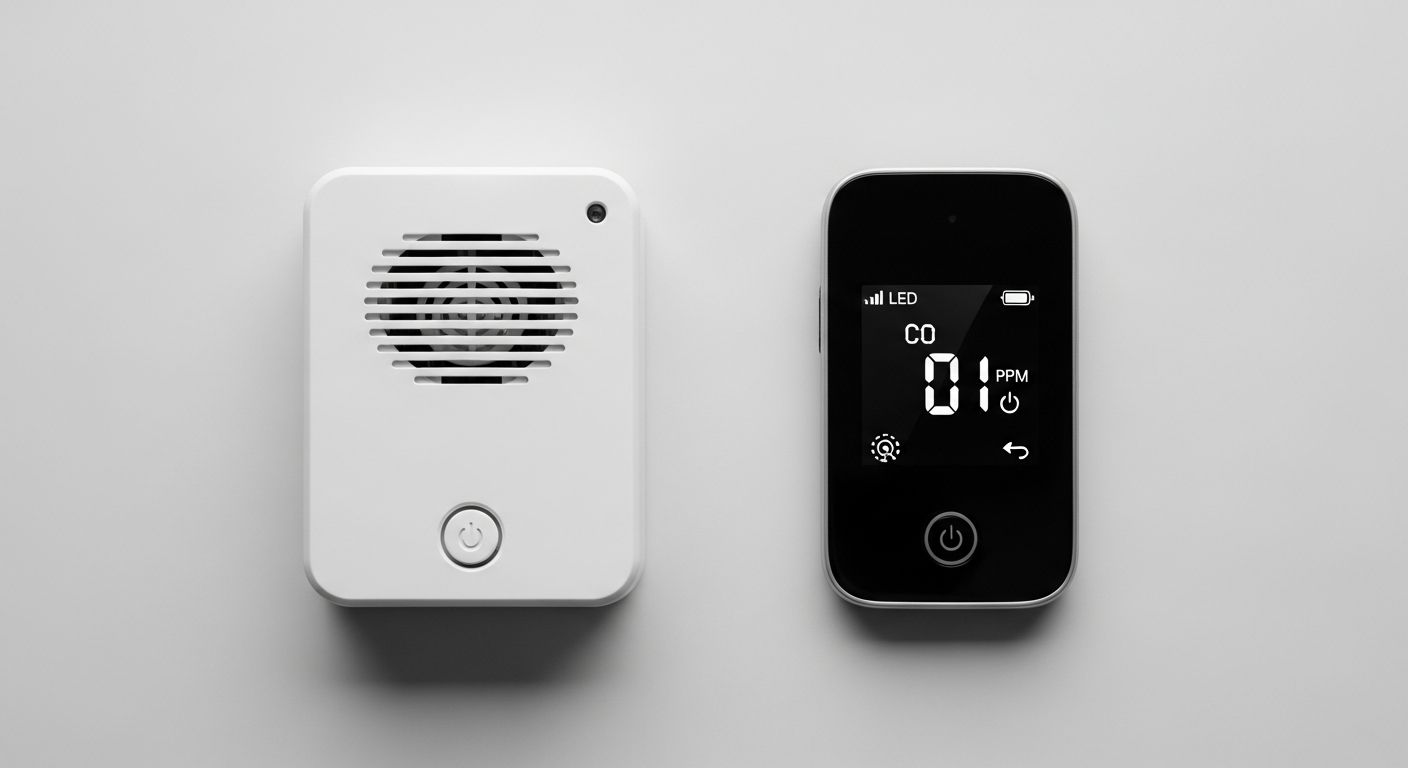
Every CO detector sold in the United States must meet the UL 2034 standard before it can be put on a shelf. That standard defines when a detector is required to alarm. Most people assume it means 'alarm as soon as CO appears.' It doesn't — and the gap between what people think the standard does and what it actually does is where CO poisoning happens.
What UL 2034 Actually Requires
UL 2034 defines alarm thresholds based on a combination of concentration and time. A compliant detector is not required to alarm at any fixed PPM level alone — it must alarm only when exposure crosses a time-weighted threshold. Specifically:
- At 70 PPM: the detector must alarm within 60 to 240 minutes — up to four hours of exposure
- At 150 PPM: the detector must alarm within 10 to 50 minutes
- At 400 PPM: the detector must alarm within 4 to 15 minutes
- Below 70 PPM: the standard does not require the detector to alarm at all
Read that again: a fully compliant, UL-certified CO detector can legally sit silent for four hours while you breathe 70 PPM of carbon monoxide. At that concentration, headaches, fatigue, and nausea begin within 2–3 hours for most adults. Children and the elderly experience symptoms faster.
Why the Standard Was Written This Way
UL 2034 was designed to prevent nuisance alarms — situations where a detector alarms from momentary CO spikes that don't represent actual risk. Cooking with a gas stove, running a car briefly in a driveway, or using a gas dryer can temporarily spike CO in adjacent areas to 20–40 PPM. A detector that alarmed immediately at any detectable CO level would go off constantly in normal households, and people would disable it.
The time-weighted approach was a reasonable engineering compromise in the 1990s, when the only output a detector could give you was a beep. If the alarm can't tell you the concentration or the trend, a threshold that filters out momentary spikes makes sense. But that constraint no longer exists. Modern detectors can show you the number — which changes everything.
What Symptoms Look Like Before the Alarm
At 70 PPM — the minimum level the standard targets — here is what happens to the human body over time:
- 0–1 hour: no symptoms in most adults; some sensitive individuals may notice mild fatigue
- 1–2 hours: mild frontal headache begins; slight shortness of breath during physical exertion
- 2–3 hours: throbbing headache; nausea; impaired concentration
- 3–4 hours: significant fatigue; increasing nausea; cognitive impairment — the alarm may still not have sounded
By the time a threshold-only detector sounds its alarm at 70 PPM, many people have already been experiencing symptoms for an hour or more — and have incorrectly attributed those symptoms to stress, dehydration, or oncoming illness. CO impairs judgment before it incapacitates you, so you may not connect the symptoms to a gas problem even as they worsen.
The Case for Live PPM Readings
A detector with a live parts-per-million display changes the nature of CO protection entirely. Instead of waiting for a threshold to be crossed, you can see the environment's CO level at every moment — and act on trends, not alarms.
Here's what a live reading makes possible:
- At 5–10 PPM rising: you notice CO is present and investigate the source before any accumulation occurs
- At 15–20 PPM sustained: you ventilate the space, identify the appliance, and eliminate the source
- At 30 PPM: you leave the area and call a technician — still hours before you'd experience symptoms
- The alarm at 70 PPM becomes a last-resort backstop, not your primary warning
Background Levels: What Normal Looks Like
One of the most valuable features of a live PPM display is that it establishes your personal baseline. Every home and environment is different:
- Near a busy road: ambient CO may read 2–5 PPM even with windows closed
- Near a gas stove during cooking: brief spikes to 15–30 PPM are normal and clear quickly with ventilation
- In a well-sealed home with a gas furnace running: 1–5 PPM is typical
- In a properly ventilated space with no combustion sources: 0–2 PPM
When you know your baseline, a sudden rise from 2 PPM to 18 PPM is immediately visible and actionable. Without a live display, that same rise produces no alarm and no warning — and you have no idea it's happening.
How AirShield Approaches This Differently
AirShield was built on the premise that preventing symptoms is better than detecting an emergency after it's started. The device meets UL 2034 — the alarm threshold is fully compliant. But the alarm is the last line of defense, not the first.
The OLED display shows CO in real time, updating every few seconds. The electrochemical sensor — the same type used in professional and medical-grade monitoring equipment — is accurate to within ±5 PPM at low concentrations. When CO enters the space, you see the number rise. You don't wait for a beep.
AirShield also detects methane and propane simultaneously, with separate live readings for each gas. A single device shows you everything in the air — not just the gas that crossed an arbitrary alarm threshold.
The Bottom Line
The 70 PPM standard exists to define a minimum safety floor for consumer detectors — not to define adequate protection. A detector that alarms at 70 PPM after four hours isn't keeping you safe from CO; it's alerting you to a sustained emergency that may have already produced symptoms.
Genuine protection means seeing CO at 5 PPM and acting before it reaches 20. That requires a live display. The UL 2034 alarm will never give you that — only a real-time reading can.
Protect Your Home with AirShield™
The only portable CO detector that shows you real-time PPM readings on a live OLED display. Electrochemical sensor, multi-gas detection, UL listed.
Check Availability →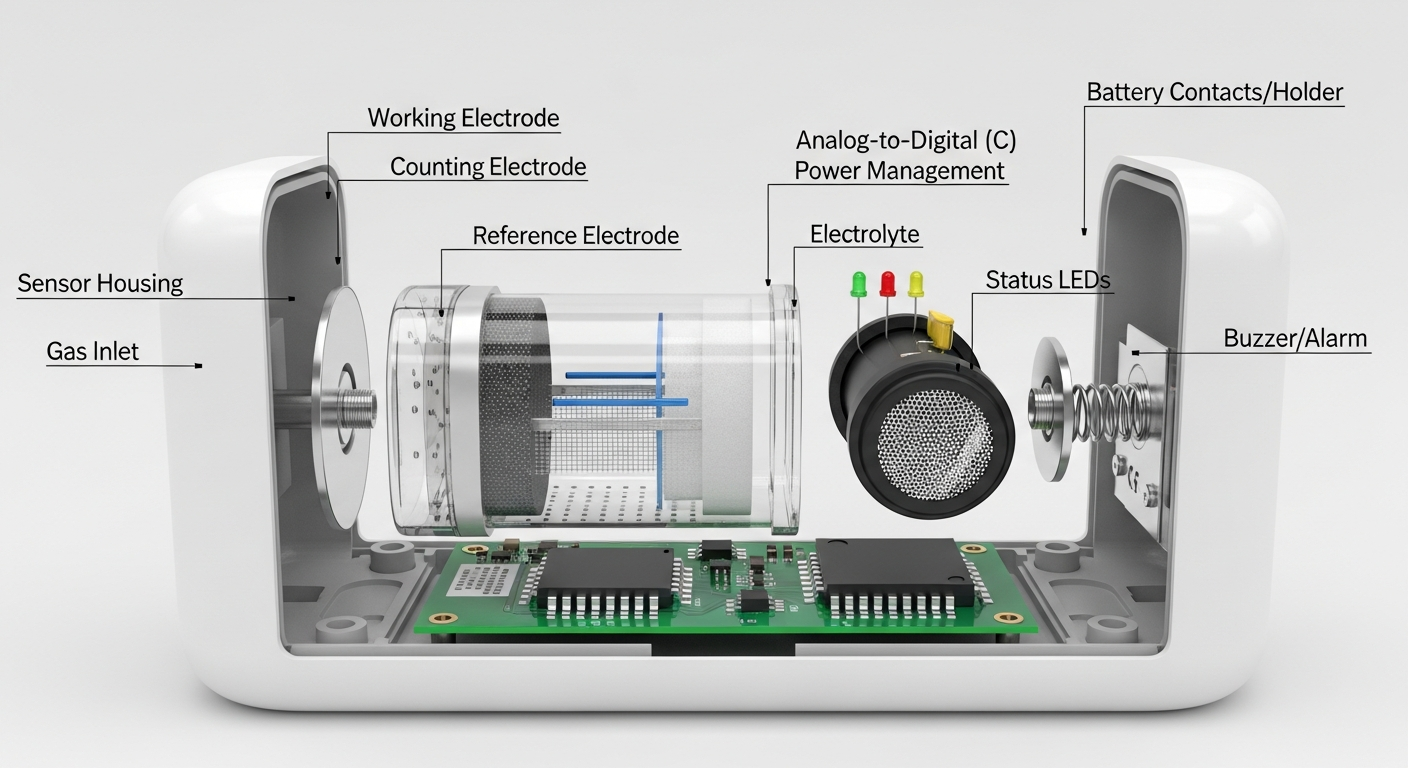
Loading comments...