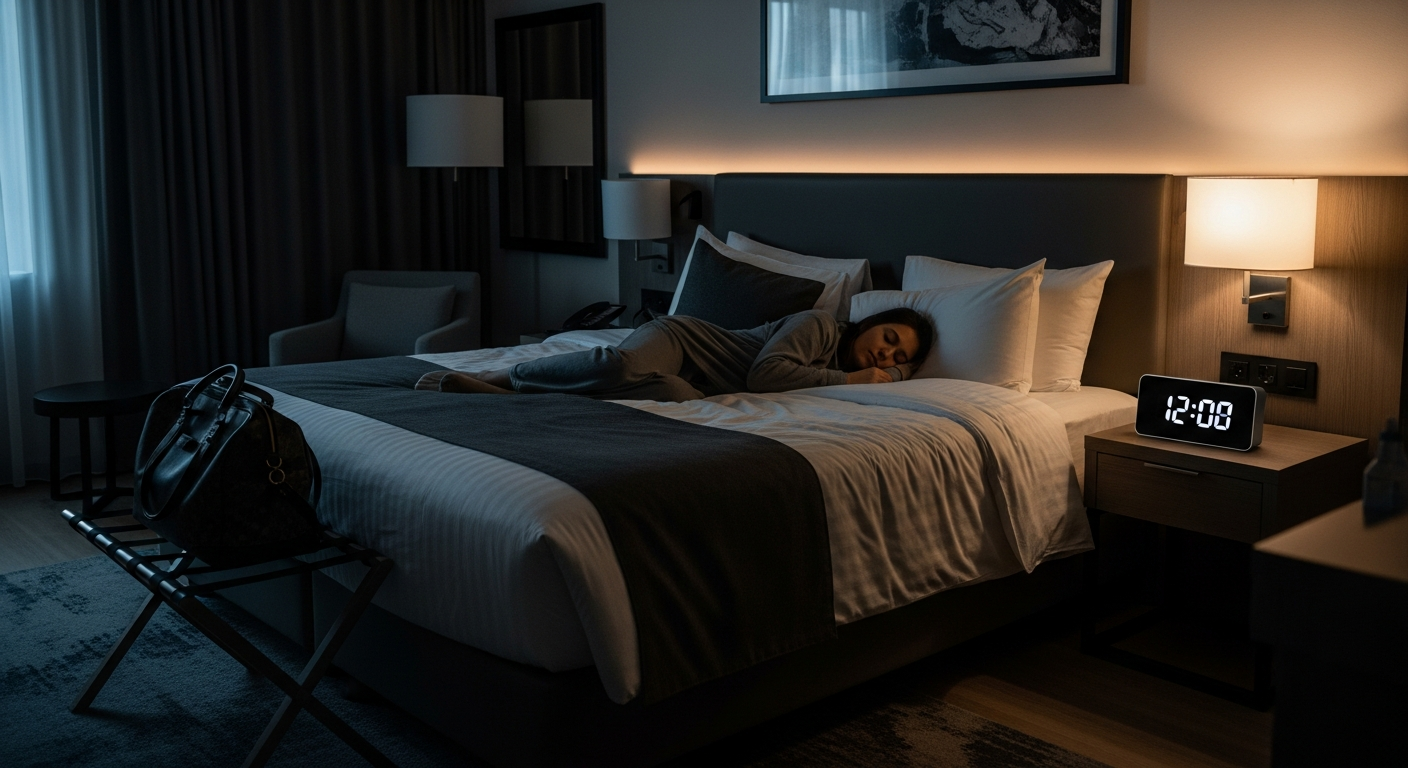
Hotel carbon monoxide incidents are documented in the news every year. Thirteen people evacuated from a Maryland hotel after a CO alarm in August 2025 — four hospitalized. Families pulled from vacation rental cabins when CO from a faulty water heater built overnight. A Rhode Island college student who died from CO poisoning in a car during a storm. Each of these incidents has the same characteristic: the occupants didn't know the risk was there, because hotel CO is invisible, odorless, and silent until a detector measures it. Most travelers assume CO safety is handled by the property. For millions of hotel nights every year, that assumption is incorrect. Hotel CO detector requirements vary by state, maintenance varies by property, and even compliant detectors have failure modes that a traveler cannot see or verify. This guide covers where hotel CO comes from, why the detector on the wall may not be enough, and what to do about it before your next stay. Carbon Monoxide in Summer: 5 Hidden Risks This Season
Are Hotels Required to Have Carbon Monoxide Detectors?
The short answer is: sometimes, depending on the state, and enforcement varies. As of 2026, approximately half of U.S. states have laws requiring CO detectors in hotels and lodging facilities. The other half do not. Within states that do have requirements, older properties are frequently grandfathered under older codes that predate modern detector standards. The NFPA 720 standard — which governs CO detection in commercial and residential settings — has been updated multiple times, but adoption into local building codes is uneven. Even in a fully compliant hotel that meets every current requirement, the detector in your specific room may be expired, installed at a height that reduces its effectiveness, or operating on a low battery that no one has checked since the last inspection. A CO detector's electrochemical sensor degrades over time — most manufacturers specify a 5 to 7 year lifespan, after which the sensor may fail to respond accurately at dangerous concentrations. A detector on the hotel room wall may be two years past its replacement date, and there is no way for you to know by looking at it. The only number you can trust is the one you measure yourself. How Long Do Carbon Monoxide Detectors Last? When to Replace Yours Takeaway: hotel CO detector compliance is inconsistent by state, inconsistently enforced, and subject to sensor degradation that no guest can verify — the room detector is not a guarantee.
Where Hotel Carbon Monoxide Actually Comes From
Hotel CO incidents cluster around specific sources that repeat consistently across incident reports. Gas-fired pool heating systems and boilers are the most common commercial culprits — these large appliances require regular maintenance to keep their flues clear and burners calibrated, and when they malfunction, CO can migrate into rooms through shared ventilation systems. Parking garage exhaust is the second most common source: rooms on the first and second floor directly above or adjacent to hotel parking structures can accumulate vehicle exhaust CO, particularly in poorly ventilated garages during busy check-in and check-out periods. In-room gas heating units — common in budget hotels and older properties — can backdraft or vent improperly, particularly in rooms with negative pressure caused by exhaust fans or weather conditions. The highest-risk hotel rooms are on lower floors near mechanical rooms, directly above parking areas, or in older properties where the HVAC and gas appliance maintenance schedule is not publicly available. Requesting a room on a higher floor away from the building's mechanical core reduces risk, but does not eliminate it. A CO detector that shows you the number in your specific room is the only definitive answer. Carbon Monoxide Detector Placement: Exactly Where to Put Yours Takeaway: hotel CO sources are structural and mechanical — pool heaters, boilers, and parking garage exhaust — and room location relative to these sources is a meaningful factor in exposure risk.
Why the Hotel's Detector May Not Be Enough
Even in a hotel room that has a functioning, up-to-date CO detector, that detector is almost certainly an alarm-only unit calibrated to sound at the UL 2034 threshold: 70 PPM sustained for four hours, 150 PPM for 50 minutes, or 400 PPM for four minutes. These thresholds were designed to prevent acute fatal poisoning in healthy adults — not to protect people with asthma, heart conditions, children, or pregnant women, all of whom show physiological effects at significantly lower concentrations. A hotel room with 35 PPM of CO — a concentration that can cause headache, fatigue, and impaired judgment in a healthy adult after several hours — will show a silent, green light on an alarm-only detector. That room's detector is technically functional and technically compliant. It is also telling you nothing useful. A CO reading of 35 PPM in a sleeping room is not safe — it is below the alarm threshold, which was designed for a different purpose than continuous overnight occupancy by people of varying health status. A live-reading detector that shows you 35 PPM lets you open a window, request a different room, or call the front desk before the night begins. The 70 PPM Standard Was Designed to Alarm Late — Here's Why That's a Problem Takeaway: hotel CO detectors are set to alarm thresholds that protect against acute poisoning, not against the lower-level exposures that cause real harm during a full night of sleep.
What to Do at Your Next Hotel Check-In
These habits add less than five minutes to a check-in and eliminate the blind spot that costs travelers their health every summer:
- Plug in a portable CO detector with a live PPM display as soon as you enter the room — before you unpack, before you sit down
- Check the reading after five minutes and again after thirty — CO from a building source may take time to accumulate in your specific room
- If the reading is above 9 PPM sustained, request a different room and check that room before settling in
- If the reading is above 35 PPM at any point, leave the room immediately, close the door, and notify the front desk from the hallway
- Request rooms on higher floors away from mechanical rooms and parking structures when booking — these room locations consistently show lower CO accumulation in incident reports
- If you wake with a headache or nausea that clears when you step into the hallway, treat it as a CO event — do not return to the room without checking the reading first
- Keep your portable detector running overnight, not just at check-in — CO sources can activate at any time
Hotel carbon monoxide is not a rare edge case. It is a recurring, documented pattern that costs people their health and occasionally their lives every year — and it is entirely preventable with one action: measuring the air in your room before you sleep in it. The AirShield™ 3-in-1 Portable Carbon Monoxide Detector is built for exactly this use. Plug it in when you check in, read the OLED display showing live CO PPM, and know — with certainty — whether the air in that room is safe. Compact enough for a carry-on, universal 100-240V for international travel, and precise enough to show you 12 PPM that the room detector will never register. Visit airshield.store before your next trip.
Frequently Asked Questions
Sources & References
- CDC: Carbon Monoxide Poisoning in Non-Residential Settings — CDC data on CO poisoning in hotels, vacation rentals, and other temporary lodging
- CPSC: Carbon Monoxide Incidents Database — CPSC incident reports and statistics on CO in residential and commercial settings
- NFPA 720: CO Detection Standard for Hotels and Lodging — NFPA standard governing CO detector installation in hotels and temporary lodging
Protect Your Home with AirShield™
The only portable CO detector that shows you real-time PPM readings on a live OLED display. Electrochemical sensor, multi-gas detection, UL listed.
Check Availability →
Loading comments...