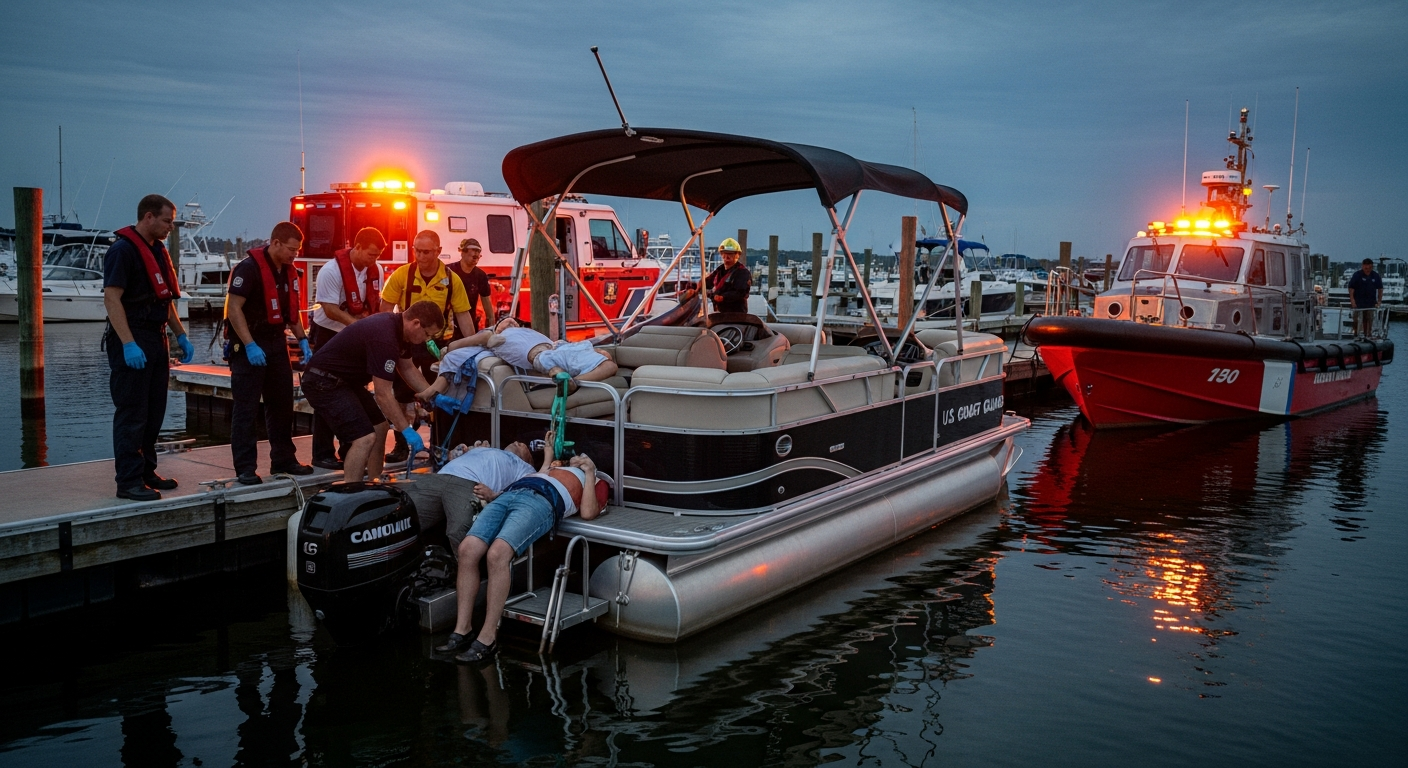
Every Memorial Day weekend, the U.S. Coast Guard releases a sobering reminder: carbon monoxide on boats kills multiple Americans every year, and most victims had no idea it was happening. Unlike a capsizing or a fire, CO leaves no visible trace — no smoke, no smell, no sound. The Recreational Boating Safety program has documented that CO from boat engines, generators, and cabin heaters is a consistent source of fatalities and near-fatalities on the water, yet it receives a fraction of the public attention given to drowning or life jacket compliance. The danger is made worse by a deadly coincidence: carbon monoxide poisoning symptoms — headache, nausea, dizziness, sudden fatigue, confusion — are nearly identical to seasickness. Victims reason that they just need to get their sea legs, stay on board, and continue breathing contaminated air. This article covers why CO accumulates faster on boats than in most homes, the specific zones where concentration peaks, how to distinguish seasickness from CO exposure, and the equipment decisions that separate a great day on the water from a tragedy. Portable Carbon Monoxide Detector: What It Is, Who Needs One, and How to Choose
Why Carbon Monoxide on Boats Builds Up Faster Than on Land
At home, a gas furnace channels exhaust through a sealed flue to the outside. A car routes exhaust through a catalytic converter and tailpipe away from occupants. Boats — especially recreational ones with stern-mounted engines or onboard generators — have no equivalent system. Exhaust exits directly into the air around the vessel, often near occupied areas. When a boat is underway, forward motion typically clears exhaust backward and away. But when a boat is idling at a dock, holding position in the water, or moving slowly in a following sea (waves pushing from behind), exhaust recirculates across the entire deck or into the cabin. According to U.S. Coast Guard research, a single idling stern-drive engine can produce enough carbon monoxide to reach 100 ppm at the swim platform and cockpit within minutes. Add an onboard generator and the numbers climb faster. Takeaway: the assumption that being outside protects you from CO does not hold on a boat — proximity to exhaust sources and variable airflow patterns make water-based CO exposure uniquely unpredictable.
- Idling engines at the dock are the highest-risk scenario — no forward motion to clear exhaust away from passengers
- Onboard generators running in the cabin or stern well produce CO continuously, even when the main engine is off
- Following sea conditions can push your own exhaust forward across the cockpit at high concentration
- Cabin cruisers and houseboats with enclosed cockpits trap CO more effectively than open runabouts
- Generator exhaust from a neighboring boat at a marina can enter your cabin through open windows or hatches
The Swim Platform Effect: A Carbon Monoxide Death Zone at the Back of Your Boat
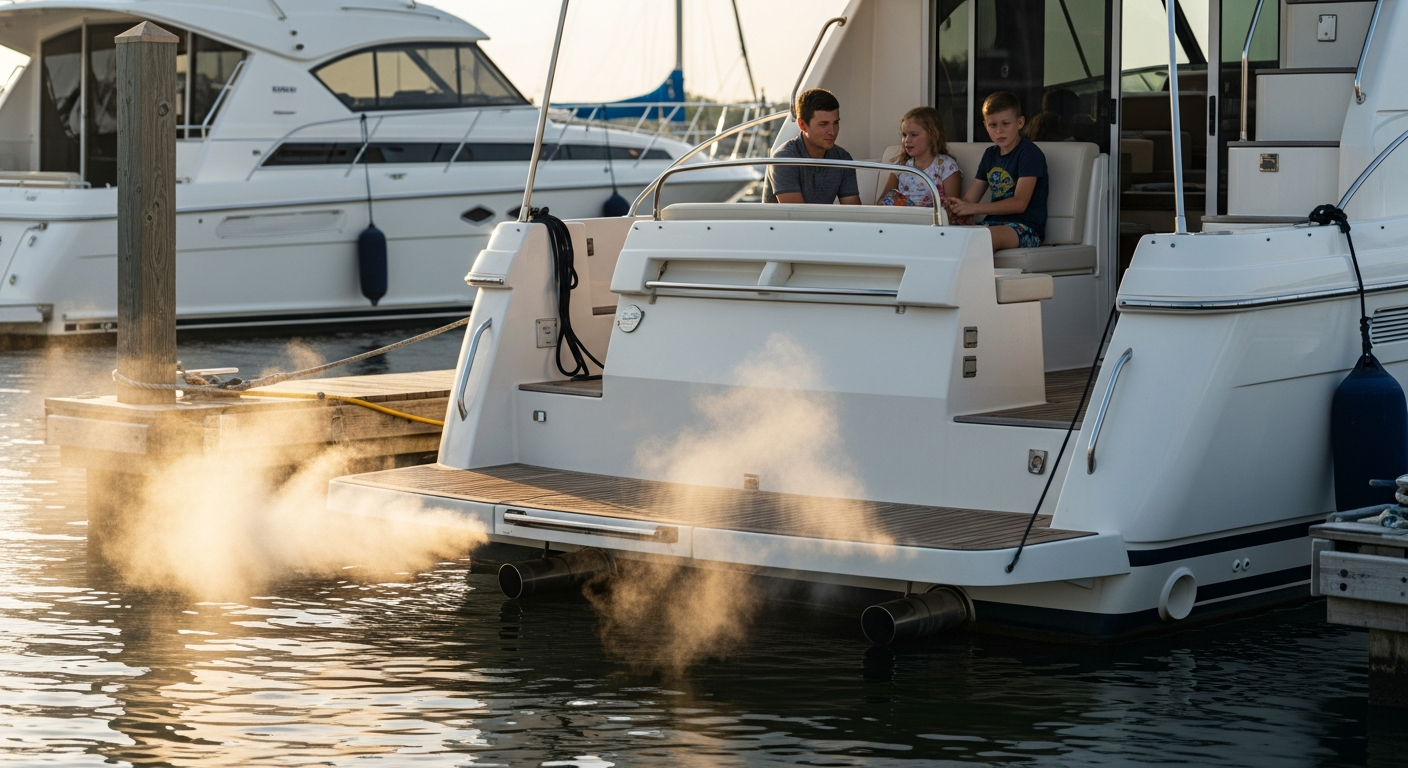
The swim platform effect is responsible for a specific and preventable category of boating CO deaths. The exhaust ports on most stern-drive and inboard boats exit at or just above the waterline, directly beneath or beside the swim platform. When the engine is running — even at idle — CO-rich exhaust rises and collects in the semi-enclosed space between the swim platform, the stern, and the water surface. This pocket of air can reach dangerous concentrations in under two minutes. Children are at particular risk because they sit or kneel at the swim platform edge, putting their airway exactly at the height where CO accumulates. The CPSC has documented drownings that were later reclassified as CO poisoning — victims incapacitated in the water before anyone recognized what was happening. The rule is absolute: no one sits on the swim platform while the engine is running, and children should never be near the swim deck of an idling boat. Carbon Monoxide Poisoning Symptoms: What to Know Before It's Too Late Takeaway: the swim platform is not a safe waiting area when the engine is on — it is the highest CO concentration point on most recreational vessels.
Carbon Monoxide on Boats Mimics Seasickness — and That Delay Kills
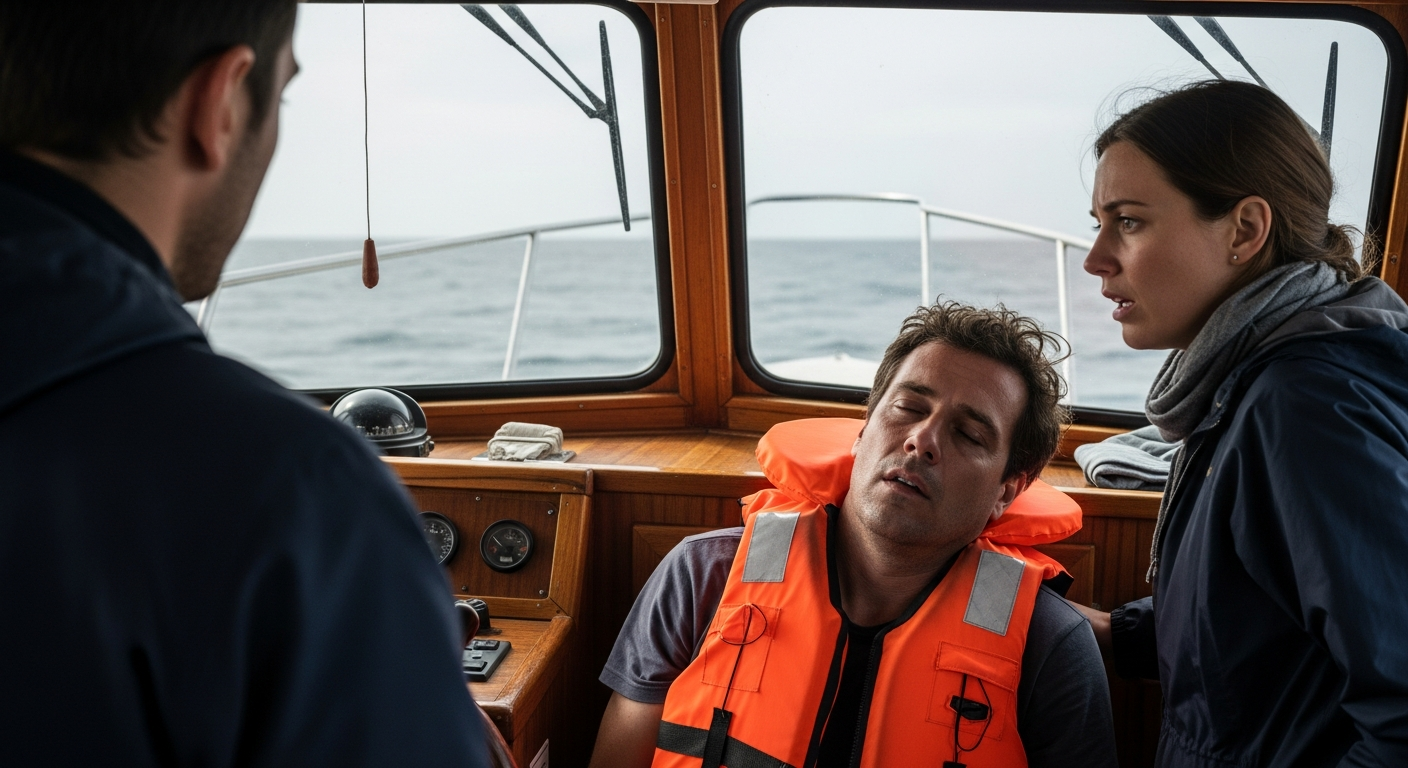
The symptom overlap between motion sickness and carbon monoxide poisoning has directly contributed to preventable deaths. When a passenger begins to feel unwell on the water, the default assumption is seasickness — and the default response is to sit down, drink water, and wait it out. If CO is the actual cause, that response keeps the person in the contaminated environment as their condition deteriorates. By the time symptoms escalate to confusion, difficulty walking, or loss of consciousness, the CO exposure may have already caused organ damage. The distinguishing rule: if multiple people on the same vessel feel unwell at the same time, CO is the more likely explanation — seasickness tends to affect individuals differently based on susceptibility, not everyone simultaneously. Other red flags include symptoms that began or worsened when entering the cabin, moving toward the stern, or sitting near the generator. Takeaway: when in doubt, move everyone to the bow, cut the engine if safe to do so, and call for help — treating a CO incident as seasickness is a far more dangerous mistake than the reverse. Carbon Monoxide Poisoning Treatment: What Happens, What Helps, and What Does Not
- Both cause: headache, nausea, dizziness, fatigue, shortness of breath
- CO red flag: multiple people feeling unwell simultaneously
- CO red flag: symptoms began or worsened in the cabin or near the stern
- CO red flag: symptoms improve when moving to the bow or leaving the boat entirely
- Seasickness pattern: affects individuals variably; improves with horizon focus and fresh air over time
Which Vessels Face the Highest Carbon Monoxide on Boats Risk?
Not all recreational boats carry equal CO risk — vessel design plays a major role in how exhaust moves relative to occupied areas. Houseboats and pontoon boats are particularly vulnerable because they combine large semi-enclosed deck spaces with generator-dependent power systems. Cabin cruisers with rear cockpits create exhaust recirculation zones directly adjacent to the living area. Open runabouts present lower risk when underway but become more dangerous at idle because there is no forward motion to disperse exhaust. Sailboats with diesel auxiliary engines have lower CO output than gasoline-powered vessels but are not risk-free, especially motoring in light wind with a following current. The key variable across all vessel types is engine runtime relative to cabin or cockpit airflow. Any boat idling for extended periods — at a dock, rafted with other boats, or anchored in calm water — accumulates CO risk regardless of design. Takeaway: assess your specific vessel's exhaust routing and identify which occupied areas are closest to exhaust exits before assuming your boat's open design makes CO a non-issue. Carbon Monoxide and Natural Gas Detector Combo: Why You Need Both
Practical Application: Carbon Monoxide on Boats Safety Checklist
Run through this checklist before and during every outing this season:
- Install a marine-rated CO detector in every enclosed cabin, sleeping berth, and generator compartment — test it at the start of each season
- Never allow passengers to sit on or near the swim platform while the engine is running — make this a non-negotiable rule for children
- Idle for no more than 10 minutes without ensuring adequate airflow across the stern and cockpit
- Turn off the generator when the cabin is occupied for sleep — use battery systems or dock power when berthed overnight
- Brief all guests on CO symptoms and the key distinction from seasickness before casting off
- If anyone shows CO symptoms: move all passengers to the bow immediately, cut the engine if safe, call the Coast Guard on VHF Channel 16
- Carry a portable CO detector that shows real-time PPM readings — not just a threshold alarm — so you see concentration rising before it becomes a crisis
- At marinas, close hatches facing neighboring boats running generators to prevent their exhaust from entering your cabin
Carbon monoxide on boats kills quietly, quickly, and without any of the visible warning signs that other boating hazards produce. The gap between early symptoms and incapacitation can be under 30 minutes in an enclosed space with a running generator or idling engine. The single most effective countermeasure is continuous monitoring — knowing your real-time CO level, not just finding out when an alarm threshold is crossed. The AirShield™ 3-in-1 Portable Carbon Monoxide Detector shows live CO PPM readings on its OLED display, so you see concentration climbing before it reaches alarm levels. Its compact plug-in form factor and universal voltage compatibility make it practical for boat cabin use, dock power, or any enclosed marine environment. Before you cast off this season, visit airshield.store.
Protect Your Home with AirShield™
The only portable CO detector that shows you real-time PPM readings on a live OLED display. Electrochemical sensor, multi-gas detection, UL listed.
Check Availability →
Loading comments...