A baby cannot tell you they have a headache. They cannot say they feel dizzy, or nauseous, or confused. They cannot describe the specific, textbook symptoms of carbon monoxide poisoning that every safety article — including this one, on other topics — tells adults to watch for. What a baby can do is fuss. Feed poorly. Sleep more than usual, or less. Cry in a way that sounds a little different. And every single one of those behaviors is something every parent already sees on a completely normal day, for completely normal reasons. This is the specific danger of CO poisoning in infants: it doesn't look like poisoning. It looks like a rough day. It looks like teething. It looks like a growth spurt. And because infants absorb carbon monoxide faster than adults, by the time a parent starts to suspect something is actually wrong, the exposure may already be significant. Carbon Monoxide Poisoning Symptoms: Signs & What to Do
Why Infants Absorb Carbon Monoxide Faster Than Adults
Babies breathe faster than adults — a newborn's resting respiratory rate can be two to three times that of an adult. Every breath in a CO-contaminated room delivers gas into the bloodstream, so a faster breathing rate means faster absorption for the same ambient concentration. There is a second, less well-known factor: fetal and infant hemoglobin, called HbF, binds carbon monoxide more readily than the adult hemoglobin (HbA) that gradually replaces it over the first several months of life. This means that at the exact same ambient CO concentration, an infant's blood reaches a higher percentage of carboxyhemoglobin — the toxic, oxygen-blocking compound — faster than an adult standing in the same room. Combine faster breathing with more efficient CO binding, and the result is a population that reaches dangerous exposure levels meaningfully faster than the adults responsible for noticing something is wrong. A parent who feels fine may be in a room where their infant is already in trouble. Why Is Carbon Monoxide Dangerous? The Science Explained Takeaway: infants absorb CO faster than adults through both a faster breathing rate and a hemoglobin type that binds CO more readily — the same room is more dangerous for the baby in it than for the adult holding them.
The Symptoms That Look Like a Normal Bad Day
CO poisoning in infants presents as behavioral change, not a description of internal sensation. The recognized signs include unusual fussiness or irritability, poor feeding or refusing the bottle or breast, excessive sleepiness or unusual difficulty waking for a feeding, a weak or unusual-sounding cry, and in more severe cases, limpness or a bluish tint to the skin. Read that list again as a parent would experience it in real life. Fussy? Babies are fussy. Poor feeding? Could be a growth spurt, a cold, teething. Sleepier than usual? Could be a good day, or the start of an illness. Every recognized infant symptom of carbon monoxide poisoning has a far more common, completely benign explanation — which is exactly why it gets explained away rather than investigated. Pediatricians see this pattern in reverse: a family brings in a fussy, poorly feeding infant, the working diagnosis is a viral illness or reflux, and the CO source in the home is only discovered after other family members — who can describe headaches and dizziness — raise the alarm. The baby is often the first person exposed and the last person whose symptoms get correctly identified. Carbon Monoxide Poisoning Symptoms: Signs & What to Do Takeaway: because a baby cannot self-report, every CO symptom in an infant surfaces as a behavior that has a far more common and completely harmless explanation — and gets treated that way until proven otherwise.
The Baby Monitor Won't Help You
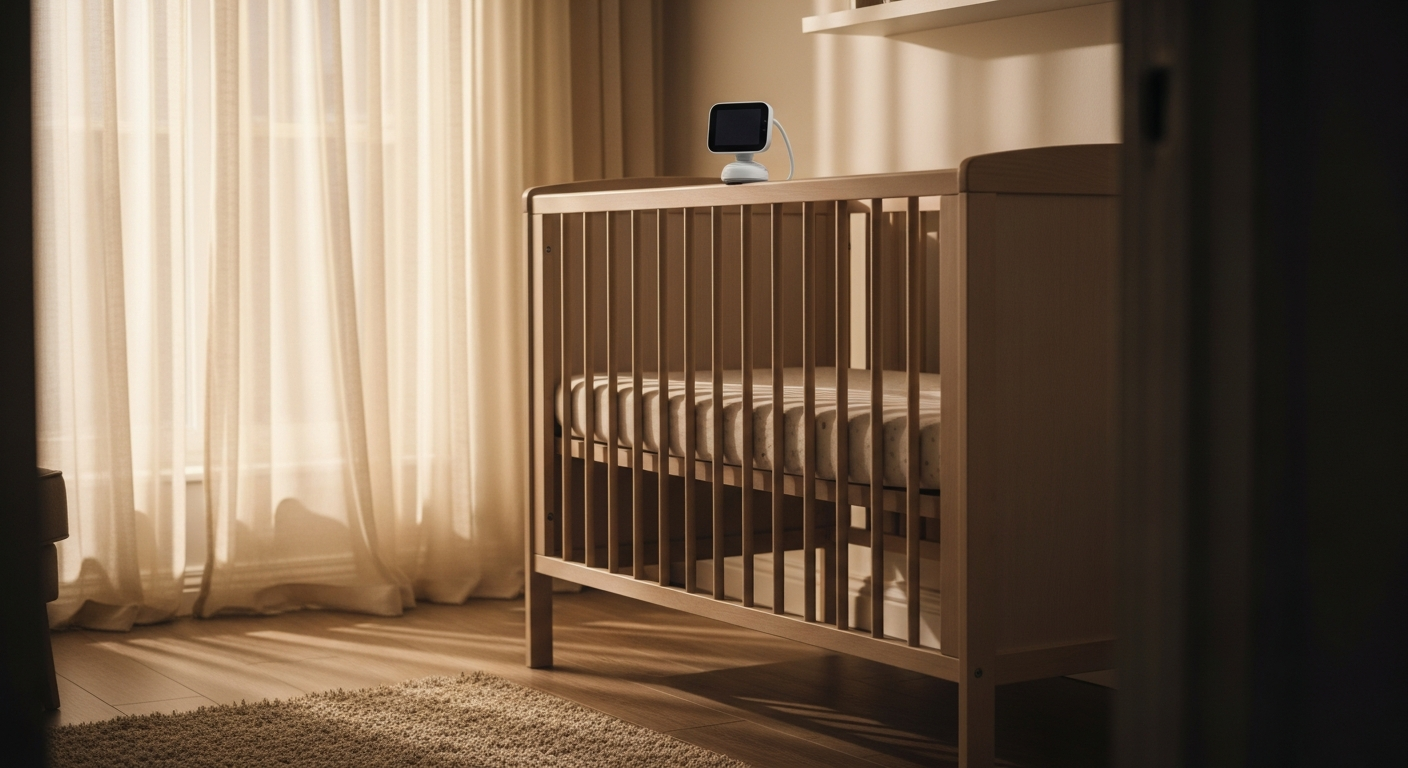
Many parents have an audio or video baby monitor in the nursery and, without ever consciously deciding this, treat it as a general safety device for the room. It is not. A baby monitor listens or watches. It has no gas-sensing hardware of any kind and provides zero information about air quality, regardless of how advanced or expensive the model is. This matters because parents often mentally allocate "nursery safety" to the monitor and don't separately consider what else the room needs. A nursery with a top-of-the-line video monitor and no CO detector has exactly the same level of carbon monoxide protection as an empty room with nothing in it at all. A nursery needs its own, independent CO detection — ideally one with a live, numeric PPM display rather than a binary alarm-or-silent design, because a rising-but-not-yet-alarming reading is exactly the information a parent needs to catch a slow leak before a baby's symptoms become severe. Carbon Monoxide Detector Placement: Exactly Where to Put Yours Takeaway: a baby monitor provides audio or video only — it is not a substitute for a dedicated CO detector, and assuming otherwise leaves the nursery with no gas detection at all.
What Actually Separates a Hard Day From an Emergency
Parents cannot rely on infant behavior alone to distinguish CO exposure from a normal rough patch — the symptoms overlap too completely. What differentiates an emergency is context and pattern, not any single symptom in isolation. The most reliable signal is the same one that applies to adults: if more than one person in the house — a parent, an older sibling, a pet — is also feeling unusually unwell, headachy, or lethargic at the same time as the baby's fussiness or poor feeding, treat it as a household-wide event, not an infant-specific one. A fussy baby combined with a parent who also has an unexplained headache on the same day is a pattern that warrants leaving the house and calling for help, not a coincidence to note and move past. Seasonal timing matters too. A newly installed water heater, a furnace that just started running again, a generator used nearby, or a car left running in an attached garage are all concrete events that raise the probability that vague symptoms have a physical cause. What Causes Carbon Monoxide in a House? 7 Hidden Sources Takeaway: no single infant symptom proves CO exposure, but a cluster of household-wide symptoms occurring together, especially alongside a plausible CO source, is the pattern that should move a parent to act immediately.
Protecting a Nursery
- Never assume a baby monitor provides any gas or air quality detection — it does not
- Place a dedicated CO detector with a live PPM display in or near the nursery, at roughly breathing or crib height
- If the baby is unusually fussy, feeding poorly, or unusually sleepy and you cannot explain why, check whether anyone else in the house feels off too
- Treat any combination of infant symptoms plus an adult headache or dizziness on the same day as a reason to check CO levels immediately
- Know your home's CO sources — furnace, water heater, attached garage, fireplace — and be more alert after any of them is serviced, installed, or used differently than usual
- If you travel with an infant, bring a portable CO detector — vacation rentals and hotels are not required to have working detectors in most states
- Trust a live PPM reading over how anyone in the house is feeling — CO exposure can be underway well before any symptom appears
Every CO safety guide is written from the perspective of someone who can describe what they're feeling. A baby can't. That gap is not a small oversight — it's the reason infants are among the most vulnerable people in any home with a carbon monoxide source, and among the least likely to have their symptoms correctly identified in time. A baby monitor watches the crib. It does not watch the air. The AirShield™ 3-in-1 Portable Carbon Monoxide Detector plugs into any outlet in the nursery and shows the live CO PPM reading in real time, giving parents the one piece of information a fussy, sleepy, or off-feeding baby cannot provide for themselves. Visit airshield.store.
Frequently Asked Questions
Sources & References
- CDC: Carbon Monoxide Poisoning Prevention — CDC guidance on CO symptoms and vulnerable populations.
- CPSC: Carbon Monoxide Information Center — CPSC safety data on CO exposure risks by population.
- American Academy of Pediatrics: Carbon Monoxide Hazards — AAP guidance on carbon monoxide risks specific to infants and children.
Protect Your Home with AirShield™
The only portable CO detector that shows you real-time PPM readings on a live OLED display. Electrochemical sensor, multi-gas detection, UL listed.
Check Availability →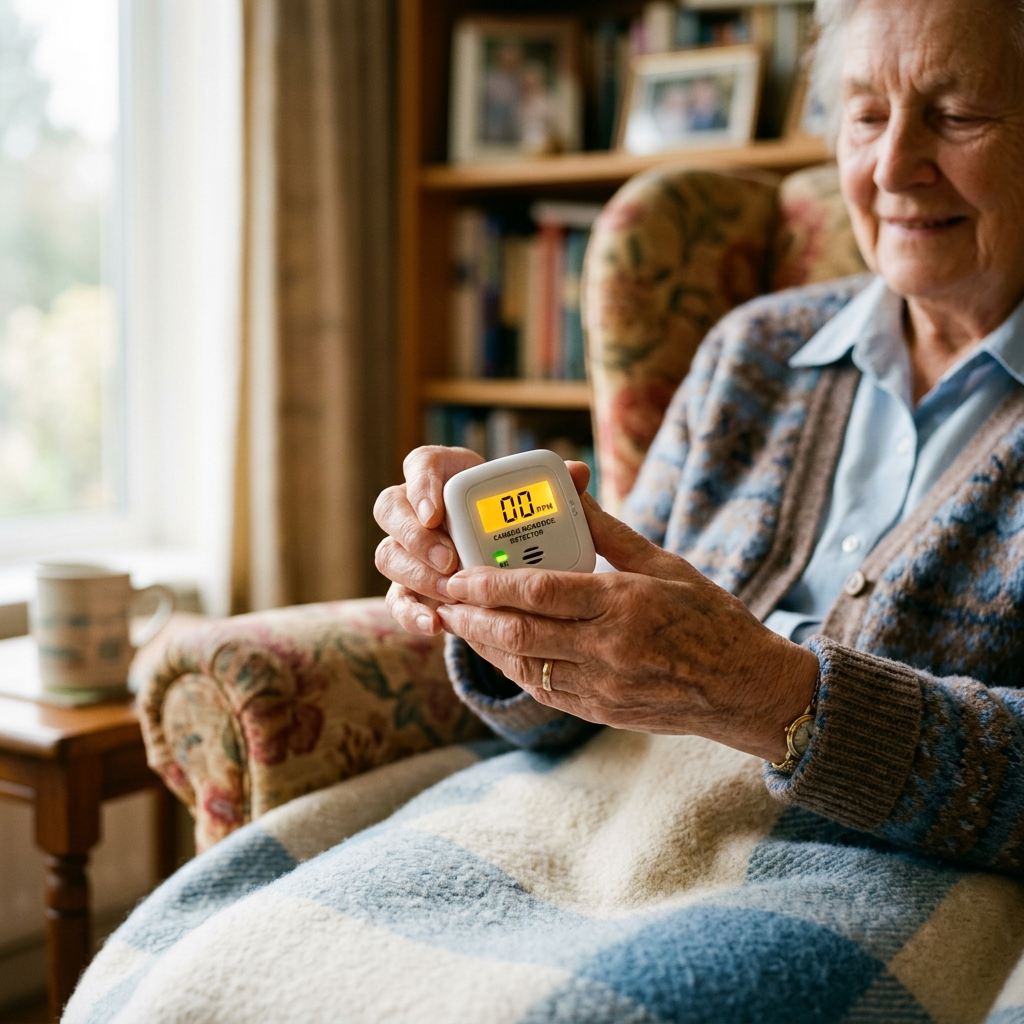
Loading comments...