It had an Amazon's Choice badge. It had sold more than 4,000 units in a single month. And according to Consumer Reports and CPSC incident reports filed in February and March 2026, it didn't alarm when carbon monoxide reached life-threatening concentrations inside at least four households — two of them with children who ended up hospitalized. The product was the Hembisen KH-158, a plug-in carbon monoxide and gas detector manufactured in Shenzhen, China. When Consumer Reports notified Amazon about the hospitalizations — a 15-year-old, a 14-year-old, a 60-year-old man, and other family members — Amazon removed the product. The CPSC was asked to investigate. This is not an isolated incident. It is a demonstration of a systemic failure in how CO detectors reach the market and what consumers are left to figure out on their own. This post covers what happened, why it happened at a technical level, and what a carbon monoxide detector that actually works looks like compared to one that earns a badge while families get poisoned. How Does a Carbon Monoxide Detector Work? A Clear Explanation
What Happened: Four Hospitalizations in One Month
Between late February and early March 2026, the CPSC received four incident reports all describing the same product and the same failure mode: the Hembisen KH-158 did not alarm — did not show elevated readings — while CO levels in the home had reached concentrations that sent residents to the hospital. The affected individuals included a 15-year-old and a 14-year-old treated for potential CO poisoning in February. In March, a 60-year-old man was hospitalized along with family members who had been experiencing dizziness and difficulty breathing. "The device failed to sound any alarm or show any elevated readings while CO levels had reached life-threatening concentrations," states one of the SaferProducts.gov reports filed with the CPSC. In a separately documented case, a family had been waking up with frequent headaches and persistent fatigue for weeks before an HVAC technician discovered the CO leak the detector next to the furnace had never flagged. Consumer Reports described the Hembisen KH-158 as giving families a false sense of security — a device that appeared fully functional while CO accumulated unseen in the rooms where they lived and slept. Low-Level Carbon Monoxide Exposure: The Silent Risk Your Alarm Never Triggers Takeaway: the KH-158 failure is not a malfunction in the conventional sense — the device appeared operational, passed visual inspection, and gave no indication of failure while real CO poisoning was underway.
Why Amazon's Choice Means Nothing for Safety-Critical Devices
Amazon's Choice is an algorithmic designation, not a safety certification. It reflects sales velocity, return rates, and review patterns — not independent testing, sensor accuracy, or performance under real CO conditions. A product earns the badge because it sells quickly and generates few returns, not because anyone has tested whether it will alarm when your life depends on it. In the case of the Hembisen KH-158, the badge was awarded to a device that, according to CPSC reports, silently failed at its only meaningful function. This is not a problem unique to Amazon. No major retail marketplace applies independent safety testing to CO detectors before listing them. UL 2034 certification — the U.S. residential standard for CO alarms — is supposed to serve as the filter. But fraudulent or lapsed certification claims can circulate in product listings for years before being identified. Consumer Reports has previously found that a significant number of CO detectors sold on online marketplaces made false or misleading certification claims — and that these products were often among the best-reviewed in their categories. How Accurate Are Portable Carbon Monoxide Detectors? Takeaway: treating CO detector selection like a commodity decision — lowest price, highest reviews, trusted badge — applies ordinary consumer logic to a safety-critical device that requires entirely different evaluation criteria.
How a CO Detector Can Appear Functional While Detecting Nothing
The KH-158 failure pattern — showing no reading while CO is present at dangerous levels — has a specific technical explanation. CO detectors can fail in two ways: false positives, where the alarm triggers without real CO present, and false negatives, where CO is present but the device shows nothing. False negatives are the more dangerous failure mode because the occupant has no indication that anything is wrong. The device appears functional. The home feels safe. Based on Consumer Reports' investigation, the KH-158 appears to have failed through false negatives — powered on, no fault indicated, and no response to actual CO. Electrochemical sensors detect CO through a specific chemical reaction at a platinum electrode, producing an electrical current proportional to concentration. They are accurate at low levels, respond quickly, and are highly selective to CO. Cheaper sensor types used in budget devices are less selective, prone to drift over time, and have documented performance problems at the low-to-mid concentrations where early warning is most valuable. A live numeric PPM display is the only way to verify in real time that your sensor is responding — a device with indicator lights only can sit on the wall appearing fully functional while detecting nothing. Digital Carbon Monoxide Detector: Why the Number on the Screen Changes Everything Takeaway: a CO detector that fails silently is more dangerous than no detector at all, because it creates active false reassurance rather than just a gap in protection.
What the CPSC Investigation Means — and Doesn't
Consumer Reports formally requested that the CPSC investigate the Hembisen KH-158 and notify consumers who may have purchased it. Amazon removed the product following Consumer Reports' notification. As of the time of publication, no formal CPSC recall notice had been issued for the KH-158, and the scope of direct notification to existing purchasers remained unclear. This pattern — product removed from one retailer, no recall, limited consumer notification — is common with CO detectors and similar safety devices that fail after entering mass distribution. CPSC's post-market surveillance depends heavily on incident reports filed through SaferProducts.gov, a system that captures only a fraction of actual incidents. Most CO exposure events either go unattributed or result in victims unable to connect their symptoms to a specific device. The four hospitalizations documented in the KH-158 case are almost certainly not the full count of affected households. For a product sold 4,000 times in a single month and capable of silent failure, four documented hospitalizations represents the visible fraction of a larger undocumented failure pattern. Carbon Monoxide Detector Not Working? Here's How to Tell — and What to Do Takeaway: post-market surveillance for CO detectors is reactive and incomplete — the burden of identifying a reliable device falls on the consumer, before an incident, not after one.
What a Carbon Monoxide Detector You Can Actually Trust Looks Like
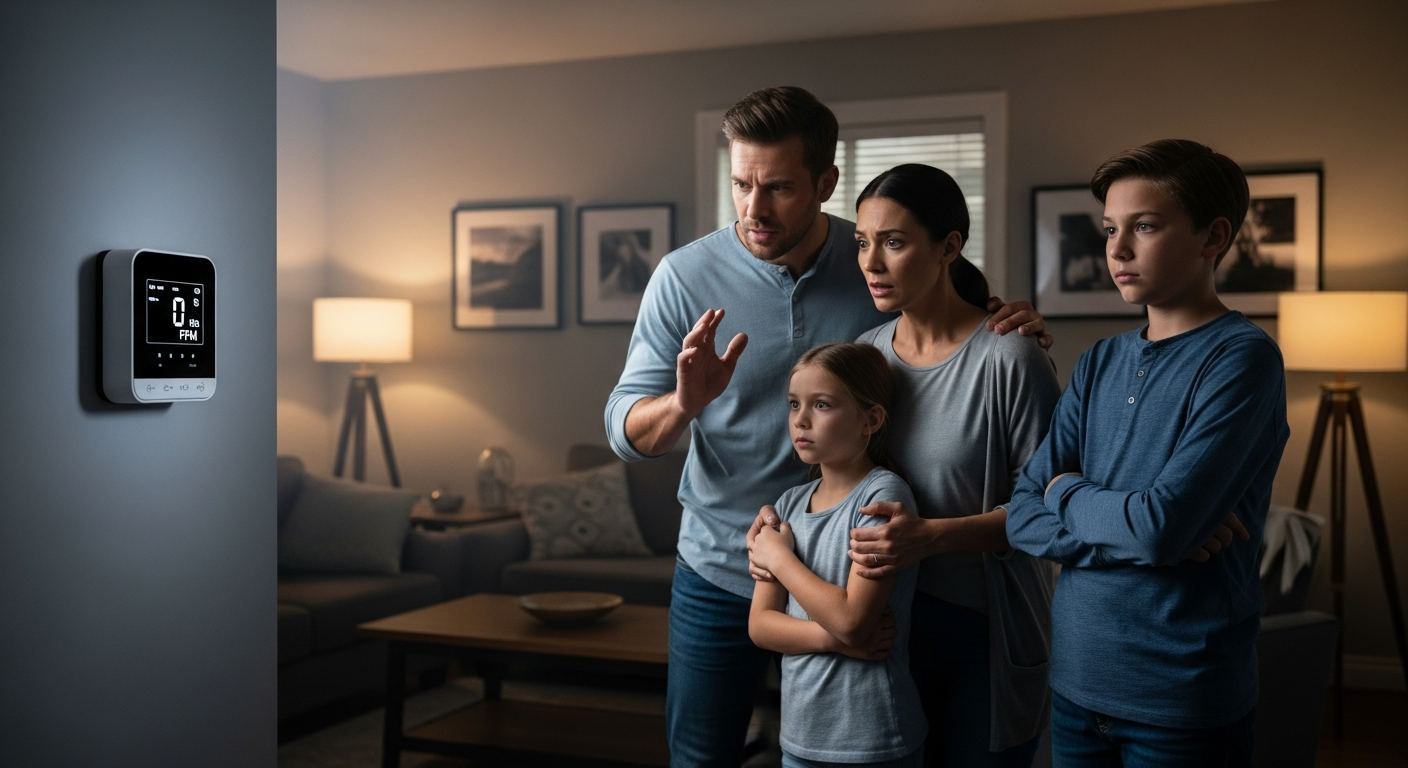
The KH-158 failure defines, by contrast, the minimum criteria any reliable CO detector must meet. An electrochemical sensor — not a lower-cost alternative. An independently verified, currently active UL 2034 listing — not just a claim in product copy. A live numeric PPM display, so you can confirm the device is reading and responding in real time. A display showing 0 PPM in a well-ventilated space tells you the sensor is functioning; an indicator light showing green tells you only that the alarm circuit is intact, not that the sensor behind it is working. The manufacturer also matters. The Hembisen KH-158 is made by Shenzhen Kanghua Shengshi Industrial Co, LTD — no U.S. presence, no support infrastructure, no history of standing behind product safety. When Consumer Reports notified Amazon, the response was product removal. No replacement program. No direct notification to the households that purchased a device that failed to protect them. A carbon monoxide detector worth trusting comes with an accountable manufacturer, a verified certification, an electrochemical sensor, and a display that shows you the number — not a badge earned by selling quickly. Best Portable Carbon Monoxide Detector in 2026 Takeaway: the criteria that matter for a CO detector cannot be read from a product listing — they require verifying sensor type, certification status, and manufacturer accountability independently.
How to Verify Your Current CO Detector Is Trustworthy
Run through this before putting faith in any CO detector currently in your home:
- Search your brand and model on CPSC SaferProducts.gov — check for incident reports filed by other consumers.
- Verify UL certification directly at ul.com, not from the product listing. Search the manufacturer name and confirm the specific model has a current, active certification.
- Confirm the sensor type in the product documentation — look for 'electrochemical.' If it says 'metal oxide,' 'semiconductor,' or lists no sensor type, that is a risk flag.
- Check for a live numeric PPM display. An indicator-only device with no number cannot show you whether the sensor is functioning at low concentrations.
- Check the manufacture date. Electrochemical sensors degrade after 5-7 years. A detector past its rated lifespan may pass its self-test while underreading significantly.
- If your detector was purchased on a marketplace without an identifiable brand behind it, consider replacing it with a device from an established, certified manufacturer with a support channel.
The Hembisen case is a useful diagnostic: it names the failure mode, identifies the conditions that enabled it, and shows exactly what is missing from a device that earns a badge while failing at its job. The AirShield™ 3-in-1 uses an electrochemical sensor, is UL listed, and displays live PPM readings from the moment it powers on — so you can see exactly what is in the air you are breathing, not just hope the light stays green.
Frequently Asked Questions
Sources & References
- Consumer Reports: Amazon CO Detector Linked to Hospitalizations — Consumer Reports investigation linking the Hembisen KH-158 to four hospitalizations in February-March 2026
- CPSC SaferProducts.gov Incident Reports — CPSC database of consumer product incident reports, including the Hembisen KH-158 filings
- CPSC: Selecting and Using Carbon Monoxide Detectors — CPSC guidance on CO detector certification and sensor type requirements
Protect Your Home with AirShield™
The only portable CO detector that shows you real-time PPM readings on a live OLED display. Electrochemical sensor, multi-gas detection, UL listed.
Check Availability →


Loading comments...