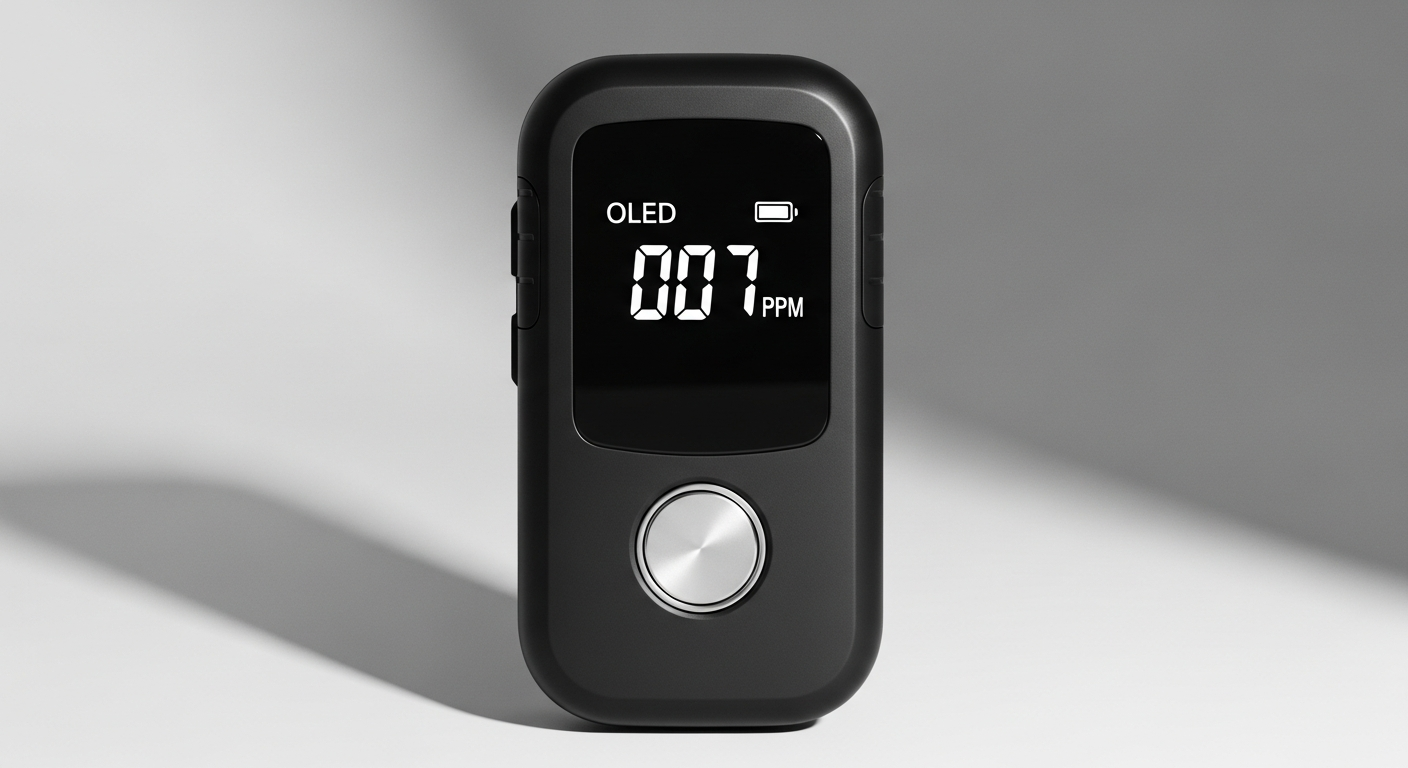
The number on your portable carbon monoxide detector's display is only as accurate as the sensor generating it. Most people buy based on price, brand recognition, or shelf availability — and most assume that if a number appears on screen, it reflects the actual CO level in the room. That assumption is not always correct. Sensor technology, temperature and humidity conditions, age-related calibration drift, and the specific standard the device was tested against all determine whether the reading you see is within a few PPM of reality or off by 30-40%. The difference matters: at 25 PPM, a person with heart disease begins to experience physiological effects. At 35 PPM, OSHA's occupational ceiling limit is reached. A detector that shows 15 PPM when the true concentration is 45 PPM is not a minor inconvenience — it is an inaccurate safety device. This guide explains what determines CO detector accuracy, what the research shows about different sensor types, and what to verify before buying a portable carbon monoxide detector you plan to rely on. Digital Carbon Monoxide Detector: Why the Number on the Screen Changes Everything
The Two Sensor Types: Why Only One Is Accurate at Low Concentrations
Every portable carbon monoxide detector on the market uses one of two sensor technologies: electrochemical or metal oxide semiconductor. The distinction is not marketing language — it is the underlying chemistry that determines whether the reading you see is accurate. Electrochemical sensors measure a tiny electrical current generated when CO molecules react at a platinum electrode. The reaction is highly selective to CO, producing minimal cross-sensitivity to other gases and reliable readings at concentrations as low as 1-3 PPM. This is the same technology used in hospital monitoring equipment, industrial gas detectors, and personal safety gear for mine workers and firefighters. Metal oxide semiconductor sensors measure changes in electrical resistance when gases adsorb onto a heated metal oxide surface. They respond to a broad range of gases — ethanol, acetone, and other volatile organics as well as CO — making them prone to false readings whenever cleaning products or solvents are nearby. The CPSC has moved to recognize only electrochemical sensors for compliant residential CO alarms, citing documented response and accuracy issues with metal oxide designs at the low concentrations most relevant to residential safety. How Does a Carbon Monoxide Detector Work? A Clear Explanation Takeaway: electrochemical is the only sensor type that provides reliable readings across the full range of CO concentrations that matter for human health — metal oxide is not a close second.
Why Metal Oxide Sensors Miss the Concentrations That Matter Most
The concentrations where CO becomes a health concern span from 9 PPM (the NIOSH long-term exposure limit) to 35 PPM (OSHA's occupational ceiling) to 70-150 PPM (where residential alarms trigger). Metal oxide sensors have documented accuracy problems specifically in the 10-100 PPM range — precisely the concentrations where early intervention is most valuable. At these low levels, metal oxide sensors can deviate from the true reading by 10-20 PPM or more. A device reading 12 PPM when the true level is 35 PPM tells you nothing that would cause you to act. For a device with a numeric display — which is supposed to give specific, actionable information — this level of inaccuracy defeats the purpose of the display entirely. Professional testing of consumer CO detectors using metal oxide sensors has documented average measurement errors of 30-40% at low concentrations — the exact range where a portable detector's early warning function is most useful. The practical implication: if the detector in your hand has a metal oxide sensor and shows 18 PPM, the actual concentration could be anywhere from 10 to 45 PPM. The display looks precise, but the number is unreliable. Low-Level Carbon Monoxide Exposure: The Silent Risk Your Alarm Never Triggers Takeaway: metal oxide sensors are most inaccurate at exactly the concentrations — below 100 PPM — where accurate early readings carry the most weight.
How Temperature and Humidity Affect CO Detector Accuracy
Both sensor types are affected by environmental conditions, but the impact differs significantly. Electrochemical sensors perform accurately across a broad temperature range (typically 32°F to 104°F) and are minimally affected by humidity levels between 15-90% relative humidity — a window that covers virtually every indoor environment. Metal oxide sensors are more temperature-dependent because the adsorption chemistry driving their detection changes with heat. A cold metal oxide sensor underreads CO; an overheated one may overread. In an air-conditioned hotel room in summer or a cold camping trailer in spring, these conditions introduce additional inaccuracy on top of the sensor's baseline limitations. For portable use specifically — where a detector encounters the widest range of temperatures — this variance matters more than it does for a fixed indoor unit. In controlled testing, metal oxide CO sensors at 32°F have shown a 40-60% reduction in sensitivity compared to room temperature — a meaningful finding for any portable detector used in cold weather cabins, camping trailers, or drafty vacation rentals. Portable Carbon Monoxide Detector for Travel: What to Look For in 2025 Takeaway: an electrochemical sensor's environmental stability is a practical accuracy advantage over metal oxide designs wherever temperature and humidity vary.
Calibration Drift: Why Detector Age Erodes Accuracy
CO detector accuracy degrades over time regardless of sensor type, but through different mechanisms. Electrochemical sensors contain a liquid or gel electrolyte that slowly evaporates over the sensor's lifetime. As it depletes, the electrode reaction becomes less efficient, and readings at low concentrations become less reliable. This is why electrochemical CO detectors carry a rated lifespan — usually 5-7 years — after which replacement is recommended. A detector near the end of its lifespan may still alarm at high concentrations while significantly underreading at the 15-40 PPM range where early warning matters most. Metal oxide sensors do not deplete in the same way, but their accuracy drifts from repeated exposure to VOCs, silicones, and interfering gases common in household environments. A CO detector that is 6 years old may appear fully functional — it passes the test button and shows no fault indicator — while providing low-level readings that are off by 25-30% because the test button checks the alarm circuit, not sensor accuracy. Most consumers replace CO detectors only when the alarm triggers or the chirp becomes annoying, not proactively at the sensor's rated lifespan. Carbon Monoxide Detector Not Working? Here's How to Tell — and What to Do Takeaway: an electrochemical detector past its 5-7 year rated lifespan is not a reliable early-warning monitor — scheduled replacement, not reactive replacement, is what maintains accuracy.
What UL 2034 Certification Tells You — and What It Doesn't
UL 2034 is the U.S. safety standard for residential CO alarms. A detector with UL 2034 certification has been tested to confirm it alarms within specific time windows at specific concentrations: 60-240 minutes at 70 PPM, 10-50 minutes at 150 PPM, and 4-15 minutes at 400 PPM. What UL 2034 does not cover: low-level accuracy below 30 PPM, the precision of any numeric display, or how closely the displayed reading reflects the true concentration at any level. A UL 2034-listed detector can have a numeric display consistently off by 20-30% and still pass certification, because the standard tests alarm timing, not display accuracy. UL 2034 certification confirms the alarm will trigger on schedule at high concentrations — it is not a validation of display accuracy or low-level sensitivity, the two features most important for a portable CO detector used in travel and sleeping environments. The sensors with the best low-level accuracy — professional-grade electrochemical units — are accurate to within ±2 PPM below 20 PPM and ±10% above 100 PPM, performance specifications that exceed what UL 2034 requires. Best Portable Carbon Monoxide Detector in 2026 Takeaway: look for both UL 2034 certification (which validates alarm timing) and an electrochemical sensor (which validates low-level display accuracy) — the two together are what make a portable CO detector genuinely reliable.
How to Verify Your Portable CO Detector Is Giving Accurate Readings
Before placing your next order or relying on a detector you already own, run through this checklist:
- Find the sensor type in the product specifications — look for 'electrochemical.' Metal oxide, semiconductor, or MOS sensors do not provide reliable low-level accuracy.
- Check the manufacture date, not the purchase date — electrochemical sensors have a 5-7 year lifespan from manufacture. A 4-year-old detector bought on clearance may be near end of life.
- Look for a live numeric PPM display. An indicator-only alarm cannot show whether it is reading accurately at low concentrations.
- If your detector is more than 5 years old, replace it regardless of whether it passes the test button. The button tests the alarm circuit — not sensor accuracy.
- Test in a well-ventilated outdoor space: a functioning electrochemical detector should read 0-1 PPM. Readings of 8-12 PPM outdoors suggest sensor drift.
- Check for UL 2034 or UL 2075 certification — UL 2075 is the more stringent standard covering systems-based detection and real-time display accuracy.
- Never rely on indicator lights alone. The numeric readout is the only way to see where CO concentrations actually are.
Accurate portable carbon monoxide detection comes down to one underlying factor: the sensor. An electrochemical sensor, correctly calibrated and within its rated lifespan, shows you a CO level that reflects reality — close enough to make the right call. The AirShield™ 3-in-1 Portable Carbon Monoxide Detector uses an electrochemical sensor paired with the Smart M8 Chip, displays live PPM readings from the moment it's powered on, and is UL listed. It gives you numbers you can actually rely on, in every space you sleep.
Frequently Asked Questions
Sources & References
- CPSC: Carbon Monoxide Information Center — CPSC guidance on CO detector sensor types and residential standards
- UL 2034: Standard for Single and Multiple Station Carbon Monoxide Alarms — UL 2034 alarm threshold and timing requirements for residential CO detectors
- NIOSH: Carbon Monoxide Occupational Exposure Limits — NIOSH recommended exposure limit: 35 PPM as the 8-hour TWA
- White Paper: Electrochemical vs. Semiconductor Gas Detection — Technical comparison of sensor types for CO and gas detection accuracy
Protect Your Home with AirShield™
The only portable CO detector that shows you real-time PPM readings on a live OLED display. Electrochemical sensor, multi-gas detection, UL listed.
Check Availability →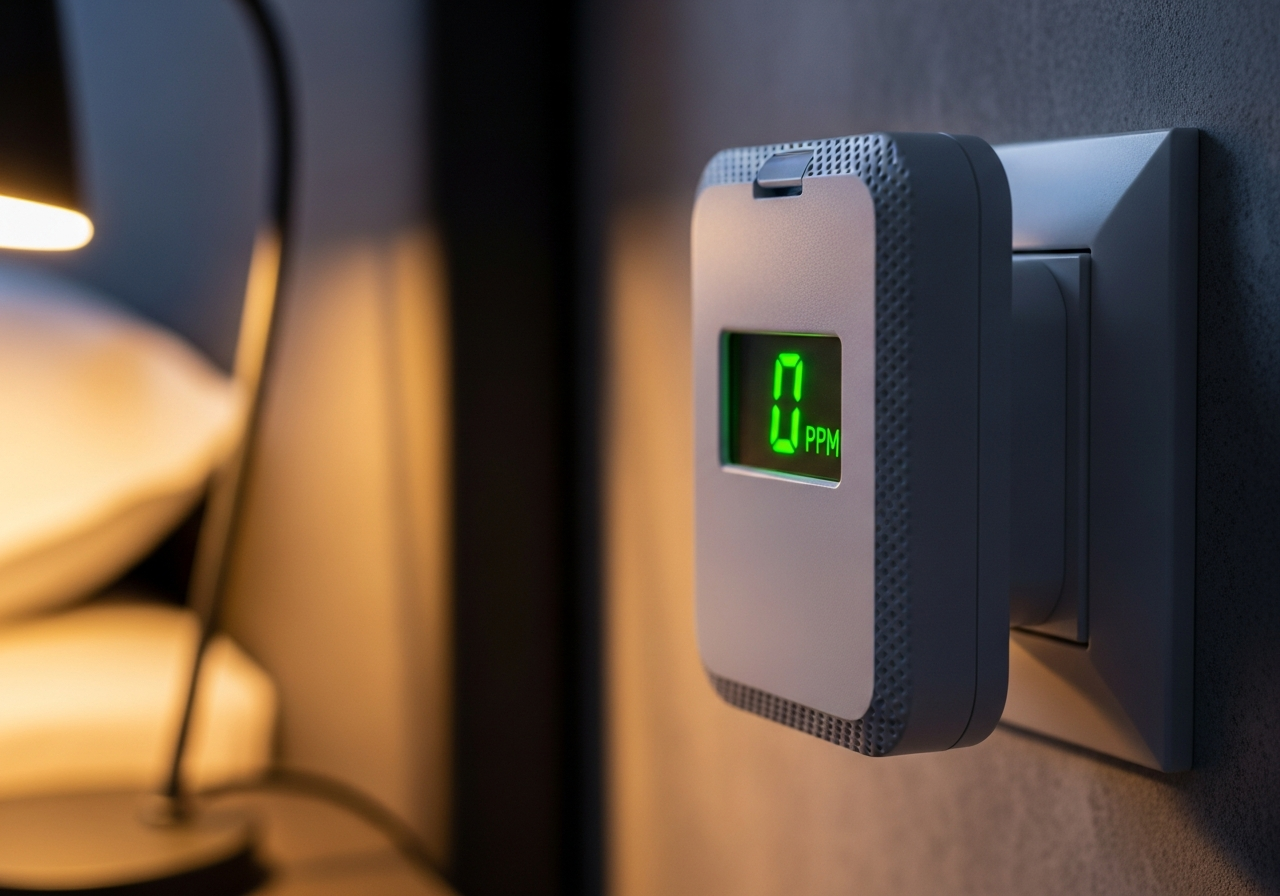
Loading comments...