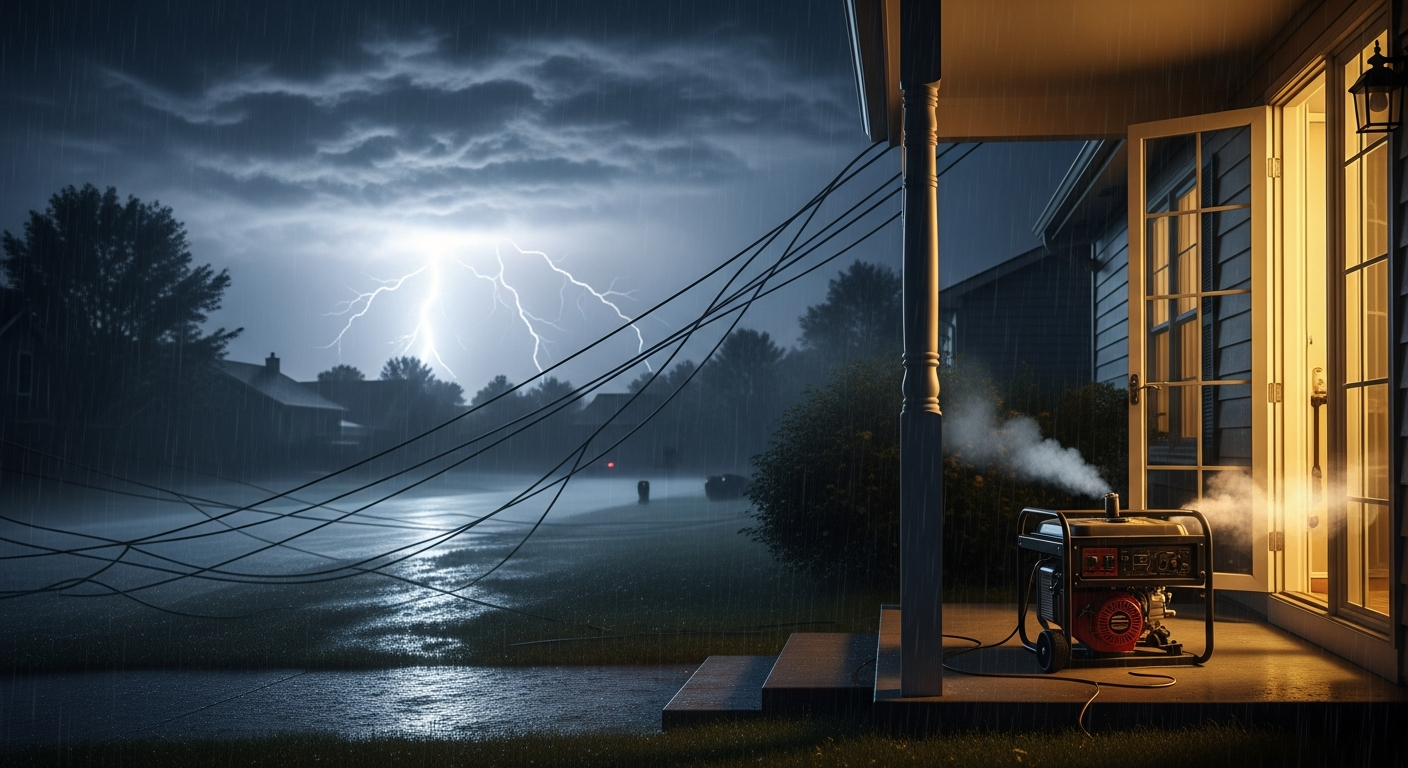
Summer 2026 has already delivered its share of severe storms. When the power goes out on a hot July night — no AC, no fans, food in the refrigerator starting to warm — the portable generator in the garage feels like a lifeline. For roughly 100 Americans every year, it becomes something else entirely. Generator-related CO poisoning is one of the most preventable causes of death in residential settings. The CPSC has documented it extensively. The CDC issues warnings every storm season. And every year, the same mistakes get made: the generator goes in the garage, on the porch, in the basement, under the overhang — anywhere that feels convenient, anywhere that keeps it out of the rain. This post covers exactly why generators are so lethal when misused, and the specific placement and usage rules that make them safe. What Causes Carbon Monoxide in a House? 7 Hidden Sources
Why Generators Produce So Much More CO Than You Expect
Most people know generators produce exhaust. Most people do not know how much CO that exhaust contains relative to other familiar sources. A single 5,000-watt portable generator running at full load produces approximately as much CO per hour as 450 idling automobiles. Not 4 or 5 cars in a closed garage — 450. The math of CO accumulation in enclosed spaces is unforgiving. Take a typical two-car garage: roughly 1,500 cubic feet of air. A generator producing CO at that rate fills that space to dangerous concentrations (above 400 PPM) in under five minutes. It reaches concentrations associated with death within 15 to 20 minutes. The CO doesn't stay in the garage. It migrates into the home through gaps around the interior door, through HVAC systems that share return air between the garage and living space, and through any wall penetrations. The house fills with CO while the garage itself may be partially ventilated through the open outer door. The family members who found their relatives dead with a generator running in the garage almost universally report that the person seemed fine — was planning to 'just be out there for a minute.' Car Running in Closed Garage: How Long Until It's Dangerous? Takeaway: Generator CO operates on a timeline measured in minutes, not hours. The gap between 'seemed fine' and 'collapsed' is often 10 to 15 minutes for a generator in an enclosed space.
The Summer Storm Scenarios That Kill People
Generator CO deaths cluster around specific scenarios, all of which are more common in summer storm conditions. **The garage placement.** The generator goes in the garage 'just to keep it dry.' The outer door may be fully open or partially open. CO migrates to the interior door and enters the home. This is the single most common scenario in documented generator CO fatalities. **The covered porch.** The generator runs under the awning, next to the house. CO concentrates under the overhang and enters through windows left open for ventilation — which are open precisely because it is a hot summer night without AC. **The window too close.** The generator is outside but placed within 20 feet of an open window. The exhaust plume enters the home. CO builds in bedrooms where people are sleeping with fans drawing outside air in. **The overnight run.** The generator runs continuously through the night while occupants sleep. CO accumulates gradually as the night progresses. By 3 AM, concentrations are dangerous. By 5 AM, they are potentially lethal. The occupants never wake. **The refueling in place.** Someone refuels the generator while it is running, in its bad location, because they don't want to move it. Hot generator + fuel = fire risk on top of CO risk. All of these scenarios share one feature: they feel like reasonable compromises in the moment, given the heat, the darkness, the urgency of a power outage. Should a CO Detector Be in Your Bedroom? Yes. Here's Why Takeaway: Summer storm generator deaths are not caused by carelessness — they are caused by reasonable-seeming shortcuts in stressful conditions. The rules exist precisely because the shortcuts feel rational.
The CO Poisoning Timeline During a Power Outage
Understanding the progression of CO poisoning helps explain why generator incidents are so often fatal rather than just serious. CO works by binding to hemoglobin — the protein in red blood cells that carries oxygen — with approximately 230 times the affinity of oxygen. Once CO has bound to a hemoglobin molecule, that molecule can no longer carry oxygen to your tissues. The medical term for CO-saturated hemoglobin is carboxyhemoglobin (COHb). **COHb below 10%:** Mild headache, possibly no symptoms. **COHb 10–20%:** Headache, dizziness, breathlessness. **COHb 20–40%:** Severe headache, disorientation, confusion, muscle weakness. **COHb 40–60%:** Convulsions, loss of consciousness. **COHb above 60%:** Fatal without immediate medical intervention. During a power outage, the household is often simultaneously stressed: it's hot, people are more tired than usual, may have had alcohol, and are sleeping with windows open or fans running air in. These conditions accelerate both CO accumulation in the home and the rate at which CO affects the occupants. The critical detail is that by the time COHb reaches 20–30%, cognitive impairment is already significant. A person at 25% COHb may feel unwell but cannot effectively reason about what is wrong or what to do about it. CO takes away the cognitive capacity to recognize CO poisoning at exactly the saturation level where self-rescue is still possible. Carbon Monoxide Poisoning Symptoms: What to Know Before It's Too Late Takeaway: The window for self-rescue during CO poisoning is narrow — and it closes as cognitive impairment from CO makes the situation harder to recognize.
Generator Placement and Usage Rules That Actually Work
- Place the generator at least 20 feet from any window, door, or vent — 25 feet is better; measure it, don't estimate
- Point the exhaust away from the house and any neighboring structures
- Never run a generator in a garage — even with the door fully open; never run one on a covered porch, under an awning, or in a carport
- If rain is a concern, use a generator tent or canopy specifically designed for generator use — one that allows full exhaust venting — never cover with a tarp
- Turn the generator off and let it cool before refueling — never refuel a running generator
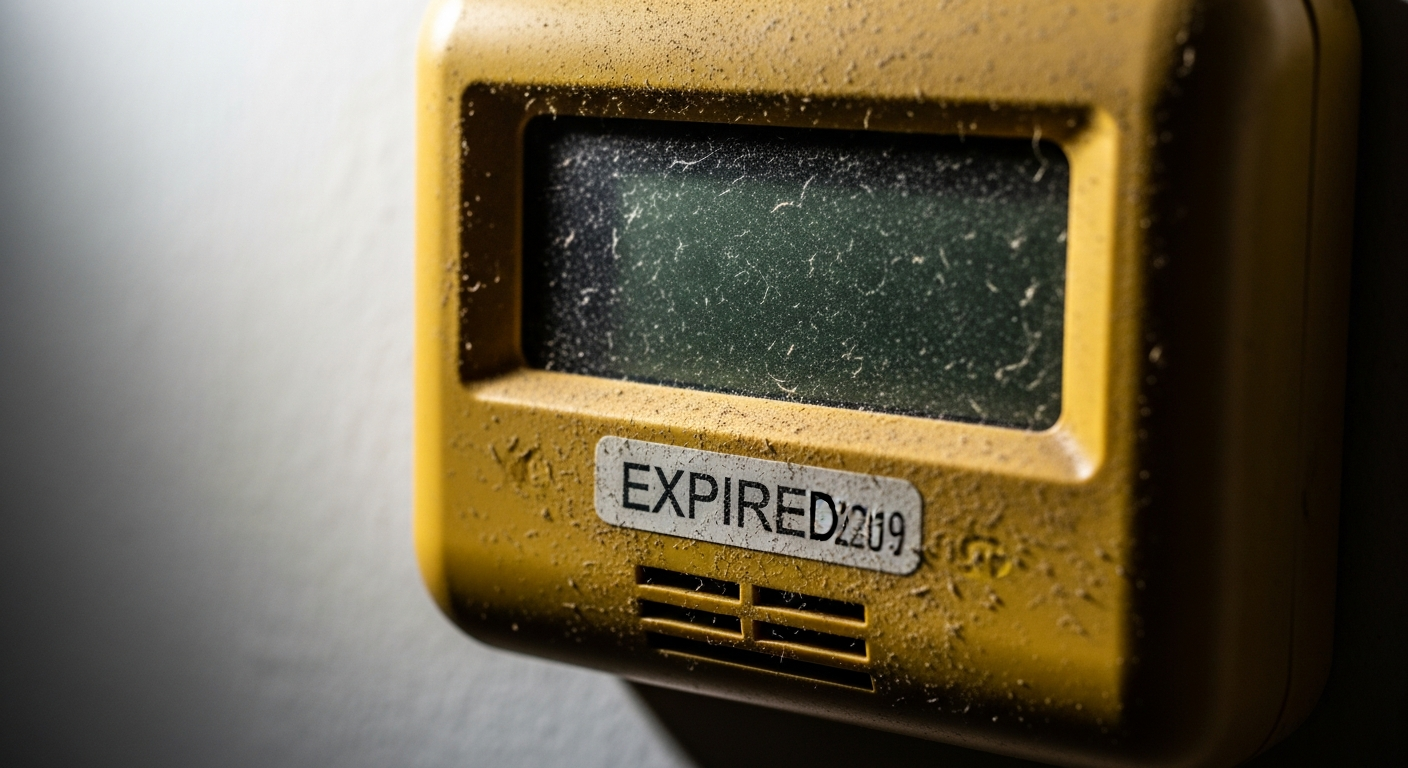
- Install a CO detector with a live PPM display inside the home and check it periodically throughout the night when the generator is running
- Place a CO detector near any interior door that connects to an attached garage — this is the highest-risk entry point for generator CO
- If anyone in the home develops a headache, nausea, or dizziness while the generator is running, turn it off immediately, get everyone outside, and call 911
- Look for generators certified to PGMA G300-2023 or UL 2201 — these include automatic CO shut-off technology
The next power outage is a matter of when, not whether. When it happens, the AirShield™ 3-in-1 Portable CO Detector is the tool that tells you whether your generator placement is safe — not in theory, but in real PPM numbers on a live display. Plug it in before you start the generator. Watch the number. If it climbs above 35 PPM, adjust the placement before it becomes a problem. That's what a real-time sensor is for. Visit airshield.store.
Frequently Asked Questions
Sources & References
- CDC: Generator Safety — CDC guidance on CO risks from portable generators during power outages and storm events.
- CPSC: Generator-Related CO Deaths — CPSC data on annual generator CO fatalities and case studies from residential incidents.
- NIOSH: Preventing CO Poisoning from Portable Generators — NIOSH alert on generator CO hazards with documented incident analysis and safety guidance.
Protect Your Home with AirShield™
The only portable CO detector that shows you real-time PPM readings on a live OLED display. Electrochemical sensor, multi-gas detection, UL listed.
Check Availability →
Loading comments...