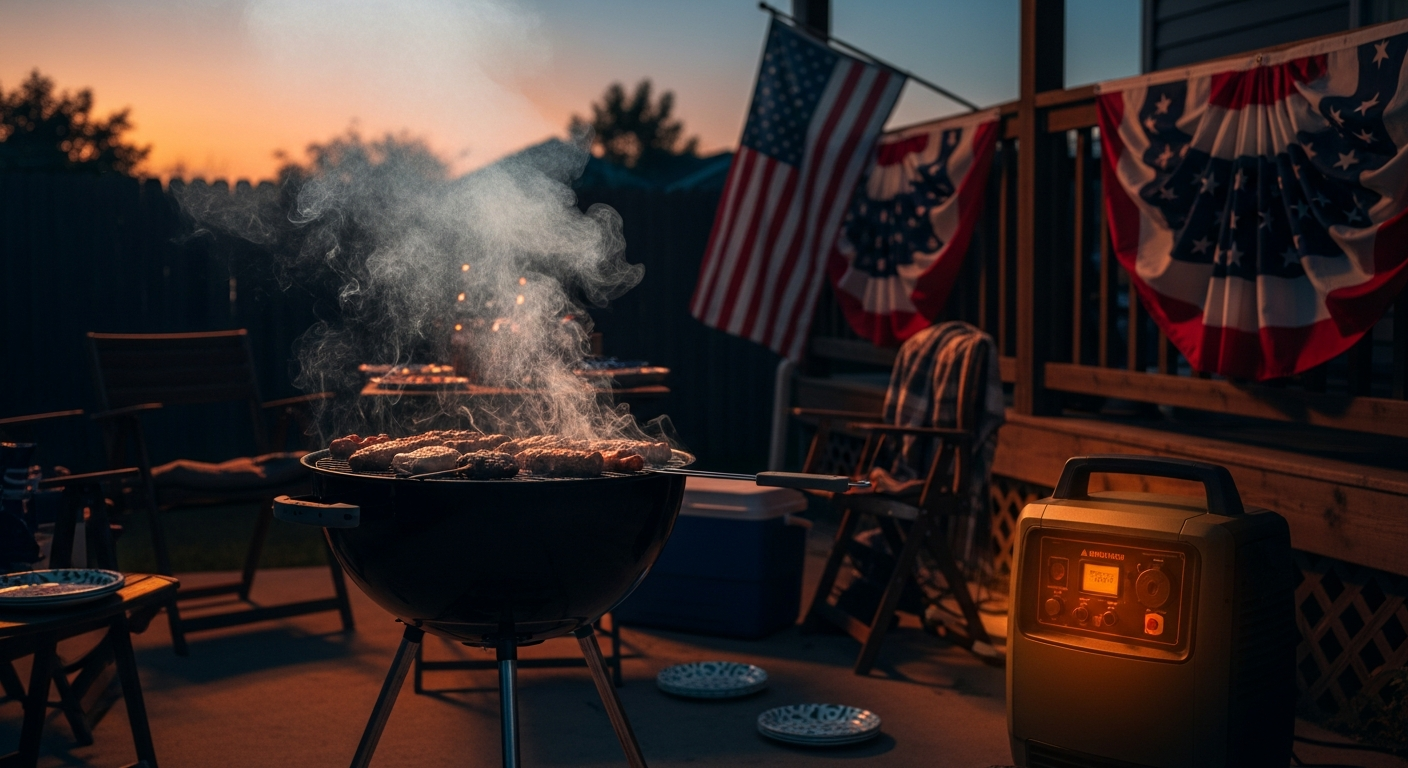
This Fourth of July, roughly 150 million Americans will fire up a grill. Millions more will run a portable generator to power speakers, lighting, and outdoor appliances. Both are traditions. Both produce carbon monoxide. And every year, both send hundreds of people to the emergency room — not from explosions or fires, but from an invisible gas that has no smell, no color, and no warning. The CPSC reported 5,400 ER visits from grill-related incidents in a single year, with an average of 13 deaths annually tied to grill misuse. Generator-related CO kills roughly 100 Americans every year, many of them during summer holidays. This post covers exactly how the danger happens — and the specific rules that prevent it. What Causes Carbon Monoxide in a House? 7 Hidden Sources
How Grills Produce Deadly CO — Even After the Flames Are Gone
Charcoal and gas grills both generate carbon monoxide as a byproduct of combustion. Gas grills produce it while burning. Charcoal grills produce it during ignition, during cooking, and — this is the part most people miss — for hours after the coals look extinguished. A charcoal bed that appears gray and cool is still smoldering. It is still consuming oxygen. It is still producing CO. The CPSC explicitly warns that charcoal briquettes, when stored inside after use, can release enough CO to kill overnight — even sealed in a bag. The danger multiplies in enclosed or semi-enclosed spaces. Cooking on a grill in a garage, under a low porch canopy, or inside a tent produces CO at concentrations that can exceed 1,000 PPM within minutes. At 1,000 PPM, loss of consciousness can occur within an hour. At 1,600 PPM, death can follow within 90 minutes. A charcoal grill placed in a garage 'just to keep it out of the rain' — even with the outer door open — has killed people within two hours. Car Running in Closed Garage: How Long Until It's Dangerous? Gas grills are somewhat safer outdoors because the open flame vents naturally. The danger arises when they are used under covered patios with poor airflow, or when someone moves them indoors — even partially — during rain. Takeaway: Grill CO danger is not just about flame management. It's about space. Any enclosed or semi-enclosed area amplifies CO concentrations to lethal levels faster than intuition suggests.
Generators: The CO Source Most People Don't Think About at a Cookout
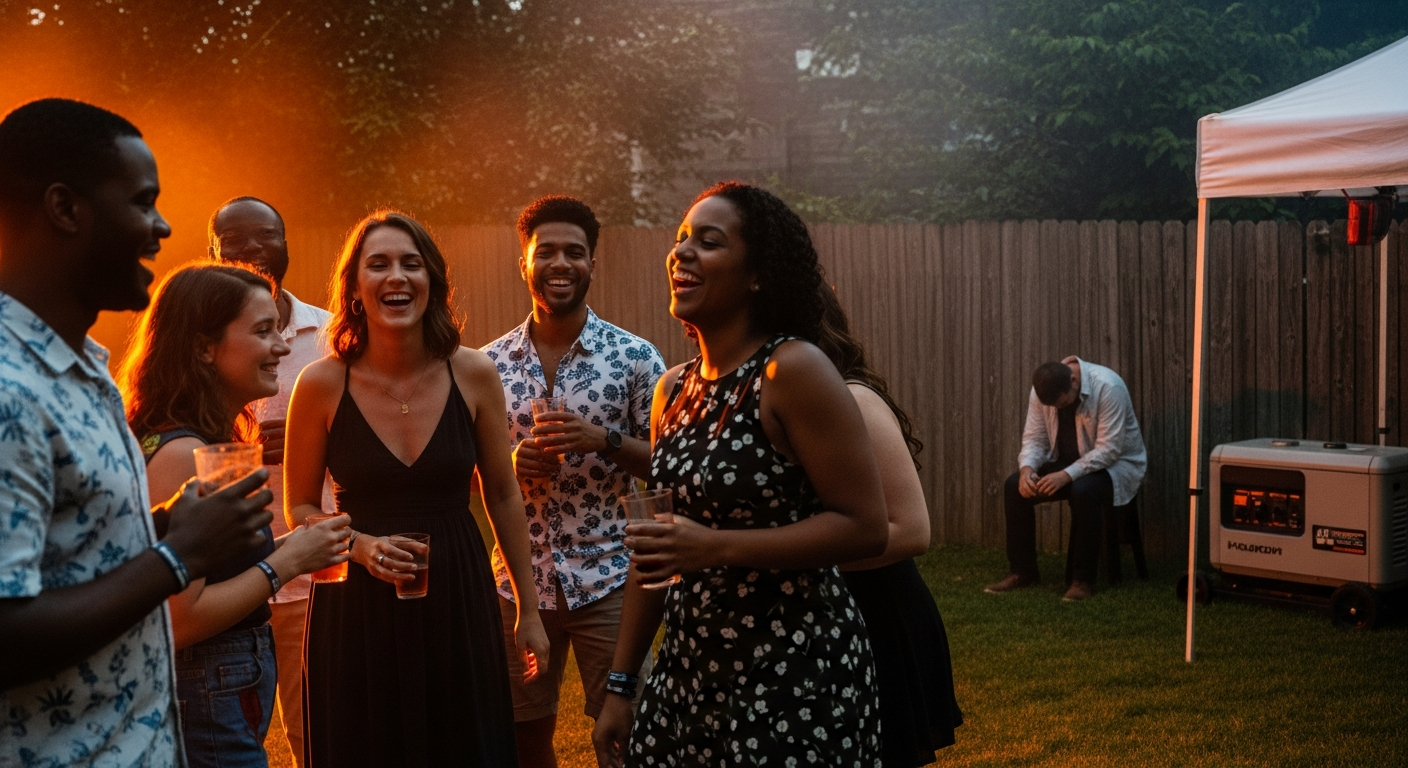
Portable generators have become standard equipment at backyard Fourth of July parties — powering speakers, string lights, outdoor projectors, and blenders. They are also, per the CPSC, the product category most commonly associated with fatal CO poisoning incidents in residential settings. A single 5,000-watt portable generator produces more CO per hour than approximately 450 idling automobiles. At full load, it fills a closed two-car garage to lethal concentrations in under five minutes. The minimum safe distance is 20 feet from any window, door, or vent. Many safety agencies recommend 25 feet. That means the generator should be at the far edge of your yard, on the downwind side, not tucked next to the house for convenience. The most common July 4th generator mistake: placing the unit inside the garage with the door open. This feels safe. It is not. CO drifts toward the interior door — which is almost never airtight — and enters the home. Concentrations in adjacent rooms can reach dangerous levels within 10 to 15 minutes. Generator CO poisoning often strikes people who are asleep, intoxicated, or who have migrated indoors away from the noise — all situations where normal warning signals fail. Summer Power Outage? Your Generator Could Kill You Takeaway: Treat the generator like a running car exhaust pointed at your party. The only position that is genuinely safe is far outdoors, with no structure between the exhaust and open air.
Why Holiday CO Poisoning Is So Hard to Recognize
July 4th creates a near-perfect set of conditions for missing CO poisoning until it is serious. First, the symptoms overlap with everything else happening at the party. Headache, dizziness, nausea, and weakness are indistinguishable from heat exhaustion, dehydration, alcohol effects, or simply overdoing it. Nobody at a Fourth of July cookout immediately suspects carbon monoxide when a guest starts feeling off. Second, alcohol and CO poisoning compound each other. Alcohol impairs judgment and increases susceptibility to CO effects. A guest who has had a few drinks and starts feeling confused may seem simply intoxicated — while CO is simultaneously binding to their hemoglobin. Third, people move indoors. When the heat or bugs drive guests inside, they bring the problem with them — through the HVAC, through the attached garage door, through the house that has been running AC and is tightly sealed. The single strongest indicator of CO at an outdoor event is when multiple people experience similar symptoms at the same time in the same location. If two or three people at the same party develop headaches and nausea within the same hour, don't blame the potato salad. Carbon Monoxide Poisoning Symptoms: What to Know Before It's Too Late Takeaway: CO at a July 4th event rarely looks like CO. It looks like too much sun, too much beer, or bad food — until the symptoms become severe enough to be unmistakable.
The July 4th CO Safety Checklist
- Grill only in fully open outdoor spaces — no covered patios with low ceilings, no garages, no carports
- Keep the grill at least 10 feet from any exterior wall, fence, or overhang
- Never move a lit or recently used charcoal grill indoors for any reason — coals produce CO for hours after they look dead
- Place your generator 20 to 25 feet from any window, door, or vent — on the far side of the yard, not next to the house
- Never run a generator inside a garage, even with the door fully open
- Point generator exhaust away from any structure — consider which direction the wind is blowing
- Test your home CO detector before the holiday weekend and replace the battery if it is more than a year old
- Carry a portable CO detector if the party is at a rental property, vacation home, or unfamiliar location
- Know the CO symptoms: headache, dizziness, nausea, confusion — especially if they develop quickly in multiple people simultaneously
The Fourth of July is one of the best days of the year. It doesn't have to come with invisible risk. The AirShield™ 3-in-1 Portable Carbon Monoxide Detector is compact enough to bring to any gathering — plug it into any outlet and get a live PPM reading every moment of the evening. If CO starts climbing, the number tells you before the symptoms do. That's the window that matters. Visit airshield.store.
Frequently Asked Questions
Sources & References
- CPSC: Generator Safety — CPSC warning on generator CO hazards and minimum distance requirements from structures.
- CDC: Carbon Monoxide Poisoning Prevention — CDC guidance on CO sources, symptoms, and generator safety for holiday and storm use.
- CPSC: Barbecue and Grill Safety — CPSC data on grill-related emergency room visits and CO fatalities.
Protect Your Home with AirShield™
The only portable CO detector that shows you real-time PPM readings on a live OLED display. Electrochemical sensor, multi-gas detection, UL listed.
Check Availability →

Loading comments...