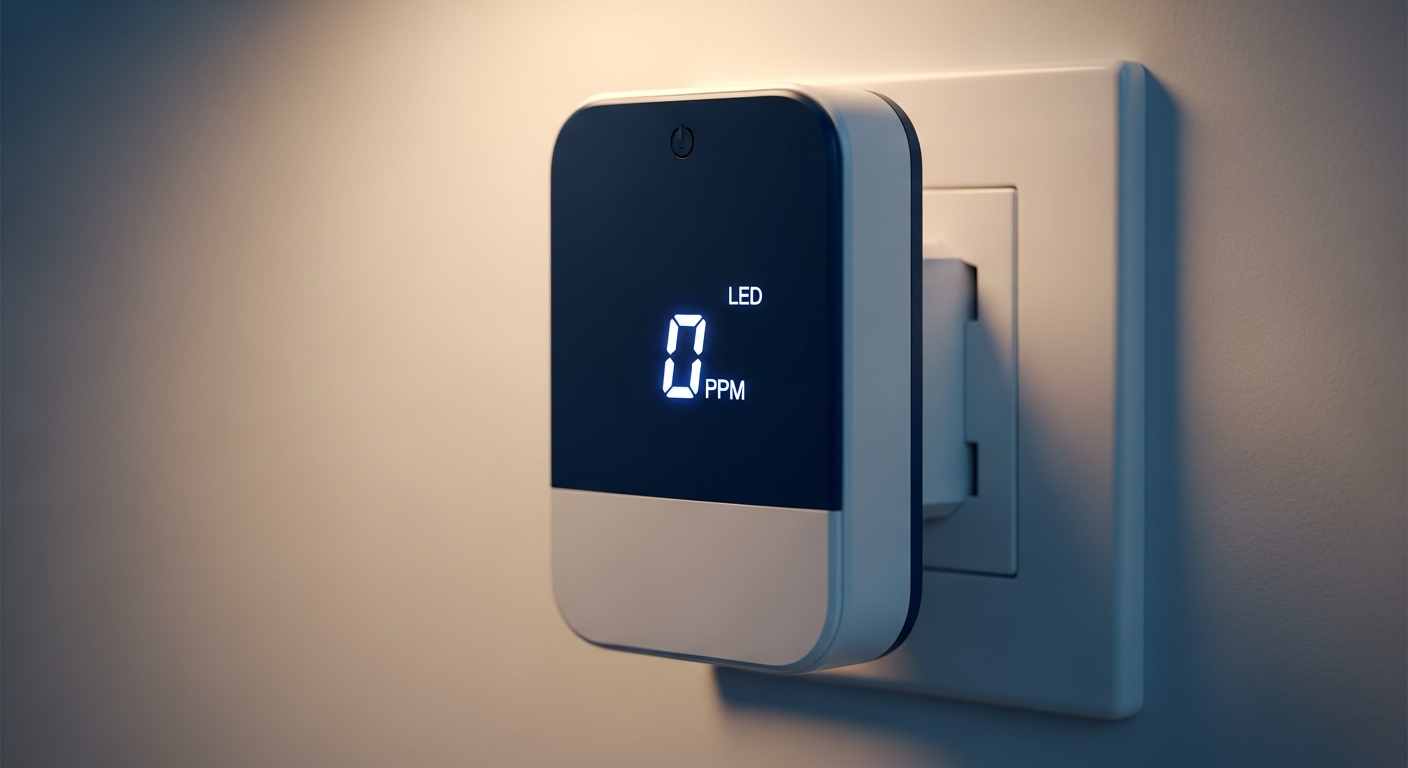
A portable carbon monoxide detector is a compact, plug-in device that monitors CO levels in real time wherever you plug it in — hotel rooms, vacation rentals, RVs, or apartments with gas appliances. Unlike fixed wall-mounted detectors, it travels with you and shows a live PPM reading the moment it's powered on. The CDC estimates that 50,000 Americans visit emergency rooms for carbon monoxide poisoning every year — and a significant share happen away from home, in hotel rooms, vacation rentals, RVs, and rental apartments where the CO detector on the wall is expired, battery-dead, or alarm-only by design. A portable carbon monoxide detector is the only piece of safety equipment that goes where you go. It doesn't rely on a hotel's maintenance schedule or a landlord's installation date. You know when you bought it, you control where it sits, and you can see its reading the moment you plug it in. This guide covers what a portable carbon monoxide detector actually is, why the format matters more than most buyers realize, who genuinely needs one, and the four features that determine whether you're buying real protection or just a device that occupies an outlet. Portable Carbon Monoxide Detector for Travel: What to Look For in 2025
What 'Portable' Actually Means — and Why the Format Changes Your Protection
Most residential CO detectors are designed for permanent installation: hardwired into a ceiling or battery-mounted to a wall. They protect one fixed location, and they stay there. A portable carbon monoxide detector works differently — it's compact, plug-in, and designed to move with you. The plug-in format eliminates the single most common failure point of portable safety equipment: battery neglect. A battery-powered detector sitting in a travel bag loses its charge between trips, fails silently, and offers no indication that it's no longer monitoring. A plug-in detector draws power from the wall outlet of whatever room you're in — hotel, rental, RV, boat, or apartment — and starts measuring from the moment it's plugged in. There's nothing to charge, no batteries to swap, no uncertainty about whether it's actually working. For travelers, the plug-in format also enables something fixed detectors can't provide: an independent reading of a space you've never been in before, taken at check-in rather than discovered as an emergency. You see the number immediately. If it's climbing, you know before symptoms start. Carbon Monoxide PPM Levels Explained: What's Safe, What's Dangerous Takeaway: the plug-in format isn't a convenience feature — it removes battery failure as a failure mode entirely, making it the most reliable form factor for portable CO protection.
Who Actually Needs a Portable Carbon Monoxide Detector
The honest answer is: anyone who sleeps somewhere other than their primary, permanently-monitored home at least once a year. That covers more people than it initially sounds like. Frequent travelers are the most obvious group — hotels are required in many states to have CO detectors, but state laws vary dramatically, and hotel maintenance programs are inconsistent. An audit of short-term rental listings found that a substantial share of Airbnb and VRBO properties either lack CO detectors entirely or use detectors past their sensor expiration date. Renters in apartments with gas appliances are in a similar position: landlords may have installed a detector at move-in years ago, but electrochemical sensors expire in five to seven years regardless of how the device looks, and most tenants have no visibility into the installation date. RV and boat owners face the most acute need: combustion appliances in enclosed, poorly-ventilated spaces produce CO concentrations that can reach dangerous levels faster than in a typical home, and the detectors often packaged with recreational vehicles are alarm-only models with no live reading. RV Safety Guide: Protecting Your Family from CO and Gas Leaks on the Road People who don't yet have a fixed CO detector at home also have a direct use case — a portable unit can serve as your primary detector while you wait to install a permanent one. Takeaway: if you stay anywhere outside your primary home, or if you're unsure about the status of your fixed detectors, a portable CO detector closes a gap that nothing else does.
The Four Features That Separate a Real Portable CO Detector from a Shelf Item
Not every portable carbon monoxide detector provides equivalent protection. The specification differences between a real unit and a shelf item are significant, and they're rarely explained clearly on packaging. First: sensor type. Electrochemical sensors are the gold standard for CO detection — they measure CO concentration directly through a chemical reaction and maintain accuracy over time. Metal oxide semiconductor (MOS) sensors are cheaper, less accurate, and more prone to false alarms from humidity and other gases. If a product listing doesn't specify 'electrochemical,' assume it isn't. Second: live PPM display. Most CO alarms only activate at concentrations the UL 2034 standard defines as an alarm threshold — 70 PPM sustained over four hours — which means they're silent during chronic lower-level exposure that still causes cardiovascular and neurological harm. A detector with a live numeric display shows you the concentration in real time, so you see 15 PPM in a hotel room and can open a window before it becomes 35. Third: multi-gas detection. CO is the most dangerous invisible combustion gas, but methane and propane leaks — from stoves, water heaters, or RV lines — are also life-threatening. A unit that detects all three provides complete protection. Fourth: universal voltage. International travelers need a detector that works on both 110V and 220V systems without an adapter transformer. Plug-In Carbon Monoxide Detectors: Who Needs One and What to Look For Takeaway: electrochemical sensor, live PPM display, multi-gas detection, and universal voltage are the four non-negotiable specifications — anything missing from that list is a meaningful gap in protection.
The Mistakes That Make Portable CO Detectors Useless
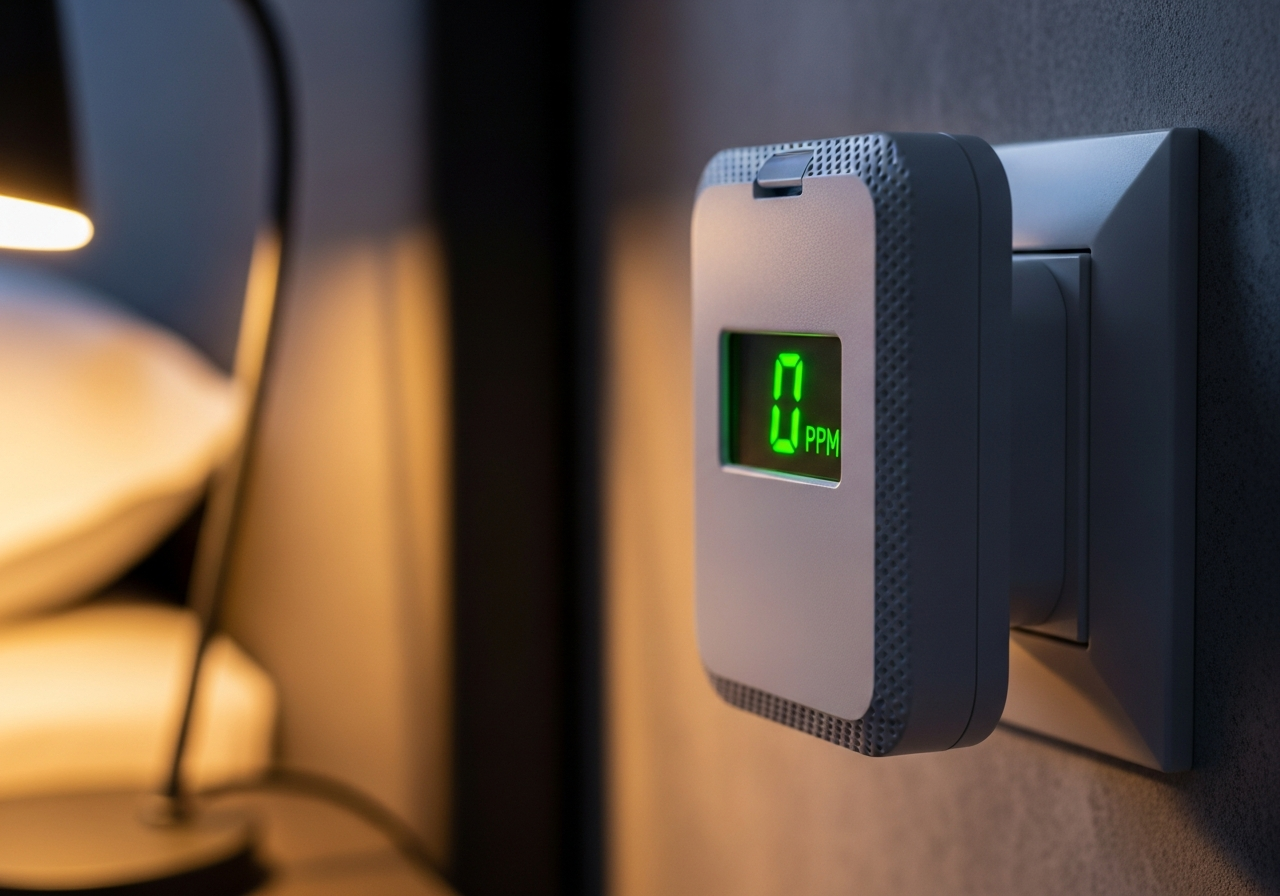
Buying the right unit is step one. The mistakes that follow are what actually determine whether the detector protects you. The most common: plugging the detector into the wall farthest from where you sleep, then treating its presence as sufficient. CO concentration in a room isn't uniform — it rises from sources and accumulates near the floor in enclosed spaces. A detector plugged in across the room from your bed in a hotel, placed high on the wall near the HVAC return, may not register the concentration building near your sleeping position until it's already elevated. Place it at plug height within 10 feet of where you'll sleep. The second mistake: ignoring sub-alarm readings. If a detector with a live display shows 12 PPM sustained in a hotel room, that's not a reading to dismiss. Normal background CO is typically 0–4 PPM. A reading above 9 PPM with no obvious source — no traffic outside, no fresh paint — warrants ventilation and investigation. The third: packing it but not using it on short trips. 'I'm only here for one night' is the mental shortcut that accounts for a disproportionate share of travel CO exposure incidents — a single-night exposure at a dangerous concentration is as medically significant as a multi-night exposure at a lower one. Is Your Hotel Room Safe? The CO Risk Most Travelers Ignore Takeaway: where you place the detector in a room matters as much as whether you brought it — keep it within 10 feet of your sleeping position, at outlet height.
Practical Application: How to Use a Portable CO Detector Correctly
Run through this sequence every time you check into a new space:
- Plug in within 5 minutes of arrival — before bags are unpacked, before windows are opened or closed, before the HVAC adjusts to occupancy
- Place it within 10 feet of where you'll sleep, at outlet height — not across the room, not in the bathroom, not near the HVAC return vent
- Watch the display for 2–3 minutes after plugging in — a reading that climbs from 0 to 10+ PPM in the first few minutes indicates an active source
- Normal reading: 0–4 PPM. Investigate: 5–9 PPM sustained. Ventilate and notify host/front desk: 10–34 PPM. Evacuate: 35 PPM or above
- If you're in a hotel and the reading is above 9 PPM sustained with no obvious temporary cause (delivery truck idling outside, recent cleaning products), request a different room — document the reading with a photo
- In an RV or boat, check the reading before running any combustion appliance and again 10 minutes after startup — CO from generators and engines accumulates faster in enclosed mobile spaces RV Safety Guide: Protecting Your Family from CO and Gas Leaks on the Road
- Before packing up, confirm the detector is still reading — not that it's charged, not that the light is on, but that the display shows an active number
- Replace the unit every 5–7 years regardless of function — electrochemical sensors degrade on a fixed chemical timeline independent of use
A portable carbon monoxide detector is not a niche product for extreme travelers. It's the answer to a straightforward problem: fixed home detectors don't travel, and the detectors in places you stay have maintenance histories you have no visibility into. The only CO reading you can trust completely is the one from a detector you bought, placed, and are watching right now. The AirShield™ 3-in-1 Portable Carbon Monoxide Detector uses an electrochemical sensor to detect CO, methane, and propane simultaneously, displays live PPM readings on an OLED screen, and plugs directly into any outlet — 100–240V worldwide, no adapter required. It's the only portable CO detector that shows you the number before the alarm would ever sound. Visit airshield.store and add it to your travel kit today.
Frequently Asked Questions
Sources & References
- CDC: Carbon Monoxide Poisoning — Emergency Room Visits — CDC documents 50,000+ annual emergency room visits from CO poisoning
- CPSC: Short-Term Rental CO Safety — CPSC guidance on CO risks in vacation rentals and short-term accommodations
- NIOSH: Carbon Monoxide Pocket Guide — NIOSH occupational exposure limits and health effects by PPM level
Protect Your Home with AirShield™
The only portable CO detector that shows you real-time PPM readings on a live OLED display. Electrochemical sensor, multi-gas detection, UL listed.
Check Availability →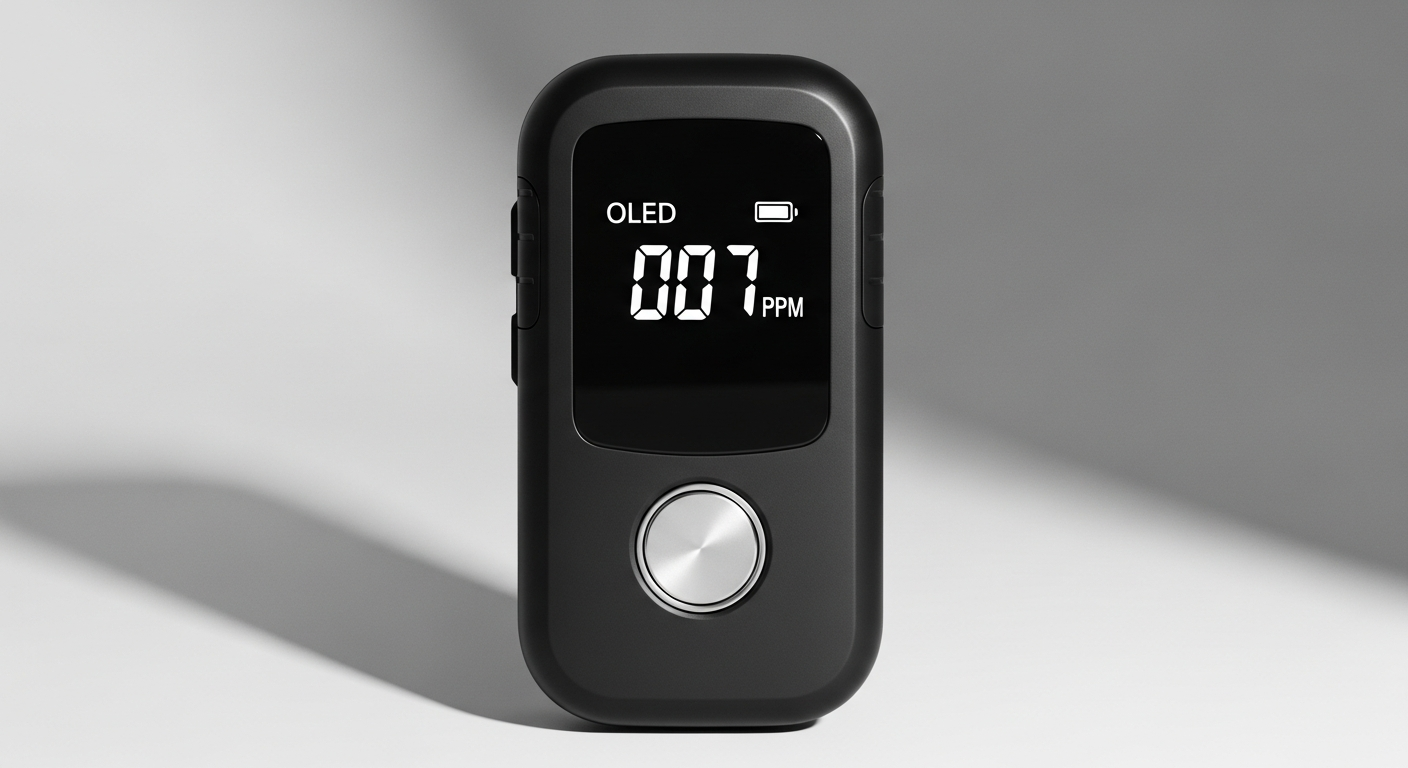
Loading comments...