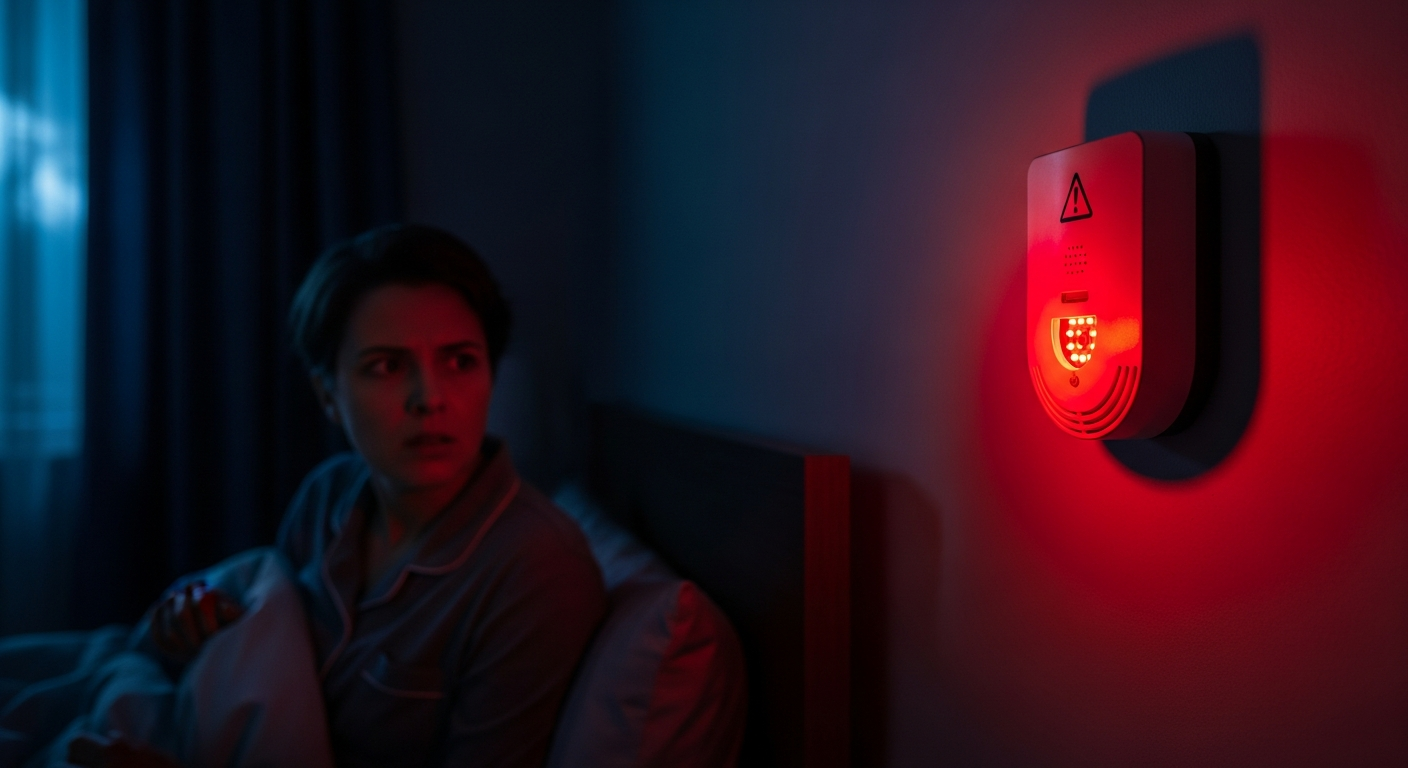
Your carbon monoxide detector is making a noise and you're not sure what it means. This is one of the most common CO safety questions — and getting it wrong can range from a minor inconvenience to a life-threatening mistake. Here is every standard beep pattern explained, with exactly what to do for each.
Pattern 1: Continuous Repeated Beeping — CO ALARM
Sound: 4 or more rapid beeps, pause, repeat. Some models use a continuous loud alarm.
- This is a CO alert — treat it as a real emergency until proven otherwise
- Get everyone out of the building immediately — don't stop to investigate
- Leave the door open as you exit to help ventilate
- Call 911 from outside — do not re-enter the building
- Do not re-enter until emergency services have confirmed it is safe
- Do not silence the alarm and go back to sleep — this is a fatal mistake
Pattern 2: One Chirp Every 30–60 Seconds — LOW BATTERY
A single chirp every 30 to 60 seconds is almost universally a low battery warning across all major CO detector brands. The unit is functioning correctly but needs a battery replacement. This chirp will continue until the battery is replaced or dies completely — at which point you lose your protection.
- Replace the battery immediately — don't wait until it stops
- Use the brand recommended by your detector's manual (usually AA or 9V)
- After replacement, press the test button to confirm the detector is working
- If the chirp continues after replacement, the battery may be installed incorrectly or the unit may need replacement
Pattern 3: Five Chirps Every Minute — END OF LIFE
Five beeps at a regular interval, often with an LED light flashing, indicates that the CO sensor has reached the end of its operational life. CO sensors degrade over time — most last 5–7 years, quality electrochemical sensors up to 10 years. Once the sensor expires, the detector may stop alarming for real CO events even if it still makes sounds.
- This detector needs to be replaced — not repaired, not reset
- Check the manufacture date on the back of the unit (not the purchase date)
- An expired CO detector provides no protection and creates false confidence
- Replace immediately and check all other detectors in your home for expiration
Pattern 4: Single Chirp Every Few Minutes — FAULT OR ERROR
An irregular chirp pattern that doesn't match low battery or end-of-life signals often indicates a sensor fault or device malfunction. This varies by manufacturer. Consult your specific detector's manual for the exact fault code pattern.
- Note the exact pattern (how many beeps, how many seconds apart)
- Check the manual or manufacturer's website for your model's fault codes
- Common causes: failed sensor, power interruption, or calibration error
- If you cannot identify and resolve the fault, replace the unit
Why CO Detectors with a Display Are Safer
The fundamental problem with alarm-only detectors is ambiguity — you hear a sound and have to guess what it means and how serious it is. A detector with a live PPM display removes that uncertainty entirely.
- 0–9 PPM displayed: background level, no action needed
- 10–35 PPM: elevated, investigate the source but no emergency
- 35–70 PPM: potentially dangerous, ventilate and identify source
- 70+ PPM: evacuate immediately, call 911
- You see exactly what's happening — not just an alarm you have to interpret
The AirShield detector displays a live PPM reading at all times. You never have to guess whether the chirp is a low battery or a CO emergency — you can see the gas level on the display instantly. This is why a PPM display is the single most important feature for households with children, elderly members, or anyone who might sleep through a nuanced beep pattern.
Protect Your Home with AirShield™
The only portable CO detector that shows you real-time PPM readings on a live OLED display. Electrochemical sensor, multi-gas detection, UL listed.
Check Availability →
Loading comments...