
On the night of February 7, 2026, Jay and Kristen Ruskey went to bed at around 2:30 a.m. after a birthday party at a friend's home in Cambria, California. By 9:30 the following morning, both were dead. The SLO County Coroner ruled the cause accidental: toxic effects of carbon monoxide. Investigators found a smoke and carbon monoxide detector mounted on the ceiling of the room where they slept. Its electrical wiring was disconnected. Jay was 53. Kristen was 49. They left behind three teenagers. The Ruskeys were well-known in California's farming and culinary community — they had spent two decades building Frinj Coffee, pioneering the California coffee-growing movement and developing a market for crops that no one believed could grow in the American West. None of that history was visible to the carbon monoxide filling the room while they slept. This post covers what the facts of the case show, why the disconnected detector was the deciding variable, and why sleeping anywhere other than your own home puts your protection in someone else's hands. Carbon Monoxide Poisoning While Sleeping: The Real Risk
What Happened in Cambria: The Facts of the Case
The Ruskeys were attending a birthday party with more than 50 guests at a private home in Cambria on the California Central Coast. They retired to their room at approximately 2:30 a.m. on February 8. At 4:34 a.m., Kristen called 911 reporting that Jay may be having a seizure; other guests had heard him screaming and becoming sick. Medics responded, Jay declined transport, and both remained in the room. At 9:30 a.m., friends found Kristen unresponsive on the laundry room floor adjacent to the bedroom. Jay was found in the bedroom, also unresponsive, pulseless, and not breathing. The coroner found no signs of trauma. No drugs were found in the room or in their vehicle. Five days after the deaths, the home's owner called authorities with concerns about CO levels — elevated carbon monoxide was subsequently confirmed at the property, consistent with the coroner's determination. The specific source of the CO was not publicly identified, but the pattern is familiar: a fuel-burning appliance or compromised heating system in a home that had a CO detector installed but not functioning. Furnace Carbon Monoxide: Why Your Heating System Is the Biggest CO Risk in Your Home Takeaway: the Ruskey case followed the established pattern of fatal CO poisoning — a confined space, a compromised CO source, and a monitoring system that was present but nonfunctional.
The Detail That Changed Everything: A Detector With Disconnected Wiring
Detectives found that the ceiling-mounted smoke and CO detector in the Ruskeys' bedroom had its electrical wiring disconnected. The device was physically present — visible on the ceiling — but entirely inoperative. We don't know when the wiring was disconnected, by whom, or for what reason. What we know is the outcome. The Ruskeys almost certainly saw the detector on the ceiling when they entered the room. It would have looked like CO protection was in place. There was no indication that the device was not functioning. This is the specific cruelty of a disconnected or nonfunctional CO detector: it provides the visual impression of safety without any of the protection. A working detector might have alarmed when CO first began to rise — possibly hours before the concentration reached lethal levels. It might have given them time to leave. A CO detector that is visible on the ceiling but nonfunctional offers something arguably worse than no detector at all: it allows occupants to assume they are protected when they are not. Carbon Monoxide Detector Not Working? Here's How to Tell — and What to Do Takeaway: physical presence of a CO detector and functional CO protection are not the same thing — the only way to know you have working coverage is to verify the device is operational yourself.
Why You Cannot Rely on CO Detectors in Other People's Homes
When you sleep at a friend's house, a vacation rental, a hotel, or any space that isn't your own home, the CO detectors in that space were installed, maintained — or not maintained — by someone else. You do not know how old they are. You do not know whether the sensor is within its rated lifespan. You do not know whether the battery was replaced last week or three years ago. You do not know whether the wiring is connected. The vacation rental regulations requiring CO detectors in many states specify installation — not ongoing maintenance, not annual sensor testing, not replacement on schedule. The hotel industry has widely adopted CO alarm installation standards, but inspections and maintenance protocols vary by property. In the Ruskey case, the detector was in a private home — no regulatory framework required it to be functional. The only CO protection you can verify is the device you carry with you — everything else is an assumption about what someone else has installed, maintained, and kept working. Carbon Monoxide in Airbnbs and Vacation Rentals: What Every Summer Traveler Needs to Know Takeaway: CO detectors installed by other people are protected by assumptions you have no way to verify — and the consequences of a wrong assumption are not recoverable.
What Carbon Monoxide Does to a Person While They Sleep
Carbon monoxide binds to hemoglobin with an affinity approximately 200-250 times greater than oxygen. When you breathe it in, it displaces oxygen in your blood, depriving organs and tissues of oxygen while your body has no direct mechanism to detect the problem. In the early stages of CO exposure, symptoms — headache, fatigue, dizziness — are easy to attribute to other causes. You might assume you drank too much, ate something wrong, or are coming down with something. At higher concentrations, CO impairs judgment and coordination before incapacitation sets in. When CO exposure occurs during sleep, the physiological signs that would prompt a waking person to seek fresh air — headache, confusion, nausea — occur while the victim is unconscious and unable to respond to them. The progression from uncomfortable to incapacitated to dead can happen over hours of continuous exposure, entirely while the victim is asleep. The early stages of that progression — concentrations of 20-50 PPM — are exactly the range where a functioning detector with a live PPM display would provide actionable warning. Low-Level Carbon Monoxide Exposure: The Silent Risk Your Alarm Never Triggers Takeaway: the physiological mechanism of CO poisoning during sleep eliminates the body's normal self-rescue response — detection technology is the only early warning available.
What a Portable CO Detector Changes About Any Night Away from Home
A portable carbon monoxide detector addresses the specific vulnerability the Ruskey case exposes: you are sleeping somewhere whose CO protection you did not install and cannot verify. You plug it in, it starts reading immediately, and its status is visible from where you sleep. If CO begins to rise — from a furnace problem, a disconnected vent, a faulty appliance in the building — you see it before it reaches a concentration that impairs your ability to respond. The portable format means the coverage comes with you to every unfamiliar space: a friend's house, a rental in a place you've never been, a hotel on a layover, a cabin booked a week ago. You are not depending on the ceiling detector being connected. You are not assuming the battery hasn't died. You are not hoping the property management last replaced the sensor before the ratings review. The specific thing that the Ruskeys did not have — and could have had — was a device that was theirs, that they controlled, that they knew was working, plugged in within reach of where they slept. Portable Carbon Monoxide Detector for Travel: What to Look For in 2025 Takeaway: a portable CO detector converts protection you are dependent on others to provide into protection you carry yourself — the one variable in the Ruskey case that would have been different.
Before You Sleep Anywhere Other Than Your Own Home
This checklist applies to any unfamiliar sleeping environment — a friend's home, a vacation rental, a hotel, a family member's guest room:
- Do not assume the CO detector on the wall is functional. A physical detector and a working detector are not the same thing.
- Look for a detector in the room where you will sleep, not just in common areas. CO protection in a hallway does not protect a sealed bedroom.
- If you can safely reach the detector, press the test button to confirm it responds — a beep or reading means the alarm circuit works, though it does not confirm sensor accuracy.
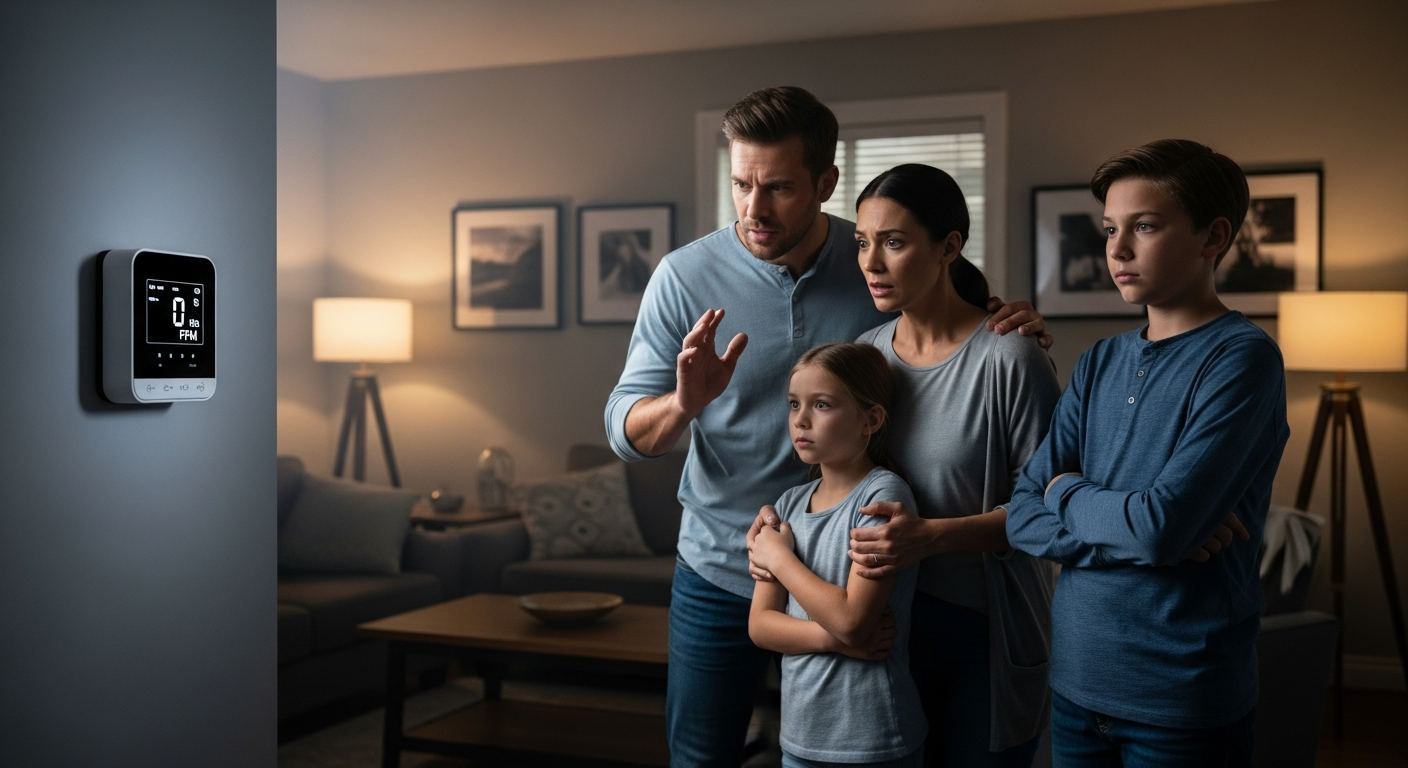
- Check if the detector has a numeric display showing a live PPM reading. A display showing 0-1 PPM means it is actively reading.
- If you cannot verify the detector in the room is working, do not assume you have CO protection for the night.
- A portable CO detector you carry eliminates all of these variables. Plug it in within 10 feet of where you sleep before going to bed.
- If any detector — yours or the property's — shows elevated PPM or alarms overnight, leave the room immediately and call emergency services.
Jay and Kristen Ruskey did not die because they were careless. They died because they were in a room where the CO detector was not working, and they had no way to know that. They had no device of their own. They had no reading. They went to sleep with the assumption that the detector on the ceiling meant they were protected. The AirShield™ 3-in-1 Portable Carbon Monoxide Detector exists for exactly this situation — a device that is yours, that you verify is working, that shows you a live reading from the moment you plug it in, wherever you sleep.
Frequently Asked Questions
Sources & References
- SLO Coroner: Jay Ruskey Died of Carbon Monoxide Poisoning — Noozhawk report on the SLO County Coroner's determination in the Ruskey deaths
- Santa Barbara Independent: New Details in Ruskeys' Deaths — Reporting on the disconnected detector found in the bedroom and subsequent CO confirmation at the property
- CPSC: Carbon Monoxide Information Center — CPSC statistics on CO deaths and portable source fatalities
Protect Your Home with AirShield™
The only portable CO detector that shows you real-time PPM readings on a live OLED display. Electrochemical sensor, multi-gas detection, UL listed.
Check Availability →
Loading comments...