
On June 17, 2026, two people died of CO poisoning in Portage, Indiana. Two days later, on June 19, five people died in Phelps County, Missouri. Both incidents involved generators. Both happened during the summer. And in both cases, the people around them — witnesses, family members, bystanders — almost certainly saw the early symptoms and attributed them to something else. Summer party. Hot day. Someone has had a few drinks. Someone is sitting down. Someone is quieter than usual. Someone says they have a headache. These are background events at every summer gathering from Memorial Day to Labor Day. They are also the early signs of carbon monoxide poisoning — and at a July 4th party, next to a generator and a grill, in the heat, with alcohol involved, you will never catch them on your own. This is the article about why CO is uniquely dangerous at summer parties, what actually happens when alcohol and CO meet in a person's body, and the one rule that can catch it before someone stops waking up. What Causes Carbon Monoxide in a House? 7 Hidden Sources
The Classic Four CO Symptoms — And Why They're Invisible at a Party
Emergency medicine textbooks describe four classic CO poisoning symptoms: frontal headache, nausea, dizziness, and confusion. These appear at moderate CO concentrations — the level at which it's still possible to act and to survive. At a July 4th cookout, every single one of those symptoms has an innocent explanation. Frontal headache? Sun exposure. Dehydration. One too many beers. The music is loud. Nausea? Something off the grill. Too much heat. The combination of food and alcohol. Dizziness? Standing up too fast. A few drinks on an empty stomach. Confusion? Same — it's late, it's loud, people are tired. CO poisoning doesn't announce itself. It creates a symptom pattern that, at a summer party, reads as someone who overdid it on a hot day. The most dangerous feature of moderate CO exposure is that it impairs the cognitive ability to recognize that something is wrong — the poison is actively preventing you from identifying the poison. This is not a subtle limitation. A person at 100–200 ppm CO exposure will report not feeling well, may sit down, may fall quiet — and may have impaired judgment severe enough that they cannot accurately describe what they're experiencing or take appropriate action. Why Is Carbon Monoxide Dangerous? The Science Explained Takeaway: CO's classic four symptoms are indistinguishable from a bad day at a summer party — which is exactly when and where they're most likely to appear.
What Alcohol Does to CO Poisoning
Alcohol and carbon monoxide interact in ways that make each one more dangerous in the presence of the other. Physiologically, alcohol is a vasodilator — it opens blood vessels and increases circulation. This increases the rate at which CO-saturated blood circulates to the brain. Higher blood flow means faster delivery of a toxic payload. A person who has been drinking will typically reach a dangerous CO concentration level faster than a sober person at the same ambient exposure. Behaviorally, alcohol impairs the very faculties that recognize a CO emergency: clear thinking, self-assessment, and judgment. A person who is both alcohol-impaired and CO-impaired will present as drunk to every bystander. Slurred speech? Drunk. Unsteady on their feet? Drunk. Falling asleep? Drunk. Can't hold a conversation? Drunk. The social context of a party actively suppresses the emergency response that CO poisoning requires — because the symptoms fit the setting too well. There is also a bystander effect at play. In a social setting, no one wants to overreact. No one wants to be the person who calls an ambulance because a friend had a few too many. The social cost of false alarm is high. The result is a delay in emergency response that, with CO, can be the difference between survival and death. Takeaway: Alcohol accelerates CO's physiological impact and perfectly disguises its behavioral symptoms — each one makes the other harder to survive.
The One Rule That Can Save Someone's Life
In emergency response circles, there is a rule about CO that every first responder knows and almost no civilians have ever heard: the multiple victim rule. If one person feels sick at a party, it might be anything. If two or three people at the same party feel sick at the same time — headache, nausea, dizziness, or just not right — in the same area, treat it as CO until proven otherwise. Get everyone out. Call 911. Fresh air immediately. The multiple victim pattern is the single strongest indicator of CO in an enclosed or semi-enclosed space. CO doesn't pick one person. If the source is a generator near a tent or a grill under a canopy, the exposure is area-based — multiple people in the same zone will show symptoms at similar times. At a party, the signal is easy to dismiss: one person got too drunk, another is overheated, a third has a headache. But two or more people feeling unwell simultaneously, in the same part of the same space, is not coincidence — it's a pattern. Tell your family this rule before July 4th: if two or more people feel sick at the same party in the same area, leave first and ask questions later. Carbon Monoxide in Summer: 5 Hidden Risks This Season Takeaway: The multiple victim rule — two or more people symptomatic simultaneously in the same area — is the only CO indicator that cuts through the noise of a summer party.
Where CO Actually Comes From at Summer Parties
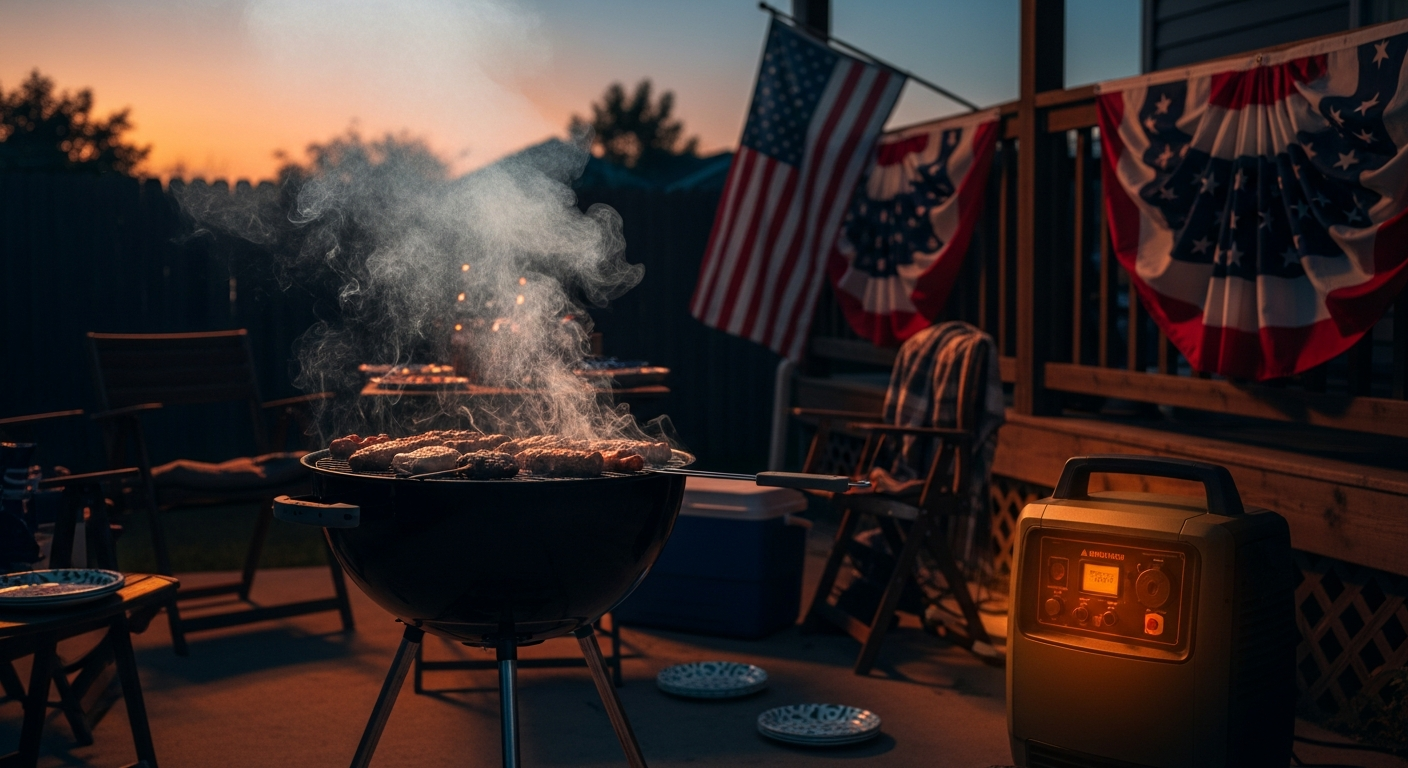
To apply the multiple victim rule, you have to know where to look when it triggers. Summer parties have specific CO sources that are different from the typical household: Generators near gatherings are the most common source. A generator positioned outside for music, lights, or a bounce house may be within 10–15 feet of a tent, pavilion, or covered area. CO exhaust disperses; depending on wind direction, it will find the enclosed space. The 2026 Missouri and Indiana deaths both involved generator misuse in or near enclosed spaces. Charcoal grills moved under cover cause fires and CO deaths every summer. Rain starts. The grill comes under the canopy. Charcoal produces enormous amounts of CO at every stage — burning and cooling. A grill under a tent is not mostly outside. July 4th Carbon Monoxide Danger: Grills and Generators Propane patio heaters used in enclosed pavilions are rated for outdoor use specifically because they produce CO. A roofed pavilion with three walls blocks enough airflow to allow dangerous accumulation. An open garage door is not adequate ventilation for a running generator — CO can still accumulate to dangerous levels within 10 minutes when people are present nearby. Takeaway: Every common summer party CO source involves fuel combustion near an enclosed or semi-enclosed space — the physics doesn't change because it's a party.
What to Do Before and During the Party
- Position any generator at least 20 feet from any tent, pavilion, garage, or indoor space — and verify direction against the wind
- Never move a charcoal grill under a canopy, tent, or covered porch, even while it's cooling down
- If using a propane patio heater, use it in fully open air — three-sided pavilions are not adequate ventilation
- Tell at least one sober person at the party: if two or more people start feeling sick at the same time, we leave immediately
- Know the address before the party starts — you won't think clearly if CO is in the air
- If someone seems too drunk and hasn't actually had that much, take it seriously
- Fresh air is the first intervention: get symptomatic people out of the space before evaluating anything else
- If multiple people are affected: call 911, state it may be CO, get everyone to fresh air, do not re-enter
- A portable CO detector with a live PPM display placed near the generator or grill gives you a real-time number instead of waiting for symptoms
June 17 and June 19, 2026. Seven people dead in two separate incidents. Both in summer. Both involving generators. Both at gatherings where symptoms, if they appeared at all, would have looked like something else entirely. The combination of summer heat, alcohol, and carbon monoxide creates a threat that is genuinely invisible without measurement. Symptoms fit the context. The source looks safe. The gas has no smell. And the people most at risk are the ones everyone assumes are just having too good a time. Before this July 4th weekend: position your generator correctly, know the multiple victim rule, and put the AirShield™ 3-in-1 Portable Carbon Monoxide Detector somewhere near the action. The live PPM number it shows is real data. Everything else — how someone seems, what you assume — is not. Visit airshield.store.
Frequently Asked Questions
Sources & References
- CDC: Carbon Monoxide Poisoning FAQ — CDC guidance on CO sources, symptoms, and prevention.
- CPSC: Generator Safety — CPSC warnings and data on generator-related CO deaths.
- CPSC: Outdoor Grill and Generator CO Deaths — CPSC statistical data on CO fatalities from portable generators and grills.
Protect Your Home with AirShield™
The only portable CO detector that shows you real-time PPM readings on a live OLED display. Electrochemical sensor, multi-gas detection, UL listed.
Check Availability →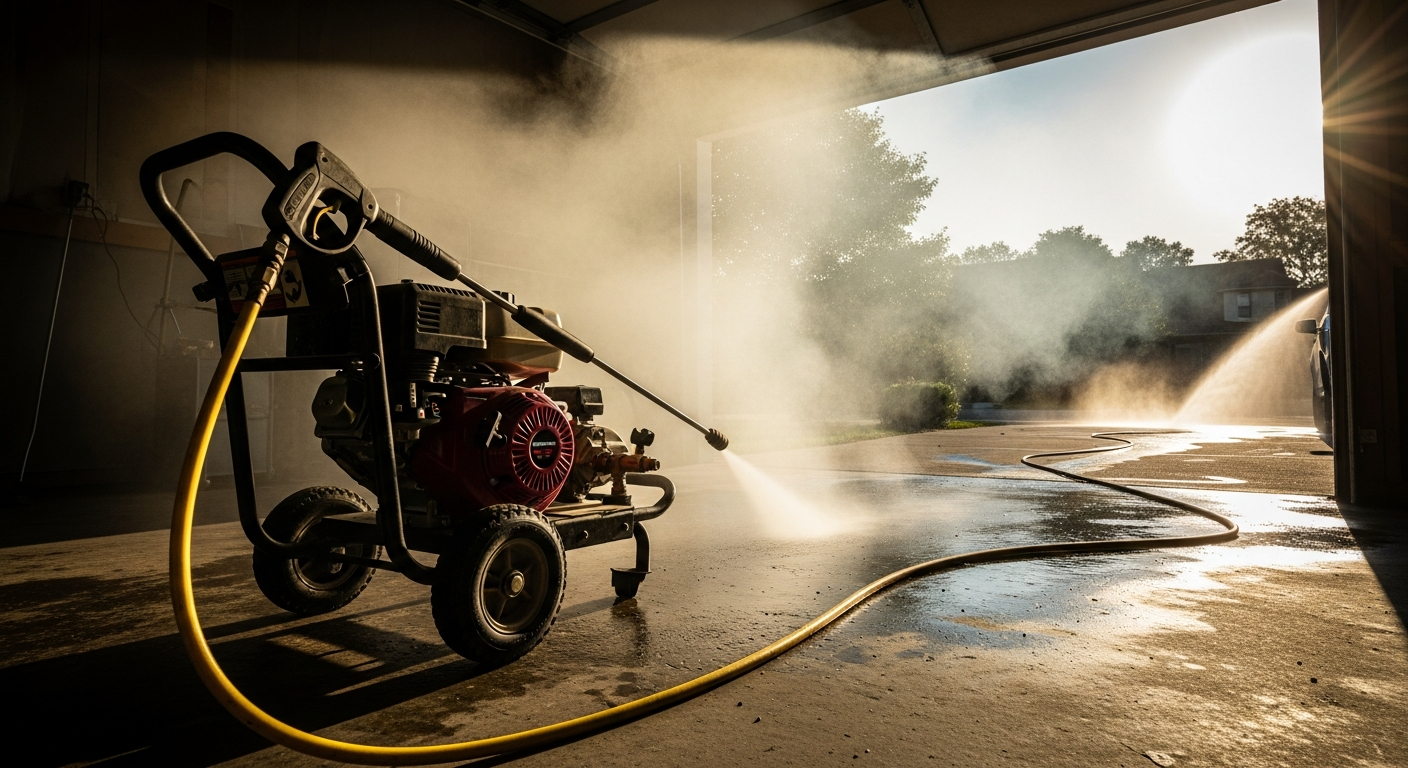

Loading comments...