
Hugo Ivan Morales, 35, and his sister Laura April Morales, 37, had planned the trip for months. They were flying to Mexico City to see Kings of Convenience perform — the first time in years they'd traveled somewhere together, just the two of them. They booked an apartment on Emilio Dondé Street in the Cuauhtémoc borough through Airbnb. On the morning of February 24, 2025, Hugo turned on the hot water to shower. That ordinary act activated a gas-burning water heater that was improperly installed in the apartment's laundry room — no adequate ventilation, no carbon monoxide alarm. By the time building staff raised the alarm after getting no response from the guests, both were dead. Investigators believe they had been dead for at least eight hours. Their mother, Laura Esperanza Morales, filed a wrongful death lawsuit against Airbnb on February 6, 2026 in San Francisco County Superior Court. A minor daughter also lost her aunt and uncle. This post covers what the complaint says, what Airbnb's policy actually requires, why the legal path is difficult, and what every traveler needs to do before sleeping in any unfamiliar rental. Hotel Carbon Monoxide: Why You Should Bring Your Own Detector
Three American tourists died of carbon monoxide poisoning at a Mexico City Airbnb in 2022 — the same city, same cause, three years before the Morales case. (ABC News)
What Happened in That Mexico City Apartment

The Cuauhtémoc borough of Mexico City, where Hugo and Laura Morales were found on February 24, 2025.
The wrongful death complaint, filed by the Dolman Law Group, describes the sequence precisely. Hugo turned on the hot water heater to shower. The unit — a gas-burning appliance improperly installed in the apartment's laundry room — was not adequately vented. When it activated, it began producing carbon monoxide in an enclosed space with no way for the gas to dissipate and no alarm to detect it. Both Hugo and Laura were asleep when CO concentrations reached lethal levels. Neither woke. They were found approximately eight hours later after staff at the property became concerned when guests stopped responding. The cause of their deaths was not equipment malfunction in any conventional sense — the water heater worked exactly as it was installed to work. The failure was the installation, the absence of ventilation, and the absence of any detector. The Airbnb listing showed no indication of a fuel-burning appliance in the laundry room. The complaint alleges Airbnb failed to require hosts to disclose the presence of such appliances or to ensure CO monitoring was in place. Your Gas Water Heater Is the Most Overlooked CO Source in Your Home Takeaway: The specific mechanism — an improperly vented gas water heater activated by routine hot water use — is not unusual. The same configuration exists in thousands of vacation rentals listed on short-term platforms worldwide.
What the Lawsuit Claims Airbnb Is Responsible For
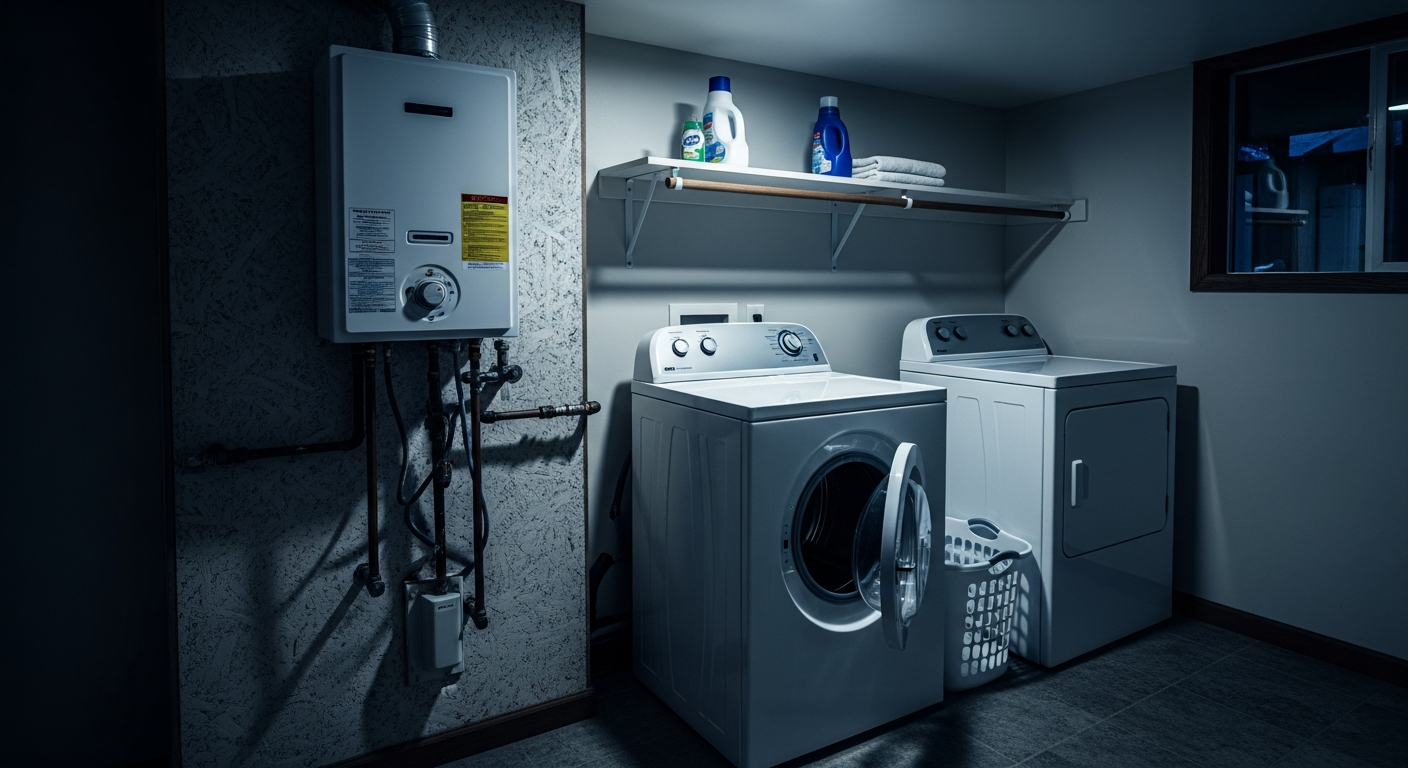
A gas water heater in an enclosed laundry space — the configuration investigators identified in the Mexico City rental.
The Dolman Law Group's complaint makes four specific allegations against Airbnb. First, that the platform failed to disclose the presence of a fuel-burning water heater in the listing description. Second, that Airbnb did not warn guests about the risk of carbon monoxide poisoning from fuel-burning appliances. Third, that the platform allowed the property to be rented without requiring a working CO alarm. Fourth, that Airbnb misrepresented the safety of listings on its platform. The lawsuit points explicitly to what Airbnb does not require: property owners are not mandated to have working CO alarms, and the platform does not conduct inspections of listed properties. This Portable Travel CO Detector Could Save Your Life Airbnb allows hosts to self-certify safety standards. A host can list a property as meeting safety requirements, list amenities including a CO alarm, and face no independent verification that any of these claims are accurate. The Morales family booked an apartment through a platform they had every reason to trust, in a listing that gave no indication of the hazard that would kill two people overnight. Takeaway: The complaint's core argument is not that Airbnb caused the CO leak — it is that Airbnb created and profited from a marketplace without implementing the safety standards that would have prevented the deaths.
The Montana Case: Why Legal Victory Against Airbnb Is Hard
The Morales lawsuit faces the same structural barrier that has defeated most CO-related litigation against Airbnb. In February 2026 — the same month the Morales suit was filed — a California federal judge ruled in favor of Airbnb in a separate case brought by a Montana family. Their infant had suffered permanent brain damage from CO exposure at a vacation rental in Santa Fe, New Mexico. The family alleged the property's boiler was in a dangerous state of disrepair and that no CO alarm was present. Their child was hospitalized and the brain damage is permanent. The judge limited Airbnb's liability under Section 230 of the Communications Decency Act, the federal statute that broadly shields online platforms from liability for third-party content and conduct. Section 230 allows Airbnb to argue that what happens inside a listed property is not 'its' content, and therefore not its legal responsibility — even when the platform curated, promoted, and collected fees from that property. Carbon Monoxide Detector for Travel: Your Hotel Safety Protocol This framework consistently routes liability to individual property owners, who often have far fewer resources than the platform. The legal outcome for families is frequently: damages difficult to recover, platform untouched. Takeaway: Section 230 is the primary shield Airbnb uses in CO litigation — it allows the company to profit from safety-critical listings while insulating itself from the liability that traditional landlords and hotel operators would bear.
At Least 12 Travelers Die at Short-Term Rentals Each Year
Hugo and Laura Morales are part of a documented pattern. Multiple legal and consumer safety analyses have found at least 12 deaths at Airbnb and VRBO-listed properties in a single year — and that figure almost certainly understates the actual toll. Many CO deaths at vacation rentals are attributed to the poisoning itself by coroners or investigators, rather than tracked as platform-related incidents. The deaths span the United States, Mexico, and international destinations — at beach cottages, urban apartments, and mountain cabins — wherever fuel-burning appliances exist in buildings where no one has verified that CO monitoring is in place. Three Americans died in Mexico City at an Airbnb rental in 2022. Hugo and Laura Morales died there in 2025. Airbnb's policy allows hosts to self-report a CO alarm as an amenity but does not require it, does not verify it, and does not inspect for it — in any country where Airbnb operates. Airbnb Safety Checklist: 7 Things to Verify Before Your First Night Airbnb has offered to send free CO detectors to hosts who request them. The program is voluntary. There is no follow-up verification that the detector was installed, is functioning, or is within its sensor lifespan. Takeaway: The gap between 'available to hosts who ask' and 'required in every listing with a fuel-burning appliance' is where travelers continue to die, year after year.
What to Do Before Every Rental Stay — Since the Platform Won't
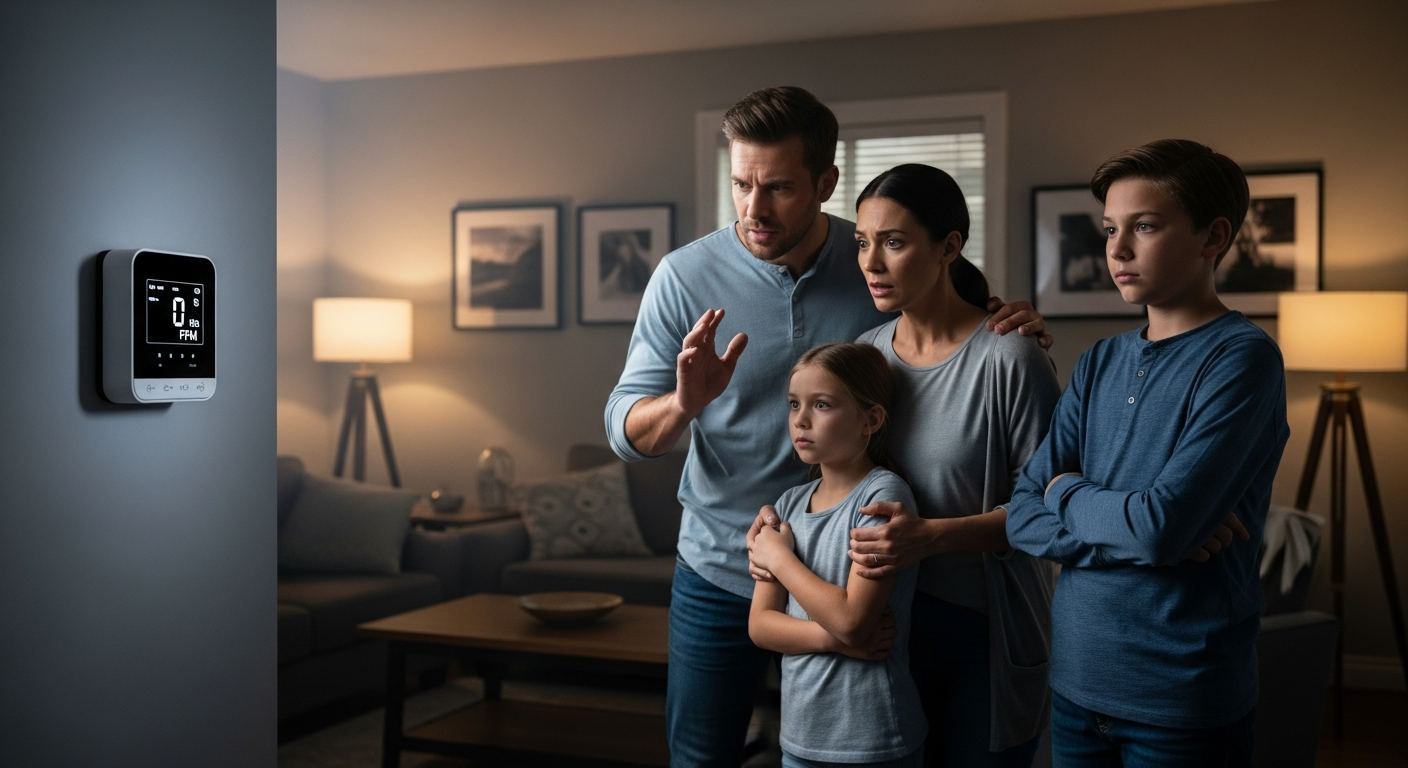
The legal reality above has a direct practical implication: when you book a vacation rental, you are entering a space whose safety has been self-certified by the host, verified by no one, and listed on a platform whose legal posture is that what happens inside is not its responsibility. The Airbnb amenities filter lets you sort for 'CO alarm' — but you have no way to verify that the listed alarm is present, functional, or not past its sensor expiration date. An alarm that passed its self-test three years ago but whose electrochemical sensor has since degraded will show no fault while detecting nothing. The only reliable way to know the CO level in an unfamiliar rental is to bring a detector that shows you the actual PPM reading — not one that may or may not alarm after dangerous exposure has already accumulated. Portable Carbon Monoxide Detector for Travel: What to Look For in 2025 A portable detector plugged in on arrival gives you a live number within minutes. If it reads 0 PPM after airing out the space, the air is clean. If it reads 15, 30, or higher in a closed room, you know before you sleep there. Hugo and Laura Morales had no such number available to them. They relied on a platform that had no requirement to provide it. Takeaway: Portable CO protection carried by the traveler is the only form of CO safety verification that doesn't depend on a host's self-report or a platform's liability calculation.
Before Every Vacation Rental Stay: Your Safety Checklist
- Check the listing for fuel-burning appliances: gas water heater, furnace, gas range, fireplace, or space heater. Any of these can produce CO. A property with gas appliances and no CO alarm listed is a material risk.
- Filter Airbnb for 'CO alarm' in amenities — it narrows the field but guarantees nothing. Self-reported amenities are not inspected.
- Bring a portable CO detector with a live PPM display. Plug it in on arrival before unpacking. A reading above 0 PPM in a closed, unfamiliar space warrants investigation.
- Ask where the water heater is located. If it's in a laundry room, utility closet, or any enclosed space near bedrooms, prioritize placement of your detector near that area.
- Locate all windows and exits before the first night. Know how to ventilate the space fast.
- If you wake up with headache, nausea, or confusion — especially if other people in the rental feel it too — leave immediately, get fresh air, and call emergency services before re-entering.
- If you find no CO alarm or a non-functional one, document it and report to both the host and Airbnb in writing before checking out.
Hugo Morales, 35, and Laura Morales, 37, went to Mexico City to see their favorite band. They made a booking on a platform that had collected billions in listings revenue and had never required a CO alarm in the apartment they rented. The wrongful death lawsuit filed by their mother will work through the courts. It may or may not change Airbnb's policy. What is certain is that this summer — across hundreds of thousands of vacation rentals with gas appliances and no required CO monitoring — the same hazard exists. The AirShield™ 3-in-1 is small enough to fit in carry-on luggage, works on 100–240V worldwide, and shows a live CO PPM reading from the moment it powers on. It takes 60 seconds to plug in. Hugo and Laura Morales deserved better than a platform that never required one. So does every traveler. Check Availability →
Frequently Asked Questions
Sources & References
- KVIA: Airbnb Facing Lawsuit After El Paso Siblings Die in Mexico City Rental — March 2026 coverage of the Morales wrongful death lawsuit, including details from the complaint.
- KFOX TV: Wrongful Death Suit Accuses Airbnb of Negligence After El Paso Siblings Die — Local El Paso coverage of the Morales family lawsuit against Airbnb.
- NBC News: Texas Siblings Found Dead in Mexico City Airbnb, Police Confirm — Initial NBC News report confirming the deaths of Hugo and Laura Morales at the Mexico City rental.
- BorderReport: Family of El Paso Siblings Sue Airbnb — Coverage of the wrongful death suit and the Dolman Law Group complaint allegations.
- Law360: Airbnb Beats Suit Over Baby's CO Poisoning (2026) — February 2026 federal court ruling limiting Airbnb liability in the Montana infant CO case under Section 230.
Protect Your Home with AirShield™
The only portable CO detector that shows you real-time PPM readings on a live OLED display. Electrochemical sensor, multi-gas detection, UL listed.
Check Availability →

Loading comments...