Most homes need a minimum of one CO detector per floor plus one outside every sleeping area — a two-story, three-bedroom house typically requires four or more units. A single CO detector cannot protect an entire home, and the CDC confirms that most CO fatalities occur when victims are asleep and too far from a lone alarm to be woken. This guide walks through the exact room-by-room formula recommended by NFPA 720 and the CPSC, explains why quantity and placement both matter, and gives you a practical checklist you can use today.
What Do the Official Standards Actually Require?
NFPA 720 — the national standard for carbon monoxide detection in residential buildings — mandates at least one CO detector on every habitable level of a dwelling unit, including the basement, and at least one detector outside each separate sleeping area. The CPSC echoes this guidance in its residential safety recommendations. For a typical single-family home, that means: one on the basement level, one on the main floor, one on the upper floor, and one in or just outside each bedroom cluster. NFPA 720 considers CO detection on every level and outside every sleeping area the absolute minimum, not the ideal. Many states now embed these rules into building codes, meaning new construction must comply by law. Older homes, however, were never retrofit-required in most jurisdictions — leaving millions of households underprotected. Renters should note that Carbon Monoxide Detectors in Rental Properties: What Landlords Are Required to Do laws vary significantly by state, with some requiring landlords to supply detectors and others placing the burden on tenants. Takeaway: NFPA 720 sets a floor, not a ceiling — meeting code is the minimum, not the goal.
How Does Room Type Change Your Risk Level?
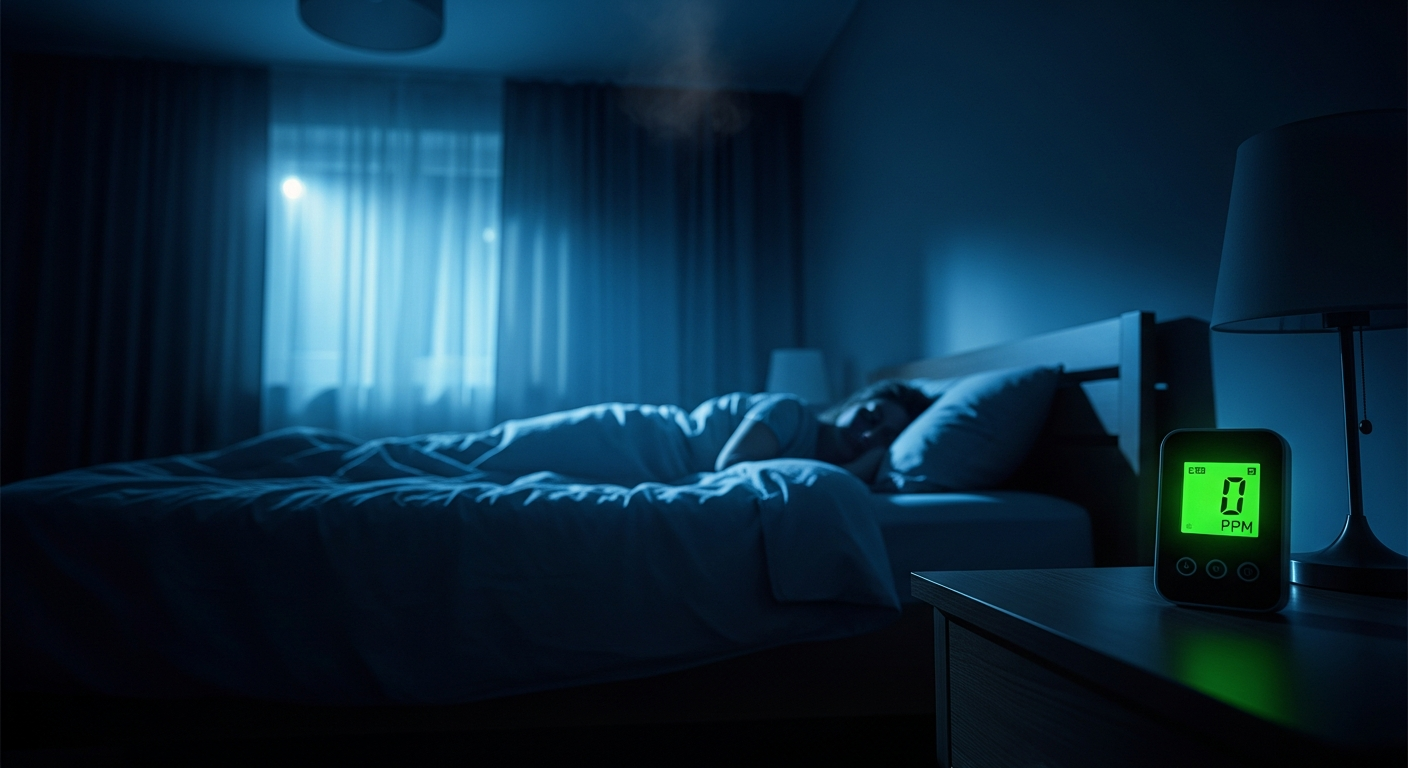
Not all rooms carry equal CO risk, and understanding which spaces are highest priority helps you allocate detectors smartly. Bedrooms are the most dangerous CO environment because sleeping occupants cannot self-rescue. The CDC estimates that over 430 Americans die from unintentional, non-fire CO poisoning each year, and a disproportionate share of those deaths happen overnight. Basements and utility rooms rank second in risk because furnaces, boilers, water heaters, and gas dryers all concentrate there. A malfunctioning furnace can elevate basement CO to lethal levels in under an hour, as detailed in NIOSH incident reports. Kitchens and living areas with gas stoves or fireplaces represent moderate risk; attached garages represent extreme risk because a single idling car can push CO above 200 ppm — NIOSH's ceiling exposure value — in minutes. For gas cooking risks, see Do Gas Stoves Produce Carbon Monoxide? What Cooks Need to Know. Attics, unless they contain HVAC equipment, are generally low priority. Takeaway: Prioritize bedrooms and basement utility rooms first — they are where the stakes are highest.
What Is the Correct Placement Height and Position for Each Detector?
Because carbon monoxide has a molecular weight of 28 g/mol — nearly identical to air at 29 g/mol — it does not sink to the floor like propane or rise to the ceiling like hydrogen. It disperses uniformly at breathing height, which is why UL 2034 and most manufacturers specify mounting CO detectors 5 feet above the floor on a wall, or following the unit's specific instructions. Plug-in detectors should go into outlets at breathing height, not in low baseboard outlets. Placing a CO detector in a dead-air corner behind furniture or inside a cabinet can delay alarm activation by 10–20 minutes compared to an unobstructed open-wall position, according to UL laboratory testing documentation. Avoid locations within 5 feet of fuel-burning appliances to prevent nuisance alarms from start-up emissions, and keep detectors out of high-humidity bathrooms and unheated spaces where condensation can degrade electrochemical sensors. For a full visual guide, see Carbon Monoxide Detector Placement: Exactly Where to Put Yours. Takeaway: Height matters less than airflow — position detectors in open, central wall locations at eye level to ensure fastest response.
How Many CO Detectors Does Each Home Type Need?
The right number depends on your home's layout, but here is the practical formula used by fire safety professionals: count your habitable floors (including basement), add the number of separate sleeping areas, and that sum is your minimum detector count. A studio apartment needs one detector. A one-bedroom apartment needs two — one on the main level and one outside the sleeping area. A two-story, three-bedroom house with a basement needs five: basement, main floor, upper floor, and outside each bedroom cluster. A split-level or multi-wing home may need six or more. For travelers, the math changes entirely — Carbon Monoxide Detector for Travel: Your Hotel Safety Protocol explains why a personal portable unit matters when you can't audit another building's fixed detectors. Households with attached garages should add one additional detector just inside the interior door between the garage and living space, as recommended by the CPSC. If you run a portable generator during power outages, the risk profile spikes dramatically; see Generator Carbon Monoxide: Why It Kills and How to Stay Safe for generator-specific placement rules. Takeaway: Use the floors-plus-sleeping-areas formula as your baseline, then add one unit for any attached garage or generator storage area.
Quick Checklist: Where to Place Every Detector in Your Home
- Basement: one detector near the furnace, boiler, or water heater — not directly on the appliance, but within the same room
- Main living floor: one detector in a central hallway or open area, away from the kitchen appliances themselves
- Upper sleeping floor: one detector in the hallway outside all bedrooms, or one inside each individual bedroom for maximum protection
- Attached garage entry: one detector just inside the door connecting the garage to the living space
- Any additional floors or finished attic with HVAC equipment: one detector per level
- RV, camper, or boat cabin: one detector installed per the manufacturer's guidelines — fixed-unit placement rules do not apply to mobile spaces; see RV Safety Guide: Protecting Your Family from CO and Gas Leaks on the Road
- Vacation rental or hotel room: carry a personal portable detector when staying somewhere you cannot verify the building's detection coverage — see Carbon Monoxide in Airbnbs and Vacation Rentals: What Every Summer Traveler Needs to Know
Once you know how many detectors you need and exactly where they go, the next decision is which detector to trust. The AirShield™ 3-in-1 Portable Carbon Monoxide Detector combines an electrochemical CO sensor with a Smart M8 Chip, live OLED PPM readout, and detection of methane and propane in one compact plug-in unit — giving you professional-grade monitoring without hardwiring or batteries to replace. Its universal 100-240V design with international adapters means it covers every level of your home and travels with you to rentals, hotels, or anywhere your fixed detectors can't follow. Visit airshield.store to see how one device can fill the critical gaps in your home's protection plan.
Frequently Asked Questions
Sources & References
- NFPA 720 — NFPA 720 standard specifying CO detector placement requirements on each level of a home and outside sleeping areas
- U.S. Consumer Product Safety Commission (CPSC) — CPSC guidance on CO detector placement per floor, outside bedrooms, and in attached garages
- Centers for Disease Control and Prevention (CDC) — CDC statistics on CO poisoning deaths and highest-risk exposure scenarios, including sleeping victims
- Underwriters Laboratories (UL 2034) — UL 2034 standard covering alarm threshold performance and testing requirements for CO detectors
- National Institute for Occupational Safety and Health (NIOSH) — NIOSH ceiling value of 200 ppm CO and exposure limits used to calibrate alarm thresholds
- International Association of Fire Chiefs (IAFC) — IAFC recommendations on multilevel detector installation for residential structures
Protect Your Home with AirShield™
The only portable CO detector that shows you real-time PPM readings on a live OLED display. Electrochemical sensor, multi-gas detection, UL listed.
Check Availability →
Loading comments...