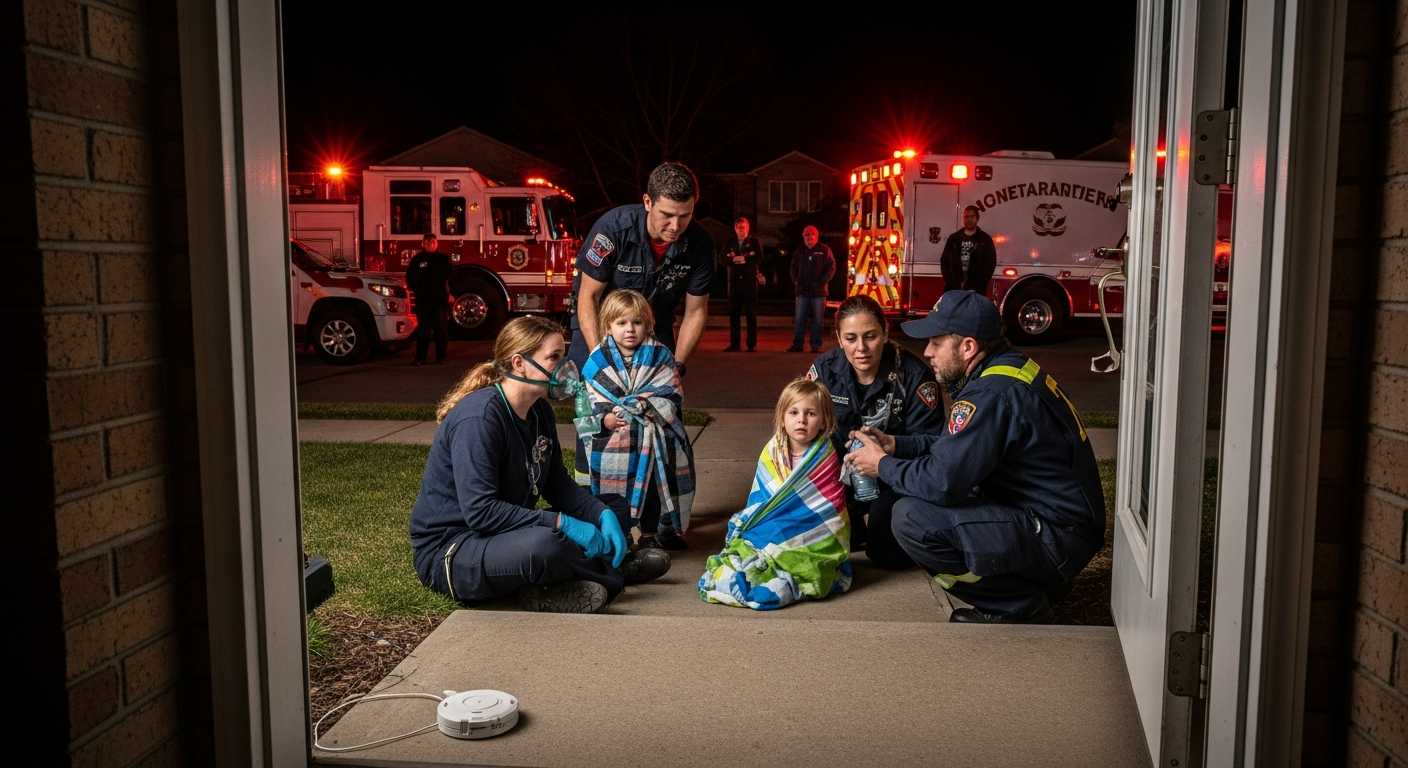
Your carbon monoxide alarm is going off. Maybe it's still sounding. Maybe it stopped after a few seconds and now you're standing in the hallway wondering whether you overreacted — or whether you're about to. The data suggests the stakes are real: the CDC estimates that accidental carbon monoxide poisoning sends more than 50,000 Americans to emergency rooms every year and kills roughly 400 — most during an incident that began with an alarm somebody wasn't sure how to interpret. Whether this is a genuine CO event or a sensor malfunction, the steps you take in the next few minutes determine the outcome. This article tells you exactly what to do when a carbon monoxide alarm is going off, why alarms trigger, how to distinguish a real event from a false one, and what the follow-up investigation looks like.
The First 60 Seconds: Get Everyone Out

The single most important step when a carbon monoxide alarm is going off is to leave the building immediately. This is not the moment to grab belongings, investigate appliances, or check whether the reading seems serious. Carbon monoxide impairs your judgment before it becomes life-threatening — it causes dizziness, confusion, and a false sense of being fine that makes people fatally underestimate the situation. If anyone in the home has symptoms — headache, nausea, sudden fatigue, confusion, or shortness of breath — this is a medical emergency. Call 911 from outside and tell the dispatcher you have a CO alarm with symptomatic occupants. Even if everyone feels well, call the fire department's non-emergency line and request a carbon monoxide air quality check. Fire departments carry professional-grade electrochemical meters calibrated to fractions of a ppm — they will give you a definitive answer within minutes. Do not re-enter until a firefighter has personally confirmed the air is safe. The instinct to briefly step inside to grab something or check the stove has resulted in preventable deaths. The building can be replaced. Takeaway: exit first, investigate after.
Why Carbon Monoxide Alarms Go Off
Understanding the most likely triggers helps you respond proportionally. Residential CO events most often originate from gas furnaces with cracked heat exchangers, water heaters operating in enclosed spaces, attached garages where an idling vehicle's exhaust has migrated into the living space, gas stoves used without range hood ventilation, and fireplaces with deteriorated or blocked flue systems. CO accumulation almost always results from two factors coinciding: incomplete combustion in a fuel-burning appliance and inadequate ventilation to remove the byproduct. In winter, when homes are sealed against the cold and heating systems run continuously, CO has fewer escape routes. The Consumer Product Safety Commission reports that most residential CO alarm events involve a real CO source — not a faulty detector. The natural instinct to dismiss the alarm as a glitch is exactly the wrong response, and statistically, it's the one that causes fatalities. Takeaway: assume the alarm is real until confirmed otherwise by instrumentation.
False Triggers — and How to Identify Them
Not every CO alarm means you have a dangerous sustained CO concentration. Some triggers are genuinely benign: a gas burner lit briefly without ventilation, steam from a shower drifting to a nearby detector, a low battery causing voltage instability that the detector interprets as a sensor signal, or an aging sensor producing erratic readings near its end of life. The critical distinction between a false trigger and a genuine event is duration and sustained concentration. A momentary cooking spike often clears within minutes. A real CO accumulation from a malfunctioning furnace or idling vehicle climbs and holds. If your detector has a live PPM display, you can check the reading from a safe outdoor position after ventilating — a reading that has returned to zero suggests a brief transient source. If the reading remains elevated above 9 ppm, treat it as a real event regardless of whether you can identify the source. If you have an alarm-only detector with no numeric display, you have no way to make this distinction without a firefighter's calibrated meter. Takeaway: a live PPM display transforms a binary alarm into actionable data.
After the Alarm: The Investigation and What It Should Cover
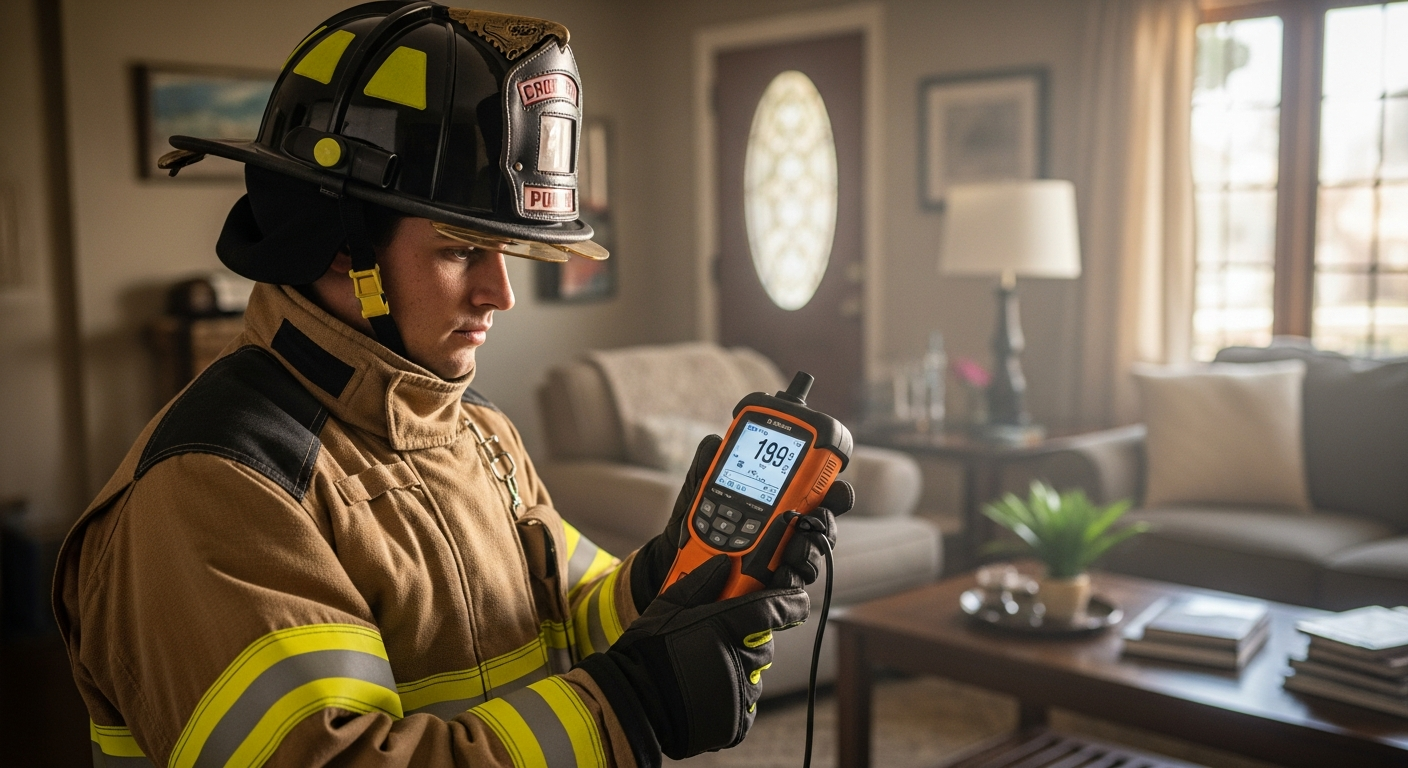
Once the building is confirmed safe and everyone is back inside, the investigation begins — and it needs to be systematic, not a quick glance at the stove. Start with your furnace: look for yellow or orange pilot flames (should be blue), soot deposits around the heat exchanger or flue connections, and any exhaust vent pipes that appear rusted, crimped, or disconnected. Check your water heater's exhaust vent for similar issues. If you have an attached garage, confirm that the door between the garage and living space has a proper seal and was fully closed. Call your gas company's emergency line if you suspect an appliance issue — they will send a technician who carries calibrated equipment. Do not restart your furnace, water heater, or any other gas appliance until a qualified technician has inspected and cleared it. If no source is found, the event may have been a brief transient — but still replace any CO detector more than five years old, as degrading sensors produce false positives with increasing frequency near end of life. Takeaway: document the incident and get professional confirmation before resuming normal appliance operation.
Practical Application: The CO Alarm Protocol That Covers Every Scenario
Whether this is your first CO alarm event or your third, the same protocol applies every time.
- Exit immediately — everyone out including pets, close doors behind you without locking them
- Call 911 if anyone has symptoms; call the fire non-emergency line if everyone is well
- Stay outside — the only acceptable reason to re-enter is to retrieve someone who cannot self-evacuate
- Get medical evaluation if anyone experienced confusion, severe headache, or lost consciousness — CO poisoning at moderate levels requires supplemental oxygen or hyperbaric therapy
- Wait for fire department clearance before re-entering, and get the all-clear in writing if possible
- Have every gas appliance inspected before resuming operation — do not restart the furnace on a cold night without professional clearance
- Check your detector: if it lacks a live PPM display or is over five years old, replace it before the next heating season
- Consider upgrading to a detector that shows continuous PPM readings — How Does a Carbon Monoxide Detector Work? A Clear Explanation so you can see sub-alarm concentrations building before the next event
A carbon monoxide alarm event is not a nuisance to silence and dismiss — it is a data point. Either your detector found something real, which demands immediate action, or something caused a false trigger, which demands understanding and correction. The worst possible response is to hit silence and go back to sleep. Every year, people die from exactly that decision. A detector with a live PPM display removes the guesswork entirely: the number on the screen either confirms CO is present or confirms it is not. That clarity is the difference between an educated response and a dangerous assumption.
Protect Your Home with AirShield™
The only portable CO detector that shows you real-time PPM readings on a live OLED display. Electrochemical sensor, multi-gas detection, UL listed.
Check Availability →
Loading comments...