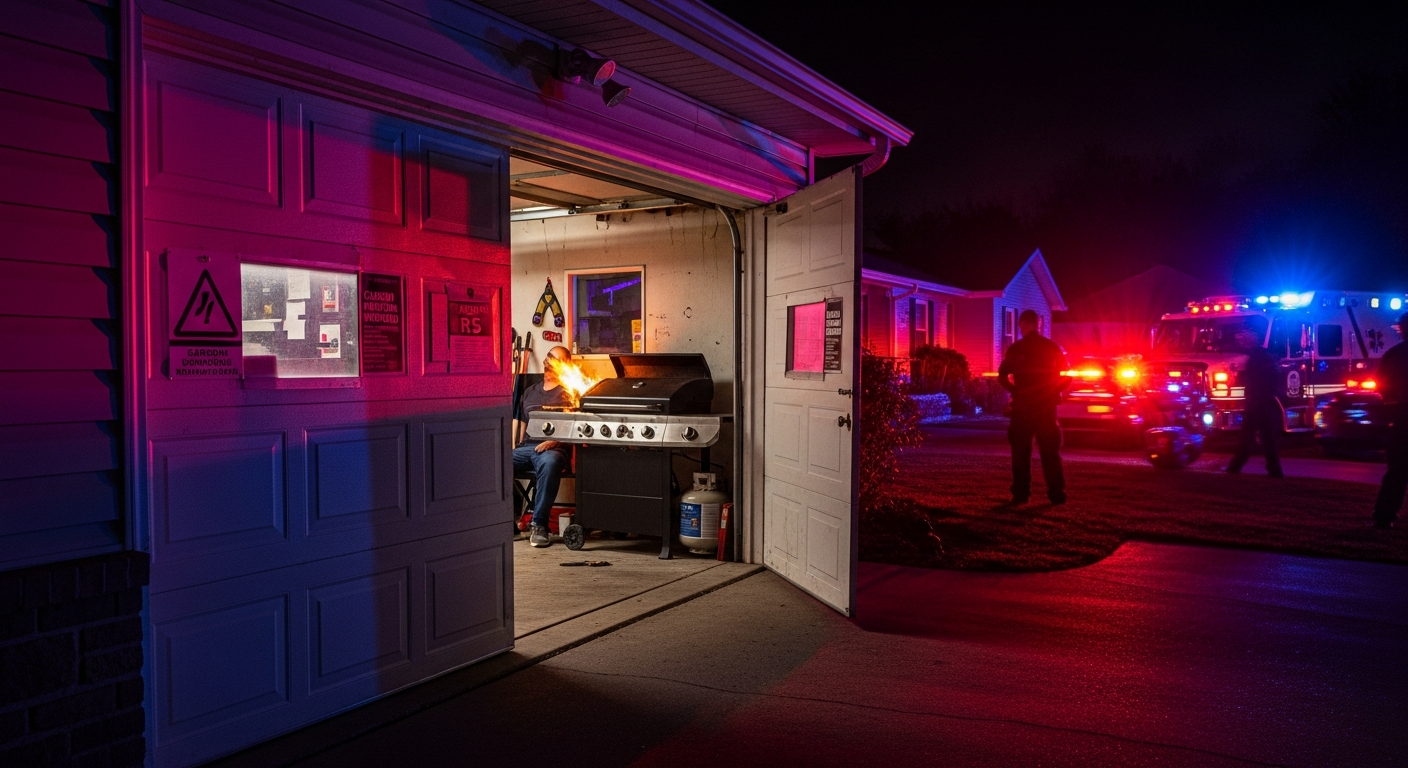
Every spring, emergency rooms see the same wave of patients: people who moved a gas grill into their garage during a rainstorm, or let a charcoal grill smolder on a covered porch, without understanding what they were doing to the air around them. The Consumer Product Safety Commission estimates that gas grill carbon monoxide incidents send hundreds of people to emergency rooms each year — and a meaningful share of those incidents are fatal. The hazard is consistently underestimated because grills don't look dangerous, and carbon monoxide has no color, no odor, and no warning that it's accumulating. This article covers how much CO grills actually produce, why even 'open' spaces can be lethal, how charcoal and propane compare, and the exact steps to take if you suspect CO exposure at a cookout. Carbon Monoxide Poisoning Symptoms: What to Know Before It's Too Late
How Much Gas Grill Carbon Monoxide Is Actually Produced?
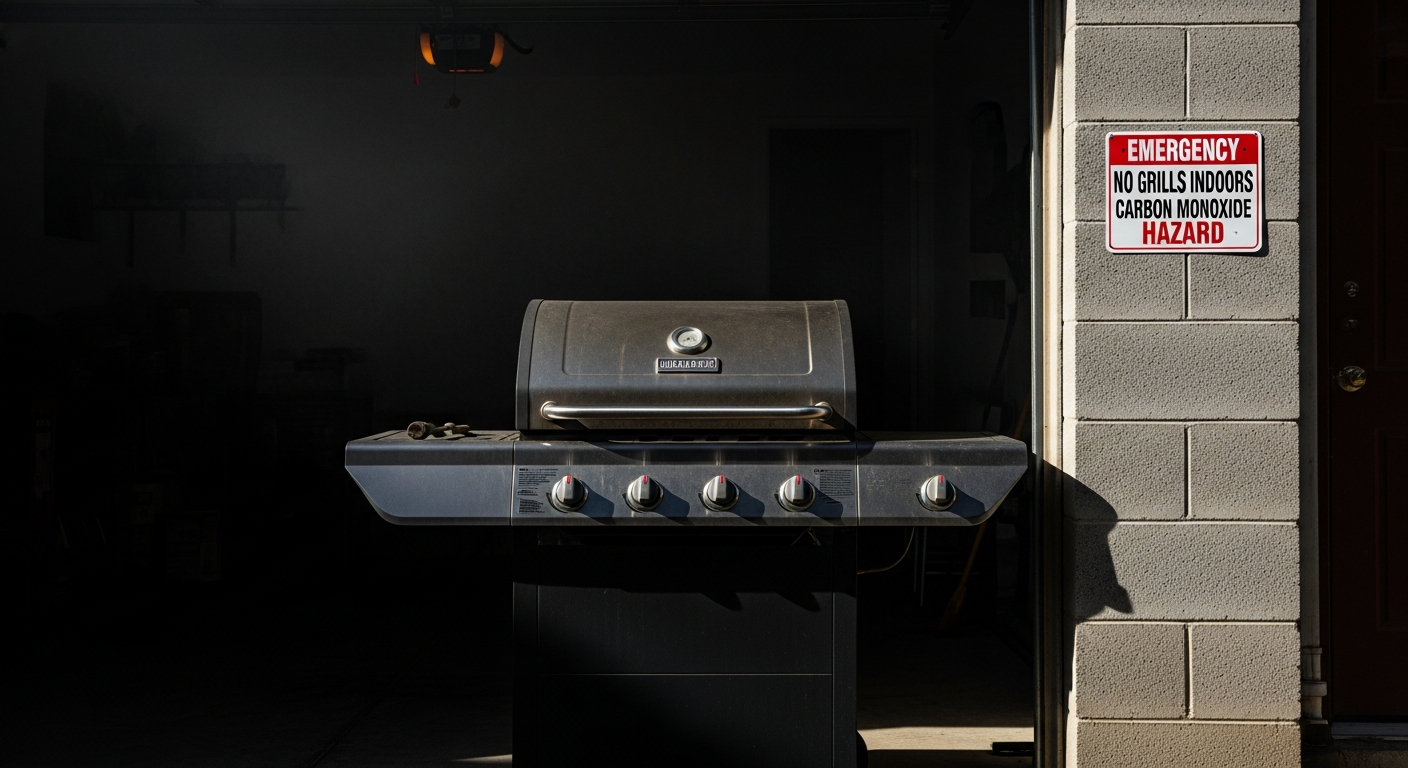
Carbon monoxide is produced any time a carbon-containing fuel burns without enough oxygen to complete combustion. Grills are engineered for open-air use — they have no combustion efficiency optimization, no sealed exhaust system, and no catalytic afterburner. The result is CO production rates dramatically higher than a gas furnace or water heater operating normally. According to CPSC testing, a single medium-sized propane grill can raise CO concentration in a standard one-car garage from 0 to 100 ppm in roughly 10 minutes. A charcoal grill at low burn can do it faster. Takeaway: grill CO output isn't a trace amount to dismiss — it's a high-rate emission designed to vent into open air. The moment you restrict that ventilation, you change the risk profile entirely.
- Propane grill at medium heat: can reach 100 ppm in a single-car garage (approximately 600 cubic feet) in under 10 minutes
- Charcoal during lighting phase: CO spikes are highest as coals transition from smoldering to full combustion — far exceeding propane output
- Charcoal at end of cook: dying coals in low-oxygen mode produce CO at peak rates for hours after cooking stops
- Hibachi or small camp grill in a tent: fatal concentrations possible in under 5 minutes
- HVAC intake: CO from a grill near an open window can be drawn directly into your home's air circulation system
The Garage Grill: Why Gas Grill Carbon Monoxide Kills Even with the Door Open
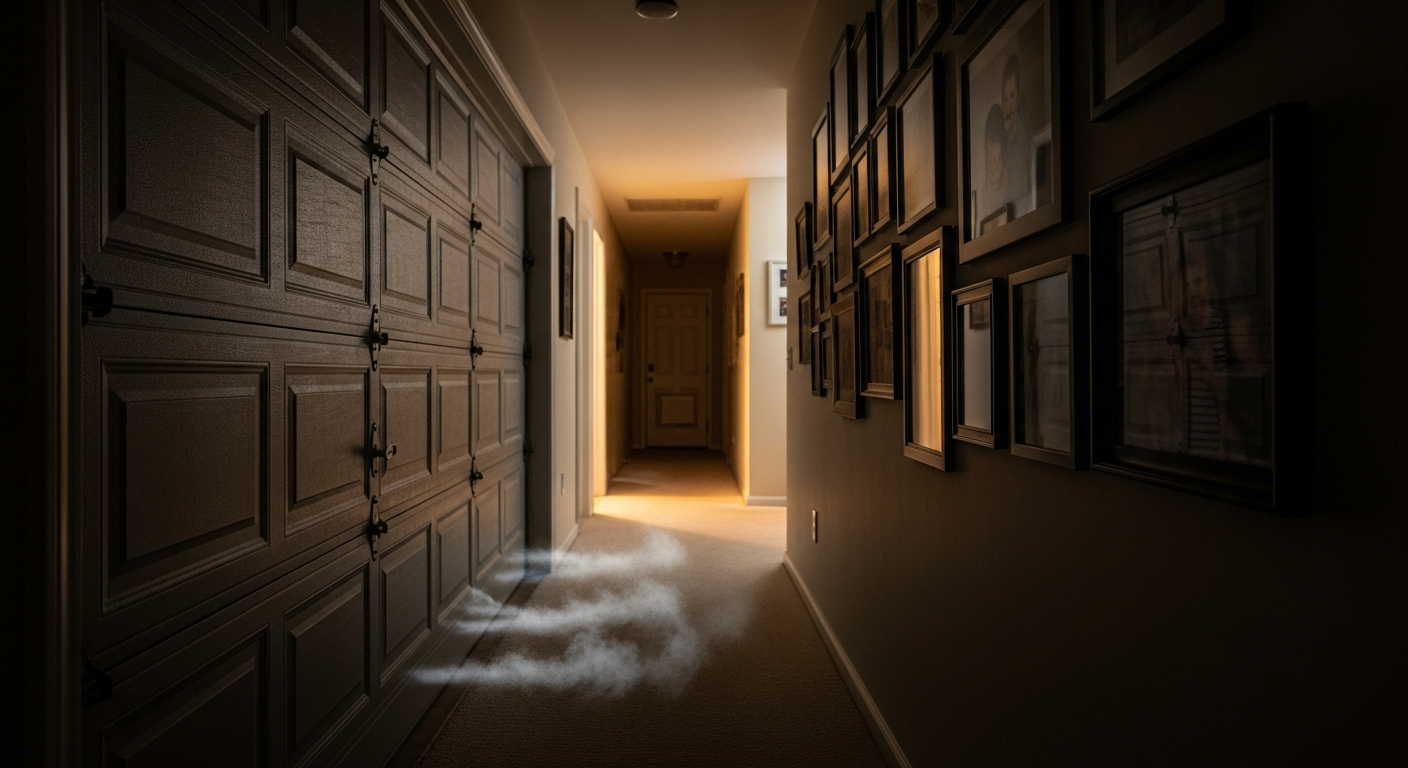
The most common fatal gas grill carbon monoxide scenario isn't a closed garage — it's a garage with the door wide open. Homeowners make a logical-seeming but physically incorrect assumption: if air can get in, CO can get out. It doesn't work that way. A single opening creates a dead-air zone at the back of the garage where exhaust accumulates and rises. CO has nearly the same density as air, so it doesn't sink or rise dramatically — it fills the space from the source outward, and the single garage opening clears only the air near it. Takeaway: if you're sheltering a grill from rain, the only safe option is to wait it out. No amount of door-opening compensates for the missing cross-ventilation that outdoor grilling relies on.
- CO concentration at the garage door may read near zero while the back corner reads 400+ ppm
- Attached garages share air with the house through wall gaps, HVAC ducts, and door seals — CO migrates indoors even while you're grilling 'outside'
- Rain doesn't change the physics — a grill just inside a garage opening with rain falling outside creates the same dead-air accumulation
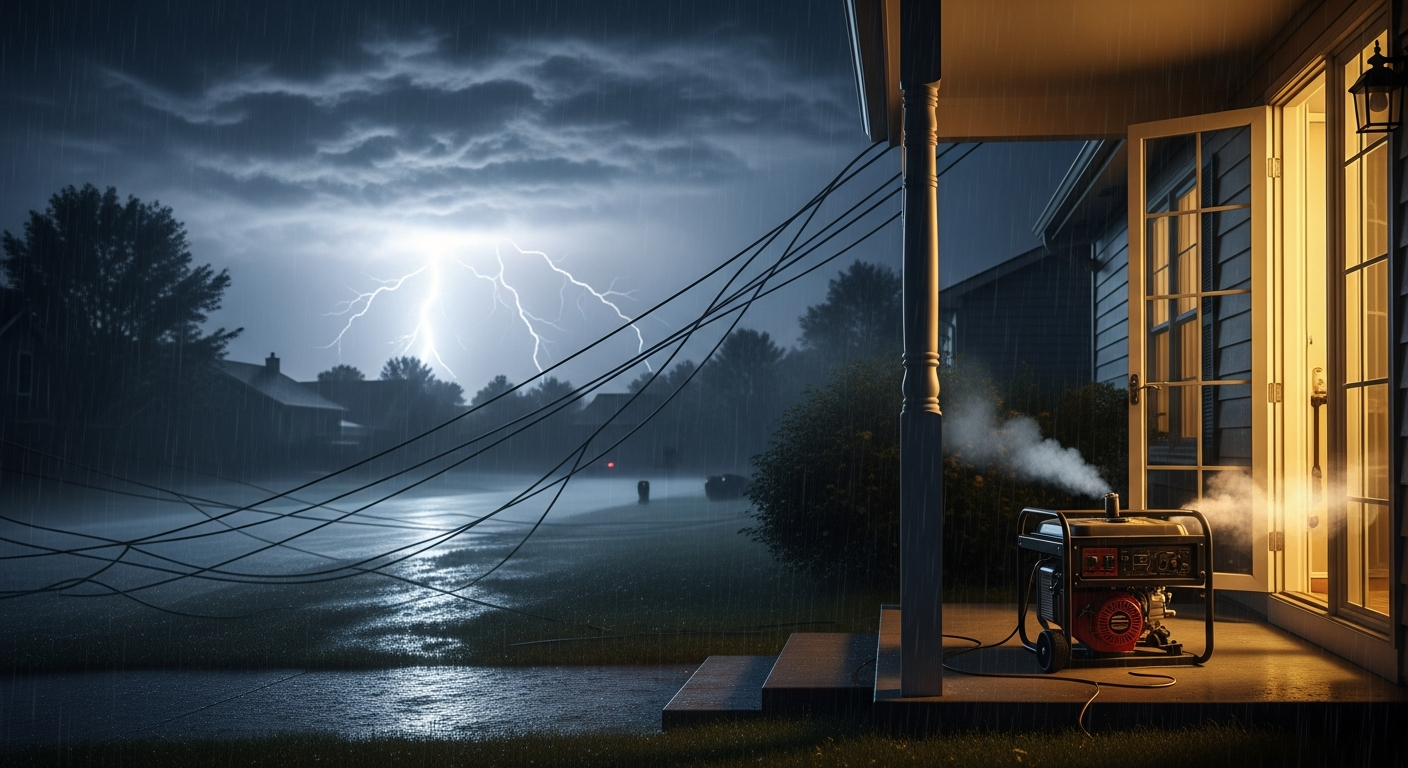
- Never use any combustion device in a garage — grill, camp stove, generator, or space heater — regardless of door position Carbon Monoxide in Your Garage Is Entering Your Home — Here Is How to Stop It
Outdoor Placement: How Far From Your Home Is Actually Safe?
Distance alone doesn't guarantee safety when it comes to gas grill carbon monoxide outdoors. CO disperses based on wind direction, barriers, and air movement — not just proximity to a wall. The CPSC's 10-foot recommendation is a minimum under normal conditions, not a blanket clearance. A grill 12 feet from the house but upwind of an open window, or tucked under a low pergola on a calm evening, can still send CO directly into occupied spaces. Takeaway: think about where the exhaust actually goes, not just how far the grill is from the house. Downwind position and unobstructed airflow matter more than raw distance.
- Minimum 10 feet from any door, window, or vent — CPSC recommended minimum, not an ideal target
- Position the grill downwind from seated guests and open windows — exhaust should blow away from occupied zones
- Avoid grilling under low overhangs, pergolas, or canvas awnings that trap exhaust below head height
- On still, calm days, create your own airflow — a fan directed away from the gathering disperses exhaust effectively
- Check HVAC intake vents before grilling — if the intake is on the same side as the grill, switch the system to recirculate mode
Charcoal vs. Propane: Which Produces More Carbon Monoxide?
Both fuel types produce gas grill carbon monoxide, but they do so at very different rates and for very different durations. Propane burns more completely under normal combustion conditions, producing less CO per unit of heat than charcoal. Charcoal's CO output is highest at two points: the lighting phase (when the ratio of fuel to oxygen is poorest) and the dying phase (when coals smolder in low-oxygen conditions long after the cook is done). Takeaway: charcoal's CO risk doesn't end when cooking does. The dying-coal phase is when many people move the grill to a porch, garage, or shed — and it's precisely when CO output is highest.
- Charcoal lighting: CO spikes dramatically as coals transition from smoldering to combustion — especially with lighter fluid
- Charcoal at end of cook: low-oxygen smoldering produces CO at peak rates for 1-3 hours after the last food comes off
- Disposable charcoal grills: particularly dangerous at events because users treat them as 'done' once the food is cooked, not realizing the CO production continues
- Propane: lower baseline CO output, but still produces enough to be lethal in enclosed or semi-enclosed spaces
- Never bring charcoal indoors to 'finish burning out' — a full charcoal load still smoldering is one of the fastest routes to a fatal indoor CO event The 6 Most Common Sources of Carbon Monoxide in Your Home
Practical Application: Gas Grill Carbon Monoxide Safety at Your Next Cookout
Applying these principles takes about 90 seconds of planning before you light the grill. Here's exactly what to do:
- Check wind direction before positioning the grill — set up so exhaust blows away from the house and seating area, not across it
- Confirm the grill is at least 10 feet from any door, window, or HVAC intake vent
- If grilling under a pergola or covered patio, position the grill at the open edge — not centered under the roof
- Switch your home's HVAC to recirculate (not intake) mode while grilling near the house
- Never move a lit or recently-used grill into a garage or screened porch for any reason — including rain
- Let charcoal grills extinguish fully outdoors in an open area — don't move them to a shed or enclosed space while still smoldering
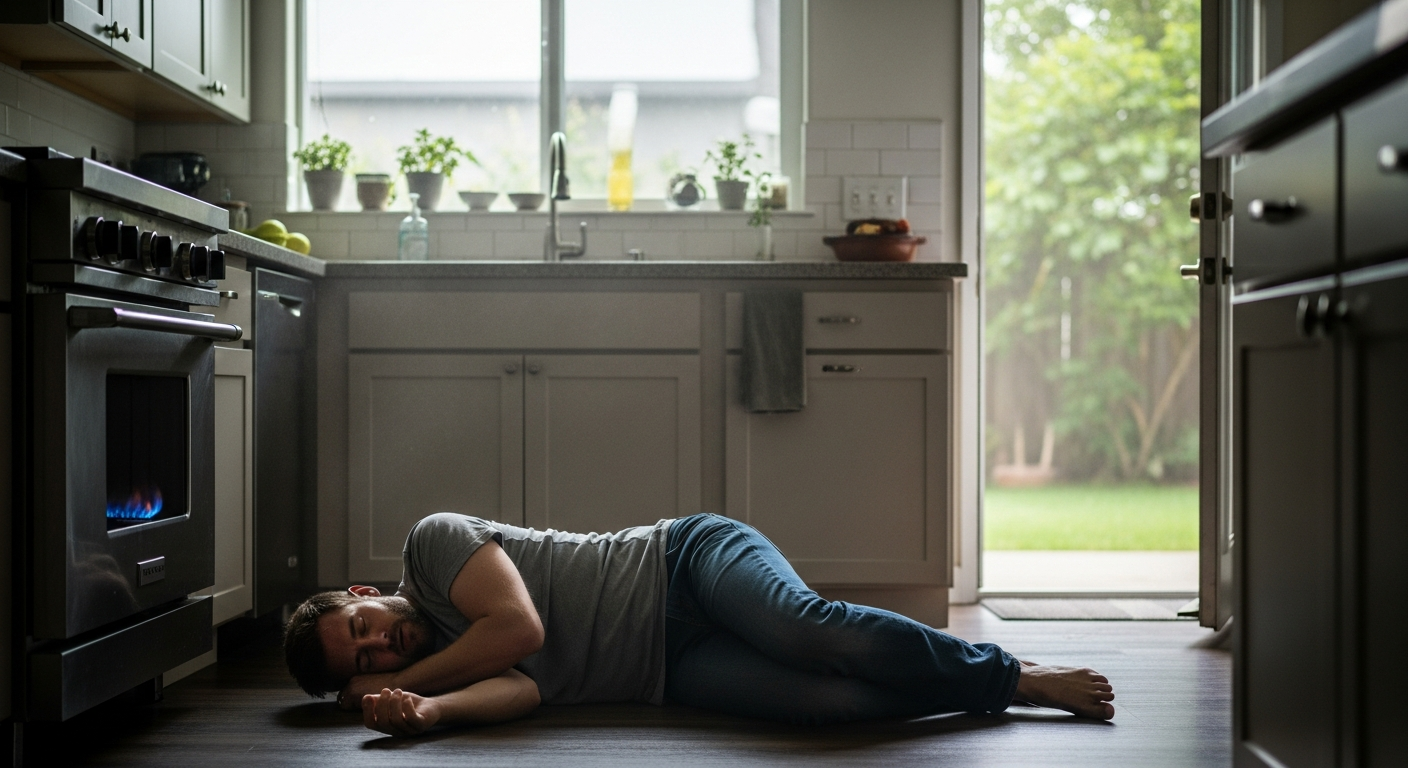
- If multiple people at your cookout develop simultaneous headaches, nausea, or dizziness: move everyone upwind immediately, shut off all combustion sources, and call 911 if symptoms don't resolve within 10 minutes in fresh air Carbon Monoxide Poisoning Treatment: What Happens, What Helps, and What Does Not
- Bring a portable CO detector to any outdoor event with multiple grills or a generator — it gives you objective PPM data before symptoms appear
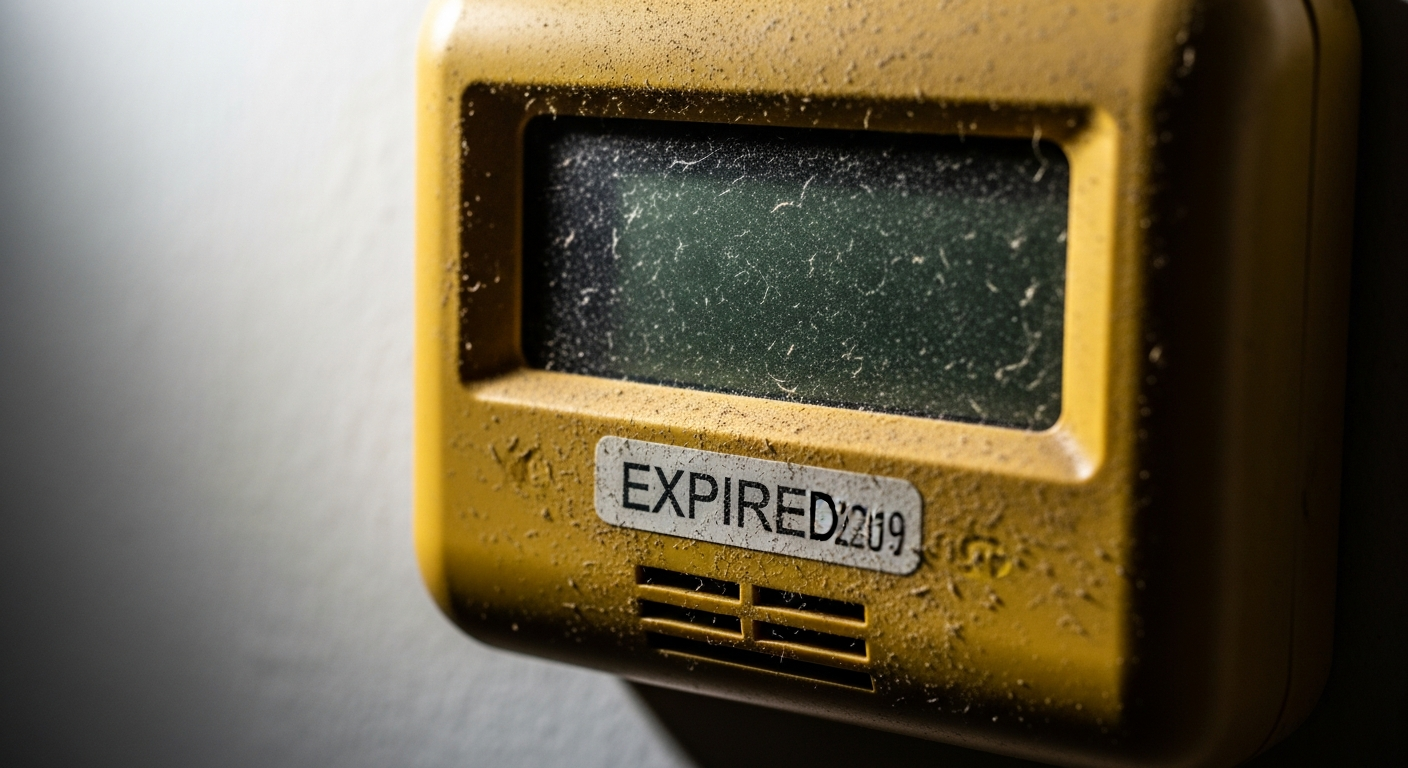
The bottom line on gas grill carbon monoxide is that the hazard is real, well-documented, and almost entirely preventable with correct placement and simple awareness of where the exhaust actually goes. Most victims didn't know they were in danger — because CO gave them no signal before it impaired their judgment. A live PPM display is the only way to confirm air quality in real time. AirShield's electrochemical sensor and OLED display gives you that number continuously — plug it into any outlet near your outdoor cooking area and see the actual CO concentration as it rises or stays flat. It's the difference between guessing your air is safe and knowing it is.
Protect Your Home with AirShield™
The only portable CO detector that shows you real-time PPM readings on a live OLED display. Electrochemical sensor, multi-gas detection, UL listed.
Check Availability →
Loading comments...