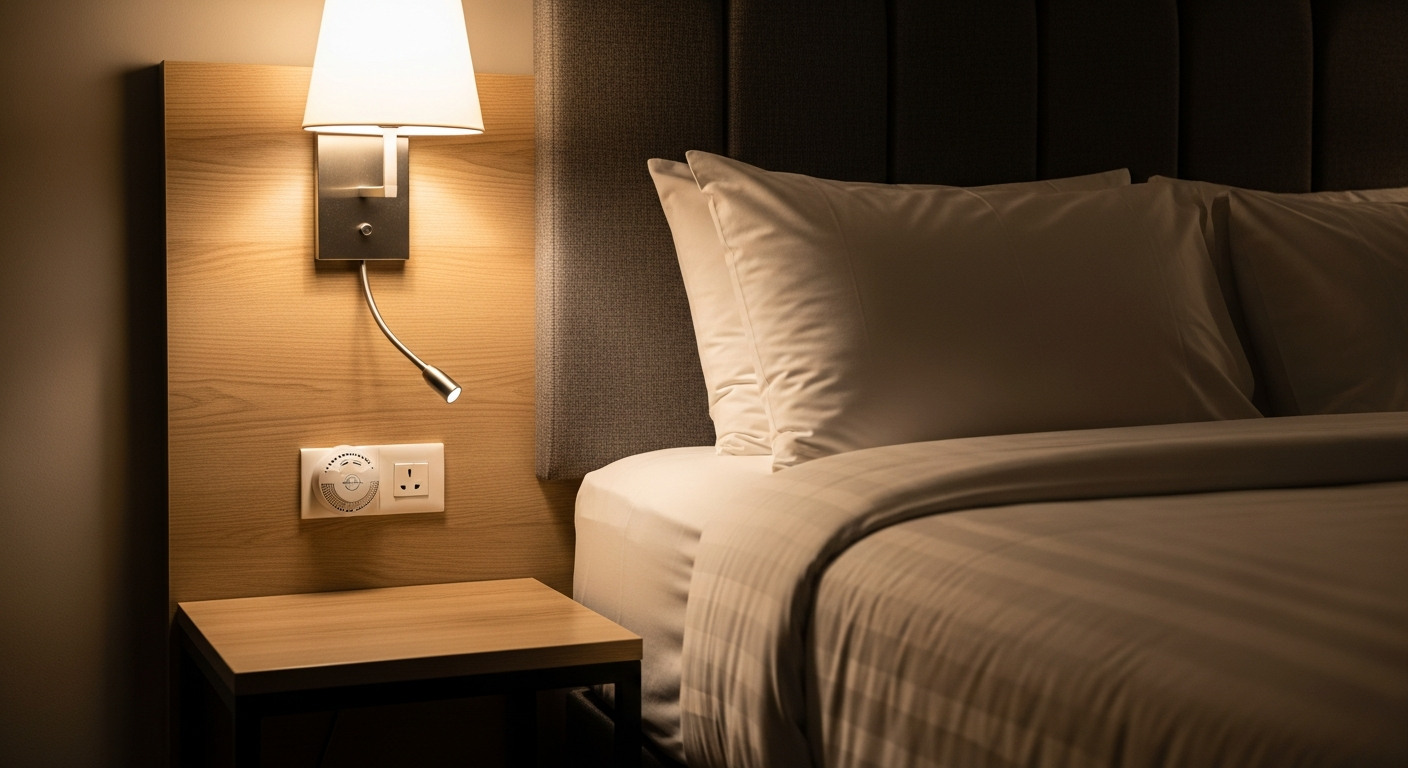
Most travelers check hotel reviews for cleanliness, WiFi speed, and pillow firmness. Almost nobody checks whether the room has a working carbon monoxide detector — and that oversight can be dangerous.
Why Hotels Are a Hidden CO Risk
Carbon monoxide is produced whenever fuel burns — natural gas, propane, oil, kerosene, or wood. Hotels run heating systems, boilers, laundry equipment, and kitchen appliances that all produce CO as a byproduct. When ventilation fails or equipment malfunctions, CO can migrate into guest rooms.
A 2019 investigation found that 1 in 3 tested hotel rooms across major US cities showed detectable CO levels above background. Several high-profile CO incidents have occurred in hotel pools, where gas heaters vent improperly into enclosed mechanical rooms adjacent to guest areas.
The Regulation Gap
Federal law does not require hotels to install carbon monoxide detectors. Regulation falls entirely to individual states, and enforcement is inconsistent:
- Some states mandate CO detectors in all hotel rooms with fossil-fuel appliances
- Others require detectors only in rooms that share a wall with a mechanical room
- Several states have no CO detector requirement for hotels at all
- Even where detectors are required, inspection and maintenance standards vary
What CO Poisoning Feels Like in a Hotel Context
Many CO exposure incidents in hotels are dismissed as travel fatigue, food poisoning, or a bad night's sleep. Classic low-level CO symptoms — persistent headache, mild nausea, lightheadedness — mimic the feeling of being overtired or slightly ill. Guests often sleep through escalating exposure because CO impairs judgment before it triggers panic.
What You Can Do
The most reliable protection is bringing your own detector. A portable CO detector plugs into any standard outlet and begins monitoring immediately — no setup, no dependency on whether the hotel has updated its safety equipment. When you check in:
- Plug your detector in near the bed before sleeping
- Keep it on the nightstand — not across the room where the alarm would be harder to wake you
- Note the location of the nearest fire exit before you fall asleep
- If the alarm sounds, leave the room immediately and call emergency services
The AirShield detector is compact enough to fit in a carry-on pocket, powers from any outlet in any country with the included adapters, and displays a live PPM reading so you can see exactly what you're breathing — not just wait for an alarm. For a full guide to what to look for when choosing one, see Portable Carbon Monoxide Detector: What It Is, Who Needs One, and How to Choose.
Protect Your Home with AirShield™
The only portable CO detector that shows you real-time PPM readings on a live OLED display. Electrochemical sensor, multi-gas detection, UL listed.
Check Availability →
Loading comments...