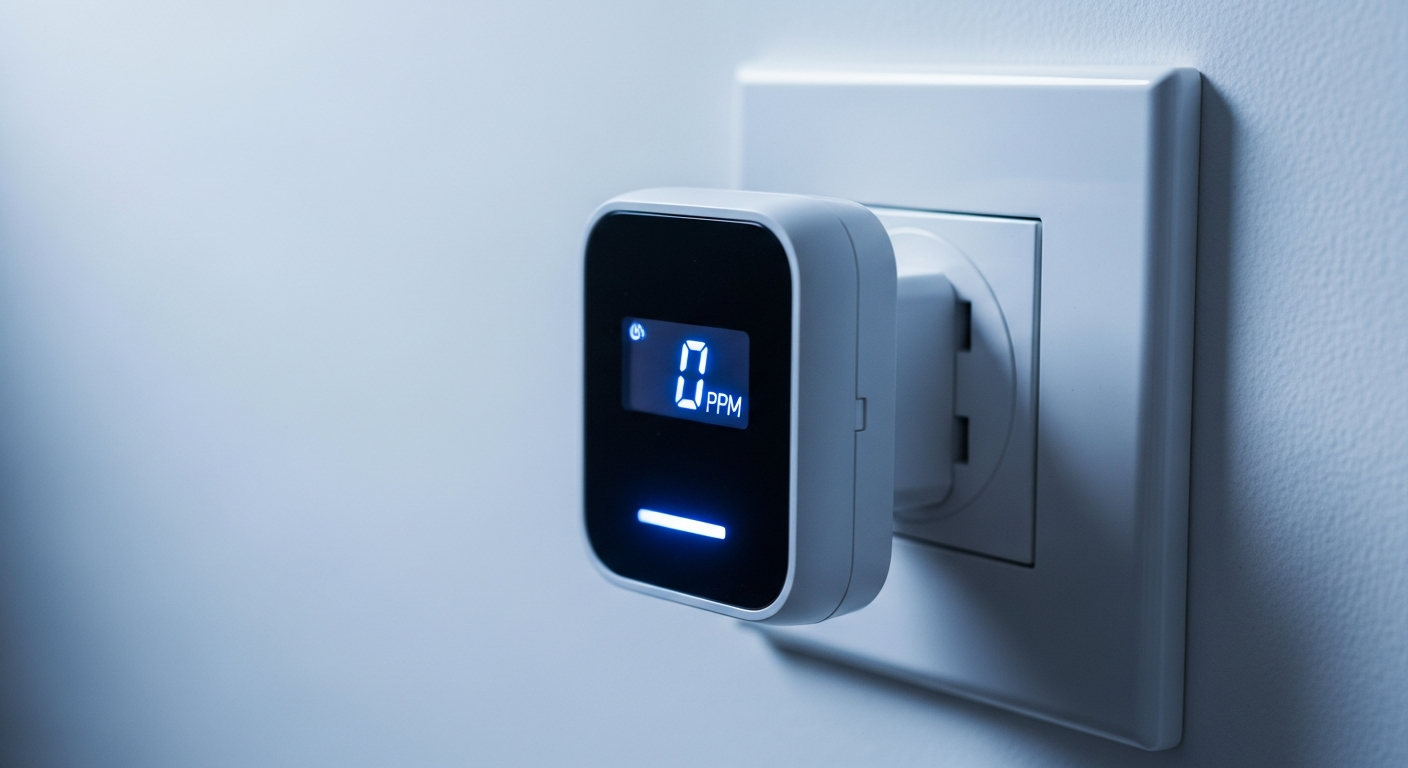
A digital carbon monoxide detector displays live CO concentration in parts per million (PPM) on a numeric screen — rather than simply sounding an alarm when a threshold is crossed. That distinction determines whether you see a problem developing or only find out once it's already an emergency. Walk into any big-box store and you'll find a wall of CO detectors, each claiming to protect you. The problem is that most of them — especially the lower-cost models labeled 'portable' — are designed to do one thing: alarm when carbon monoxide reaches a concentration the UL 2034 standard defines as dangerous after sustained exposure. That threshold is 70 PPM held for four hours. The detector tells you nothing about what's in the air right now, shows no reading you can act on before symptoms start, and uses a sensor technology that degrades silently. A portable carbon monoxide detector that actually protects you is a different product — one with a live parts-per-million display, multiple gas detection, and a power source that doesn't fail between trips. The gap between these two categories is significant, and the packaging rarely makes it clear which one you're buying. This guide covers the five features that define real portable CO protection, what each one does for your safety, and the single question to ask before any purchase. Portable Carbon Monoxide Detector: What It Is, Who Needs One, and How to Choose
Sensor Type Is the First Feature to Check
Two sensor technologies dominate consumer CO detectors, and the difference between them determines accuracy, reliability, and how long the device actually works. Electrochemical sensors detect CO through a direct chemical reaction: CO molecules interact with an electrolyte, generating an electrical current proportional to concentration. The reaction is specific to CO, making these sensors accurate, resistant to humidity and temperature variation, and capable of producing a reliable live numerical reading. Metal oxide semiconductor sensors — often called MOS sensors — detect changes in electrical resistance caused by a range of gases including CO. They are cheaper to manufacture, more susceptible to false positives from humidity and other chemicals, and less accurate in the real-world temperature range of hotel rooms, vehicles, and homes. Every professional-grade CO meter used by firefighters and industrial safety inspectors uses an electrochemical sensor — the same technology inside the AirShield detector. If a product listing does not specify 'electrochemical,' it is almost certainly MOS, which limits both accuracy and useful sensor life. Electrochemical sensors typically remain reliable for five to seven years before the chemical inside degrades to the point of requiring replacement; MOS sensors often have shorter effective lives, and neither type shows visible signs of degradation before it stops working accurately. Takeaway: if the product listing or packaging does not say 'electrochemical sensor,' that is a meaningful gap — the sensor type determines whether the readings are accurate enough to rely on.
Why a Live PPM Display Changes Everything
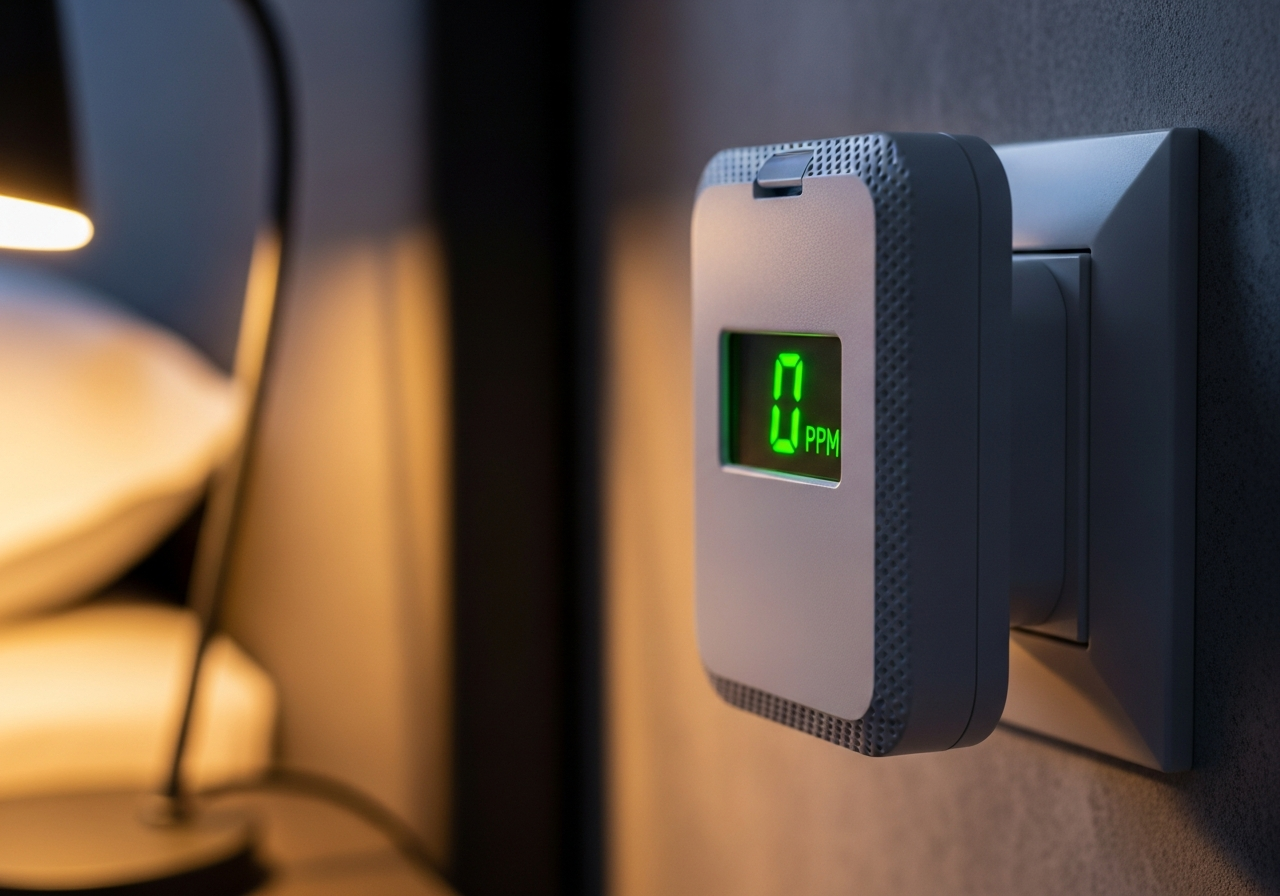
Most CO detectors — even many labeled portable — are alarm-only devices. They have a single mode: silent. They display no number. They give no indication of what concentration is present. They are designed not to respond below UL 2034 thresholds: 70 PPM sustained for four hours, 150 PPM for 50 minutes, or 400 PPM for four minutes. These are the concentrations at which a healthy adult begins showing clear symptoms. They are not the concentrations at which chronic lower-level exposure begins affecting your cardiovascular system. NIOSH defines 35 PPM as the maximum continuous workplace exposure limit for an eight-hour shift — a level that alarm-only detectors ignore entirely. A detector with a live PPM display shows you the concentration the moment you plug in, so you see 12 PPM in a hotel room and open a window before it becomes 70. An alarm-only detector would be silent at 12 PPM, at 25 PPM, at 50 PPM, and would not respond until the concentration reached its alarm threshold and held there for the calibrated duration. The live display is the difference between proactive response and reactive crisis. For a portable detector used in unfamiliar spaces — hotel rooms, vacation rentals, boats, RVs — the ability to see what's in the air before symptoms start is the core protective benefit of the product. Carbon Monoxide PPM Levels Explained: What's Safe, What's Dangerous Takeaway: alarm-only detectors are blind below their alarm threshold; a live PPM display gives you the reading you need to act before anyone feels anything.
Multi-Gas Detection — CO, Methane, and Propane
Carbon monoxide is the most dangerous invisible combustion gas in a residential setting, but it is not the only one. Methane and propane present a different category of risk — explosion and fire rather than poisoning — but they share a common origin with CO: combustion appliances and fuel supply lines. In an RV, boat, vacation rental, or older hotel with gas appliances, a methane or propane leak can be present alongside CO or independently. A CO-only detector misses the full combustion gas risk profile of any space that uses natural gas, propane, or liquefied petroleum gas. The AirShield 3-in-1 monitors CO, methane, and propane simultaneously, displaying a live reading for each. For travel use specifically, this matters because you cannot know what appliances are installed in a vacation rental, when a gas fireplace was last serviced, or whether an RV's propane lines are sealed. A single device that covers all three gases replaces the uncertainty of walking into an unfamiliar space blind to anything except CO. Takeaway: multi-gas detection closes the gap left by CO-only devices — in any rental, hotel, or vehicle where combustion appliances are present, the complete risk profile includes methane and propane alongside CO.
Plug-In Design vs Battery — Why the Power Source Matters
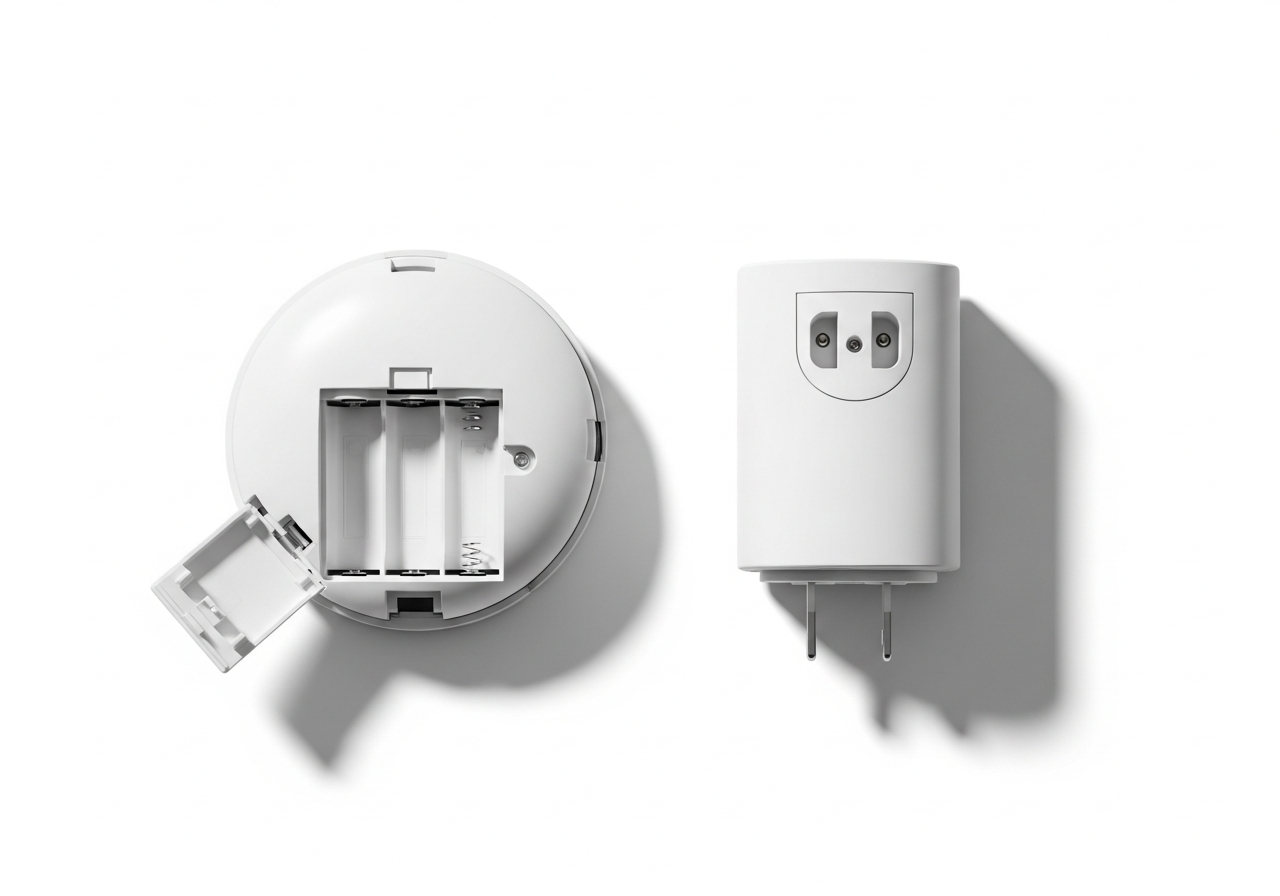
Battery-powered portable CO detectors are more common in travel contexts because they do not require an outlet. The problem is that batteries are the single most common failure point for any portable safety device used intermittently. A detector sitting in a travel bag between trips can lose charge with no visible indication. Alkaline batteries discharge gradually, and the resulting voltage drop can reduce detector sensitivity before the low-battery alarm sounds — meaning the device appears operational while no longer monitoring accurately. In international travel, replacement batteries may not be the correct size or chemistry for the device. A plug-in portable CO detector eliminates the battery failure mode entirely: it draws power continuously from any wall outlet and begins monitoring from the moment it's inserted. There is no battery to check, no charge to verify, no silent degradation between uses. The AirShield uses universal voltage (100–240V) with international adapter support, which means the same unit that works in a US hotel outlet works in a European apartment and an Australian vacation rental without a voltage transformer — just a plug adapter. For a device whose purpose is to protect you in an unfamiliar space, reliability is not optional. Plug-In Carbon Monoxide Detectors: Who Needs One and What to Look For Takeaway: a plug-in detector removes battery failure as a variable — when protection depends on a device working immediately, that's a meaningful advantage.
Practical Application: How to Use a Portable CO Detector Correctly
Buying the right detector is step one. These habits determine whether it actually protects you:
- Pack it where you'll see it when you open your luggage — if it stays at the bottom of the bag, it stays unused; make it the first visible item
- Plug in within five minutes of arriving at any new space — before you unpack, before windows are opened or closed, before the HVAC adjusts to occupancy
- Place it within 10 feet of where you'll sleep at outlet height — not across the room near the TV, not in the bathroom, within 10 feet of your pillow
- Watch the display for two to three minutes after plugging in — a reading that climbs from 0 to 10+ PPM in the first minutes indicates an active source in the space
- Normal reading: 0–4 PPM. Investigate: 5–9 PPM sustained. Ventilate and notify host or front desk: 10–34 PPM. Evacuate immediately: 35 PPM or above Carbon Monoxide PPM Levels Explained: What's Safe, What's Dangerous
- In an RV or boat, check the reading before running any combustion appliance and again 10 minutes after startup — CO from generators and engines accumulates faster in enclosed mobile spaces
- Replace the unit every five to seven years regardless of apparent function — electrochemical sensors degrade on a fixed chemical timeline independent of use frequency Carbon Monoxide Detector Not Working? Here's How to Tell — and What to Do
- For international travel, confirm the unit supports 100–240V — a universal voltage model needs only a physical plug adapter, not a voltage transformer
The gap between a portable carbon monoxide detector that provides real protection and one that occupies an outlet is larger than the packaging suggests — and the difference is not brand or price, it's sensor type, display type, gas coverage, and power design. Each feature has a specific safety consequence: an MOS sensor is less accurate; an alarm-only display is blind below its threshold; CO-only detection misses combustion gas risk; a battery-powered detector can fail silently between uses. The AirShield™ 3-in-1 Portable Carbon Monoxide Detector covers all four: electrochemical sensor, live OLED display, simultaneous CO and methane and propane detection, and plug-in universal voltage operation. It is the only portable CO detector that shows you the number before the alarm would ever sound. Visit airshield.store and add it to your travel kit today.
Frequently Asked Questions
Protect Your Home with AirShield™
The only portable CO detector that shows you real-time PPM readings on a live OLED display. Electrochemical sensor, multi-gas detection, UL listed.
Check Availability →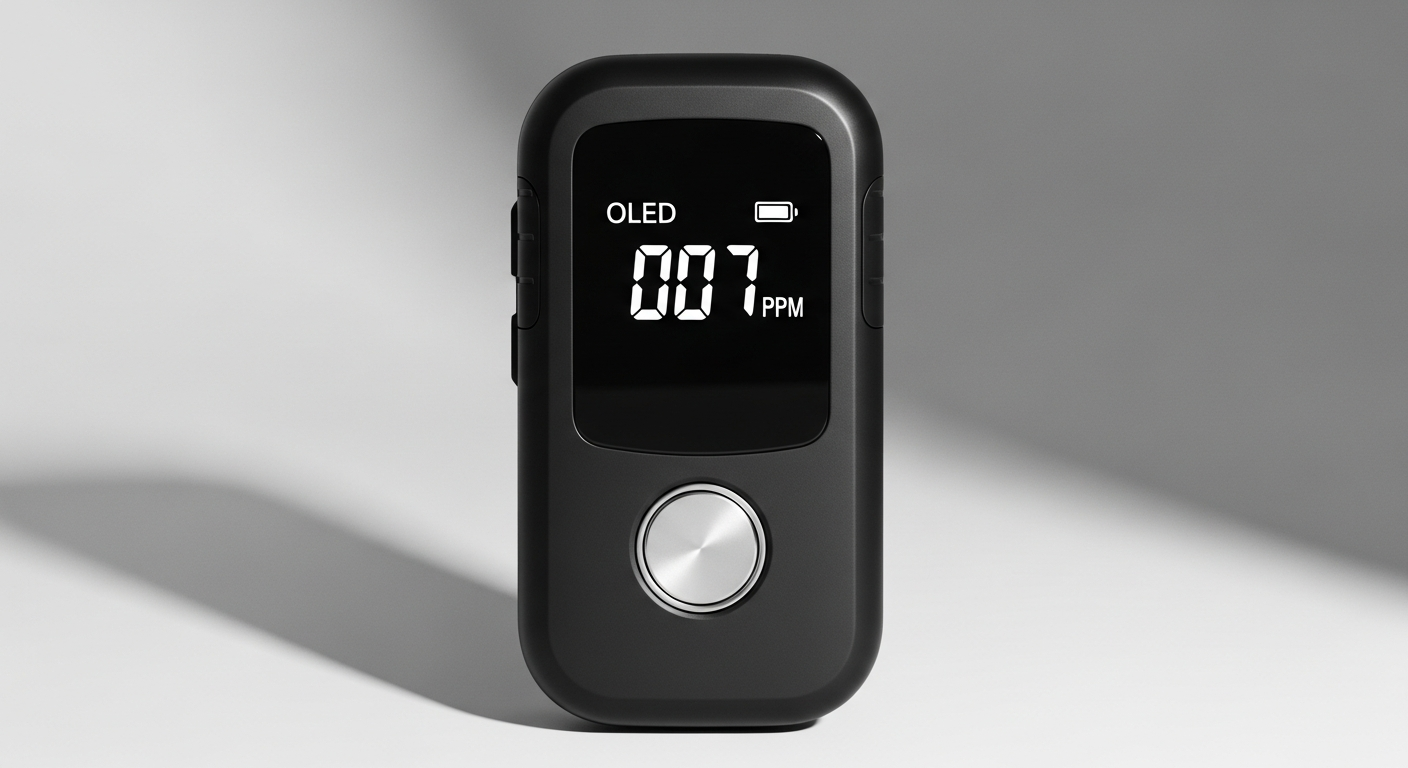
Loading comments...