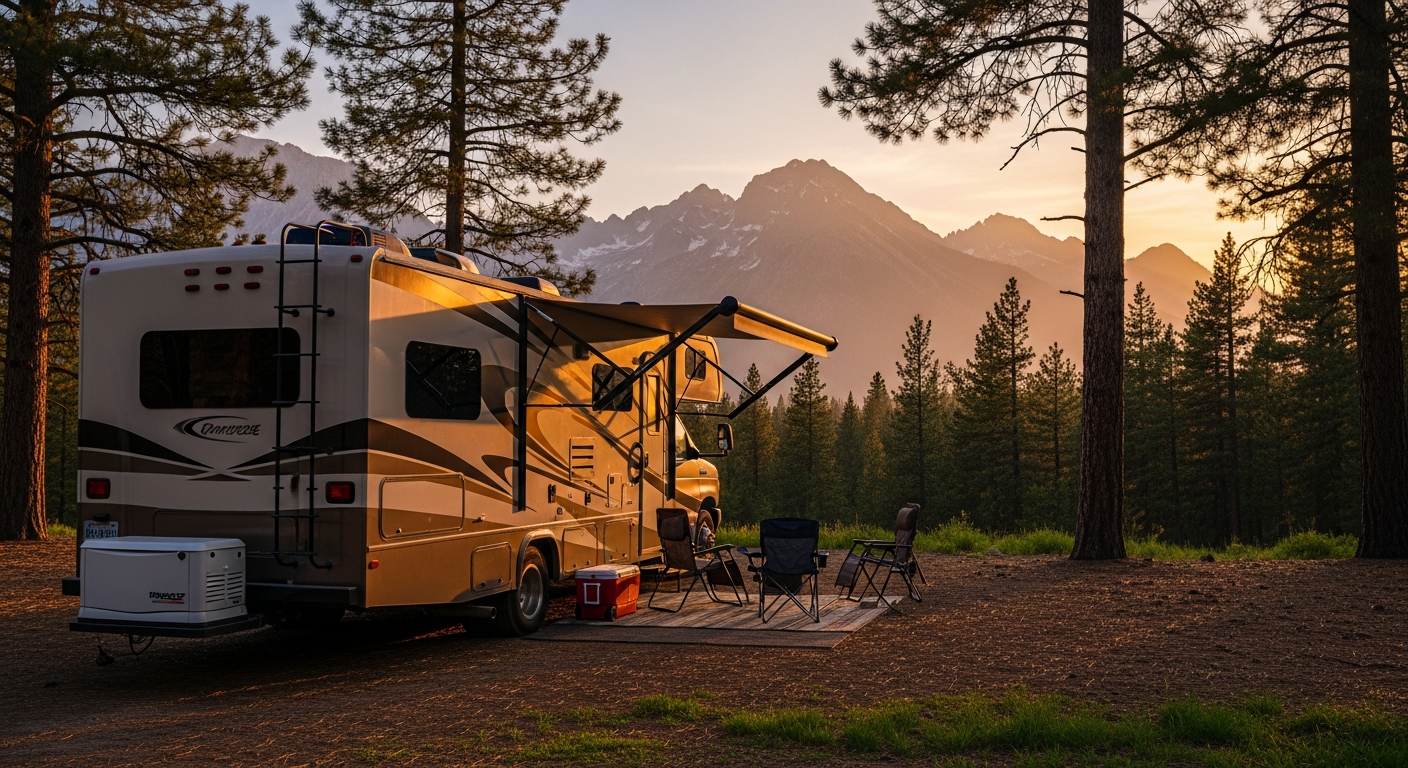
Life on the road in an RV offers freedom that few other travel styles can match. It also creates a concentrated set of gas and CO risks that most first-time RV owners underestimate significantly.
Why RVs Are High-Risk
An RV is, essentially, a small living space with multiple combustion sources operating in close proximity with limited ventilation. The combination of generator exhaust, propane appliances, and enclosed sleeping quarters creates conditions where CO can accumulate rapidly.
- Generators produce large amounts of CO and are often run while occupants sleep
- Propane stoves, ovens, and furnaces all produce CO when combustion is incomplete
- RV seals degrade over time, allowing exhaust gases to seep in
- Many RV parks don't allow running generators at night — but people do it anyway, with windows closed
The Generator Problem
Generator-related CO deaths are the single largest cause of CO fatalities in outdoor settings. The scenario is almost always the same: an occupant starts the generator for power or heat, falls asleep, and CO accumulates while they sleep. The generator may be positioned outside, but exhaust gases find every gap in the RV's construction.
- Never run a generator inside the RV, in the garage compartment, or directly under open windows
- Maintain at least 20 feet of clearance between the generator exhaust and any RV opening
- Check the wind direction — CO can flow back toward the RV even with the generator positioned away
- Have the generator serviced annually to ensure complete combustion
Propane Safety
Propane appliances — stoves, furnaces, water heaters, refrigerators — are efficient and convenient but require proper ventilation to burn cleanly. Signs that your propane appliances may not be burning properly:
- Yellow or orange flame instead of blue (indicates incomplete combustion)
- Excessive moisture or condensation on windows
- Soot or black marks around burner areas
- Unusual smell (though CO itself is odorless, incomplete combustion can produce other detectable gases)
What to Monitor
A portable 3-in-1 detector that monitors carbon monoxide, methane, and propane simultaneously is the ideal solution for RV use. CO from incomplete combustion, methane from gas line leaks, and propane from appliance or tank issues are all real risks in an RV environment — and all detectable with the right equipment.
Where to Position Your Detector
In an RV, detector placement matters:
- CO detectors should be at breathing height — about 5 feet from the floor
- Near the sleeping area is highest priority since exposure during sleep is most dangerous
- Keep one detector near the cooking area for methane and propane detection
- Avoid placing detectors directly above appliances or in areas of high airflow that could dilute readings
The AirShield detector displays live PPM readings, so you can see CO levels rising before they reach dangerous concentrations — giving you time to ventilate or evacuate rather than waiting for an alarm threshold to trigger. For guidance on what to look for in a portable unit, see Portable Carbon Monoxide Detector: What It Is, Who Needs One, and How to Choose.
Protect Your Home with AirShield™
The only portable CO detector that shows you real-time PPM readings on a live OLED display. Electrochemical sensor, multi-gas detection, UL listed.
Check Availability →
Loading comments...