When you buy a carbon monoxide detector, you're making a decision about sensor technology without usually knowing it. The package tells you it detects CO. It may show a star rating and a price. What it almost never tells you is what's actually inside the device — and that matters more than any other specification on the box. There are two sensor technologies in consumer CO detectors: electrochemical and semiconductor. They work on completely different physical principles, they have meaningfully different accuracy profiles, and they behave very differently in real-world conditions. The electrochemical carbon monoxide detector is the standard in hospitals, fire departments, and industrial safety — and yet most homes contain the cheaper alternative without their owners knowing. How Does a Carbon Monoxide Detector Work? A Clear Explanation
How Semiconductor CO Sensors Work — and Where They Fail
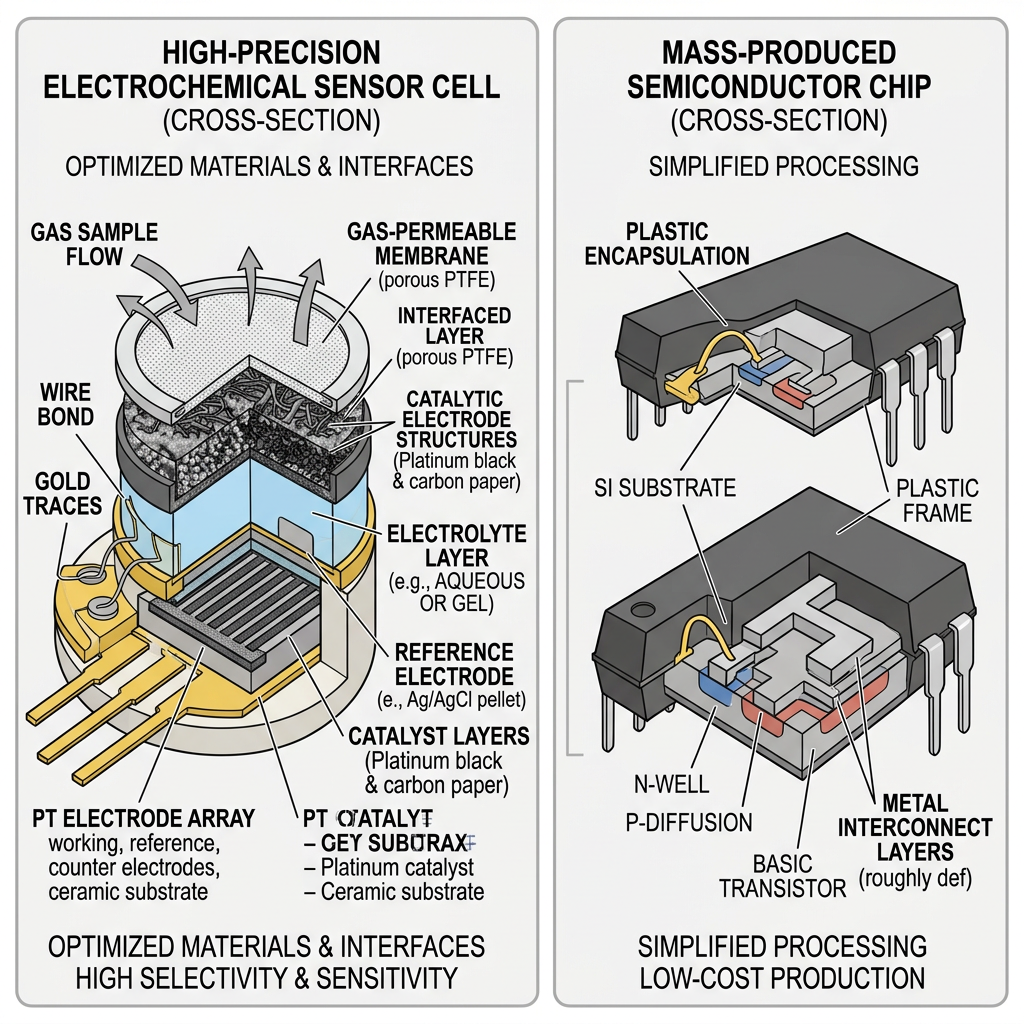
A semiconductor CO sensor (also called a metal oxide sensor or MOS) works by heating a metal oxide material — usually tin dioxide — to a high temperature using an internal heating element. When CO molecules contact the heated surface, they alter the electrical resistance of the material. The detector measures this resistance change and triggers an alarm when the change exceeds a threshold. The fundamental problem with semiconductor sensors is that CO is not the only thing that changes their resistance. Many common household chemicals — cleaning sprays, alcohol vapors, hairspray, paint fumes, cooking byproducts — also alter the resistance of a heated metal oxide surface. High humidity does too. This means a semiconductor CO detector can alarm on your kitchen cleaner, your bathroom aerosol, or a newly painted wall — and the sensor has no way to distinguish between a genuine CO event and a non-CO molecule that produces the same resistance signal. Semiconductor sensors are inexpensive, which is why they dominate the consumer market. A $25 CO alarm almost certainly contains one. Carbon Monoxide Detector False Alarm: What's Causing It and What to Do Takeaway: semiconductor sensors detect changes in electrical resistance caused by CO — but also by dozens of other household compounds, which is the root cause of most false alarms in consumer-grade detectors.
How Electrochemical CO Sensors Work
An electrochemical CO sensor operates on a different physical principle entirely. CO molecules enter the sensor through a permeable membrane and react with a platinum electrode in an acidic electrolyte solution. This oxidation reaction releases electrons, producing an electrical current. Critically, the magnitude of that current is directly proportional to the CO concentration — twice as many CO molecules produce roughly twice the current. This makes the electrochemical sensor inherently quantitative. It doesn't just detect the presence of CO; it measures how much is there, producing a signal that can be converted to an accurate parts-per-million reading. This is how a detector with a live PPM display actually shows you a number rather than an alarm state. Because the chemical reaction is specific to CO oxidation at a platinum electrode, electrochemical sensors are far less susceptible to interference from other gases than semiconductor sensors — the reaction is chemically selective in a way that heated metal oxide resistance is not. Electrochemical sensors are used in hospital air quality monitors, emergency responder equipment, industrial gas monitoring systems, and laboratory reference instruments. Carbon Monoxide Detectors That Show PPM: Why a Number Matters More Than an Alarm Takeaway: electrochemical sensors produce a current proportional to actual CO concentration, making them inherently more accurate, more selective, and capable of reporting precise PPM values rather than just an alarm threshold.
The Real-World Accuracy Gap
In controlled laboratory conditions with pure CO at known concentrations, both sensor types can perform adequately at the higher concentrations (150+ PPM) that govern most UL 2034 alarm requirements. The gap becomes significant at lower concentrations and in the presence of interfering compounds. Independent testing of consumer CO detectors has consistently shown that semiconductor sensors can significantly under-report CO at concentrations below 50 PPM — the range where early warning would be most useful — and can over-report in environments with elevated humidity or volatile organic compounds. This has practical consequences. A household where cleaning products are used regularly, or where cooking produces significant organic vapors, may experience false alarms from a semiconductor detector while a genuine low-level CO leak goes unreported because the signal is masked by the interference. For travelers — who routinely enter unfamiliar spaces with unknown appliance histories and variable air quality — an inaccurate sensor produces exactly the wrong outcome: false confidence when the reading is low and unnecessary alarm when it isn't. Hotel Carbon Monoxide: Why You Should Bring Your Own Detector Takeaway: the real-world accuracy gap between sensor types is widest at low concentrations and in imperfect environments — precisely the conditions where early warning matters most.
Questions to Ask Before You Buy
- What sensor technology does this device use? (Look for 'electrochemical' — if the product description doesn't mention sensor type, assume semiconductor)
- Does it display a live PPM reading? (Semiconductor sensors cannot reliably do this — a live display almost always means electrochemical)
- Is it UL 2034 listed? (This is the minimum safety certification for CO alarms in the U.S.)
- Is it portable? (A portable detector lets you use one device across your home, hotel rooms, vacation rentals, and vehicles)
- What is the sensor lifespan? (Electrochemical sensors typically last 5–10 years; semiconductor sensors often degrade faster under real-world conditions)
- What triggers the alarm? (Ask whether the device distinguishes CO from other gases or can trigger on cleaning products and humidity)
The sensor inside your CO detector is the only component that actually matters. Everything else — the housing, the alarm sound, the LED indicators — is packaging. Two detectors that look identical on a store shelf can have fundamentally different accuracy, different false-alarm rates, and a fundamentally different ability to tell you what's actually in your air. The AirShield™ 3-in-1 Portable Carbon Monoxide Detector uses an electrochemical sensor with a Smart M8 Chip — the same sensor category used in professional safety equipment — paired with an OLED display that shows live CO PPM continuously. UL 2034 certified. Compact enough to travel with. Visit airshield.store.
Frequently Asked Questions
Sources & References
- NIOSH: Carbon Monoxide Monitoring Guidance — NIOSH guidance on CO monitoring technologies used in occupational settings.
- CPSC: Residential CO Detector Performance Testing — CPSC data on residential CO detector standards and sensor performance.
- Underwriters Laboratories: UL 2034 Standard — UL standard governing minimum performance requirements for residential CO alarms.
Protect Your Home with AirShield™
The only portable CO detector that shows you real-time PPM readings on a live OLED display. Electrochemical sensor, multi-gas detection, UL listed.
Check Availability →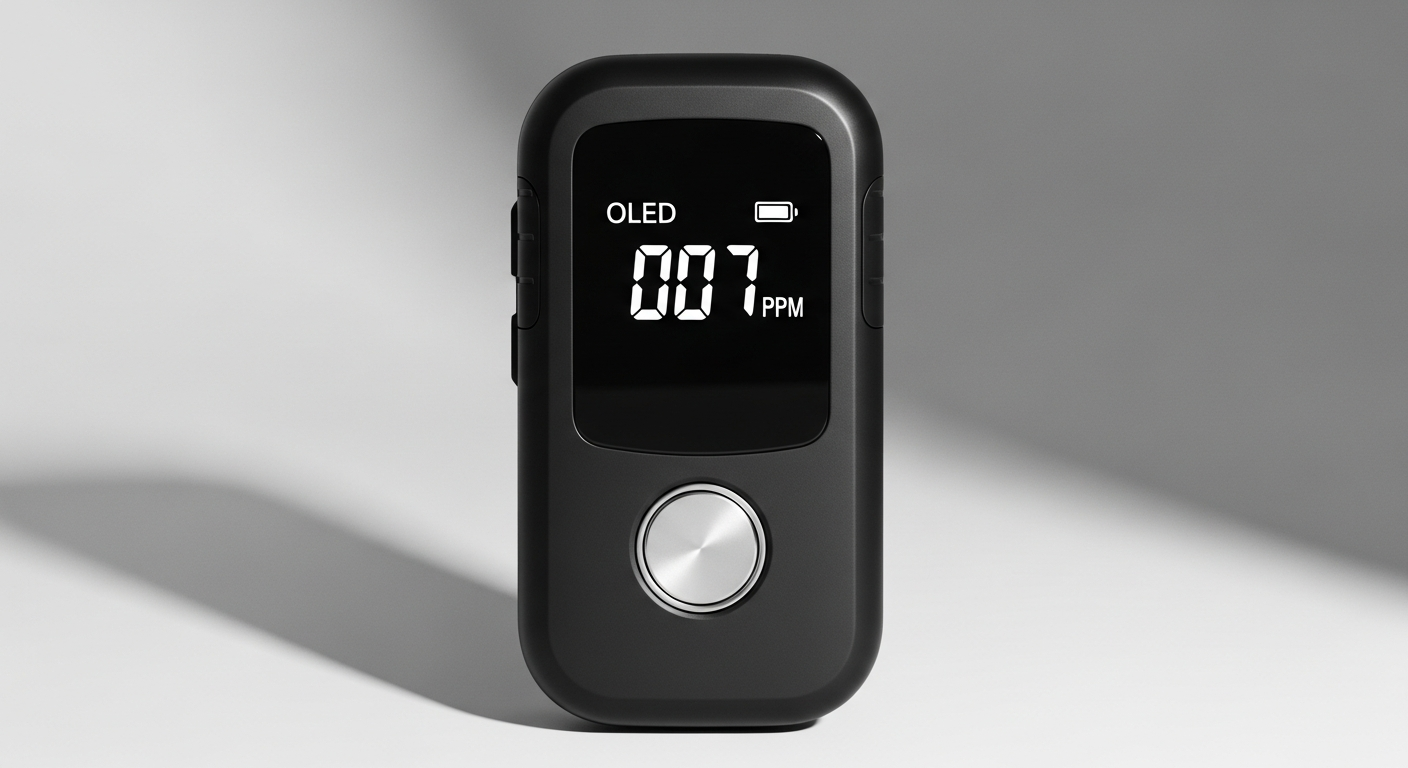
Loading comments...