A UL listed carbon monoxide detector has been independently tested to prove it actually works. One that hasn't? It might do nothing while CO fills the room. This is not a hypothetical risk. In April 2026, Consumer Reports found that Amazon's top-rated CO detector sent people to the hospital after failing to alarm. Millions of Americans owned that device and trusted it completely. This post covers exactly what UL listing means, why it matters more than price or star ratings, and how to tell if your detector is genuinely certified. Consumer Reports' 2026 investigation showed that the best-selling CO detector on Amazon — a device with thousands of five-star reviews — failed to alarm at dangerous levels and caused real hospitalizations. You'll also learn what PPM readings are, why most detectors hide that information from you, and what the safest option looks like right now. CO kills roughly 400 Americans every year, according to the CDC. Don't let a fake or faulty detector be the reason it happens to you.
What Does 'UL Listed' Actually Mean for a CO Detector?
UL stands for Underwriters Laboratories. It's an independent organization that has been testing product safety since 1894. When a CO detector is UL listed, it means UL physically tested real units from that product line and confirmed they meet the UL 2034 standard — the national benchmark for residential CO alarms. UL 2034 is not a soft guideline. It requires a detector to alarm within 189 minutes at 70 PPM of carbon monoxide, within 50 minutes at 150 PPM, and within 15 minutes at 400 PPM. According to the CDC, exposure to 150 PPM for 2–3 hours can cause headache and dizziness in healthy adults. At 400 PPM, incapacitation can happen within an hour. A detector that misses those windows isn't a safety device — it's decoration. NFPA 720, the national standard for CO alarm installation, explicitly requires devices to be listed by a nationally recognized testing laboratory like UL. The CPSC recommends only UL-listed devices for home and travel use. A CO detector without a UL mark has never been independently confirmed to alarm when carbon monoxide actually reaches a dangerous level. Non-UL devices can be manufactured to look identical to real detectors while having no working sensor inside. To verify a device: look for the UL mark (a circle with 'UL' inside) on the product or packaging, and cross-check at ul.com's Product iQ database. Takeaway: The UL mark is the only independent proof that a CO detector has been tested and confirmed to work — without it, you're guessing. Carbon Monoxide PPM Levels Explained: What's Safe, What's Dangerous
Why Did Amazon's Top CO Detector Get Pulled in 2026?
In April 2026, Consumer Reports published a damaging investigation into CO detectors sold on Amazon. Their testing found that the platform's top-rated, Amazon's Choice CO detector failed to alarm at CO levels that should have triggered it. People who owned these devices didn't know. Some were hospitalized after CO built up in their homes with no warning from their detector. Amazon subsequently removed the device from its platform. But here's the problem: millions of those detectors are still in homes right now. Owners have no easy way to know their device is one of the faulty ones. And the pattern that led to this outcome — prioritizing price and reviews over certification — hasn't changed. The issue isn't Amazon specifically. It's the way online marketplaces work. Third-party sellers can list products with official-looking packaging and impressive specifications. Star ratings reflect customer satisfaction, not lab-tested performance. A device can have 4.8 stars and zero independent safety verification. The Amazon recall proved that a CO detector can reach #1 in its category, earn thousands of five-star reviews, and still fail completely when carbon monoxide enters the room. This is what makes UL certification so important: it's the only signal that doesn't depend on customer reviews or seller claims. The CPSC actively monitors the market for CO detector safety failures and has issued multiple warnings about uncertified devices sold online in recent years. Takeaway: Star ratings and 'Amazon's Choice' labels tell you nothing about whether a CO detector actually works — only independent lab certification does. Recalled Carbon Monoxide Detectors: What Amazon Buyers Need to Know Right Now
What Is an Electrochemical Sensor and Why Does It Matter?
Most cheap CO detectors use a biomimetic sensor — a small gel pad that changes color when it absorbs CO. It's simple and inexpensive, but it's slower to respond and less accurate than the alternative. Electrochemical sensors use a chemical reaction between CO and an electrode to generate an electrical current. The stronger the current, the higher the CO level. Electrochemical sensors are what hospitals and industrial safety monitors use. They respond faster, measure CO more accurately across a wider range, and they can detect lower concentrations — which matters because long-term exposure to CO below alarm thresholds still causes harm. According to NIOSH, repeated low-level CO exposure — even below 70 PPM — can cause persistent headaches, cognitive problems, and cardiovascular stress over time. This is where a live PPM display becomes critical. Most UL 2034 detectors are designed only to alarm at defined thresholds. They show you nothing below that point. You could be breathing 50 PPM of CO for hours — not enough to trigger the alarm, but enough to make your family feel sick and confused — and a beep-only detector would never warn you. A CO detector without a live PPM readout is like a car speedometer that only shows one number: it tells you when you've crossed a line, not how close you're getting. NIOSH recommends real-time PPM monitoring for exactly this reason. Knowing your current CO level — not just whether an alarm has tripped — gives you time to act early. Takeaway: An electrochemical sensor with a live PPM display gives you faster, more accurate CO readings than basic alarm-only detectors — including at levels that won't trigger a standard alarm. The 70 PPM Standard Was Designed to Alarm Late — Here's Why That's a Problem
Does Certification Matter More When You Travel or Stay in Rentals?
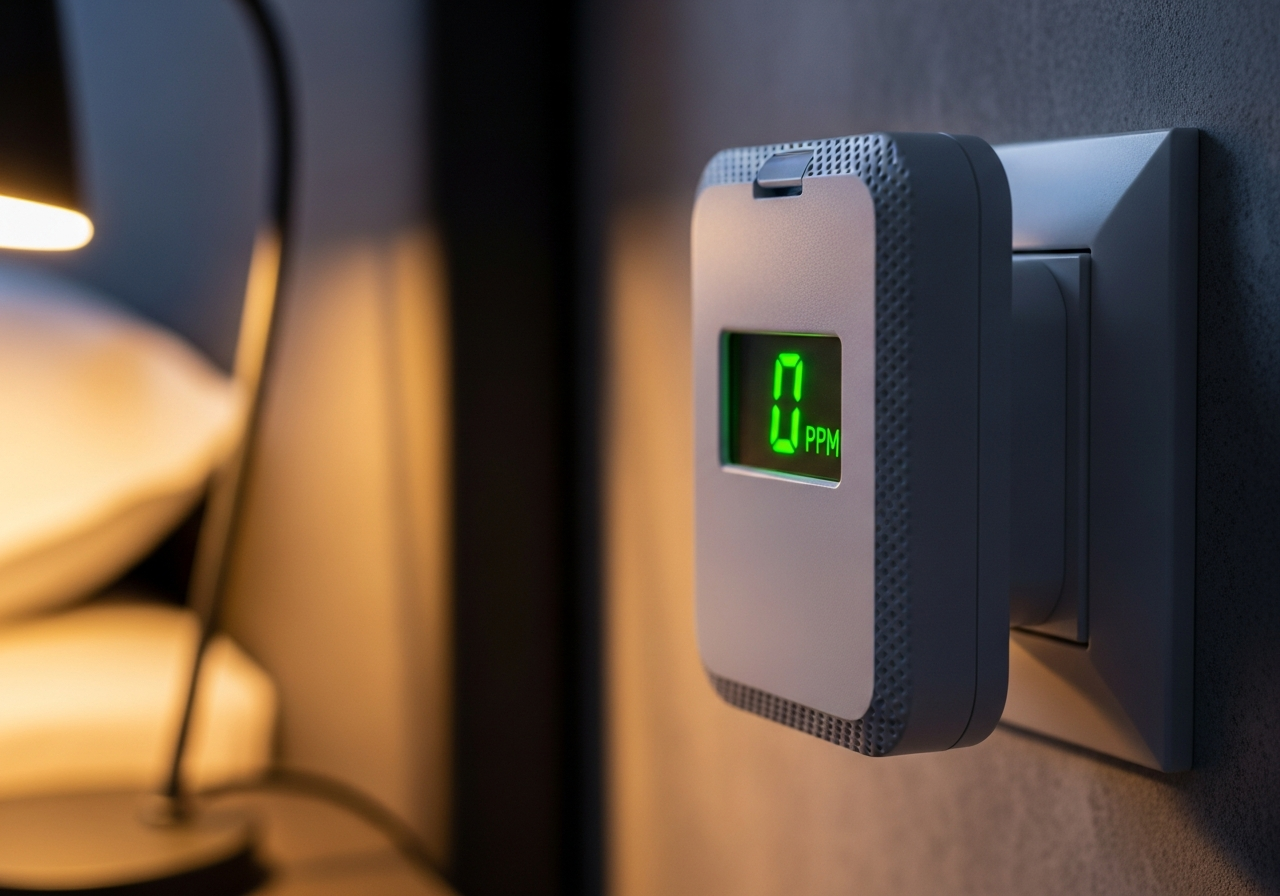
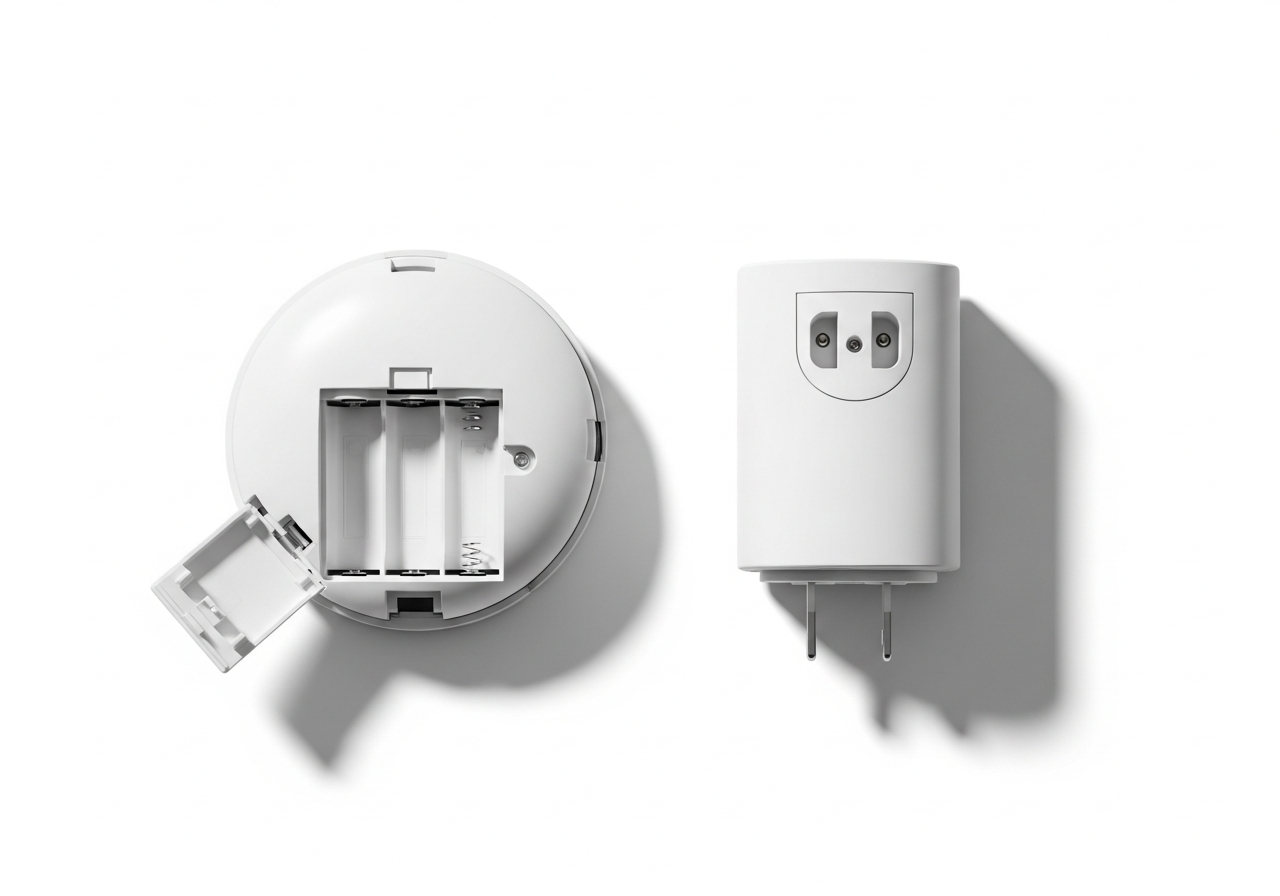
At home, you chose your CO detector. You can check whether it's UL listed, replace it when it expires, and confirm it's plugged in and working. When you stay in a hotel, Airbnb, or short-term rental — you have none of that control. According to the CDC, CO kills approximately 400 Americans per year, and a significant portion of those deaths happen away from home — in vacation rentals, hotels, and temporary lodging. Maryland passed the first-in-nation short-term rental CO law in March 2026, requiring certified CO detectors in all Airbnb-type properties. But most states haven't followed yet. And even where laws exist, enforcement is minimal. Hosts who want to comply can unknowingly install one of the uncertified devices that flooded the market before and after the Amazon recall. As a guest, you cannot inspect a CO detector on the wall and know whether it's functional. A device can look perfectly normal, have a green light, and still have a dead sensor. The only way to know the air you're breathing is safe is to bring your own certified detector. A CO alarm mounted on a rental property wall that was never UL tested offers the appearance of safety without the reality of it — and you have no way to tell the difference just by looking. This is the exact use case that portable, travel-ready CO detectors were designed for. A device that works on 100–240V plugs into any outlet in the US or abroad, giving you independent air quality data that doesn't depend on trusting a stranger's equipment. Takeaway: When you stay somewhere unfamiliar, the only CO detector you can trust is one you brought yourself — certified, tested, and verified before you left home. Carbon Monoxide in Airbnbs and Vacation Rentals: What Every Summer Traveler Needs to Know
What Should You Do Right Now?
- Find your current CO detector and look for the UL mark — a circle with 'UL' inside — on the device or its packaging. If you can't find it, your detector may not be certified.
- Go to ul.com's Product iQ database and type in your detector's model number to confirm it is genuinely UL listed — not just claimed to be.
- Check how old your detector is. According to UL and most manufacturers, CO detectors should be replaced every 5–7 years. An expired detector may show a green light and still have a dead sensor.
- If you own a CO detector you bought on Amazon in the past two years, cross-check it against the Consumer Reports April 2026 recall coverage to see if your model was flagged.
- If you travel, stay in Airbnbs, hotels, or any rental property, plan to bring a certified portable CO detector. Don't assume the host's detector is certified or functional.
- Look for a detector with a live PPM display — not just an alarm. Real-time CO readings let you act before levels hit emergency thresholds.
- Place your CO detector at sleeping level in bedrooms, not just in hallways. According to the CDC, most CO poisoning deaths happen during sleep when symptoms go unnoticed.
After everything the 2026 Amazon recall exposed — and everything the CDC, CPSC, and Consumer Reports have warned about — it's clear that the certification on your CO detector is not a technicality. It's the only proof that the device you're trusting with your family's life has been independently tested and confirmed to actually work. If you're ready to stop guessing, the AirShield™ 3-in-1 Portable Carbon Monoxide Detector is UL listed, uses a professional-grade electrochemical sensor with a patented Smart M8 Chip, and shows you live CO PPM on an OLED screen — not just a beep when things get bad. It works on 100–240V, so it's just as reliable in a hotel room abroad as it is in your bedroom at home. You can learn more and get yours at airshield.store.
Frequently Asked Questions
Sources & References
- Consumer Reports — April 2026 investigation into faulty Amazon CO detectors that led to hospitalizations and product removal
- CDC — Carbon monoxide kills approximately 400 Americans per year and sends more than 100,000 to emergency rooms
- UL (Underwriters Laboratories) — UL 2034 is the standard for single- and multiple-station CO alarms — devices must pass sensor accuracy, alarm timing, and durability tests
- CPSC — The Consumer Product Safety Commission tracks CO detector recalls and recommends only UL-listed devices for home and travel use
- NFPA — NFPA 720 requires CO alarms to be listed by a nationally recognized testing laboratory such as UL
- NIOSH — NIOSH sets occupational CO exposure limits and recommends devices with real-time PPM displays for accurate monitoring
Protect Your Home with AirShield™
The only portable CO detector that shows you real-time PPM readings on a live OLED display. Electrochemical sensor, multi-gas detection, UL listed.
Check Availability →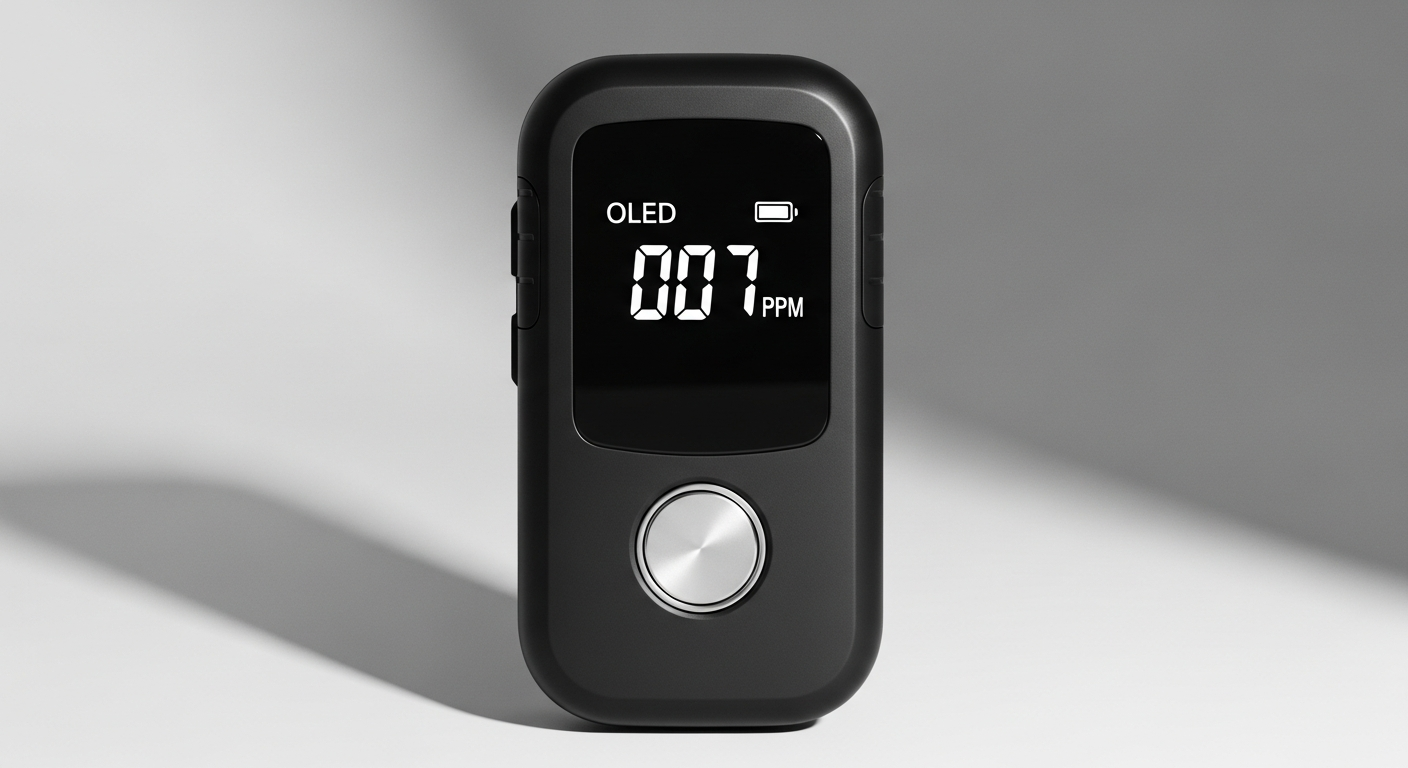
Loading comments...