A UL listed CO detector has been independently tested and proven to alarm at the right levels. One without that certification has not. That difference can determine whether your family wakes up — or doesn't. This is not a technicality. In April 2026, Consumer Reports found that Amazon's top-selling CO detector failed to alarm at dangerous CO levels. Amazon pulled the product. Millions of people are now wondering: is mine safe? This article explains exactly what UL certification means, why it matters more than price or brand name, and how to tell in 10 seconds whether your detector is actually protecting you. Carbon monoxide is colorless, odorless, and can reach a lethal concentration in your bedroom before you feel sick enough to wake up. You'll also learn what CO levels trigger a UL 2034-certified alarm, what happened with the recalled Amazon detector, and what to look for in a replacement.
What Is UL 2034 and Why Should You Care?
UL 2034 is the official U.S. safety standard for carbon monoxide alarms. UL stands for Underwriters Laboratories — an independent testing organization that has been certifying safety products for over 130 years. When a CO detector earns the UL mark, it means the device was physically tested in a lab and proven to alarm correctly at specific CO concentrations. Here's what that testing actually covers. The detector must alarm within 189 minutes at 70 PPM of CO, within 50 minutes at 150 PPM, and within 15 minutes at 400 PPM. It must also survive humidity, heat, and cold without failing. Its sensor must stay accurate over time. A device that isn't UL listed has never been put through any of these tests by an independent party. The CPSC — the U.S. Consumer Product Safety Commission — specifically recommends only CO alarms certified to UL 2034 or the Canadian CSA 6.19 standard. NFPA 720, which is the national fire protection guideline for CO alarm installation, also requires UL 2034 listing for any residential CO alarm. A detector that looks identical to a certified one can fail completely to alarm at concentrations that will kill a sleeping adult within hours. That's what Consumer Reports proved in 2026. Takeaway: If your CO detector doesn't have the UL mark on the device or package, it has never been independently verified to work.
What Happened With the Amazon CO Detector Recall in 2026?
In April 2026, Consumer Reports published an investigation that sent a jolt through the home safety world. Their testing lab evaluated multiple CO detectors sold on Amazon — including the platform's top-rated, Amazon's Choice pick. The results were alarming. Several detectors, including the best-seller, failed to sound an alarm at CO concentrations that exceeded safe exposure limits. Some gave readings that were significantly lower than actual CO levels in the test chamber. Amazon removed the top-selling detector after the report went public. But the problem didn't start in 2026. Many of these products were never UL 2034 certified to begin with. They were low-cost devices that looked like legitimate safety products, carried impressive star ratings, and sat at the top of search results — but had never been tested by an independent lab. The Consumer Reports investigation came just weeks before the summer generator season began. That timing matters. The same families who bought those detectors to protect against generator CO during summer storms were relying on devices that couldn't detect the danger. According to the CDC, CO kills approximately 400 Americans per year and sends more than 100,000 to emergency rooms. Many of those people had a CO detector in their home — it just didn't work. See our Recalled Carbon Monoxide Detectors: What Amazon Buyers Need to Know Right Now guide for a full breakdown of which devices were flagged and why. Takeaway: A high star rating and an Amazon's Choice badge are not substitutes for independent safety certification.
How Do You Know If Your CO Detector Is Actually Certified?
This is the most practical question — and it takes about 10 seconds to answer. Pick up your CO detector and look for a circle with 'UL' inside it. It should be molded into the plastic casing or printed on a label on the device. You'll also see it on the box. If you don't see it anywhere, the device is not UL listed. You can go one step further. UL runs a free searchable database called UL Product iQ at iq.ul.com. Type in the brand and model number of your detector. If it's certified, it will appear with its certification details. If it doesn't appear, it has not been certified under UL 2034. There's another factor beyond the label: sensor type. UL listed or not, the best CO detectors use an electrochemical sensor. This is the same type used in professional industrial safety equipment. Electrochemical sensors measure CO by detecting a chemical reaction, which makes them highly accurate at low concentrations. Cheaper detectors often use metal oxide sensors, which are less accurate at low PPM levels and more prone to false alarms and missed readings. NIOSH — the National Institute for Occupational Safety and Health — sets a ceiling limit of 200 PPM for CO in workplaces. At that level, evacuation is required immediately. An electrochemical sensor will reliably detect CO as it climbs toward that threshold. A metal oxide sensor in a cheap, uncertified device may not. Understanding Carbon Monoxide PPM Levels Explained: What's Safe, What's Dangerous CO concentration levels helps you see exactly why sensor accuracy at low PPM matters so much. Takeaway: Check for the UL mark on the device itself, and look for 'electrochemical sensor' in the product specifications.
Does Your CO Detector Work During a Power Outage or at a Hotel?
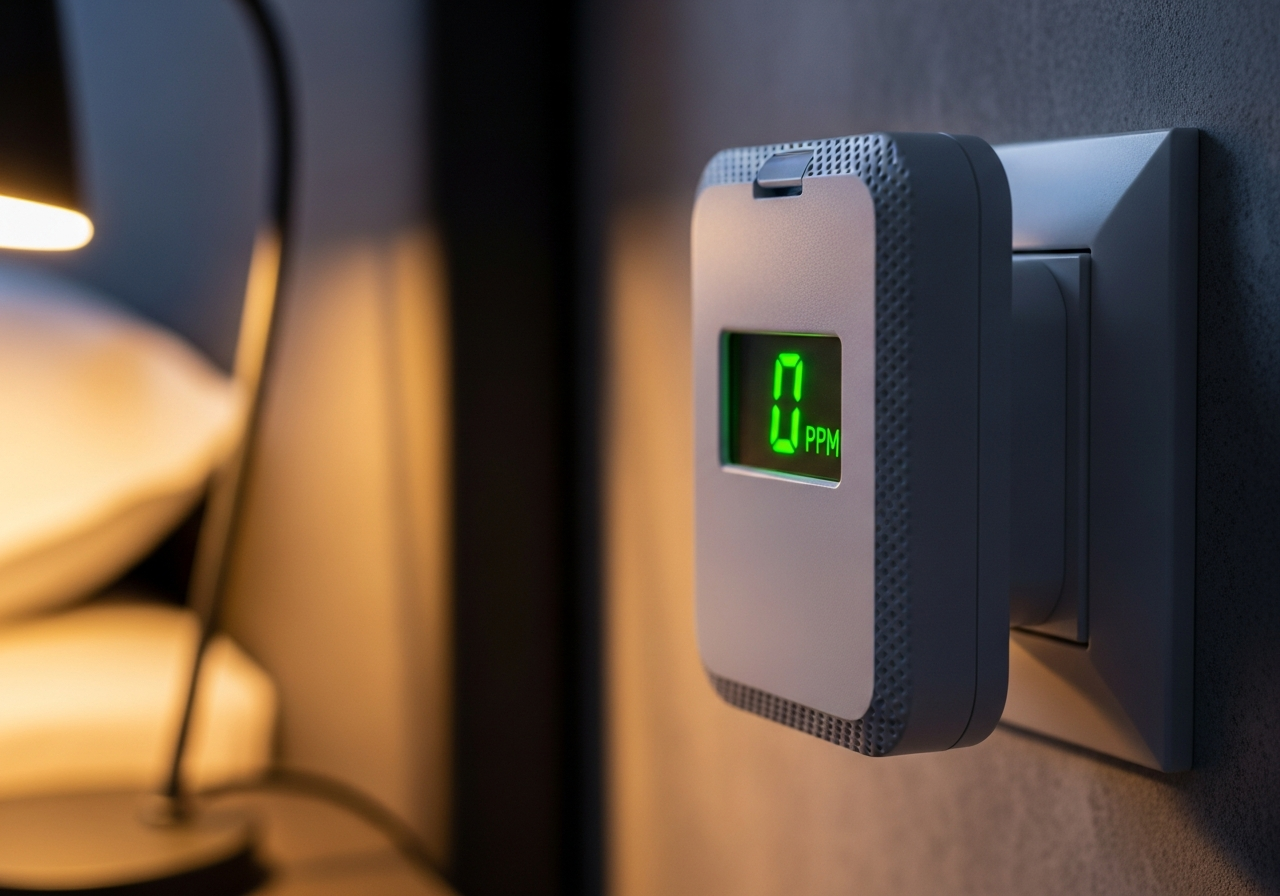
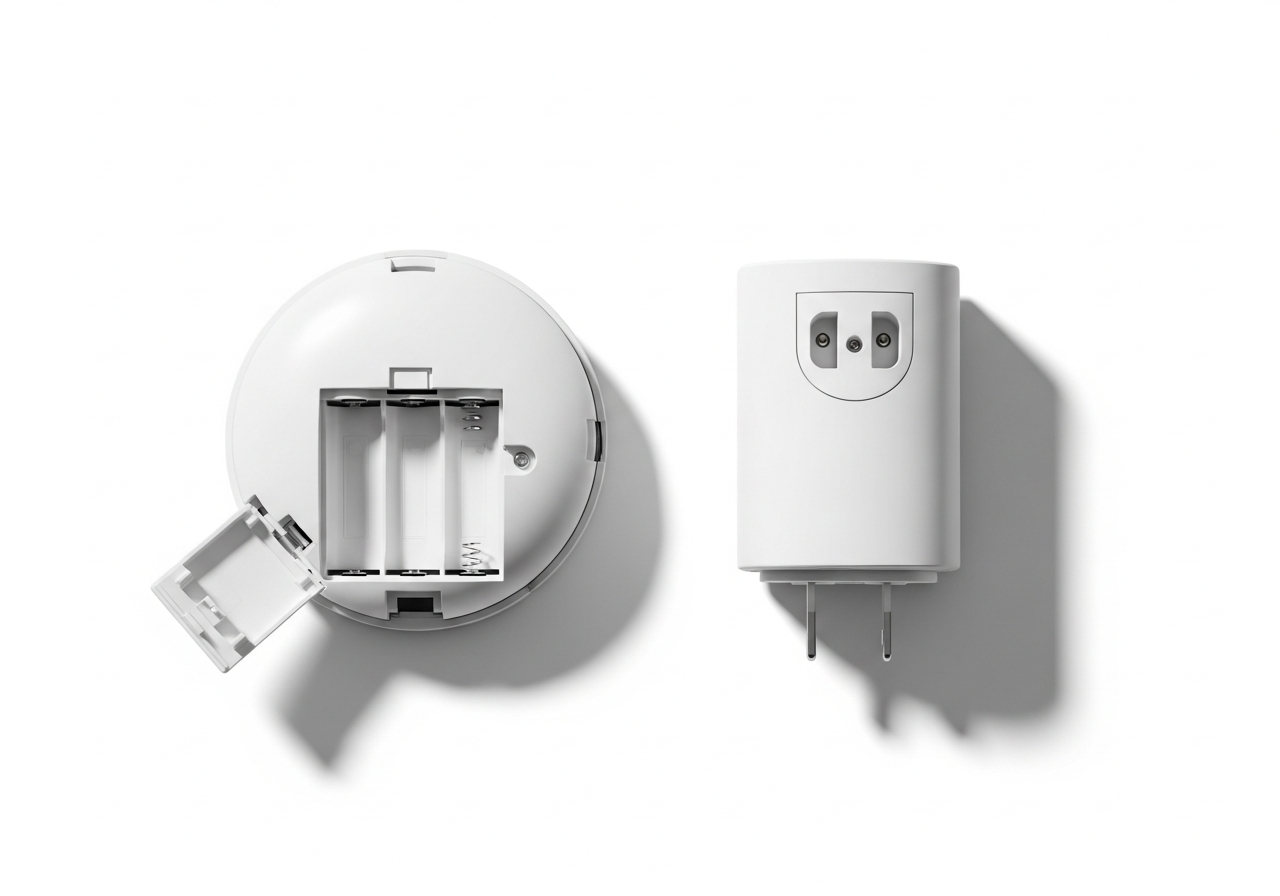
This is where most people discover a problem they didn't know they had. Plug-in CO detectors — the kind hardwired into your wall outlet — stop working the moment the power goes out. That's exactly when many families start running a generator. And generator CO is the leading cause of CO death in the U.S. during summer storm season. In June 2026, two people died in Portage, Indiana after running a generator during a power outage from summer storms. Their plug-in home detectors were useless without electricity. This is not a rare edge case — it's a pattern that repeats every summer. According to the CPSC, generators account for more than half of all non-fire CO deaths reported each year. The same gap applies to travel. If you're staying in a hotel or Airbnb, you have no control over whether the room has a working, certified CO detector. Heating and cooling systems, gas appliances, and attached garages all create CO risk in properties you're sleeping in. Most hotel rooms have no CO detector at all. If yours does, you have no way to know when it was last tested or whether it's still within its operational lifespan — most CO sensors expire after 5 to 7 years. Read more about How Long Do Carbon Monoxide Detectors Last? When to Replace Yours sensor lifespan and when to replace. A portable, UL listed CO detector that runs on any voltage solves both problems at once: it works during a power outage and travels with you everywhere. Takeaway: Your home plug-in detector goes dark in a power outage — the exact moment you may need it most.
What Should You Do Right Now?
- Pick up every CO detector in your home and look for the UL mark on the device itself — not just the box.
- Check the manufacture date on the back of the device. CO sensors typically expire after 5 to 7 years. If yours is older, replace it now.
- Search your model number at iq.ul.com to confirm it's in UL's active certification database.
- If you bought your detector on Amazon and it was a budget brand without a UL mark, stop relying on it and replace it immediately.
- If you own a generator, read the manufacturer's warning: never run it inside a garage, basement, or any enclosed space — even with the door open. Position it at least 20 feet from any window or door.
- If you travel for work, stay in Airbnbs, or sleep anywhere unfamiliar, consider a portable CO detector you can plug in wherever you are — one that works on 100–240V so it functions internationally.
- Place at least one CO detector outside every sleeping area in your home, as recommended by the NFPA and CPSC.
The Amazon recall and the Indiana generator deaths are both reminders of the same truth: a CO detector that doesn't work is worse than useless — it gives you false confidence. The certification on the device isn't a bureaucratic checkbox. It's proof that someone independent tested the sensor, ran it through temperature extremes, and confirmed it will alarm before CO reaches a level that kills. If you're looking for something you can trust at home, in a rental, at a hotel, or during a storm-driven outage, the AirShield™ 3-in-1 Portable Carbon Monoxide Detector is UL listed, uses an electrochemical sensor with a patented Smart M8 Chip, and shows you live CO PPM, temperature, and humidity on an OLED screen. It works on 100–240V, so it plugs in anywhere in the world. You can learn more and pick one up at airshield.store.
Frequently Asked Questions
Sources & References
- CDC — CO kills approximately 400 Americans per year and sends more than 100,000 to emergency rooms
- Consumer Reports — April 2026 investigation found top Amazon CO detectors gave false readings and failed to alarm at dangerous levels
- UL (Underwriters Laboratories) — UL 2034 is the standard for single- and multiple-station CO alarms; defines minimum alarm thresholds and sensor accuracy requirements
- CPSC — CPSC recommends only CO alarms that meet UL 2034 or CSA 6.19 standards for home use
- NIOSH — NIOSH ceiling limit for CO exposure is 200 PPM — above that level, immediate evacuation is required
- NFPA — NFPA 720 requires CO alarms to be listed in accordance with UL 2034 for residential installation
Protect Your Home with AirShield™
The only portable CO detector that shows you real-time PPM readings on a live OLED display. Electrochemical sensor, multi-gas detection, UL listed.
Check Availability →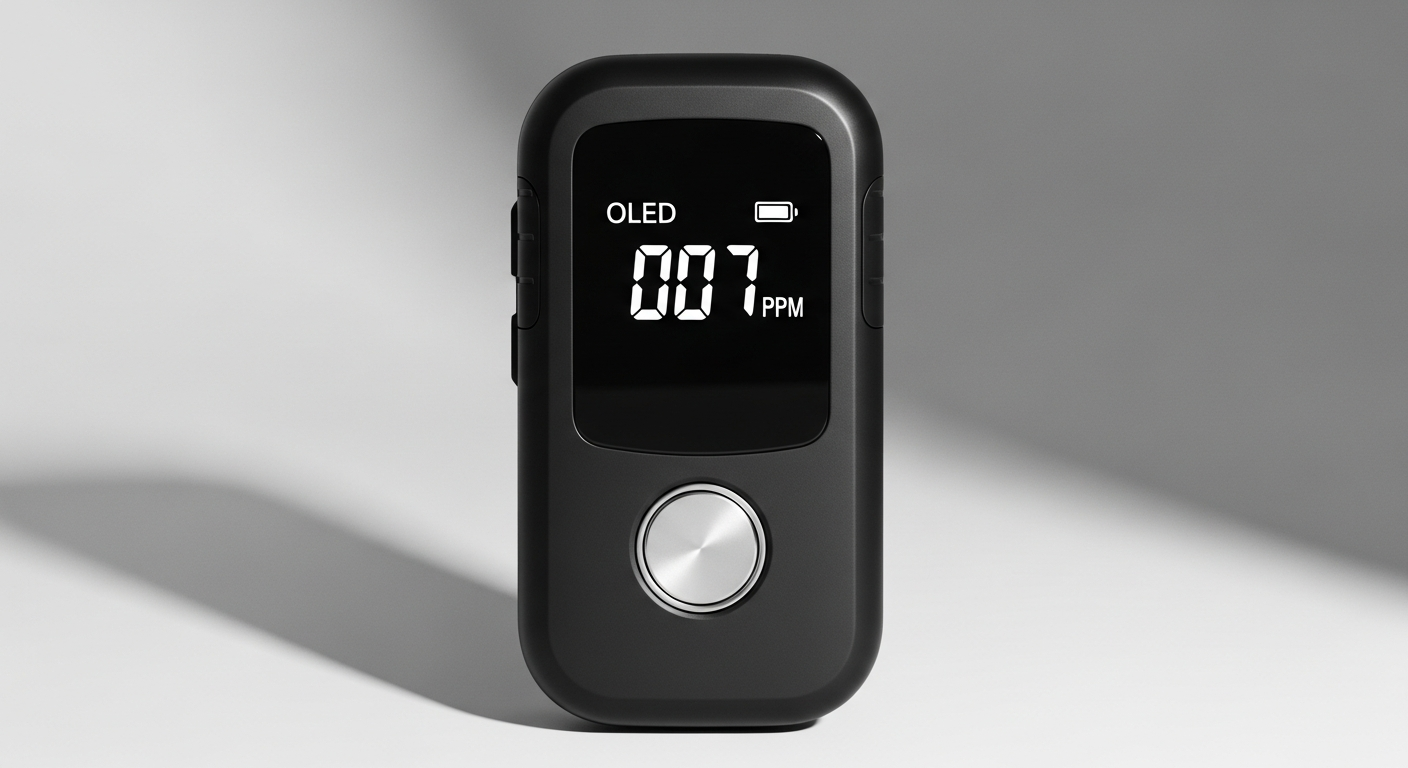
Loading comments...