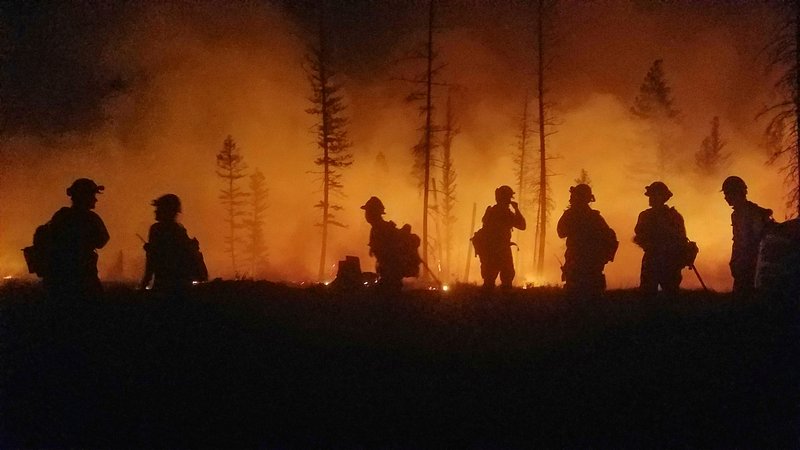
Firefighters have a different relationship with carbon monoxide than the general public. For most people, CO is an abstract danger — something that might happen, something the detector on the wall is supposed to handle. For professional first responders, CO is a documented incident type they are dispatched to regularly, in every type of building, including hotels. AirShield surveyed professional firefighters about portable CO detector use during personal travel. The question was straightforward: do you feel safer traveling with a portable CO detector than without one? 97% said yes. That number is not a surprise to anyone who works in emergency response. It is a signal to everyone else about what professionals who have seen CO incidents firsthand do differently. Carbon Monoxide Detector for Travel: Your Hotel Safety Protocol
What the Survey Asked — and What Firefighters Said
AirShield's survey of professional firefighters was designed to understand whether first responders — the people most likely to have real-world CO experience — would choose to travel with portable CO detection versus relying on whatever detection the hotel or rental property provides. Key findings: **97%** of firefighters surveyed said traveling with a portable CO detector is safer than traveling without one. **The reasoning firefighters cited most frequently:** - They had responded to at least one CO call at a hotel, motel, or vacation rental during their career - They did not trust that all accommodations maintain CO detectors correctly (dead batteries, expired sensors, absent detectors in older properties) - They knew from training that CO symptoms — headache, nausea, fatigue — are easily attributed to travel, jet lag, or food when in an unfamiliar environment - They understood that the first 4–6 hours in an unfamiliar accommodation, before any symptoms could appear, is the window when a portable detector provides the clearest safety value The firefighters who do travel with portable CO detectors cited one consistent reason: they have seen what CO does, and they do not trust a system they cannot personally verify. Takeaway: the people trained to respond to CO emergencies choose not to rely on accommodation-provided detection when they can bring their own. Carbon Monoxide in Vacation Rentals: What Travelers Must Know
Why Hotels and Rentals Are a Real CO Risk
The CDC and CPSC document CO incidents in hotels and short-term rentals on an ongoing basis. The hospitality environment creates specific CO risks that don't exist in the same way in a primary residence: **Shared HVAC infrastructure:** Hotel ventilation systems serve multiple rooms from a central unit. A malfunctioning component — a cracked heat exchanger in the basement boiler, a degraded flue seal — can distribute CO to multiple rooms simultaneously through shared ductwork. The CO source is not in your room; it's three floors below, and you have no visibility into its maintenance history. **Gas appliances you never see:** Wall-mounted gas heaters in older motel rooms, gas water heaters in attached utility closets, gas-fired pool heaters on the roof with exhaust near HVAC intakes. These are operating in a building you checked into four hours ago. You have no way to know their condition. **Detector age and maintenance:** Hotels are required to have CO detectors in most jurisdictions, but the detector in your room may be five years old with a degraded sensor, positioned on the ceiling of a hallway 30 feet from your sleeping area, or missing entirely in an older property that predates the requirement. **Parking structures below guest rooms:** Attached underground parking in hotels creates a consistent CO source beneath occupied rooms. CO from vehicles migrates upward through elevator shafts, stairwells, and construction gaps. Ground-floor and lower-floor rooms in hotels with attached parking are consistently higher-risk CO environments. A portable CO detector you bring yourself solves all four of these problems in one action. You plug it in, you see the number, and you know whether the air in your specific room is clean — regardless of what's happening with the building's own detection system. Hotel Carbon Monoxide: Why You Should Bring Your Own Detector
What Professional First Responders Carry — and Why It Matters for You
Professional firefighters carry calibrated CO meters on every emergency call. Not because CO incidents are common in every building they enter — but because CO incidents are invisible without measurement. You cannot smell CO, see CO, or feel it until the exposure has already caused physiological change. By the time symptoms appear, the exposure has been accumulating for minutes or hours. The professional protocol is to measure first and make decisions based on what the meter shows. This is not practical to do from a residential smoke alarm — it requires a device that shows a live number. The AirShield 3-in-1 Portable CO Detector brings that same live-number visibility to personal travel. Plug it in when you arrive. Look at the display. If it reads 0–5 PPM, you are in clean air. If it reads 15 PPM, you have actionable information before symptoms appear. The firefighters in AirShield's survey understand this at a professional level. The 97% who said they feel safer with a portable CO detector are not responding to abstract risk — they are applying firsthand knowledge from CO calls they have run in hotels, motels, and vacation rentals. You don't have to wait for a CO emergency to understand what they know. You can travel the way they do. Visit airshield.store.
Frequently Asked Questions
Sources & References
- CDC: Carbon Monoxide Incidents in Hotels and Other Accommodations — CDC documentation of CO incidents in temporary lodging environments.
- CPSC: Carbon Monoxide in the Home — CPSC data on CO incident locations including hotels and rental properties.
- NFPA: Carbon Monoxide in Residential Occupancies — NFPA research on CO incident patterns in residential and lodging environments.
Protect Your Home with AirShield™
The only portable CO detector that shows you real-time PPM readings on a live OLED display. Electrochemical sensor, multi-gas detection, UL listed.
Check Availability →
Loading comments...