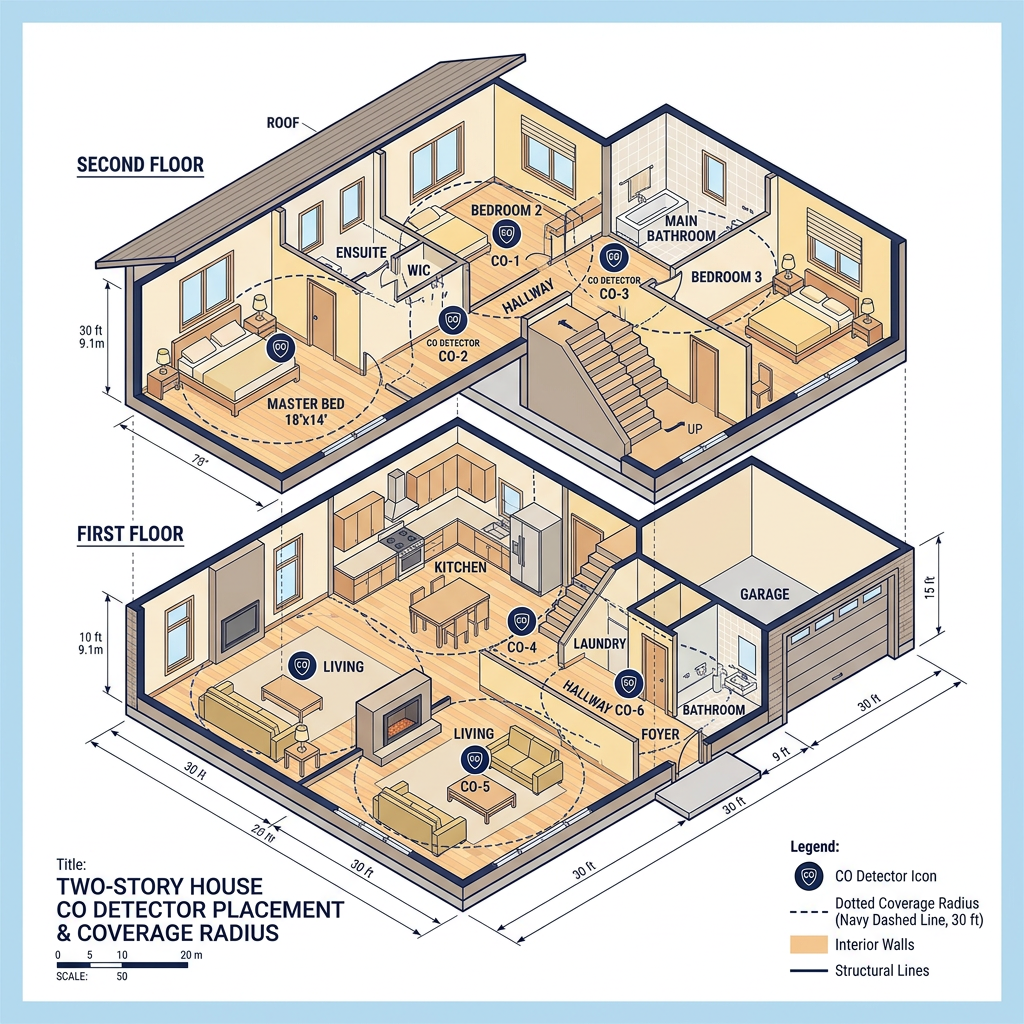
"Do I need more than one carbon monoxide detector?" is one of the most-searched questions in residential CO safety — and the answer from NFPA 720 (the national installation standard) is almost always yes: most homes need more detectors than they have. The intuition that one detector is sufficient comes from how people think about smoke detectors — one in the hallway, maybe one in the kitchen. But CO behaves differently. It doesn't stay where it's produced. A furnace leak in the basement builds CO concentration at the source and rises through the home over time. A detector placed only in a second-floor hallway may not alarm until the whole house is contaminated — too late for the people already asleep nearest the leak. The NFPA 720 minimum-per-floor requirement exists precisely because of this failure mode: a single detector, no matter how well-placed, cannot monitor all floors simultaneously. Carbon Monoxide Detector Placement: Exactly Where to Put Yours Here is the definitive answer by home size.
The NFPA 720 Minimum: By Home Type
**Studio or one-room apartment (single floor, no basement):** 1 detector minimum. Place near the sleeping area, within 10 feet of the bed if the space is open-plan. **Single-story home with basement:** 2 detectors minimum. One on the main floor outside the sleeping area; one in the basement near any fuel-burning appliances (furnace, water heater). **Two-story home, bedrooms upstairs:** 3 detectors minimum. One outside the bedroom cluster on the upper floor; one on the main floor; one in the basement. **Two-story home with bedrooms on both floors (split plan):** 4 detectors minimum. One outside the upstairs bedroom cluster; one outside the ground-floor bedroom cluster; one on the main living floor; one in the basement. **Three-story home (or home with finished basement as a living floor):** 4–5 detectors minimum. One per level, plus one outside each sleeping area cluster. The formula is: one CO detector per occupied floor, plus one outside every distinct sleeping area. These requirements stack — if you have two floors and two sleeping areas on different floors, you need at minimum two detectors regardless of overlap. Takeaway: most households need 3–4 detectors, not 1–2. Carbon Monoxide Detectors for Apartments: What Every Renter Needs to Know
Why Single-Detector Failures Happen
The documented pattern in CO poisoning fatalities that involve a detector on-premises is consistent: the detector was present, but it was not in the right location to catch the leak before occupants were incapacitated. The most common failure mode: CO produced in a basement by a malfunctioning furnace or water heater reaches fatal concentrations in the basement and on the main floor before the single upstairs hallway detector alarms. By the time the upstairs detector sounds, the person closest to the source — often sleeping in a room with a door left open — has already received a significant exposure dose. The second most common failure mode: a detector placed incorrectly (inside a garage, inside a bedroom with the door closed, near a window, or far from sleeping areas) simply never detects the leak within the alarm-threshold window. A 2019 CPSC fatality analysis of CO poisoning deaths in homes that had CO detectors found that incorrect placement — including having only one detector in the wrong location — was the most frequently cited contributing factor. NFPA 720's per-floor, per-sleeping-area requirements are calibrated to address both of these failure modes simultaneously: a detector on each floor catches building concentration at the source level, and a detector outside each sleeping area ensures sleeping occupants hear the alarm before reaching dangerous exposure. How Long Do Carbon Monoxide Detectors Last? When to Replace Yours
Inside Bedrooms: The Question NFPA Doesn't Fully Answer
NFPA 720 requires detectors *outside* sleeping areas, which in practice means within 10 feet of the bedroom door in the hallway. This works in an open-floor-plan home where the hallway detector's alarm is clearly audible from every bedroom. It may not work in these situations: - Bedrooms with solid-core doors that significantly muffle sound - Deep sleep or sleep-medication users who may not wake to a hallway alarm - Homes with elderly occupants who have hearing loss - Very large homes where the hallway detector is more than 30 feet from the farthest sleeping area For these households, the safer approach is one detector per bedroom, in addition to the hallway requirement. Several states have adopted this as a code requirement: California's Health and Safety Code now requires CO detectors in each bedroom in addition to hallway placement. Takeaway: NFPA minimum = outside sleeping areas + per floor; best practice for deep sleepers, hearing-impaired occupants, or solid-door bedrooms = inside each bedroom as well.
Basements: The Most Underprotected Location
More documented CO poisoning fatalities begin in basements than in any other room in the home. The reason: basements house the highest density of fuel-burning appliances — furnaces, boilers, hot water heaters, and in many older homes, gas dryers. These appliances run for extended periods unattended, often at night when occupants are sleeping. Despite this, basements are the location where CO detector coverage is most frequently absent. Homeowners either don't think to place a detector there, or assume the main-floor detector will catch a basement leak before it becomes dangerous. A CO detector placed in the basement, near the furnace or boiler, is the single highest-ROI location for a new detector in most homes — because it catches a leak at the source before it reaches the sleeping areas above. If you currently have one CO detector in your home and it is on the main floor or in a bedroom hallway: the next detector you buy should go in the basement, ideally within 5–10 feet of your furnace. After that: one per additional floor. The AirShield 3-in-1's portable plug-in design works well for basements — plug it into the nearest outlet near the furnace, and the OLED display shows the live PPM reading whenever you pass by. Visible sub-alarm levels (10–35 PPM) alert you to a developing problem before it escalates. Visit airshield.store.
Frequently Asked Questions
Sources & References
- NFPA 720: Standard for the Installation of CO Detection and Warning Equipment (2024 ed.) — The authoritative US standard on how many CO detectors are required and where to place them.
- CDC: Carbon Monoxide Poisoning Prevention — CDC guidance on CO prevention including detector placement recommendations.
- UL 2034: Single and Multiple Station CO Alarms — UL certification standard for CO alarms sold in the United States.
- CPSC: Carbon Monoxide Questions and Answers — CPSC guidance on CO detector placement and the number of units required per home.
Protect Your Home with AirShield™
The only portable CO detector that shows you real-time PPM readings on a live OLED display. Electrochemical sensor, multi-gas detection, UL listed.
Check Availability →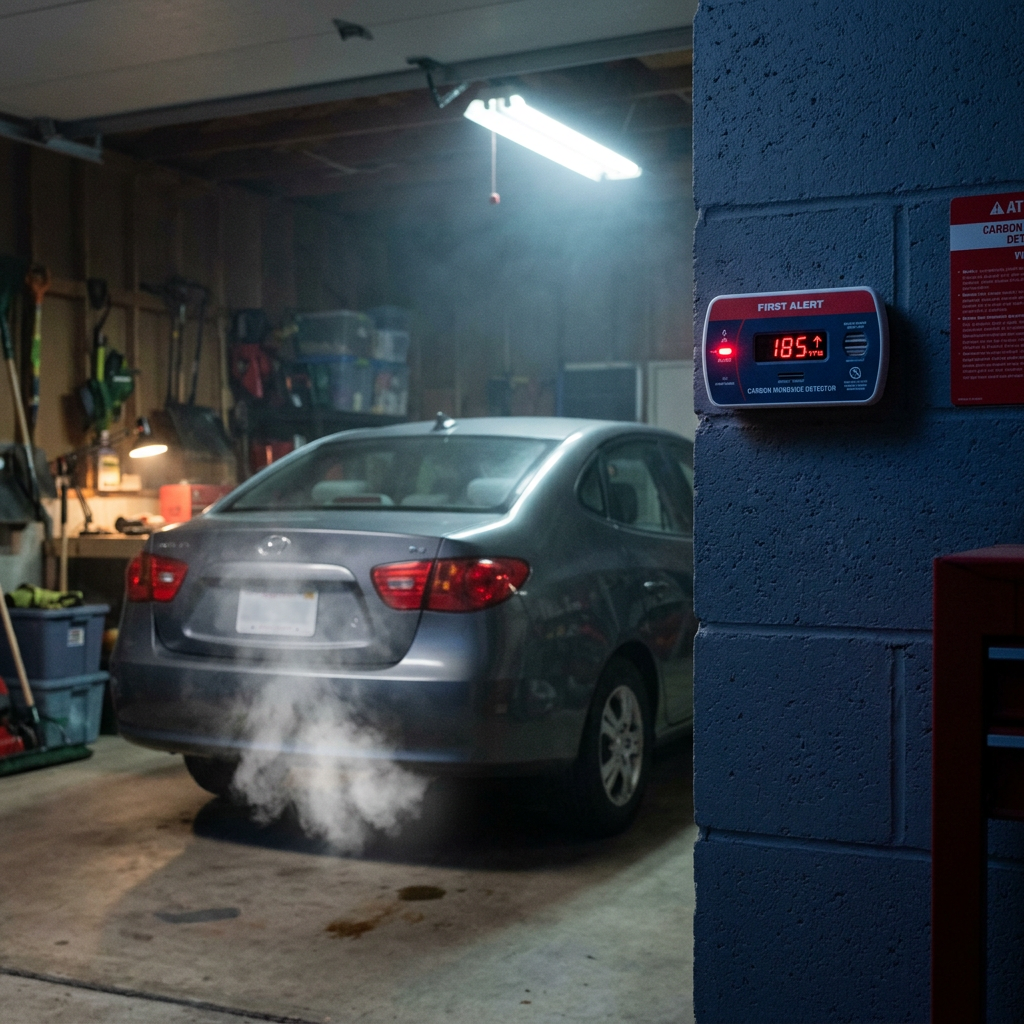
Loading comments...