On July 9, 2026, the U.S. Consumer Product Safety Commission issued an emergency stop-use warning for JNHCD Combination Smoke and Carbon Monoxide Detectors sold through Amazon, eBay, and Sears. The reason: these carbon monoxide detectors can fail to alert consumers to hazardous smoke and fire — silently, with no indication that they have stopped working. A separate Treatlife CO detector recall was issued in June for an identical failure mode. Both products appeared in Amazon search results for "carbon monoxide detector." If you have purchased a CO detector online in the past year, read this before assuming you are protected. Portable Carbon Monoxide Detector: What It Is, Who Needs One, and How to Choose
The JNHCD Warning: Stop Using These Detectors Immediately
CPSC Warning #26-614, issued July 9, 2026, is unambiguous: stop using JNHCD Combination Smoke and CO Detectors immediately. The products are described as white plastic combination detectors with a digital display, sold by a Chinese vendor across 14 documented Amazon ASINs. The CPSC reports the vendor has been unresponsive to requests for a voluntary recall — which is why this was issued as a warning rather than a coordinated recall with a refund mechanism. The failure mode is the type that makes it undetectable by the user: the detector appears functional, the display may illuminate, and the device may respond normally when the test button is pressed — but it will not alert to actual smoke or CO at concentrations that should trigger an alarm. A CO detector that looks installed and operational but does not alarm is not providing protection — it is providing the appearance of protection, which may be more dangerous than having no detector at all, because it eliminates the motivation to install a working one. If you own a detector matching any of the 14 ASINs listed in the CPSC warning, the instruction is clear: dispose of it and install a certified replacement immediately. Carbon Monoxide Poisoning Symptoms: Signs & What to Do Takeaway: The JNHCD detectors may appear functional but fail silently — households that believe they are protected may have no actual CO or smoke detection in place.
The Treatlife Recall: Check the Bottom of Your Detector Right Now
The Treatlife recall, issued June 2026, covers a separate product: a circular white battery-operated combination smoke and CO detector sold exclusively on Amazon from November 2025 through April 2026 for approximately $40. The failure mode is the same category: the device may fail to alert consumers to a fire. To check if you own an affected unit, flip the detector over. Look for FCC ID "2ANDL-XR3" and manufacture date "2023.DEC.02" printed on the bottom of the casing. If your detector matches, contact Treatlife at support@treatlife.tech or visit treatlife.tech/pages/recalls for a full refund. Unlike the JNHCD warning, the CPSC guidance on Treatlife is nuanced: continue using the recalled detector until you have purchased and installed a replacement, because some CO detection is better than none. Then write "recalled" on the unit, remove the batteries, and dispose of it in household garbage. The Treatlife recall demonstrates what a responsible product response looks like — a refund mechanism, a vendor that cooperated with CPSC, clear replacement instructions — but it still leaves households with no CO protection during any gap between detector removal and replacement installation. Carbon Monoxide Detector Placement: Exactly Where to Put Yours Takeaway: The Treatlife recall has a clear resolution path — check the FCC ID on the bottom, claim the refund, and do not remove the recalled unit until a certified replacement is installed and tested.
How Dangerous Uncertified Detectors Keep Ending Up on Amazon
The JNHCD and Treatlife actions are not isolated incidents. Earlier in 2026, Consumer Reports flagged the Hembisen KH-158 after reports of hospitalizations linked to the device's failure to alarm at dangerous CO levels. The pattern across all three is consistent: a low-cost combination detector manufactured in China, sold through Amazon's third-party marketplace, with no independent certification, that fails silently and causes harm before the CPSC can respond. Amazon's marketplace model allows any seller to list products without pre-sale verification of safety certification. The CPSC conducts post-market surveillance and acts only after harmful products are already in homes. That time lag — from sale to incident to CPSC action — can span months or years, during which thousands of households believe they have protection they do not. The specific certification to look for is the UL mark — a physical symbol on the detector casing, not just mentioned in the product listing. UL 2034 governs how quickly a residential CO alarm must respond at given concentrations. A detector that is genuinely UL-listed has been independently tested by UL Solutions on production units. A UL listing means a testing laboratory physically verified that the production unit alarms within the required time windows at required CO concentrations — not that the seller claimed in a product description that it would. Takeaway: Uncertified detectors on online marketplaces pass no pre-sale safety testing — only the UL or ETL mark on the physical casing confirms that an independent laboratory verified its performance.
How to Tell a Safe CO Detector From a Dangerous One Before You Buy
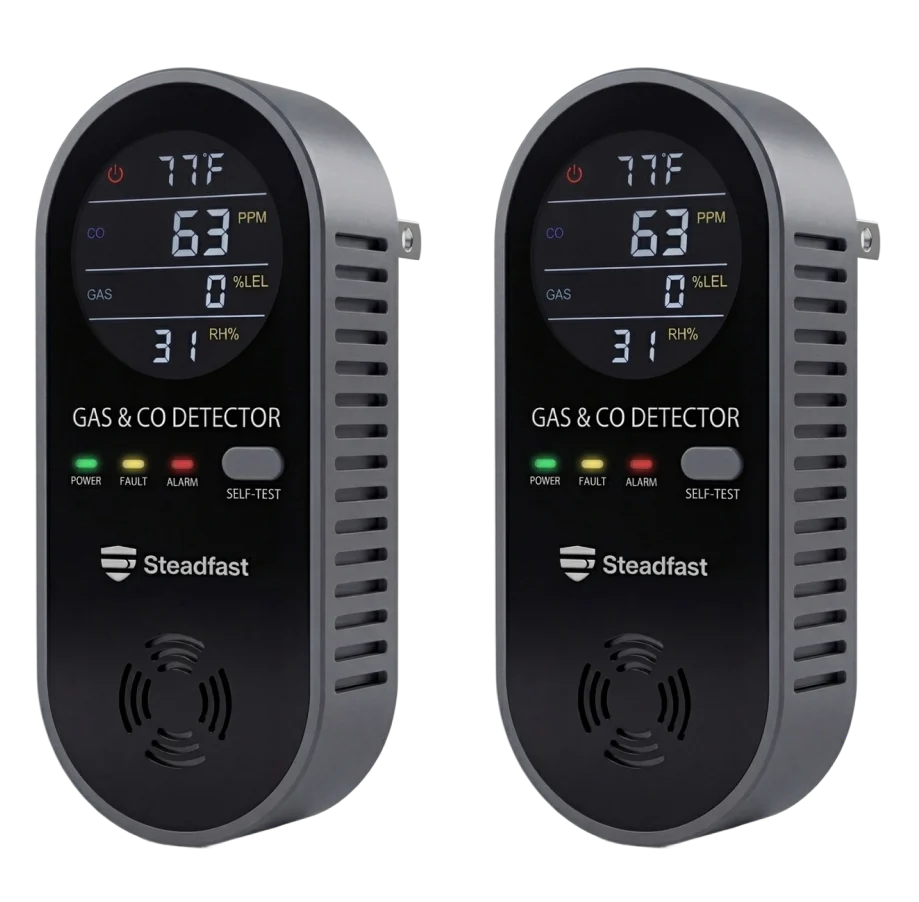
Shopping for a CO detector online requires more scrutiny than buying one from a hardware store, because the third-party marketplace is where uncertified products concentrate. Here is what to check before purchasing. **The brand.** Established CO detector brands — Kidde, First Alert — have decades of U.S. product liability exposure and recall infrastructure. They do not ship uncertified product into the U.S. market. For less familiar brands, the certification mark is the only reliable proxy for safety. **The seller.** A product sold and fulfilled directly by Amazon is more reliable than one sold by a third-party seller with a generic name and no physical address. Third-party sellers on Amazon have no product certification obligation. **The mark.** Look in listing photos for a legible UL mark on the device body — not on the box, not in the title, not in the bullet points. The certification belongs to the physical production unit. **The display.** A detector that shows only "CO" in red when the alarm trips tells you nothing about what was happening in the hours before. A unit with a live PPM display shows 10, 20, 30 PPM in real time — sub-alarm readings that an alarm-only unit can never communicate, giving you early warning before concentrations reach dangerous levels. How Long Do Carbon Monoxide Detectors Last? When to Replace Yours Takeaway: For online CO detector purchases, verify brand reputation, seller identity, UL or ETL mark on the physical casing, and whether the unit shows live PPM readings — not just an alarm threshold.
What to Do Right Now If You Own a Recalled or Unverified Detector
- Check your Amazon order history for JNHCD detectors by cross-referencing the 14 ASIN codes in CPSC Warning #26-614 — if matched, stop using it immediately
- Flip over any circular combination smoke/CO detector purchased on Amazon from November 2025 through April 2026 and look for FCC ID '2ANDL-XR3' (Treatlife recall)
- Do not remove a recalled detector until a replacement is installed and confirmed working — even a recalled unit provides some protection during the gap
- Replace with a UL 2034-listed detector and verify the UL mark is physically on the device casing, not just in the product description or packaging
- Check every CO detector in your home — not just recently purchased ones; CPSC has flagged multiple uncertified brands in the past six months alone
- Register your new detector with the manufacturer so you receive recall notifications automatically in the future
- Test every CO detector in your home monthly using the test button and replace units older than 7 years per manufacturer guidance
Two CPSC actions in two months is a clear signal: the online market for CO detectors has a genuine certification problem, and the consequence of buying the wrong unit is not a failed appliance — it is a detector that looks like protection and provides none. The AirShield™ 3-in-1 Portable CO Detector is UL listed and shows the live CO PPM level on an OLED display, so you can see sub-alarm concentrations — 10, 20, 30 PPM — that a threshold-only alarm will never communicate. It is the one CO detector where you know exactly what it is reading, not just whether it is alarming. Visit airshield.store.
Frequently Asked Questions
Sources & References
- CPSC: Stop Using JNHCD Combination Smoke and CO Detectors (Warning #26-614) — Official CPSC stop-use warning for JNHCD detectors, July 9, 2026.
- CPSC: Treatlife Smoke and CO Detector Recall — Official CPSC recall notice for Treatlife detectors sold on Amazon, June 2026.
- UL Solutions: UL 2034 Standard for Carbon Monoxide Alarms — UL 2034 performance standard for residential CO detectors.
- CPSC: Carbon Monoxide Information Center — CPSC hub for CO safety information and product guidance.
Protect Your Home with AirShield™
The only portable CO detector that shows you real-time PPM readings on a live OLED display. Electrochemical sensor, multi-gas detection, UL listed.
Check Availability →
Loading comments...