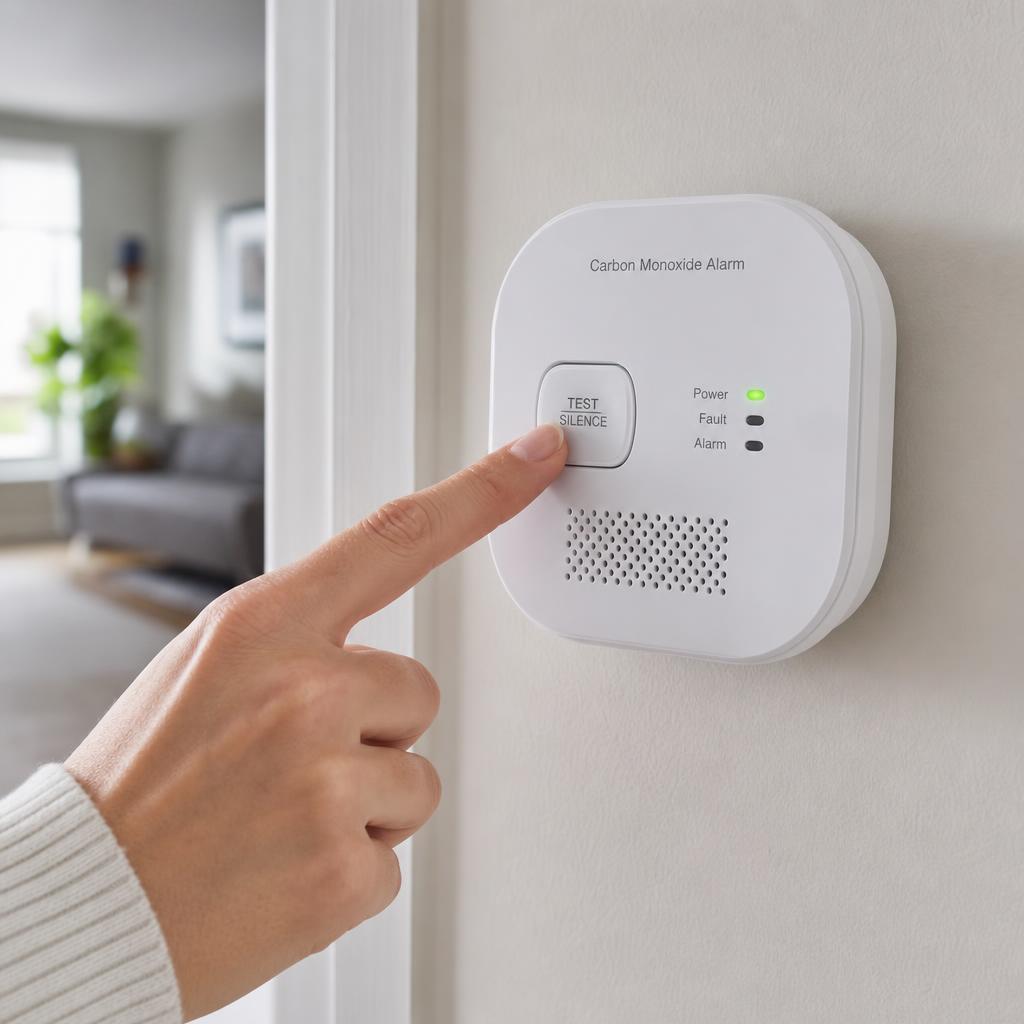
The Test Button Lie (and Why Almost Everyone Believes It)
Every CO detector comes with an instruction to test it monthly by pressing the test button. The button triggers an alarm, the alarm sounds, and most people conclude their detector is working. This conclusion is wrong in a specific and important way. The test button applies a simulated signal to the alarm circuit — it tells the electronics to sound the horn. It does not expose the electrochemical sensor cell to CO gas. A detector with a completely dead sensor, one that would never respond to real carbon monoxide at any concentration, still passes the button test. The button test tells you the speaker works. That is all. This is not an obscure technical nuance. CO sensor cells are consumable electrochemical components that degrade over 5-7 years regardless of whether they have ever encountered CO. As the cell degrades, its sensitivity falls. In early degradation, it may only detect CO at dangerously high concentrations. In late degradation, it may not respond at all — while the button test still sounds perfectly.
How to Actually Test the CO Sensor
A proper sensor test requires exposing the electrochemical cell to carbon monoxide gas and confirming it responds. There are two practical options for homeowners. The first is a CO test spray — a pressurized canister that releases a measured concentration of CO gas at the sensor opening. Hold the nozzle 1-2 inches from the sensor port and apply a short burst. If the sensor is functional, the detector should alarm within 60 seconds. CO test sprays are available from safety supply stores and some detector manufacturers. Check your detector manufacturer's documentation for any model-specific testing product recommendation. The second, simpler option applies only to detectors with a live digital display: monitor the PPM reading in clean air. A functional sensor reads 0 PPM when there is no CO present. If the display never updates, always shows a suspicious fixed number, or reads 0 even near a deliberate CO source (like exhaust from a gas-powered engine 20 feet away, outdoors), the sensor may have failed silently. A live-reading detector like AirShield effectively self-tests continuously: any time you glance at the display and see a current PPM reading, you know the sensor is actively sampling the air. This is fundamentally different from threshold-only detectors that give you no signal until CO reaches alarm level.
How Often to Test — and When to Replace Instead
NFPA 720 recommends monthly testing. The button test takes about 10 seconds. A sensor spray test once a year or whenever you have doubts about the detector age or function is good practice. More importantly: testing is not a substitute for replacement. CO sensor cells have a finite service life. Most electrochemical cells are rated for 5-7 years from the manufacture date (not purchase date — the manufacture date is on the back label). After that period, testing whether the sensor still works misses the point. A degraded sensor may pass a casual test while failing to detect the sub-alarm-level CO exposures (10-70 PPM) that cause chronic symptoms without ever triggering an alert. Replace on schedule. Set a calendar reminder on the manufacture date. If you cannot find the manufacture date, treat any detector older than 5 years as expired. The cost difference between a test spray and a new detector is small compared to the cost of a sensor that fails at the moment it should have alarmed.
Why a Live PPM Display Changes the Testing Calculus
A CO detector with only an alarm threshold gives you one bit of information: CO is above the threshold, or it is not. To know whether the sensor works, you have to run an external test. A CO detector with a live digital PPM display gives you continuous sensor output. Every time you see a reading — even 0 — the sensor has reported a value. Anomalies are visible: a reading that jumps for no reason, or one that never changes at all when you carry the detector outside versus inside, or one that shows 0 even when you walk it past a running generator (safely, at distance) — these are observable signals that something may be wrong. AirShield updates its display every 5 seconds with the current CO reading from the electrochemical sensor. At 0 PPM in clean air, you know the sensor is active. At 12 PPM, you know you have a source to investigate. The threshold alarm is a backup, not the primary interface. Visit [airshield.store](https://airshield.store) to see the full specification.
Frequently Asked Questions
Sources & References
- NFPA 720: Standard for the Installation of Carbon Monoxide Detection and Warning Equipment — Monthly testing recommendation and sensor replacement guidance
- CPSC: Carbon Monoxide Detector Testing Guidance — Consumer product safety guidance on CO detector function and limits
Protect Your Home with AirShield™
The only portable CO detector that shows you real-time PPM readings on a live OLED display. Electrochemical sensor, multi-gas detection, UL listed.
Check Availability →
Loading comments...