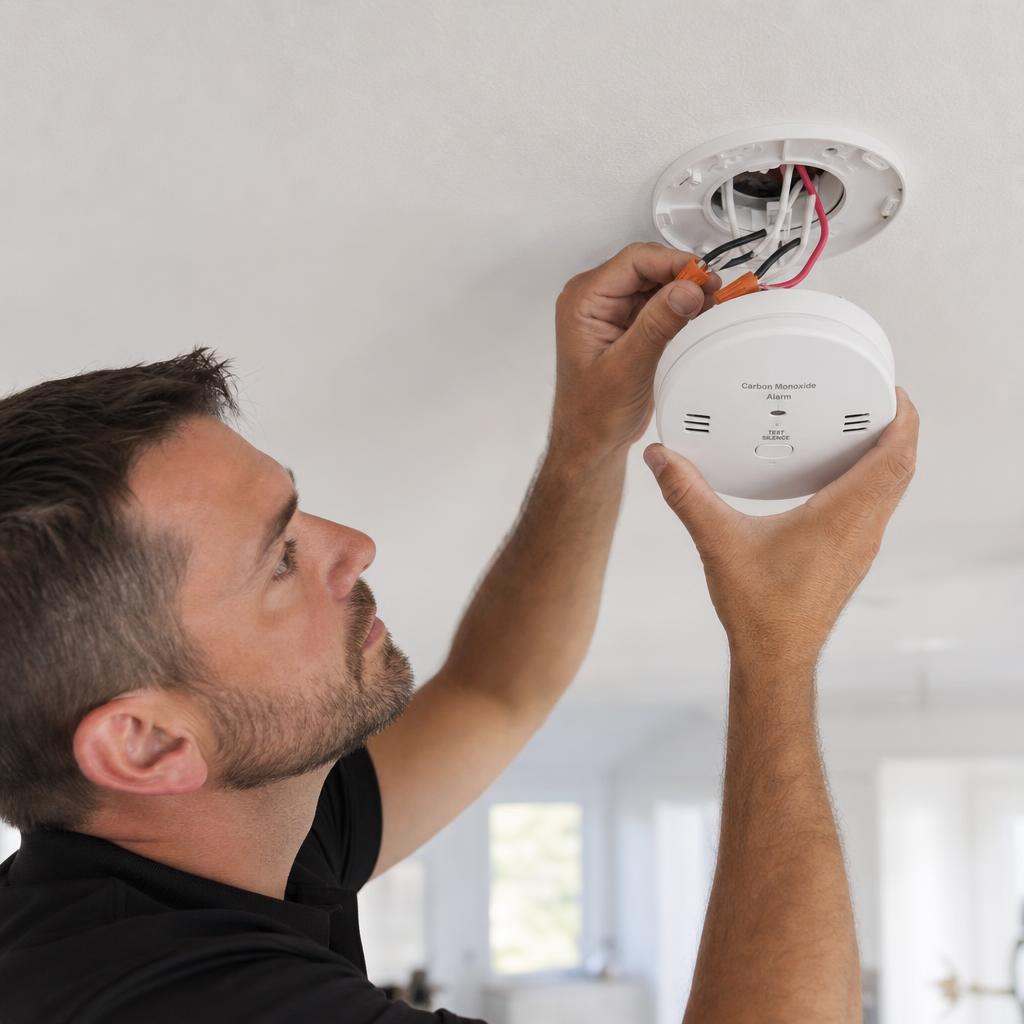
The Three Power Sources — and What Actually Differs Between Them
A CO detector's safety performance comes from two components: the electrochemical sensor cell that detects CO molecules, and the alarm circuit that sounds when concentration exceeds threshold. Both components are standardized across all power sources — UL 2034 specifies that all listed detectors must alarm within defined timing windows at specified CO concentrations, regardless of whether they are hardwired, battery-operated, or plug-in. Where power sources differ: Hardwired: Connected to the home's electrical system with a dedicated circuit. Most include battery backup for power outages. Allows interconnection through shared wiring — when one unit alarms, all units on the interconnect circuit alarm. Cannot be unplugged or run down. Requires electrician for installation. Battery-operated: No installation required, works anywhere. Only viable option in locations without nearby outlets. Critical failure mode: dead batteries silence the detector without warning. Some newer models include low-battery chirps; all require regular battery replacement. Some support wireless interconnection. Plug-in: Draws continuous power from a standard outlet. No battery replacement required. Cannot fail from dead batteries. Limited to outlet locations. Typically the most practical choice for adding supplemental detectors to an existing home. Some models support USB power for portable use.
When Hardwired Is Required By Code
Most U.S. state building codes that require CO detectors in new residential construction specify hardwired units where fuel-burning appliances are present. The reasoning is reliability: a hardwired detector cannot be removed, unplugged, or run dead. In new construction, the wiring cost is minimal — the house is already being wired, and adding a CO detector circuit is a minor addition. For existing homes, the requirements are more variable. Most states that require CO detectors in existing homes allow battery-operated or plug-in units as compliant options. The hardwired requirement typically applies when: - A building permit is pulled for a significant renovation - A new fuel-burning appliance is installed (adding a gas furnace, gas range, or wood stove) - A home is sold and the buyer's jurisdiction requires CO detectors to be present and code-compliant at time of sale The local building department or a licensed electrician can confirm what your specific property requires.
Interconnected Alarms: When They Matter Most
A CO event in a basement mechanical room — a furnace with a cracked heat exchanger, a water heater with a blocked flue — produces CO that rises through the home slowly. In a non-interconnected setup, the basement detector alarms, but the upstairs bedroom detector (which has not yet reached alarm concentration) remains silent. An occupant sleeping on the second floor may not hear the basement alarm, particularly through closed doors. Interconnected detectors solve this: the basement detector's alarm signal is transmitted to all other units in the interconnect network, which all sound simultaneously at maximum volume. Every occupant is alerted regardless of where they are in the home. For single-floor homes or apartments where the CO detector alarm is audible from any room, interconnection is less critical. For multi-story homes, especially those with sleeping areas on upper floors and fuel-burning appliances in the basement or ground level, interconnection provides meaningfully earlier warning.
The Case for a Live-Reading Plug-In Detector in Any Home
Code compliance covers the minimum required by law. A plug-in CO detector with a live digital display adds something no threshold-only detector provides: continuous visibility of CO concentration below alarm level. A standard hardwired CO detector tells you nothing until CO reaches 70 PPM sustained. Between 0 and 69 PPM, all you know is that the alarm has not sounded. A detector with a live display shows you 0 PPM (all clear), 18 PPM (investigate — something is producing CO at low level), or 55 PPM (leave now, before the alarm triggers). This is especially valuable: - During the first days of a new heating season, when a furnace that has sat idle all summer may run poorly before stabilizing - In homes with unvented gas logs or gas ranges used for extended cooking - For occupants who want to know their baseline CO level, not just whether they have crossed an alarm threshold For most existing homes, the right setup is: hardwired or battery interconnected detectors where code requires them, supplemented by a plug-in live-reading detector in the primary living and sleeping areas. Code covers the legal minimum; the live-reading unit covers the rest. See specifications at airshield.store.
Frequently Asked Questions
Sources & References
- NFPA 720: CO Detection and Warning Standard — Installation requirements by dwelling type and occupancy
- UL 2034: Single and Multiple Station CO Alarms — Alarm timing and sensor standards for all listed CO detectors
- ICC International Residential Code — CO Detectors — Model code basis for hardwired requirement in new construction
Protect Your Home with AirShield™
The only portable CO detector that shows you real-time PPM readings on a live OLED display. Electrochemical sensor, multi-gas detection, UL listed.
Check Availability →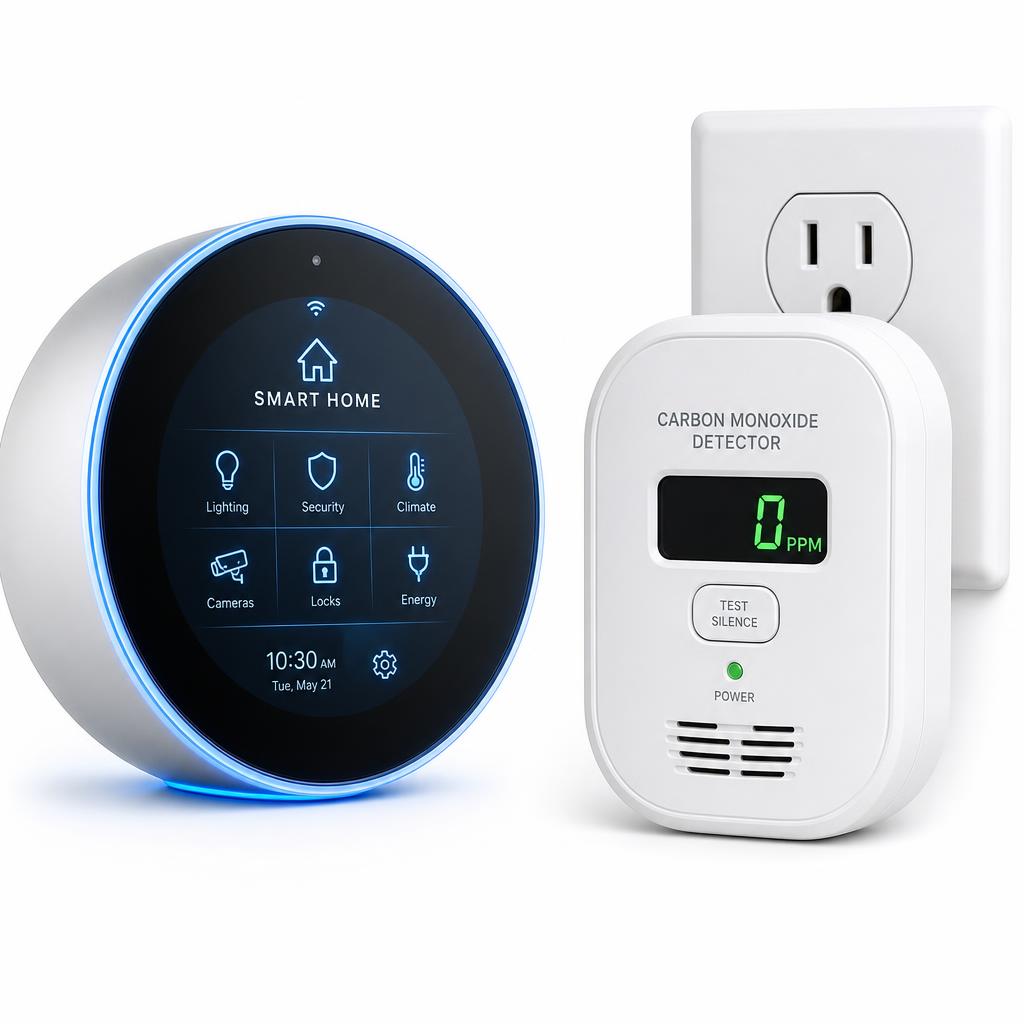
Loading comments...